
Gräberstadt — History & Facts
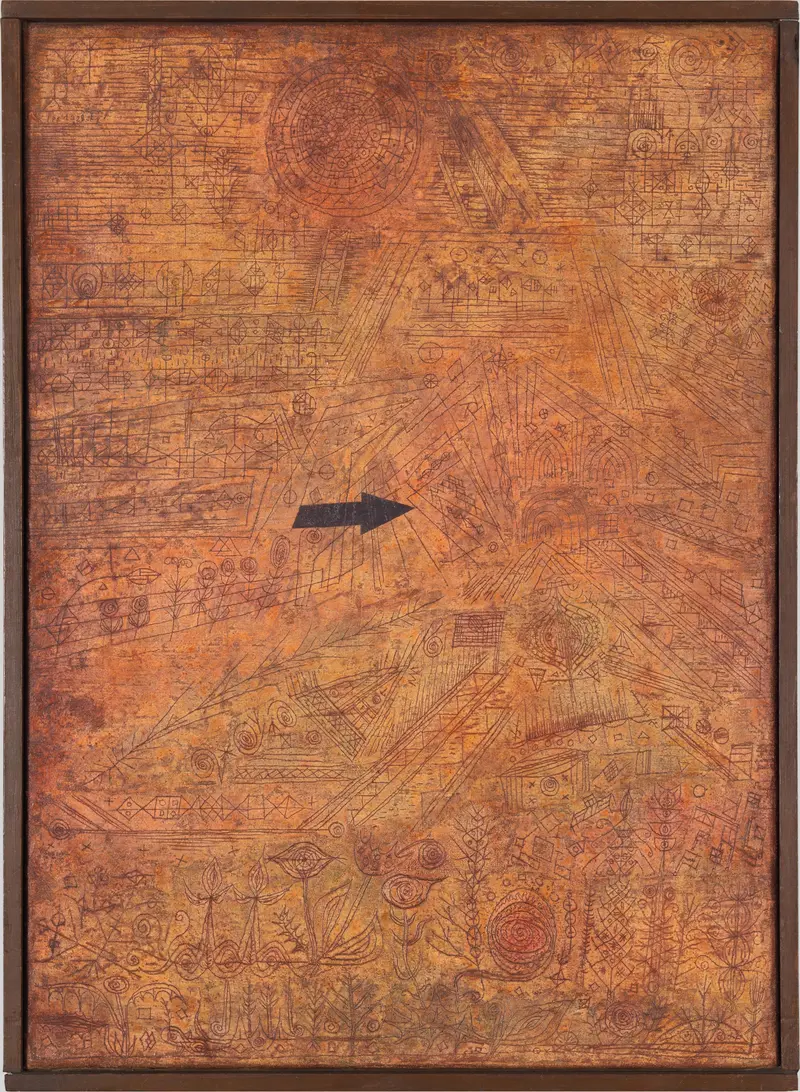
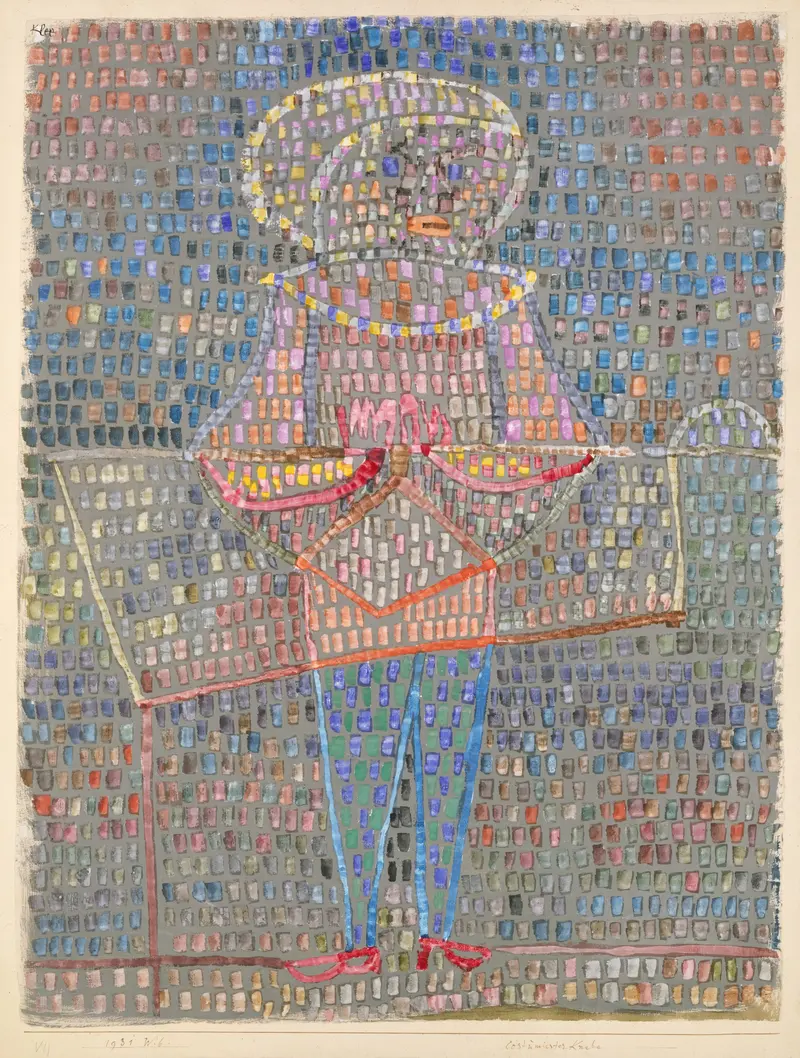
In Gräberstadt, Paul Klee presents a landscape filled with abstract forms and vibrant colors. The painting features a series of geometric shapes that suggest buildings and pathways, creating a sense of a city. The palette is dominated by earthy tones mixed with bright hues, giving the work a lively yet mysterious atmosphere.
The overall composition feels both structured and chaotic, inviting viewers to explore its depths. The painting is characterized by Klee's signature use of line and color, which create a rhythmic flow across the canvas. The geometric shapes are layered and interwoven, suggesting depth and perspective despite their abstract nature. Klee often employed a technique of layering colors to achieve a sense of luminosity, which is evident in this work.
The dimensions of the painting are approximately 60 x 80 cm, making it a medium-sized piece that draws attention without overwhelming the viewer. Gräberstadt was created during a period when Klee was exploring the relationship between abstraction and representation. This work reflects his interest in the emotional resonance of color and form, typical of the Expressionist movement. An interesting fact about this painting is that it was inspired by Klee's travels and experiences in various cities, which influenced his perception of urban landscapes.
Klee's unique approach to art continues to resonate with audiences today, making him a pivotal figure in modern art.
More Artworks by Paul Klee

More Landscape Art

The Starry Night
Vincent van Gogh

View of Delft
Johannes Vermeer

Water Lilies
Claude Monet

The Grand Canal, Venice, looking north-west from the Ca' Corner to the Ca' Contarini degli Scrigni, with the campanile of Santa Maria della Carità
Canaletto

Windsor Castle
Canaletto

The Grand Canal looking North-East from the Palazzo Dolfin-Manin to the Rialto Bridge
Canaletto