
Grand Canal looking East from Palazzo Bembo to Palazzo Vendramin-Calergi — History & Facts
In the 1730s, the British aristocracy’s hunger for Venetian views reached its peak, and Canaletto became the painter most sought after by Grand Tourists eager to bring home a piece of La Serenissima. Among the most requested scenes was the stretch of the Grand Canal between Palazzo Bembo and Palazzo Vendramin-Calergi, a vista prized for its parade of palazzi and the ceaseless ballet of gondolas. This composition proved so popular that Canaletto painted it multiple times, each version a careful orchestration of light and detail to satisfy the discerning tastes of his international clientele.
The painting’s fame spread quickly, with contemporary travelers remarking that “the city is nowhere better mirrored than in Canaletto’s hand.” Here, the artist captures Venice at the height of a sunlit day, the Grand Canal teeming with daily life. Gondoliers in striped shirts steer their boats past the stately facades, while merchants and nobles cross paths along the water’s edge. The white marble of Palazzo Vendramin-Calergi gleams at the vanishing point, drawing the eye through the rhythmic procession of buildings.
Every window, flag, and mooring post is rendered with such clarity that the city seems to float between reality and ideal. Unlike the atmospheric haze of Guardi, Canaletto’s vision is precise, almost architectural, inviting viewers to imagine themselves drifting into the heart of 18th-century Venice. The exact patron of this particular version is unknown, but it likely left Venice soon after its creation, destined for the collection of a foreign visitor. Over the centuries, works like this have traveled across Europe, passing through private hands and public auctions, sometimes misattributed to followers or imitators.
Today, Grand Canal looking East from Palazzo Bembo to Palazzo Vendramin-Calergi is recognized as a quintessential example of Canaletto’s mature period, when his reputation as Venice’s visual chronicler was firmly established. Its enduring appeal lies in its dual nature: both a souvenir for travelers and a document of a city at the height of its splendor.
More Artworks by Canaletto

The Grand Canal, Venice, looking north-west from the Ca' Corner to the Ca' Contarini degli Scrigni, with the campanile of Santa Maria della Carità
Canaletto

Venice, Bacino di San Marco on Ascension Day
Canaletto

Windsor Castle
Canaletto

The Grand Canal looking North-East from the Palazzo Dolfin-Manin to the Rialto Bridge
Canaletto

Venice: The Campo SS. Giovanni e Paolo
Canaletto

Venice: The Grand Canal from the Rialto to the Palazzo Foscari
Canaletto
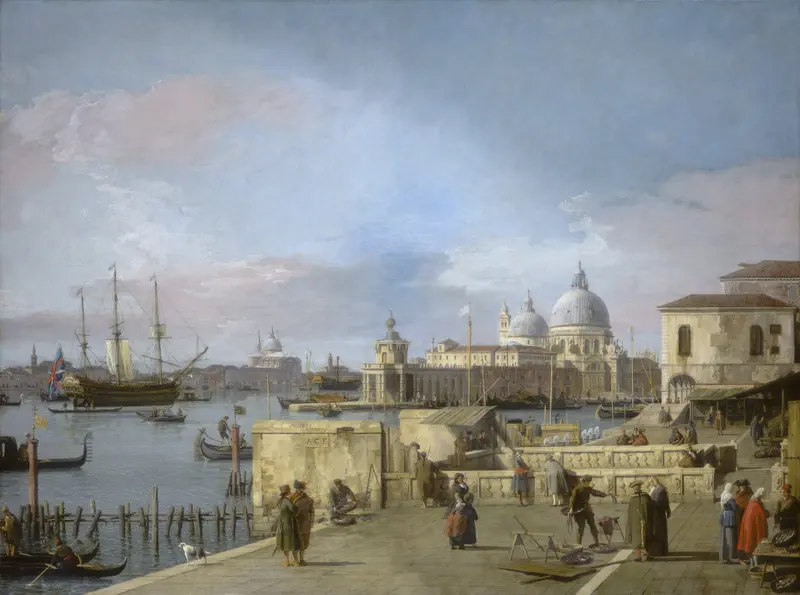
Venice: The Molo towards the Dogana and Santa Maria della Salute
Canaletto

Venice: The Piazzetta
Canaletto
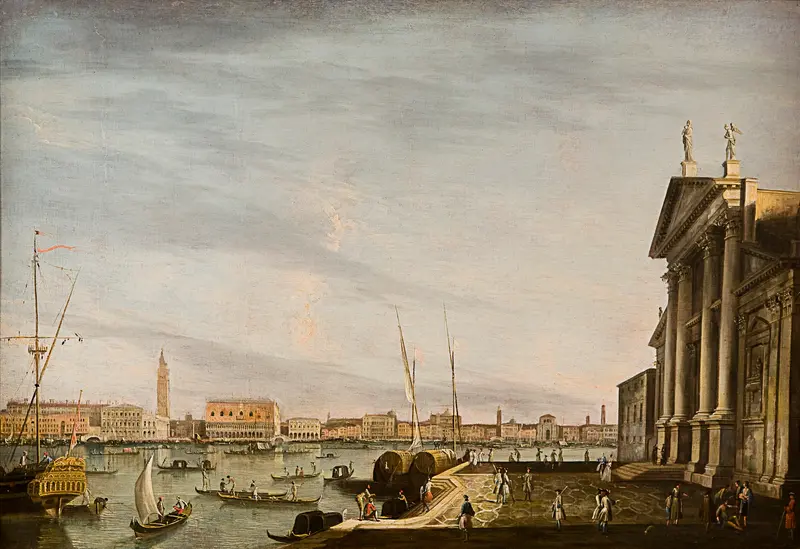
Venice, View of San Giorgio Maggiore
Canaletto

London: The Thames from Somerset House Terrace towards Westminster
Canaletto
More Landscape Art

The Starry Night
Vincent van Gogh

View of Delft
Johannes Vermeer

Water Lilies
Claude Monet
The Grand Canal, Venice, looking north-west from the Ca' Corner to the Ca' Contarini degli Scrigni, with the campanile of Santa Maria della Carità
Canaletto
Windsor Castle
Canaletto
The Grand Canal looking North-East from the Palazzo Dolfin-Manin to the Rialto Bridge
Canaletto