Grand Canal, Venice — History & Analysis
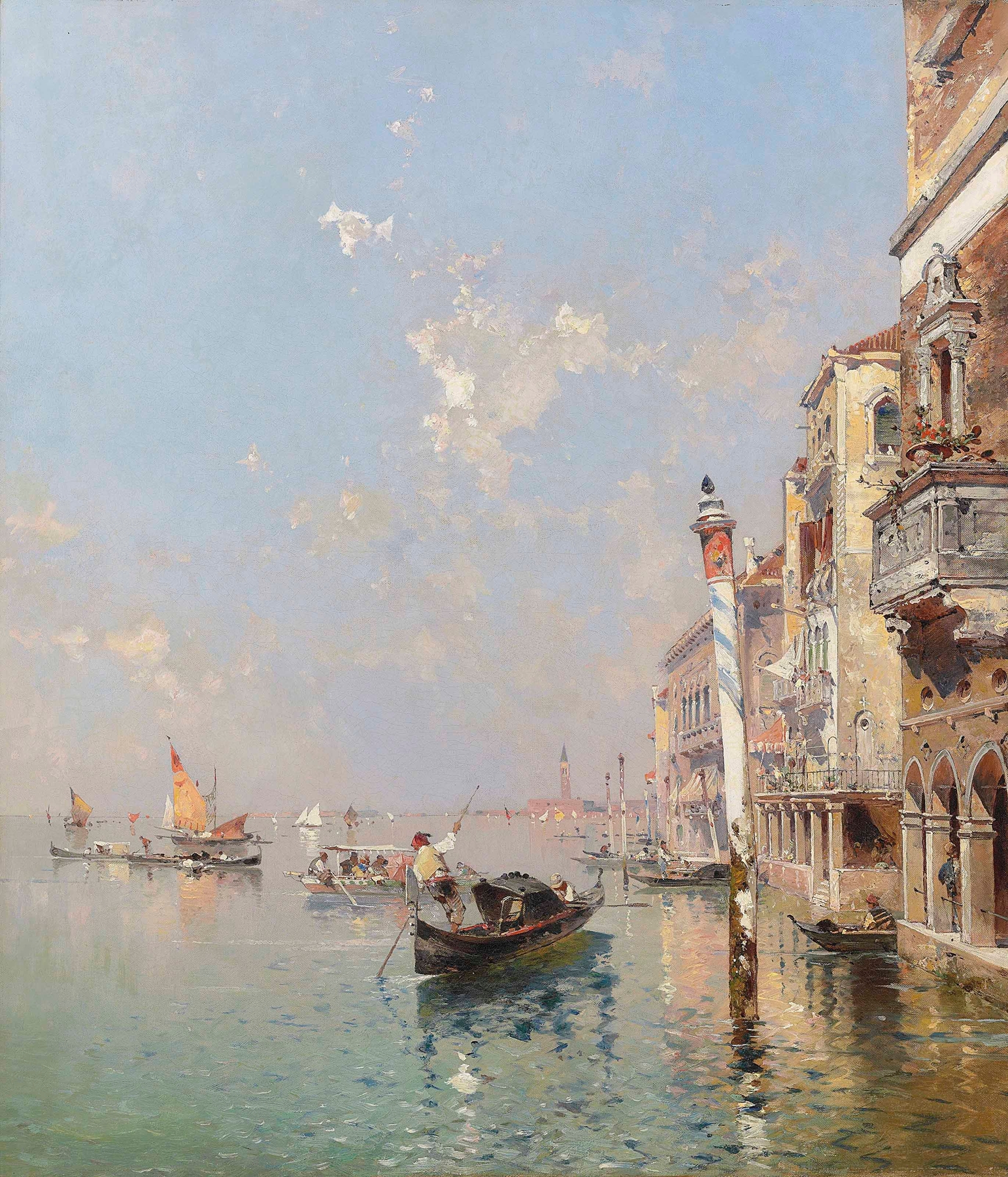
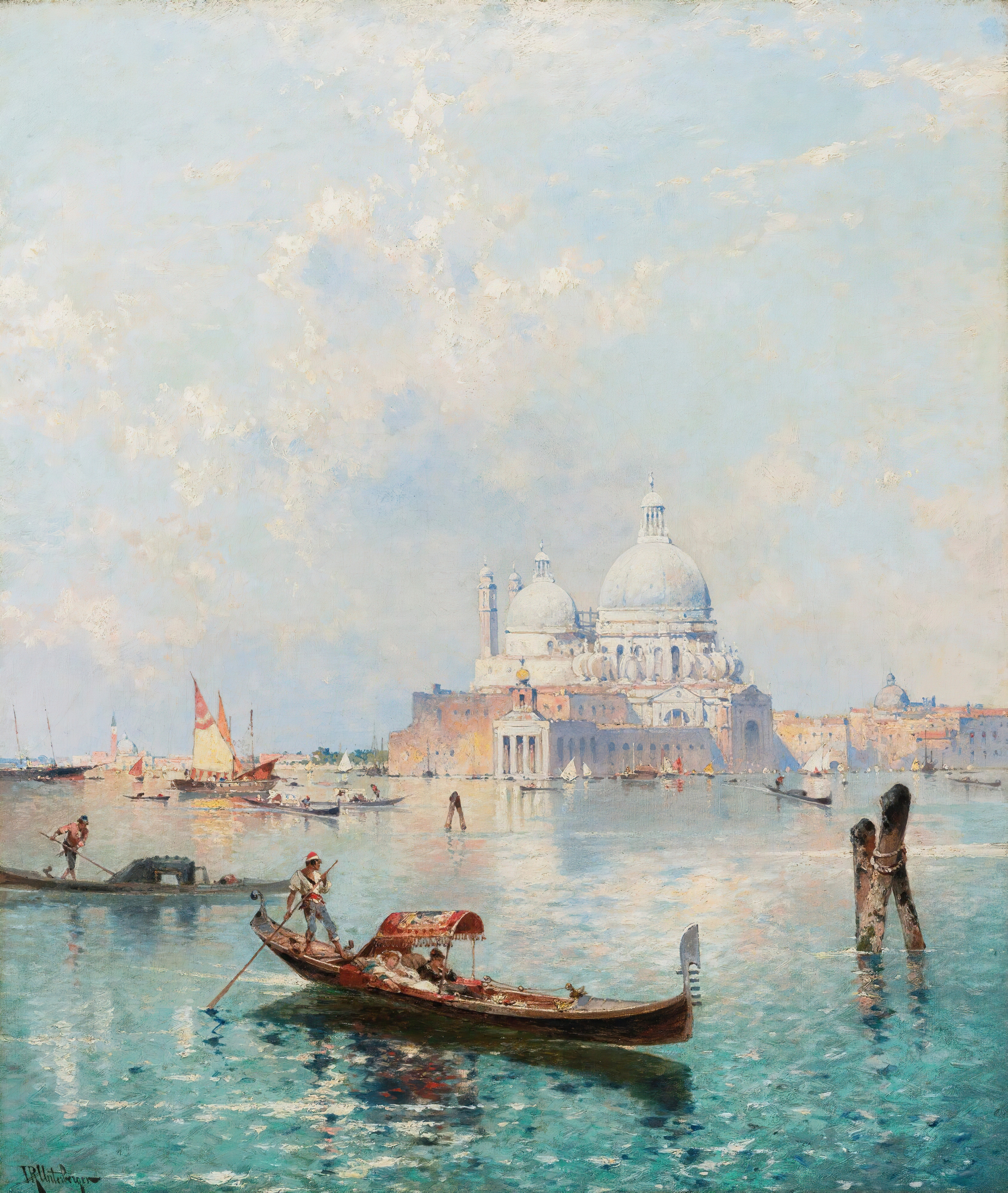
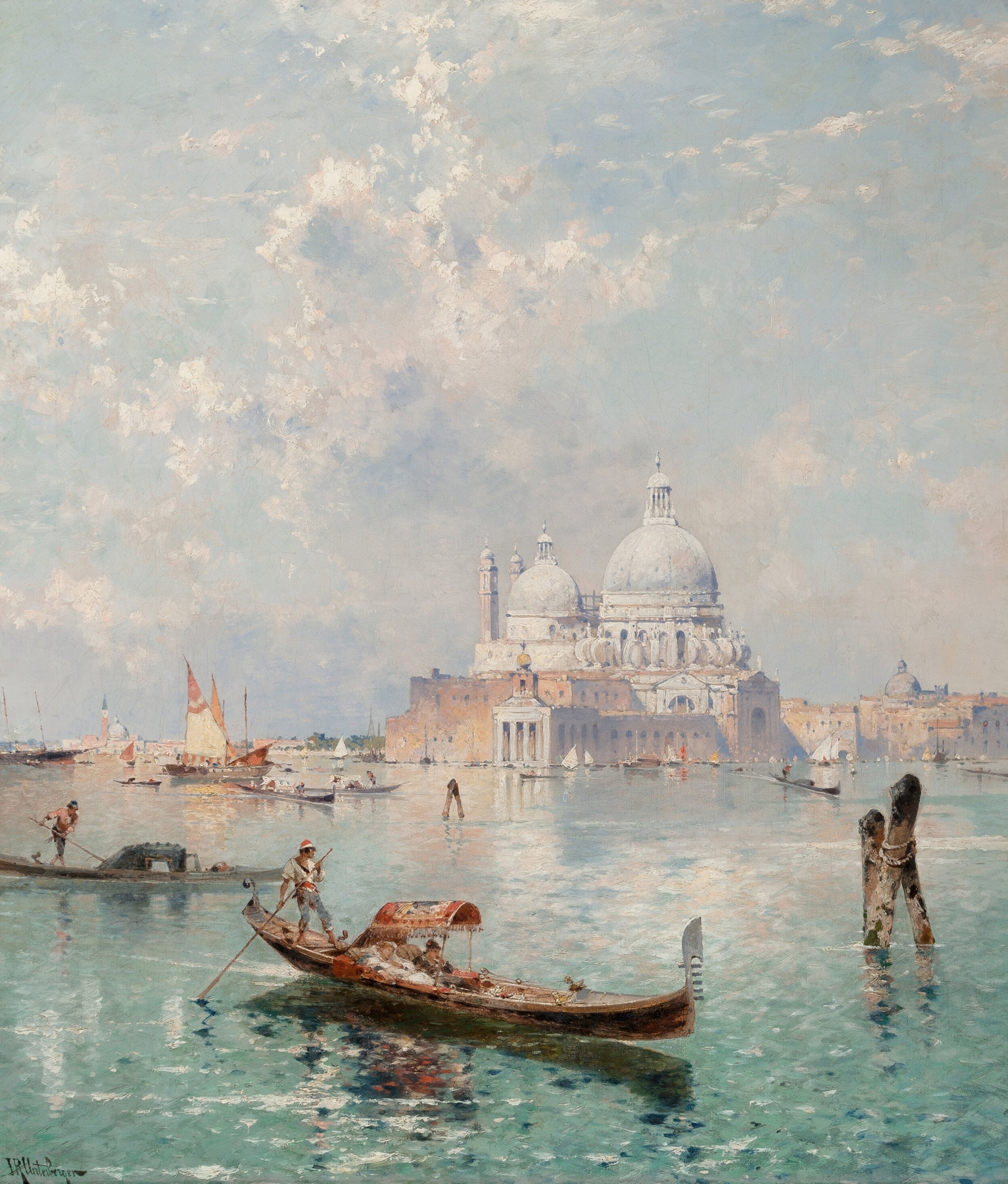
Could beauty survive in a century of chaos? A dreamlike tranquility envelops the viewer as they gaze upon the flowing waters of Venice, a serene haven amidst the clamor of existence. Look to the foreground at the gentle ripples on the Grand Canal, where soft hues of turquoise and azure shimmer under the embrace of golden light. The meticulous brushwork captures the dance of gondolas, their elongated forms gliding effortlessly across the surface, while slender reflections shimmer like whispers of dreams.
Notice how the artist employs a delicate balance of warm and cool tones, drawing your eye toward the distant palaces that frame the scene, their ancient facades steeped in history and character. Beneath this enchanting facade lies a juxtaposition of stillness and motion, embodying the duality of Venice itself—a city teetering between the weight of its past and the flux of modernity. The gondoliers, figures of both leisure and labor, epitomize the heartbeat of the city, while the quiet sky hints at the restless winds of change. Each stroke conveys not just beauty but also an underlying tension, evoking a longing for permanence in a transient world.
Franz Richard Unterberger painted this vision sometime in the 19th century, likely during his travels through Italy. At this juncture in his career, the artist was deeply influenced by the Romantic movement, embracing themes of nostalgia and the sublime. The world was witnessing rapid industrialization, yet the artist chose to immortalize the timeless allure of Venice, capturing a moment that speaks to the resilience of beauty amidst inevitable change.