
Great Horned Owl — History & Facts
What first arrests the viewer in Great Horned Owl is the direct, unblinking gaze of the birds—two pairs of luminous eyes, wide and round, command the space with an intensity that seems to pierce the quiet of the page. The artist, John James Audubon, arranges the owls not as passive subjects but as sentinels, alert and poised, their feathered bodies braced on a lichen-draped branch. Every barb and streak of plumage is rendered with a precision that borders on reverence, each mark a testament to close observation.
The subtle gradations of brown and ochre, the sharp curve of talons, and the almost architectural arrangement of feathers all speak to a world where survival is a matter of vigilance. This work belongs to a period when natural history illustration was both science and spectacle. Between 1827 and 1838, as the United States expanded westward, artists like Audubon became chroniclers of a continent’s teeming life, their plates intended for wealthy patrons and scientific societies hungry for knowledge of the New World. Plate 61 of Birds of America, now in the University of Pittsburgh collection, stands as a relic of that era’s ambition: to capture nature not only for study, but for awe.
History has kept few traces of the individual journeys of these prints, but their purpose endures—inviting us to meet the wild, eye to eye.
More Artworks by John James Audubon
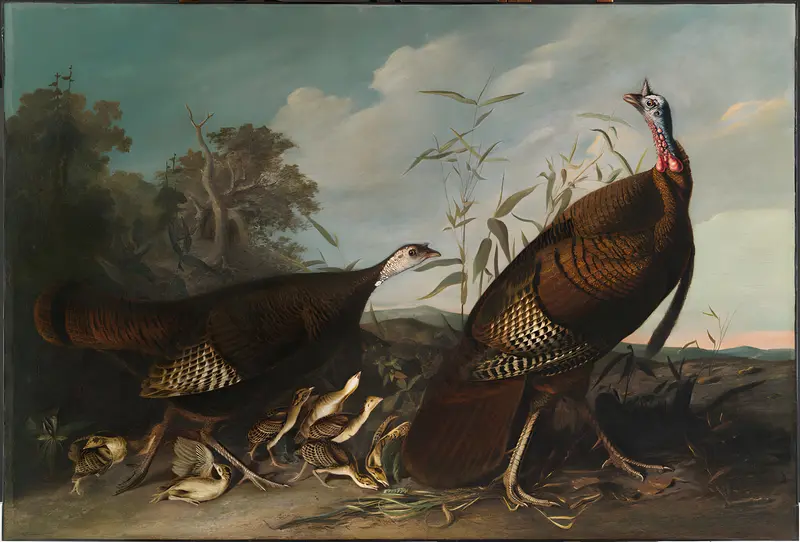
Wild Turkey Cock, Hen, and Chicks
John James Audubon
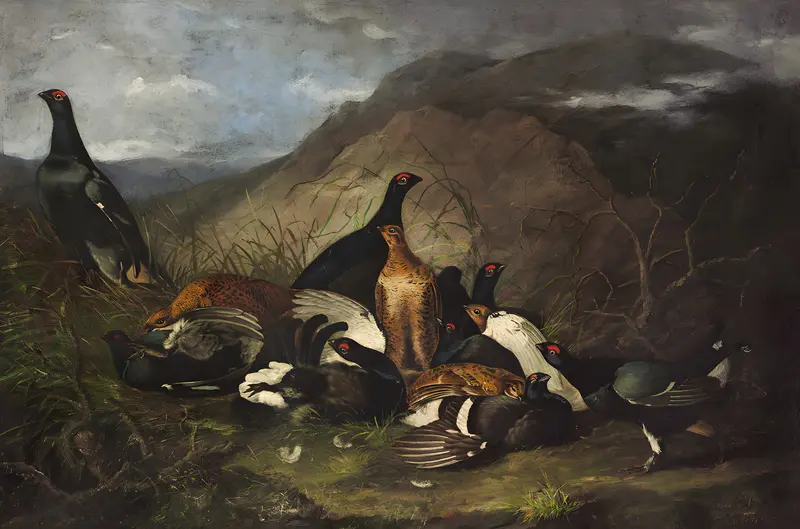
Scottish Black Grouse, Cocks and Hens
John James Audubon
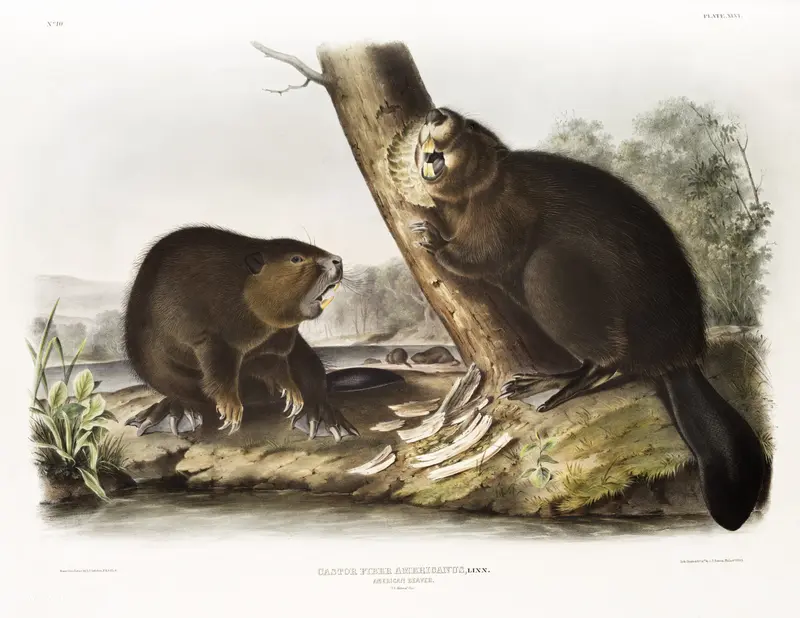
American Beaver
John James Audubon
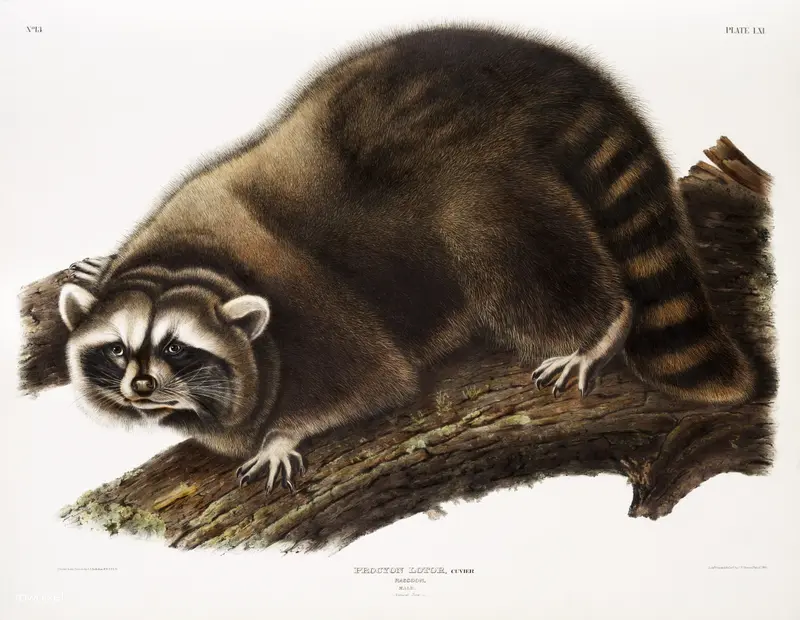
Raccoon
John James Audubon

Magnificent Frigatebird
John James Audubon
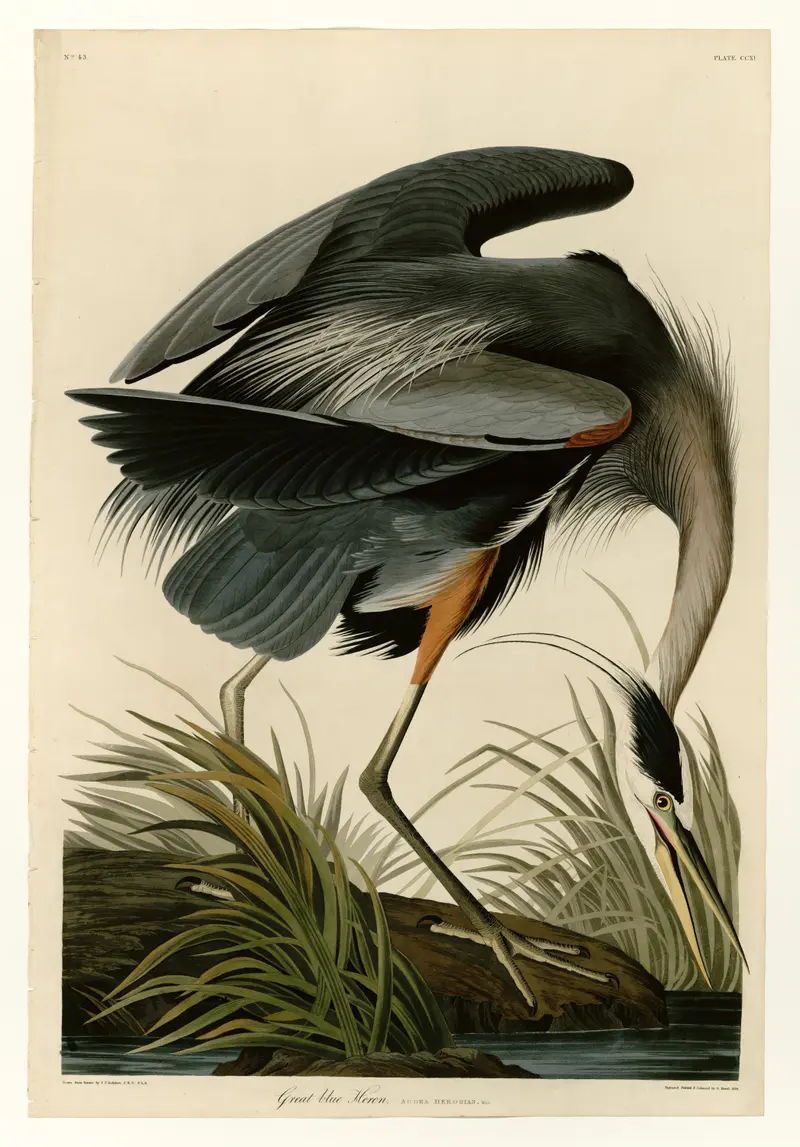
Great Blue Heron
John James Audubon
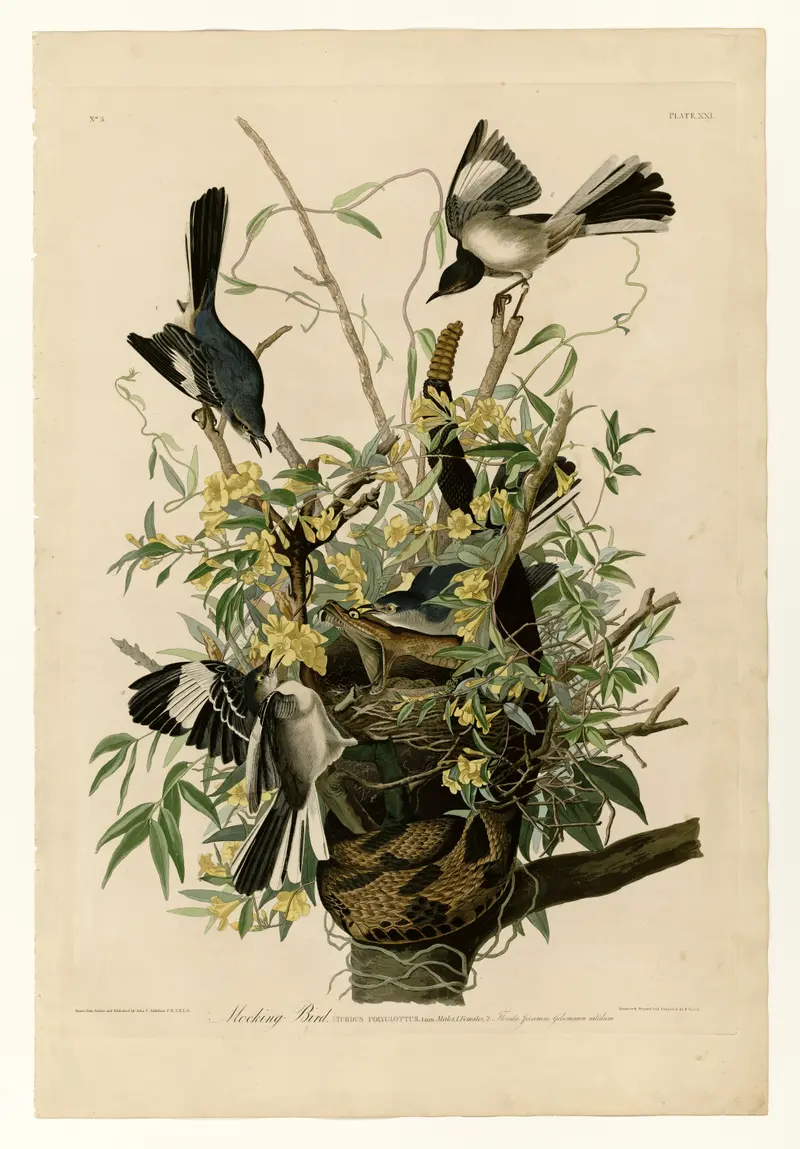
Northern Mockingbird
John James Audubon
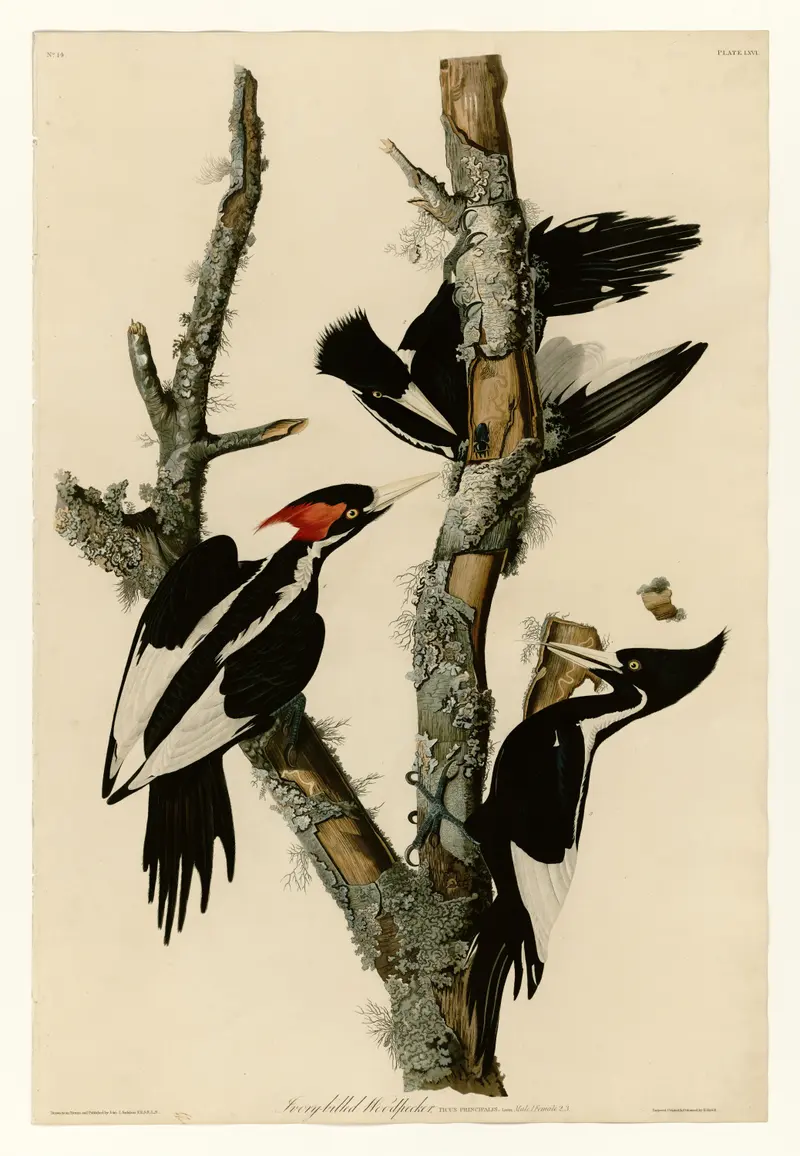
Ivory-billed Woodpecker
John James Audubon
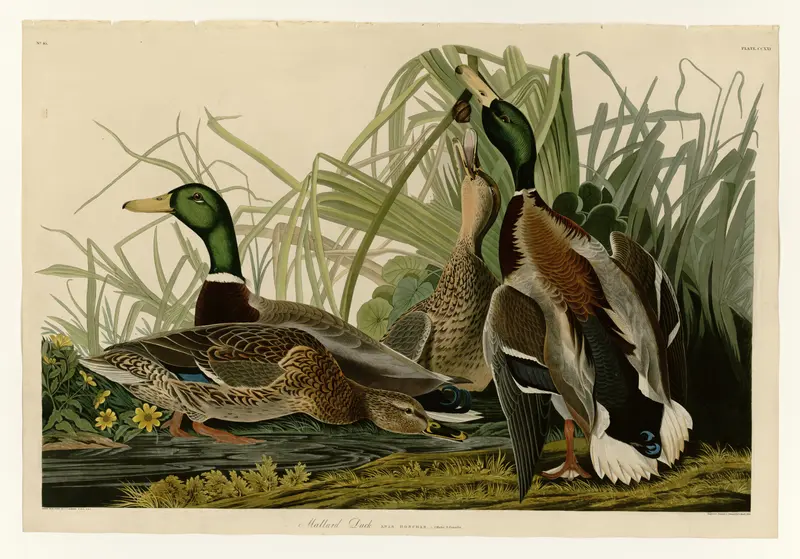
Mallard
John James Audubon
Ruby-throated Hummingbird
John James Audubon





