
Haystacks; Autumn — History & Facts
In that stillness, it holds the essence of fleeting moments, capturing both the beauty and the toil of rural life. Through its texture and hues, a visceral connection to nature and labor emerges, inviting us to reflect on the ecstasy and exhaustion of existence. Focus first on the vibrant oranges and russets that define the haystacks, their warm tones contrasting against the cool, muted greens of the landscape. Notice how the gentle curves of the stacks invite the eye to wander, while the soft, diffused light envelops the scene, creating an ethereal atmosphere.
The brushwork, both loose and deliberate, mirrors the organic forms of the harvest, evoking the tactile nature of the countryside. Delve deeper into the emotional layers that lie beneath the surface. The haystacks symbolize the labor of the earth, yet they also hint at the transience of the season — a visual reminder that beauty is often bound to the cycle of life and death. The juxtaposition of vibrant colors against the shadowy, somber background suggests an emotional tension between joy and melancholy, celebrating both the ecstasy of harvest and the inevitability of winter's approach. In 1874, Jean-François Millet created this piece during a time of great change in the world of art, as the Realist movement gained momentum.
Working from his home in Barbizon, France, he sought to depict the dignity of rural laborers, reflecting his own experiences growing up in a peasant family. This work embodies his commitment to portraying the raw, authentic life of the countryside, a departure from the traditions of Romanticism that preceded him.
More Artworks by Jean-François Millet
Browse all →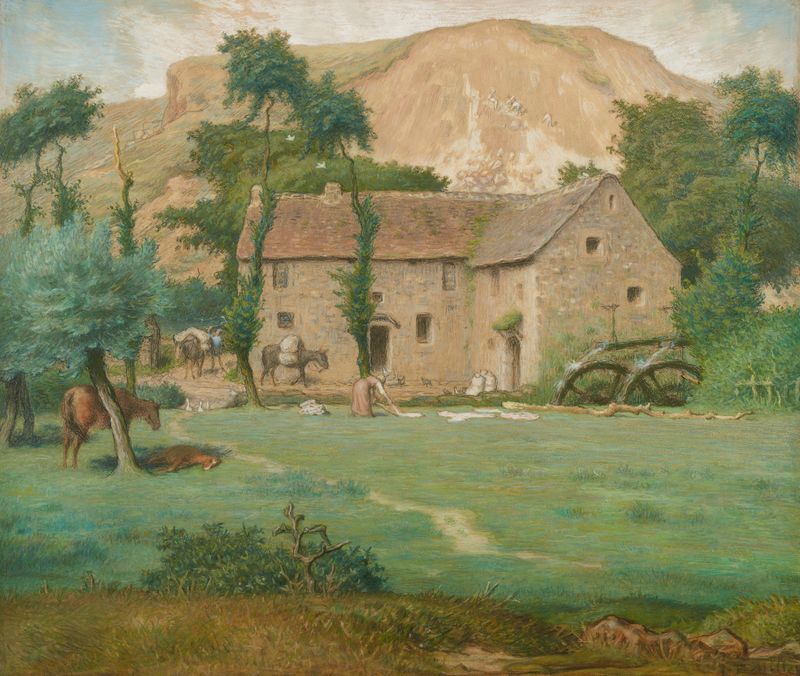
Watermill at the Foot of a Mountain, Allier
Jean-François Millet
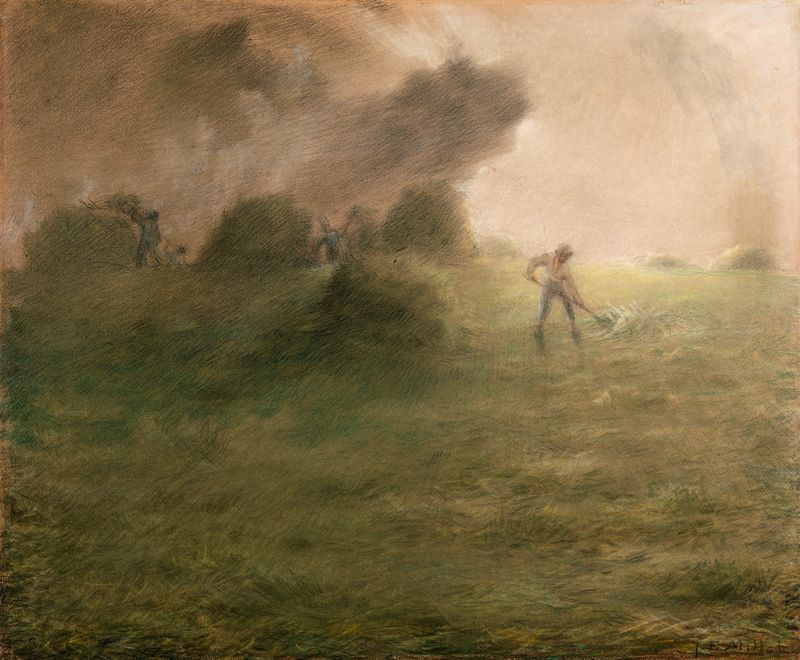
A Storm during Haymaking
Jean-François Millet
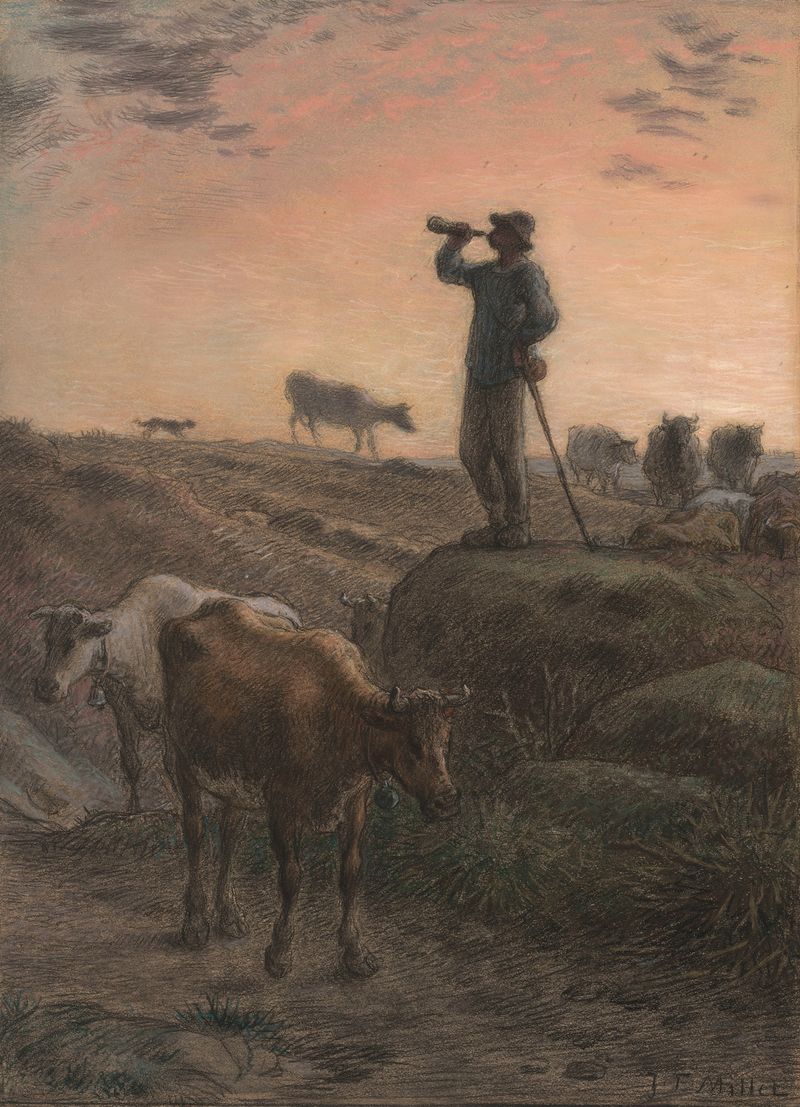
Calling Home the Cows
Jean-François Millet
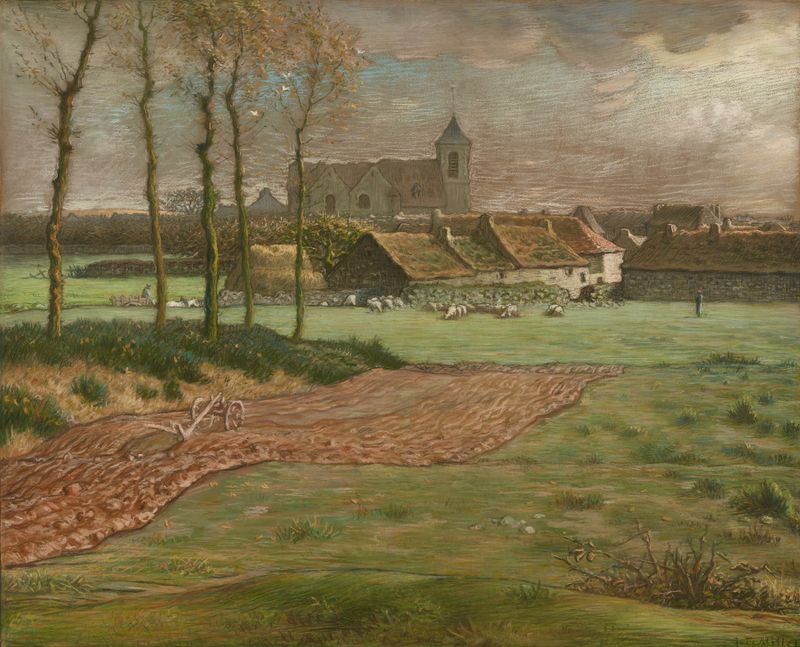
The Church at Chailly
Jean-François Millet
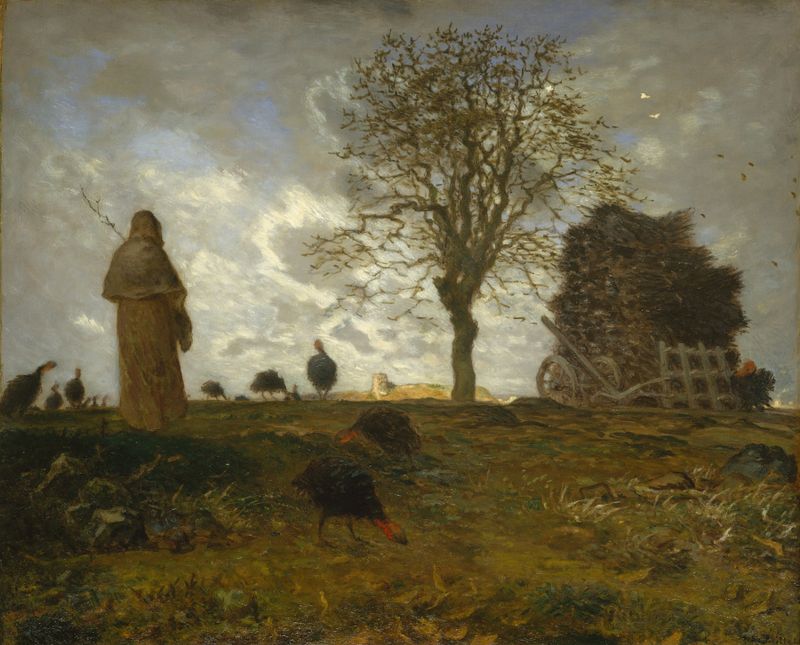
Autumn Landscape with a Flock of Turkeys
Jean-François Millet
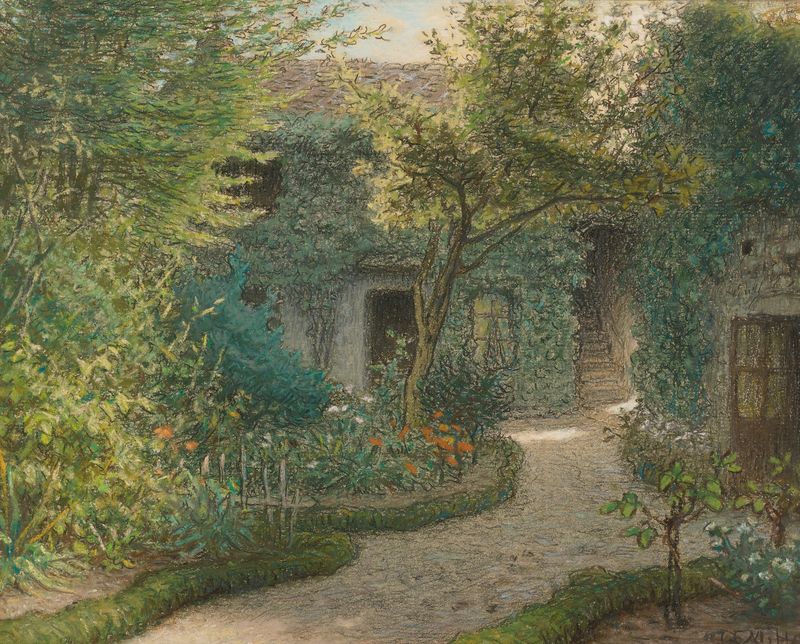
Théodore Rousseau’s House In Barbizon
Jean-François Millet
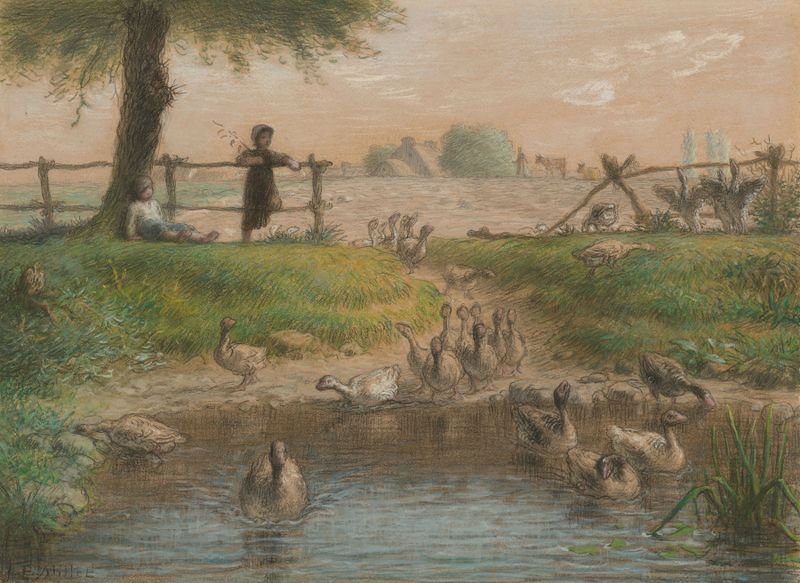
Peasant Children at Goose Pond
Jean-François Millet
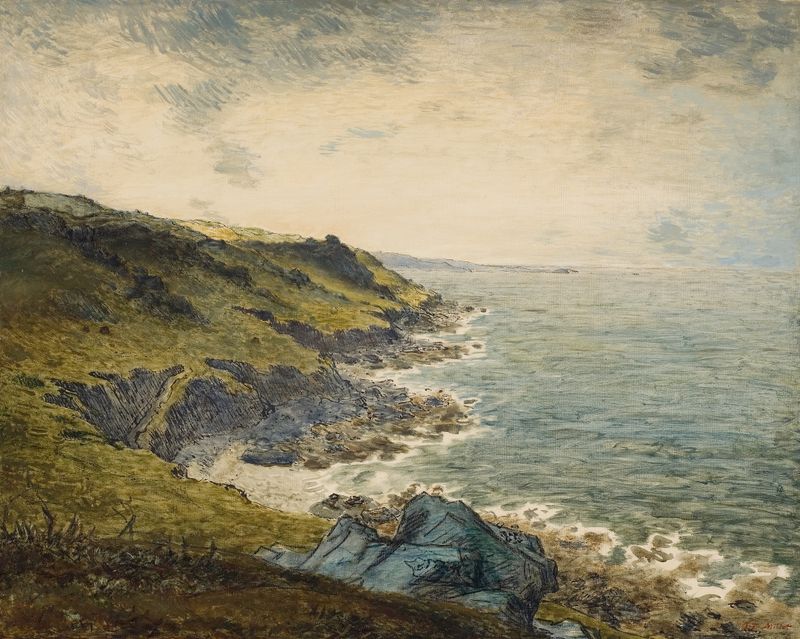
The Coast at Gréville
Jean-François Millet
Shepherds Resting
Jean-François Millet
The Old Mill
Jean-François Millet





