
Haystacks, Ipswich — History & Facts
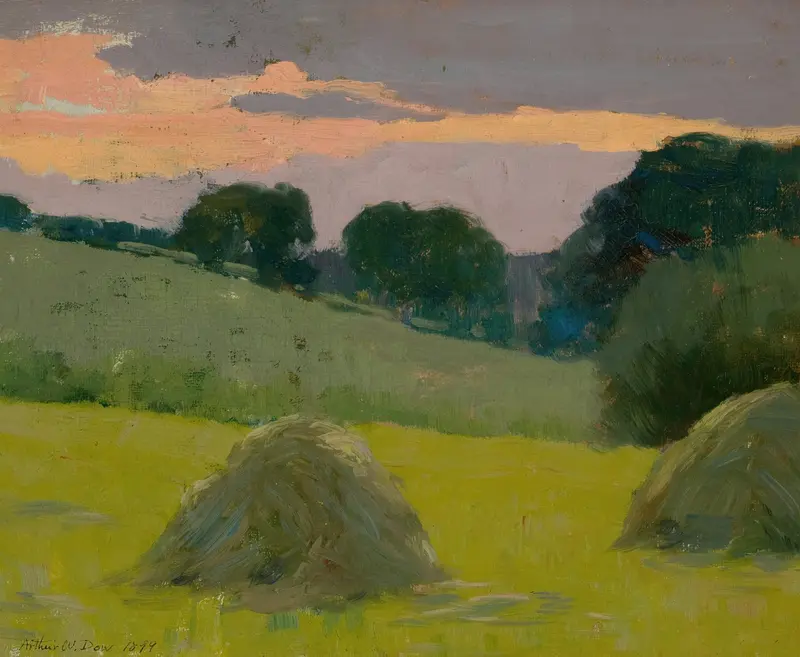
What first draws the eye in Haystacks, Ipswich is the quiet monumentality of the haystacks themselves—two rounded forms rising from a field speckled with wildflowers, their textured surfaces catching the gentle light. The composition leads us from the foreground, where the flowers scatter in a delicate pattern, toward the looming haystacks that anchor the scene. Behind them, a single tree stands at the horizon, its silhouette softened by the pale sky.
There is a sense of stillness here, but also of careful observation: the artist has chosen a low vantage point, giving the humble haystacks a presence almost architectural in its solidity. Created around 1894, this work belongs to a moment when American artists like Arthur Wesley Dow were turning to the rural landscape, not just as subject but as a field for exploring new ideas about design and harmony. The late nineteenth century saw a growing interest in the everyday beauty of the countryside, often inspired by the innovations of French Impressionism but filtered through local traditions and sensibilities. While history has kept few traces of the origins or travels of this particular piece, its presence in the National Gallery of Art collection today is a quiet testament to that era’s search for order and poetry in the ordinary.
Let your gaze linger on the subtle interplay of forms and textures—this is a picture that rewards patience.
More Artworks by Arthur Wesley Dow

City Island, New York
Arthur Wesley Dow
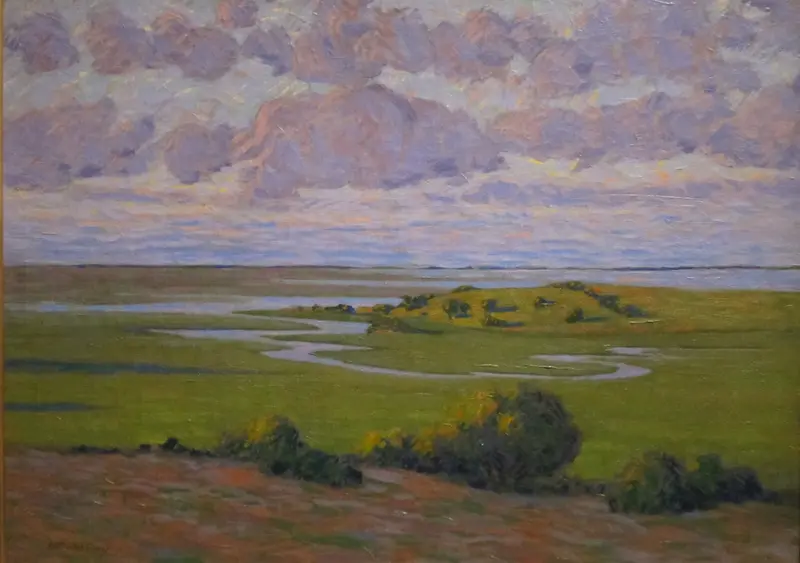
Lavender and Green
Arthur Wesley Dow
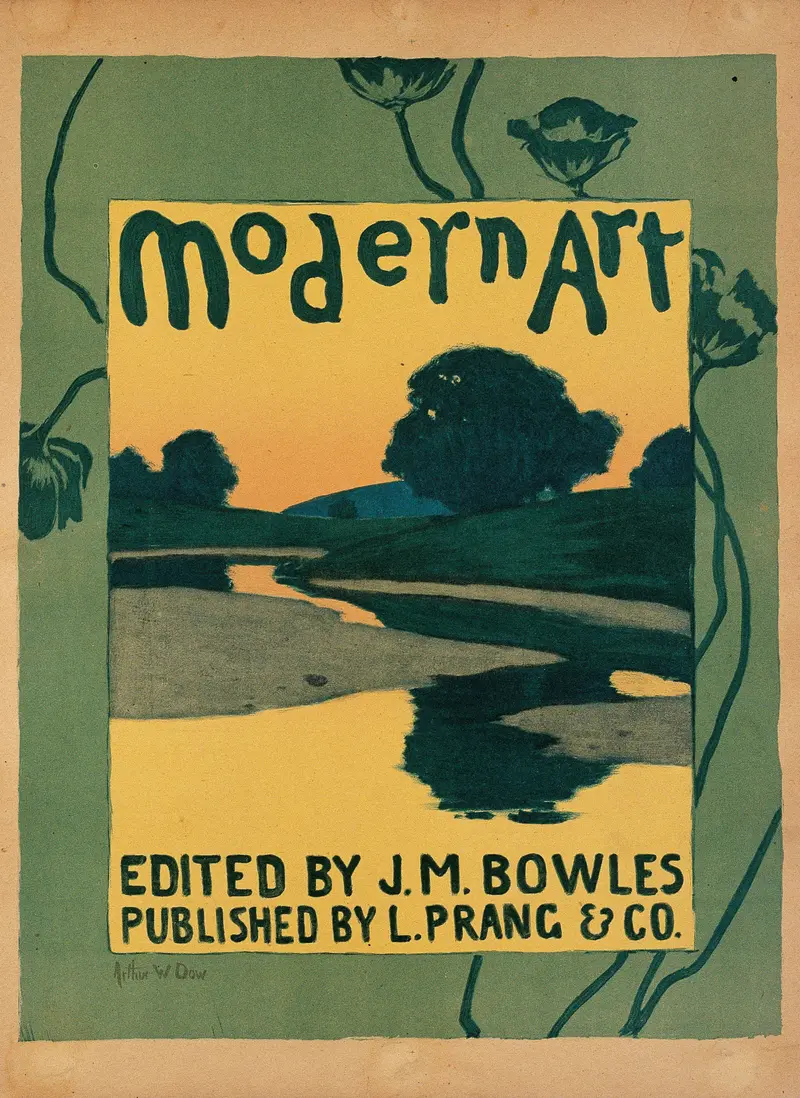
Modern Art
Arthur Wesley Dow
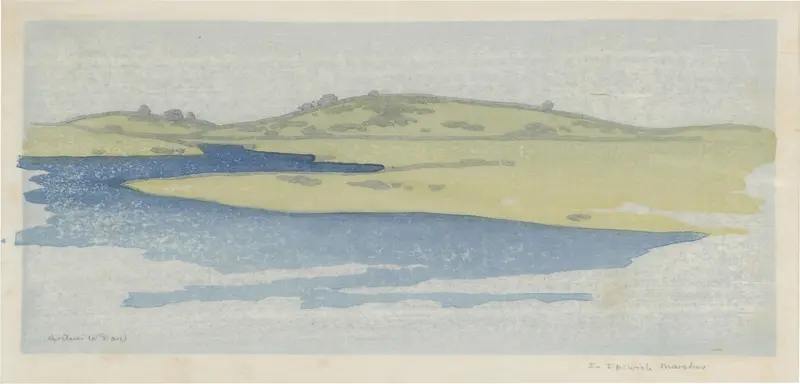
In Ipswich Marshes (Sagamore Hill, Ipswich)
Arthur Wesley Dow
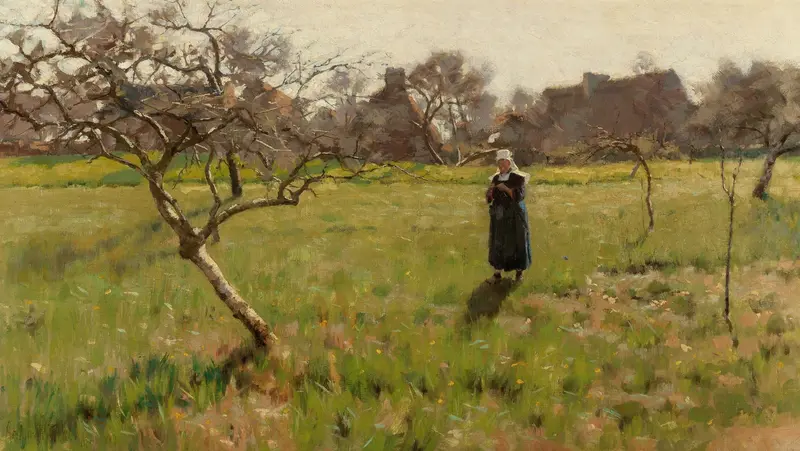
Brittany Field with Figure
Arthur Wesley Dow
Haystacks
Arthur Wesley Dow
Boats at Rest
Arthur Wesley Dow
Desert Scene with Mountains
Arthur Wesley Dow
A Maine Headland
Arthur Wesley Dow
Boats at Rest
Arthur Wesley Dow
More Landscape Art

The Starry Night
Vincent van Gogh

View of Delft
Johannes Vermeer

Water Lilies
Claude Monet

The Grand Canal, Venice, looking north-west from the Ca' Corner to the Ca' Contarini degli Scrigni, with the campanile of Santa Maria della Carità
Canaletto

Windsor Castle
Canaletto

The Grand Canal looking North-East from the Palazzo Dolfin-Manin to the Rialto Bridge
Canaletto