
Head of a Man — History & Facts
Few works in the history of Belgian modernism are as enigmatic as Head of a Man by Jules Schmalzigaug. The absence of a date and medium has only deepened the air of mystery that surrounds this piece, prompting scholars to debate whether it belongs to his early explorations before his Italian sojourn or to his later, more experimental phase. What is certain is that Schmalzigaug was a key figure in introducing Futurism to Belgium, and this work stands as a rare example of his engagement with portraiture, a genre he seldom pursued.
The painting’s provenance is equally elusive, with no records of its first exhibition or original owner. The subject’s face emerges from a swirl of energetic brushwork, his features fragmented and reassembled in a way that recalls the dynamism of Futurism, yet retains a haunting psychological intensity. Unlike the heroic, mechanized figures of Umberto Boccioni or the fractured forms of Giacomo Balla, Schmalzigaug’s man is caught in a moment of introspection: the downward gaze, the tense jaw, and the interplay of light and shadow across the forehead all suggest a private struggle. The background dissolves into abstraction, focusing the viewer’s attention on the sitter’s troubled expression—a visual echo, perhaps, of the anxieties of pre-war Europe.
The palette, dominated by muted earth tones, distances the painting from the brighter, more metallic hues favored by his Italian contemporaries. As with much of Schmalzigaug’s work, the physical journey of Head of a Man is difficult to trace. The artist’s brief, tragic life—he died in 1917 at the age of 32—left many of his paintings scattered and often misattributed, especially after his posthumous obscurity. Today, Head of a Man is recognized as a testament to his restless experimentation and his unique position at the crossroads of Belgian Symbolism and Italian Futurism.
Its current location in a private collection or museum remains uncertain, but its importance has grown as scholars rediscover Schmalzigaug’s contribution to early twentieth-century art.
More Artworks by Jules Schmalzigaug

A View of Scheveningen
Jules Schmalzigaug
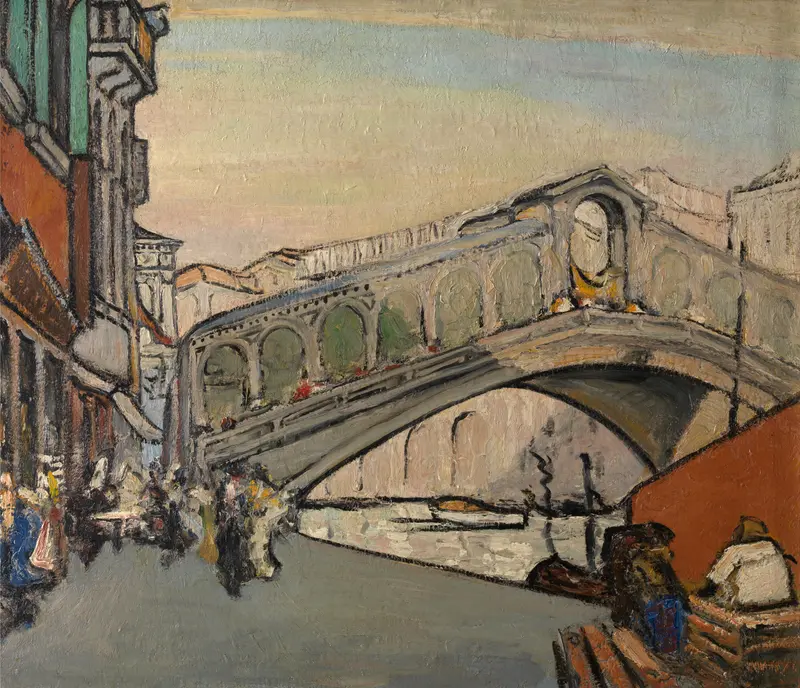
The Rialto Bridge in Venice
Jules Schmalzigaug

Abstract Bouquet
Jules Schmalzigaug
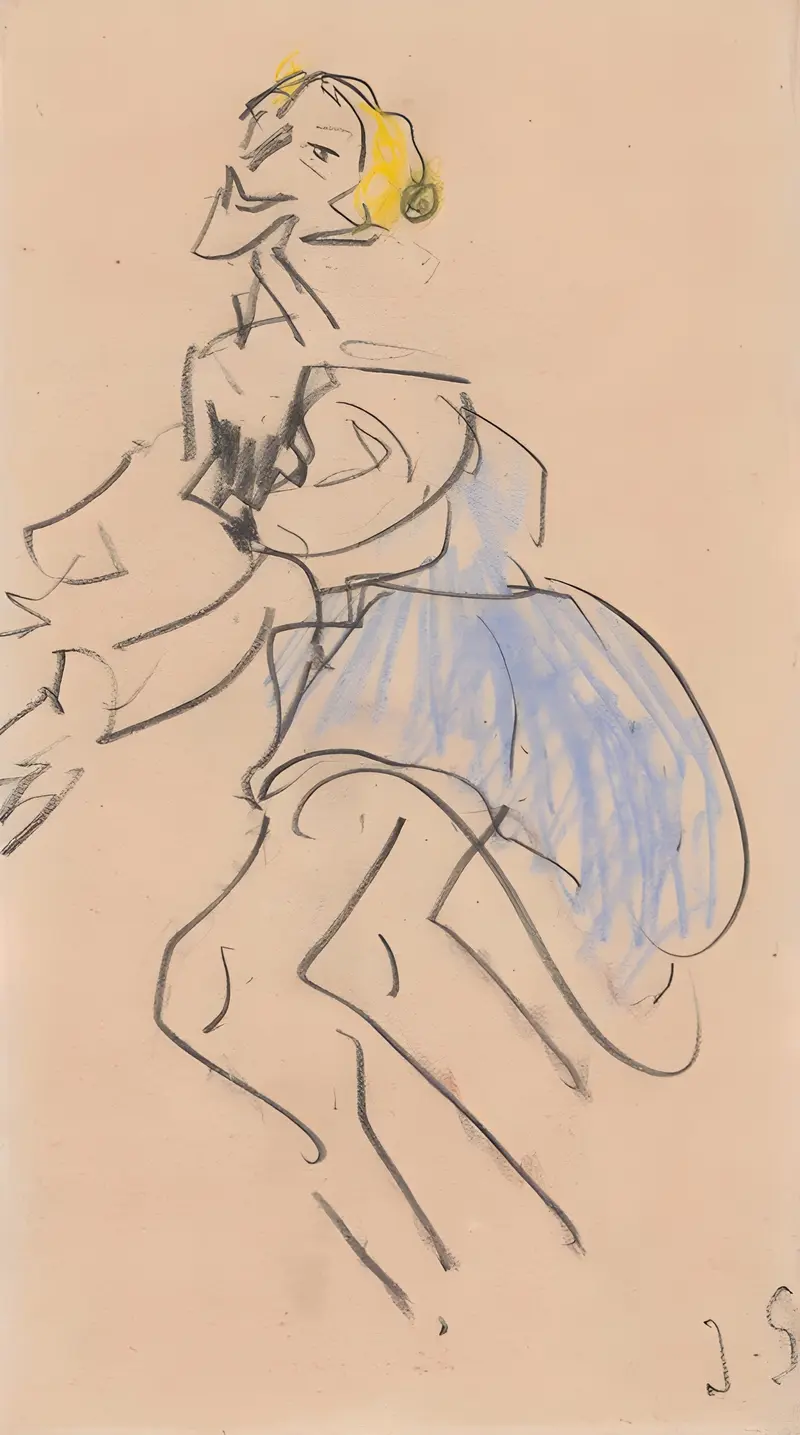
Dancer
Jules Schmalzigaug
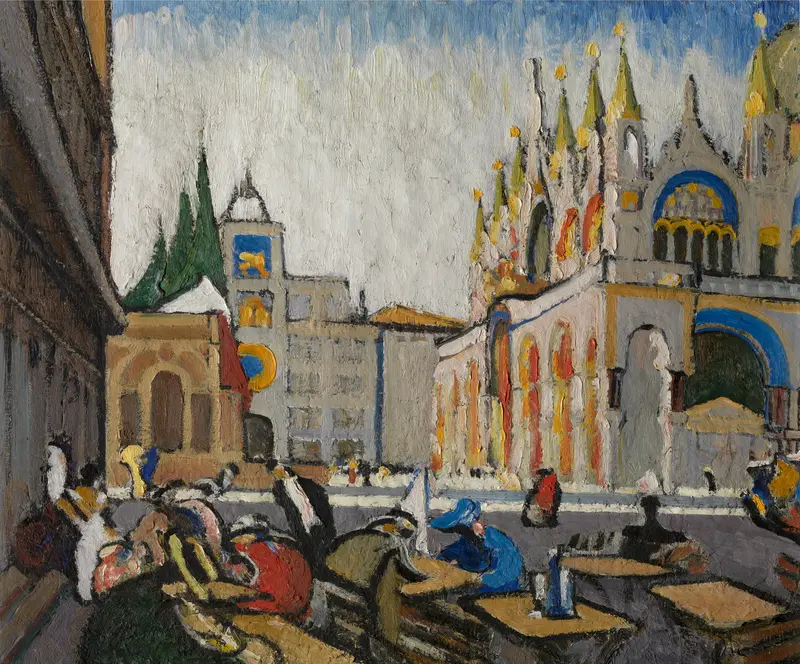
San Marco from the Piazetta
Jules Schmalzigaug
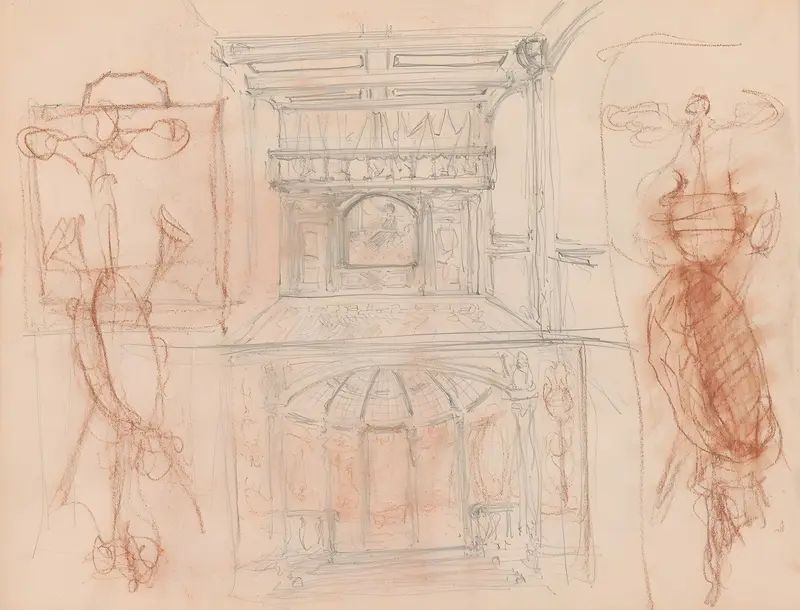
Architectural Elements
Jules Schmalzigaug
Blue, Red and Yellow Figures
Jules Schmalzigaug
Chiesa dei Gesuati in Venice
Jules Schmalzigaug
Café-chantant
Jules Schmalzigaug
Backyard
Jules Schmalzigaug





