
Head of a white horse — History & Facts
When Théodore Géricault was just twenty years old, he began a series of studies that would later feed directly into his most famous works, and among these, Head of a white horse stands out as an early testament to his obsession with the animal’s form and spirit. Horses were more than a subject for Géricault—they were a passion, and his relentless observation of them at the imperial stables of Versailles became almost legendary among his contemporaries. This particular study is believed to have been painted in 1811, during the same feverish period in which he was preparing for his debut at the Paris Salon.
The intensity of his focus on the horse’s head, isolated from any background or narrative, was unusual and even a little shocking to some early viewers, who were accustomed to seeing animals only as part of grand historical scenes. In this painting, Géricault captures the horse at a moment of alert stillness, its head turned slightly, nostrils flared, and eyes wide, as though sensing an unseen presence just beyond the frame. The animal’s mane is rendered with quick, energetic strokes, suggesting movement and vitality, while the modeling of the head itself is precise and almost sculptural. The light falls strongly across the horse’s face, highlighting the tension in its muscles and the moist gleam of its eye, inviting the viewer to read emotion and intelligence there.
Unlike earlier equestrian studies by artists such as George Stubbs, whose horses are coolly anatomical, Géricault’s approach is raw and immediate, focusing on the animal’s individuality rather than its breed or pedigree. The exact medium of Head of a white horse remains uncertain, a reminder of the experimental nature of Géricault’s early years, when he worked in both oil and watercolor, often on paper or canvas scraps. The painting’s subsequent history is not well documented; it may have remained in the artist’s studio, serving as a reference for later, larger compositions such as The Charging Chasseur or even The Raft of the Medusa. Today, studies like this are valued as windows into Géricault’s process and his radical approach to animal painting, which helped lay the groundwork for the Romantic movement in France.
Whether displayed in a museum or preserved in a private collection, Head of a white horse continues to fascinate viewers with its blend of observation and empathy.
More Artworks by Théodore Géricault
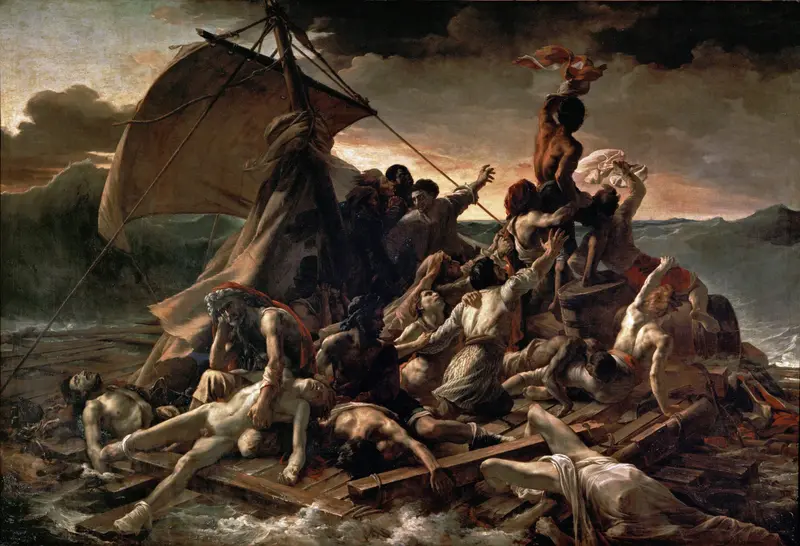
The Raft of the Medusa
Théodore Géricault

Géricault - Le naufrage du radeau de la Méduse, MBA 790
Théodore Géricault
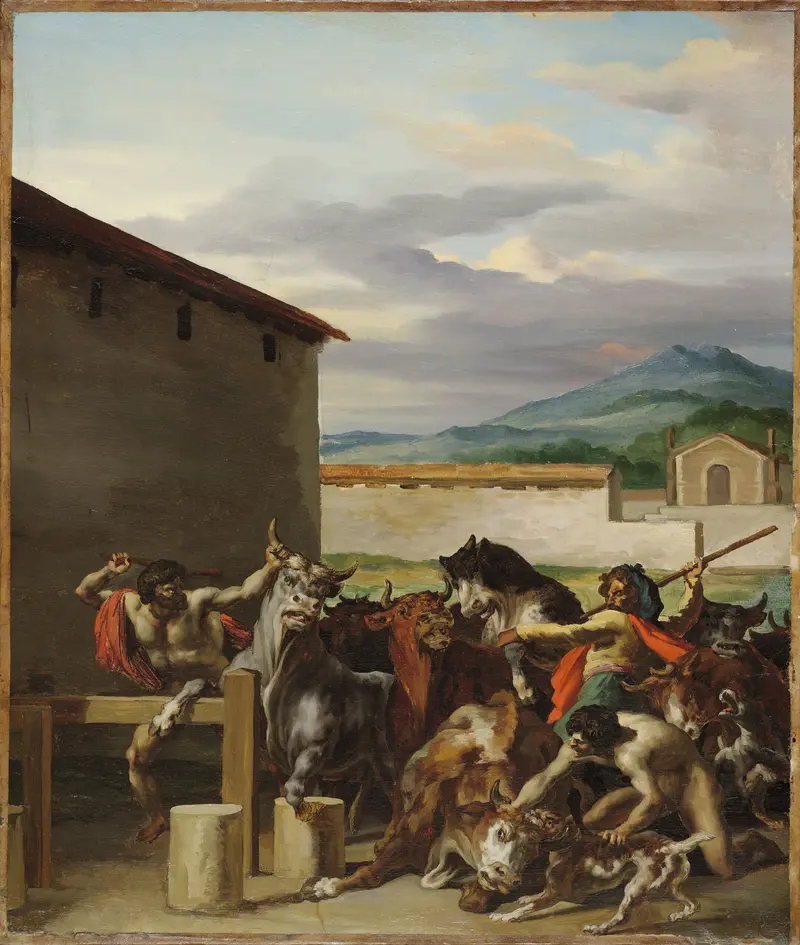
Cattle Market
Théodore Géricault
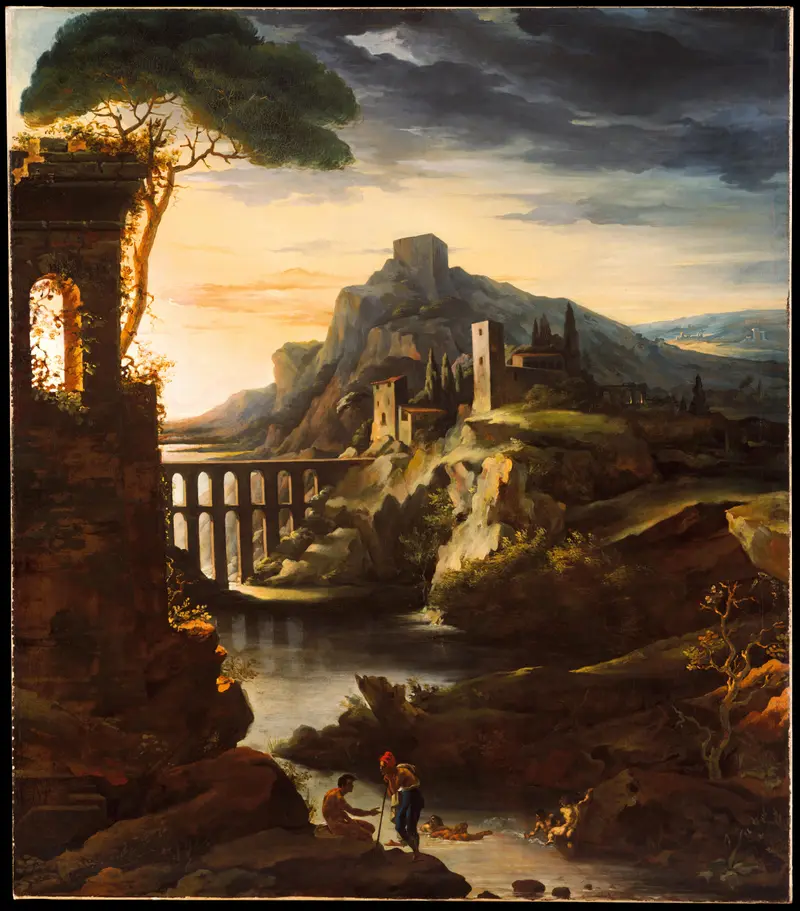
Evening; Landscape with an Aqueduct
Théodore Géricault
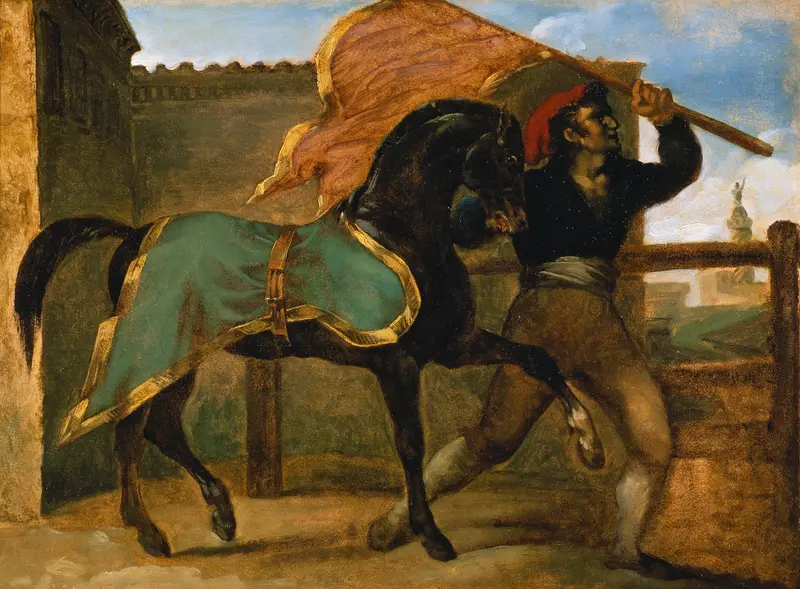
Horse Race
Théodore Géricault

Horses Standing in a Mews
Théodore Géricault
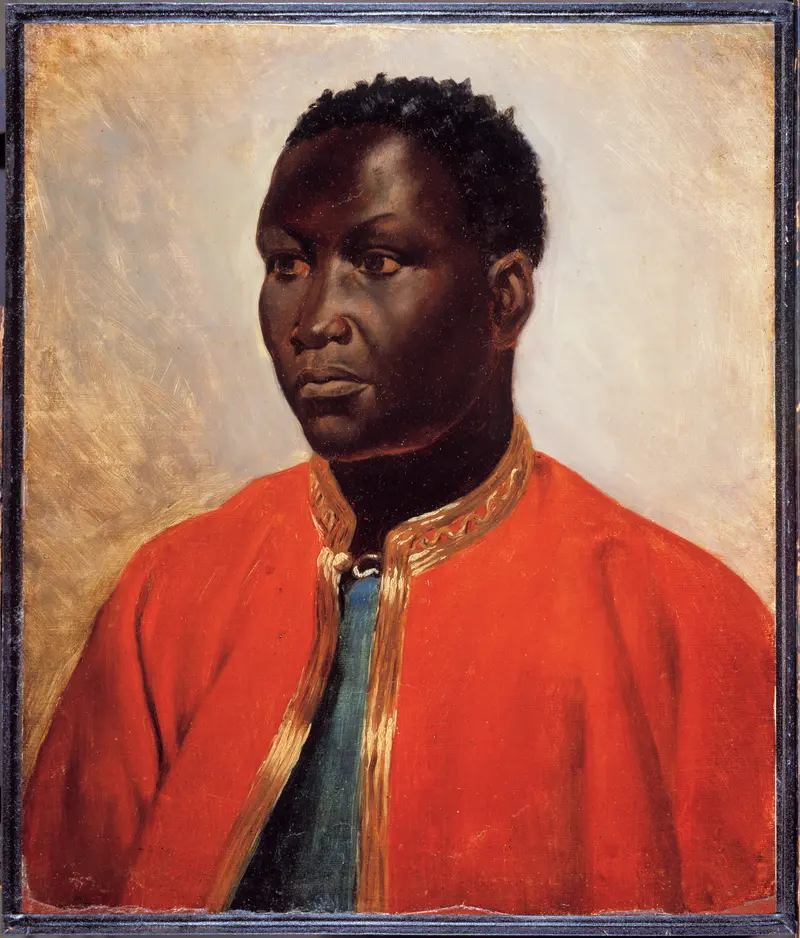
Portrait of a Negro
Théodore Géricault
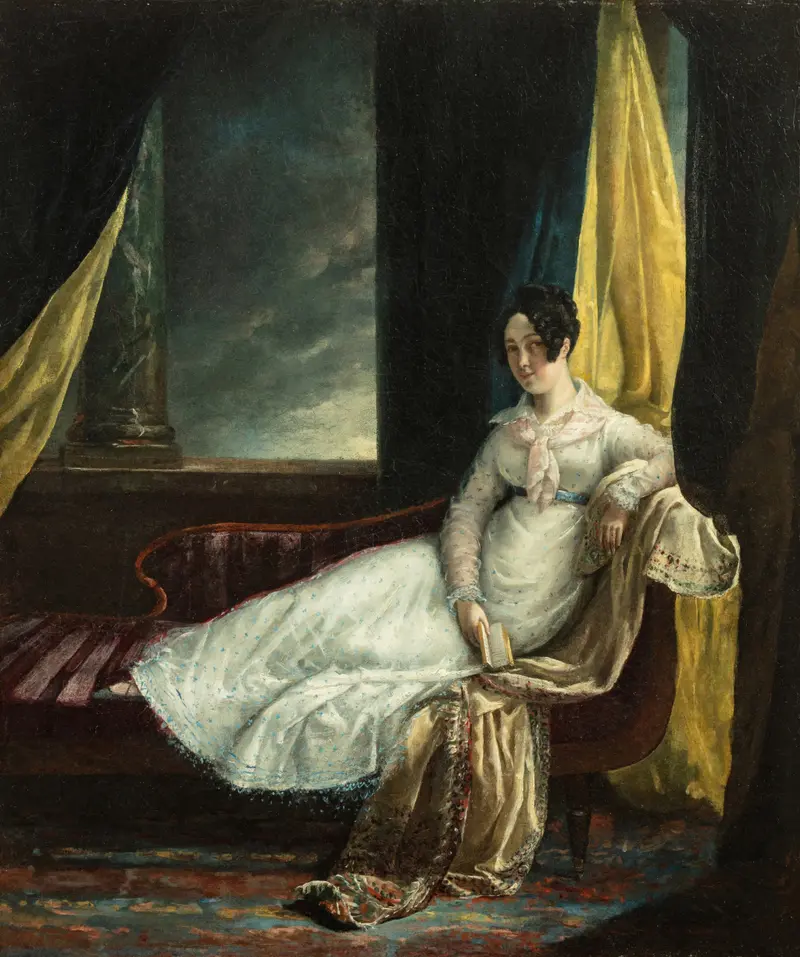
Portrait of Zoë Elmore
Théodore Géricault
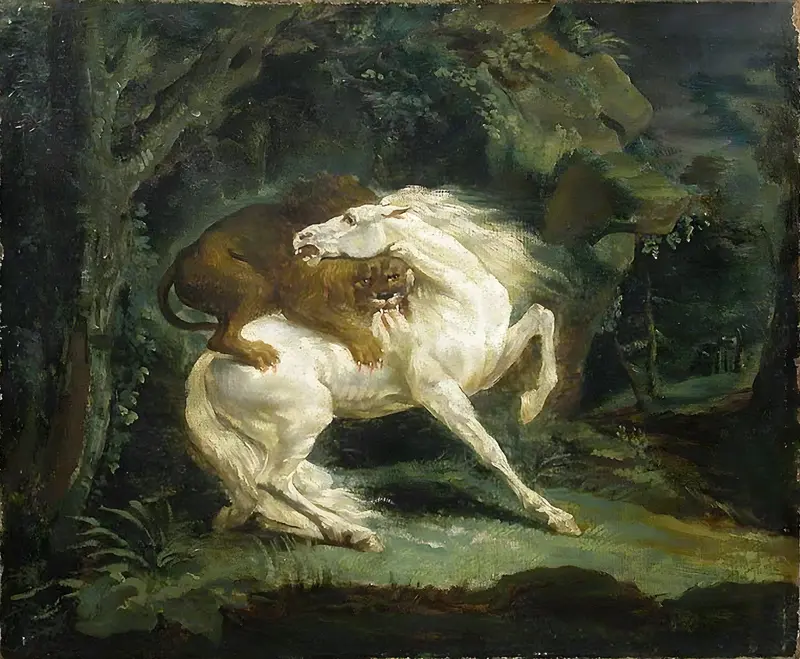
Cheval attaqué par un lion
Théodore Géricault
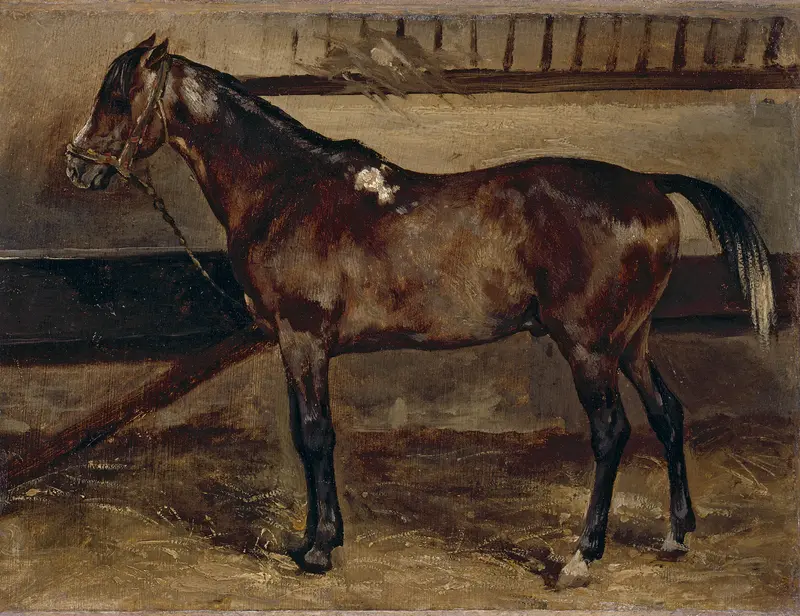
Cheval brun à l'écurie
Théodore Géricault





