
Head of Sabała — History & Facts
What first seizes the viewer in Head of Sabała is the relentless directness of the sitter’s gaze, a look that seems to weigh and measure the onlooker as much as it is itself being studied. The face emerges from a field of earthy browns, the features carved by shadow and a pale, searching light that falls across the forehead and cheekbones. Every brushstroke in the hair, rendered in a silvery tangle, draws the eye back to the intensity of the eyes and the set of the mouth—there is no distraction, no ornament, only the gravity of the figure’s presence.
The artist, Aleksander Kotsis, gives us a portrait that feels almost like a confrontation, as if the sitter is caught in the act of remembering or judging. Created in 1870, this work belongs to a period when Polish artists were turning to their own people for subjects, seeking out faces marked by hardship, experience, and the weight of history. Portraits like this were often commissioned or created as acts of cultural preservation, capturing the likenesses of notable figures or local personalities at a time when Poland’s national identity was under threat. Now held in the National Museum in Warsaw, Head of Sabała stands as a testament to both the era’s fascination with character and the artist’s ability to distill a life into a single, unforgettable expression.
The longer you look, the more the sitter’s silence seems to speak.
More Artworks by Aleksander Kotsis

Trip in the Tatra Mountains
Aleksander Kotsis

Fair in Nowy Targ
Aleksander Kotsis
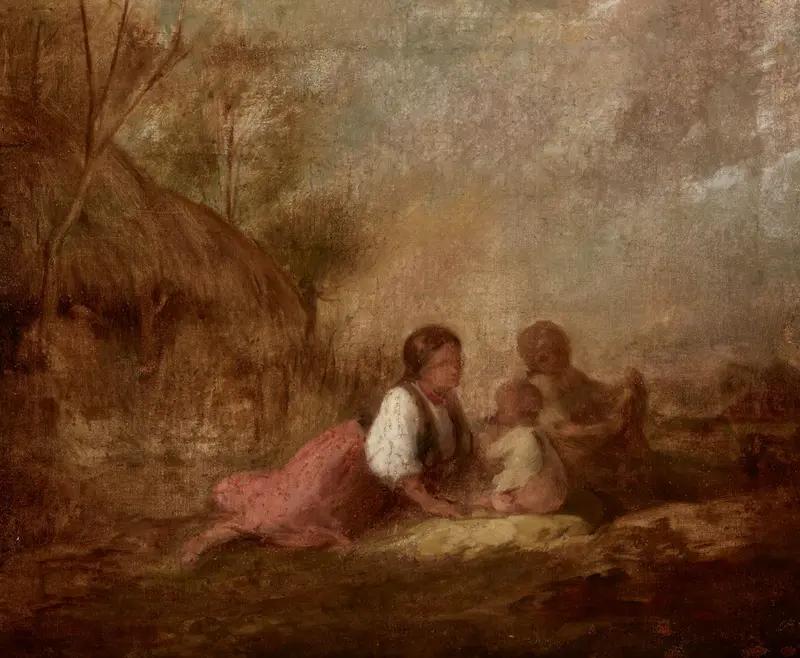
Pastoral Scene
Aleksander Kotsis
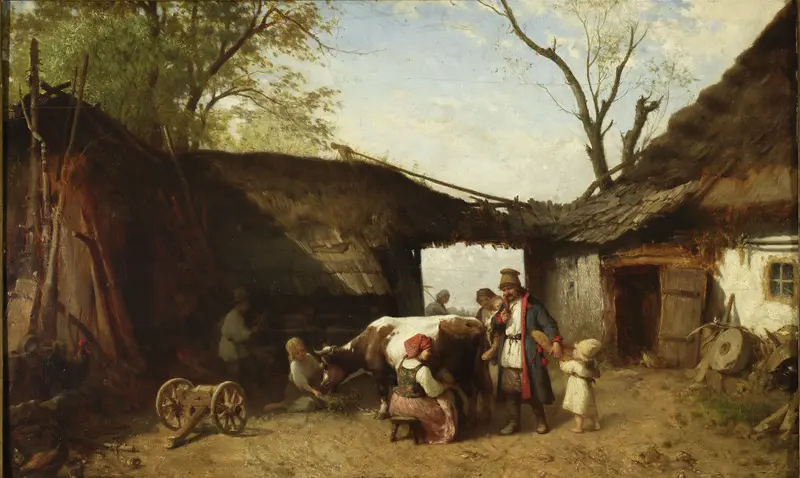
In the farmyard
Aleksander Kotsis
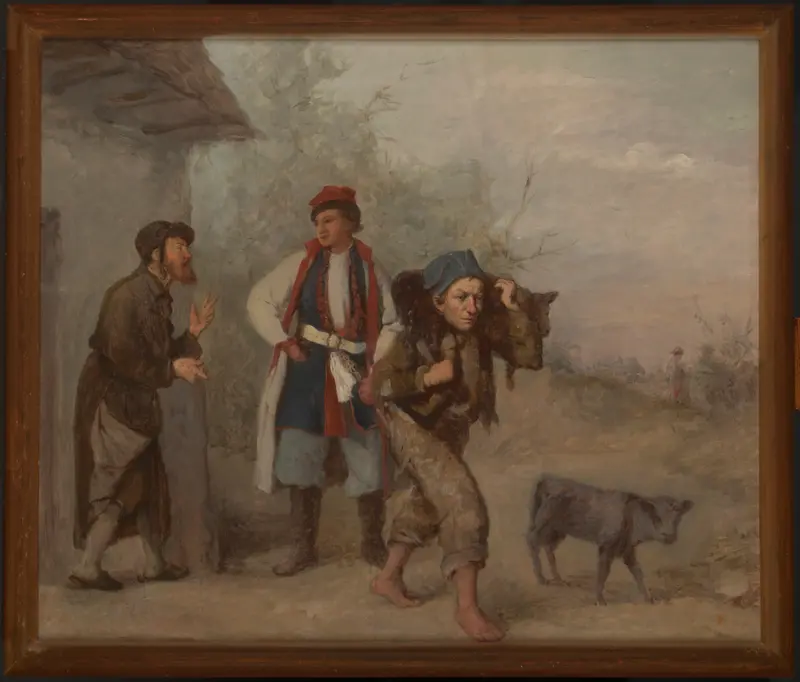
Haggling over a Calf
Aleksander Kotsis
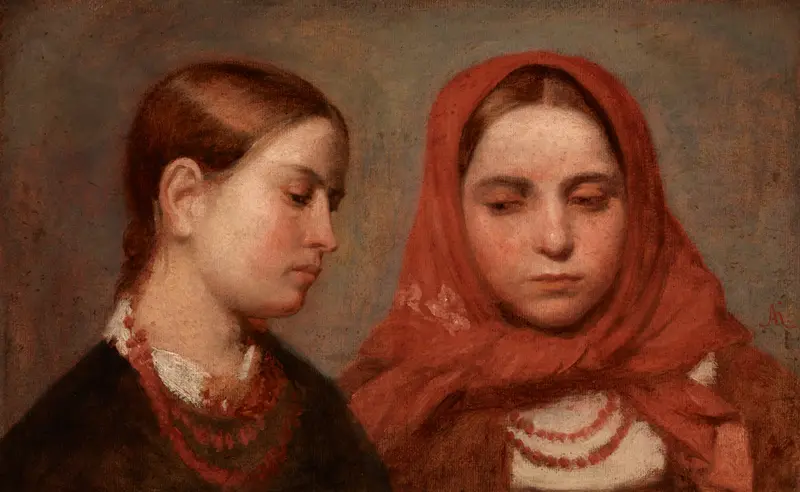
Heads of Two Young Girls
Aleksander Kotsis
Haymaker
Aleksander Kotsis
Highlander in Front of a Hut
Aleksander Kotsis
Gypsies
Aleksander Kotsis
A Highlander's Funeral
Aleksander Kotsis





