
Herd im Thomahaus zu Bernau — History & Facts
When did color learn to lie? Each stroke of paint reveals a world where fragility dances between reality and illusion, whispering secrets of the human experience. To understand the essence of Herd im Thomahaus zu Bernau, focus first on the vivid palette that saturates the canvas. The warm ochres and rich greens draw your eye to the lush landscape, where a tranquil herd grazes under an expansive sky. Notice how the light falls delicately on the animals, casting soft shadows that evoke a sense of calm yet hint at an underlying tension, as if nature itself holds its breath, poised between serenity and the inevitable passage of time. As you delve deeper, observe the juxtaposition of the stillness of the herd against the subtly stirring background.
There is a fragility to the scene; the animals seem suspended in a moment that could dissolve into chaos at any time. This contrast invites contemplation of life’s transience, a challenge to the viewer to acknowledge the beauty that exists within vulnerability. Each creature is rendered with meticulous care, and yet, the viewer senses they are part of a larger, ever-changing narrative where peace is but a fleeting illusion. Eugen Bracht painted this work in 1860 during a period marked by the Romantic movement's embrace of nature and its complexities.
Living in Germany, he was influenced by the evocative landscapes of his time, which celebrated the emotional connection between humanity and the natural world. This painting reflects a moment in his life when he sought to capture not just the beauty of the environment, but also the delicate balance of existence itself—a commentary on the fragility embedded in the very heart of life.
More Artworks by Eugen Bracht
Browse all →
Blick auf den Monte Rosa, Westseite
Eugen Bracht
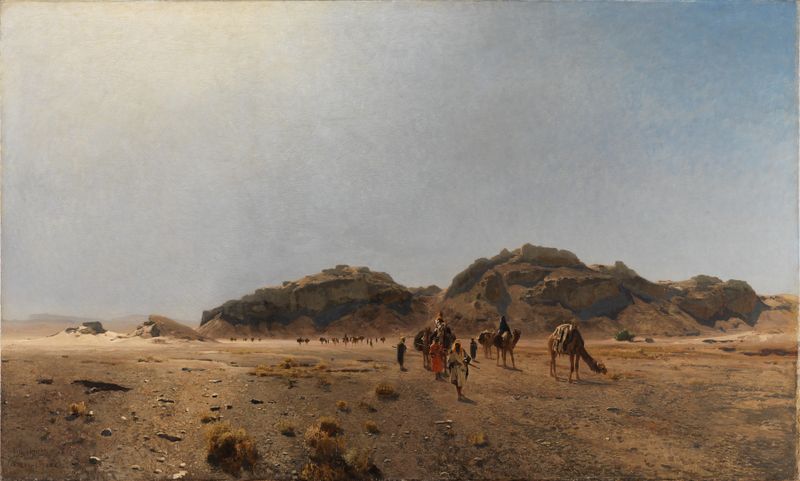
In der Wüste Araba
Eugen Bracht

‘Der alte Hof (n. d. N. Windisch-Eschenbach)’
Eugen Bracht
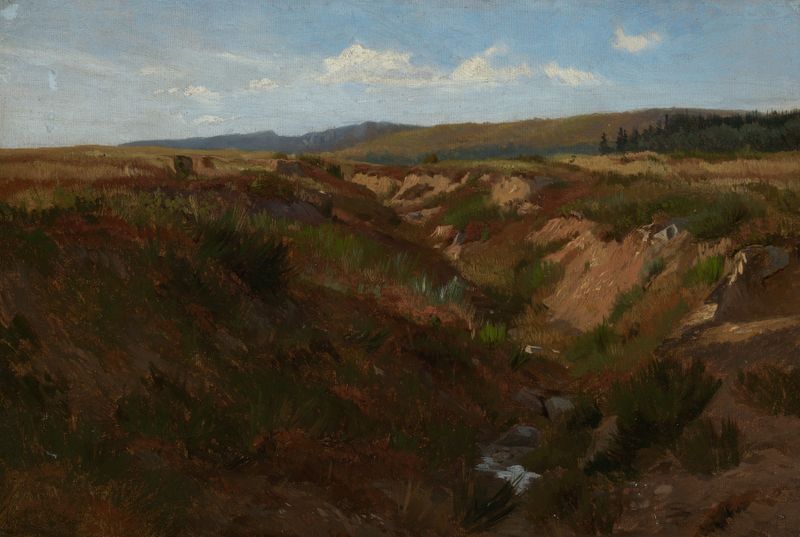
Heide im Soonwald
Eugen Bracht

Bemooste Felsen im Waldtal
Eugen Bracht
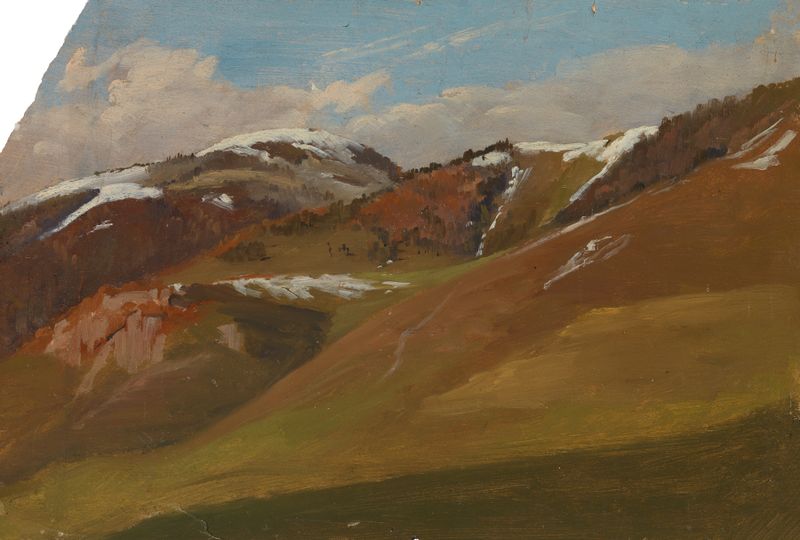
Blick auf Herzogenhorn und Kaiserberg
Eugen Bracht

Das Herzogenhorn im Neuschnee
Eugen Bracht

Abendlandschaft
Eugen Bracht

Nach dem Regenschauer
Eugen Bracht
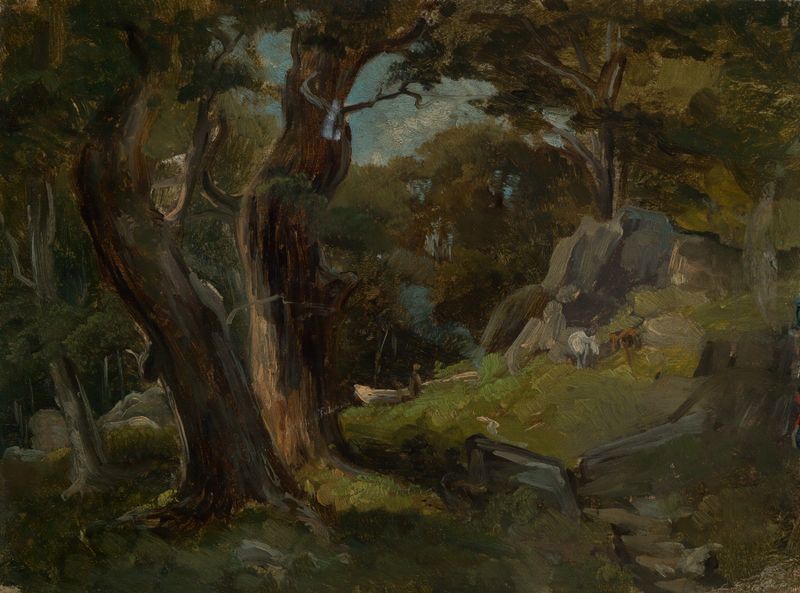
Waldlichtung mit Pferden
Eugen Bracht





