
Herderin op ezel bij een herberg — History & Facts
Can beauty exist without sorrow? In the tender interplay of light and shadow, a memory unfurls, allowing us to reflect on our own fleeting moments of joy and melancholy. Look closely at the left side of the canvas, where a young shepherdess reclines on a donkey, her serene expression radiating quiet strength. Notice how the gentle browns and muted greens create a harmonious backdrop, accentuating her vibrant attire. The play of sunlight filters through the trees, casting soft highlights that dance across her face, evoking a sense of peace amidst the bustling life of the inn behind her. As you explore further, take in the contrasting elements of solitude and community.
The shepherdess, isolated in her moment of contemplation, becomes a poignant symbol of the balance between connection and introspection. The inn, bustling with activity, stands in stark contrast to her stillness, suggesting the often hidden layers of human experience — that beneath the surface cheer of social life, there is a deeper narrative of longing and memory. Painted between 1652 and 1655, this work emerged during a period of great artistic experimentation in the Netherlands. Nicolaes Pietersz Berchem, known for his idyllic landscapes and pastoral scenes, was influenced by the rise of genre painting, where everyday moments were celebrated.
As the art world transitioned through styles, this piece captures a serene narrative, reflecting both personal and collective memories against the backdrop of changing social dynamics.
More Artworks by Nicolaes Pietersz Berchem
Browse all →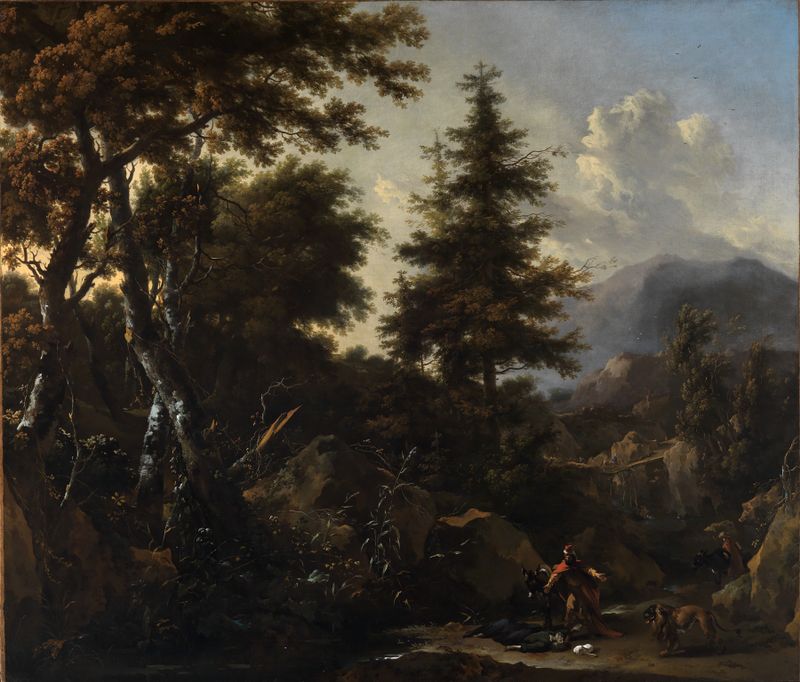
Schlucht im Bergwald mit alttestamentlicher Staffage
Nicolaes Pietersz Berchem
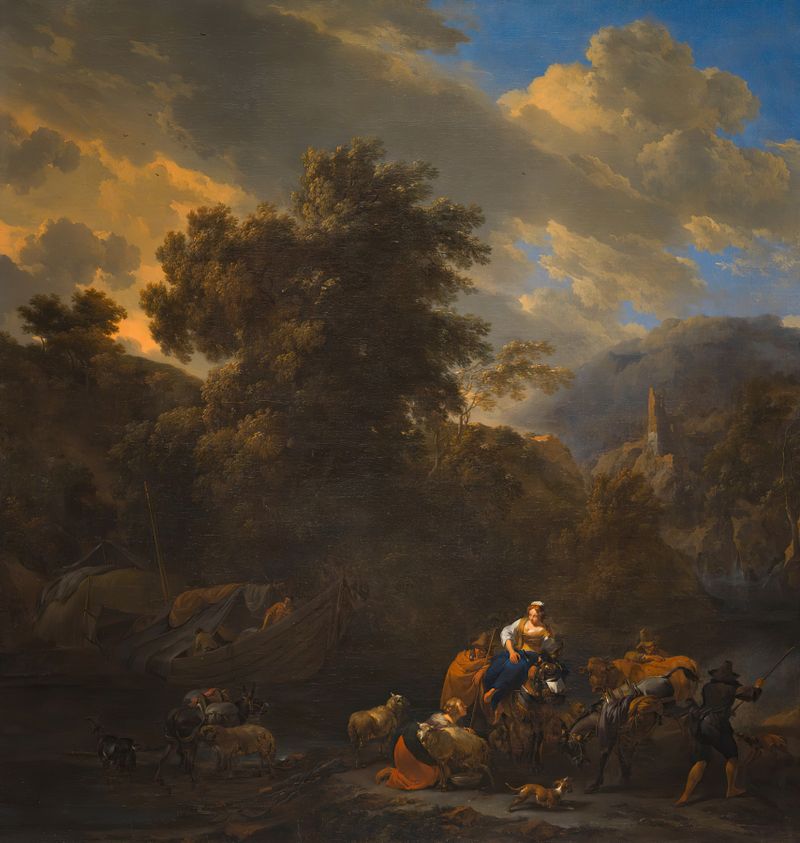
Italianate Landscape with Figures and Pack Animals on the Banks of a River
Nicolaes Pietersz Berchem
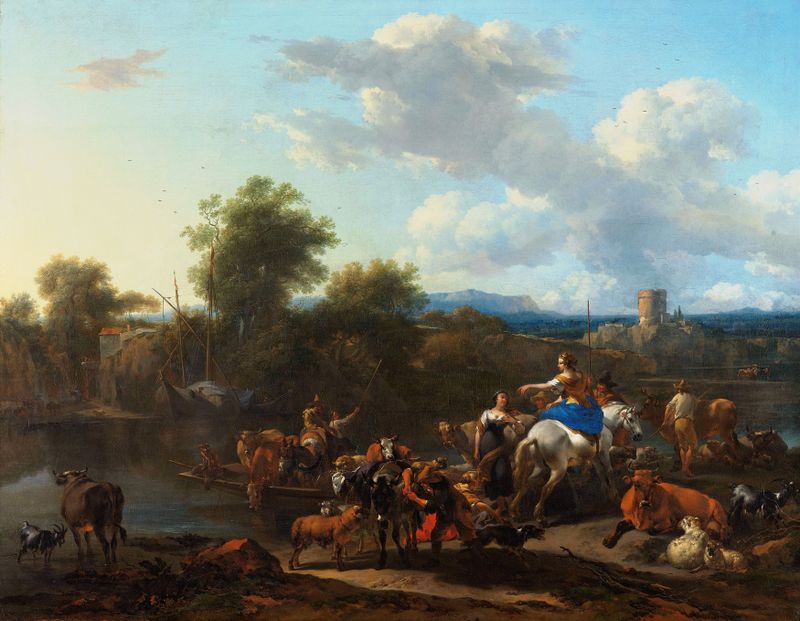
The Cattle Ferry
Nicolaes Pietersz Berchem
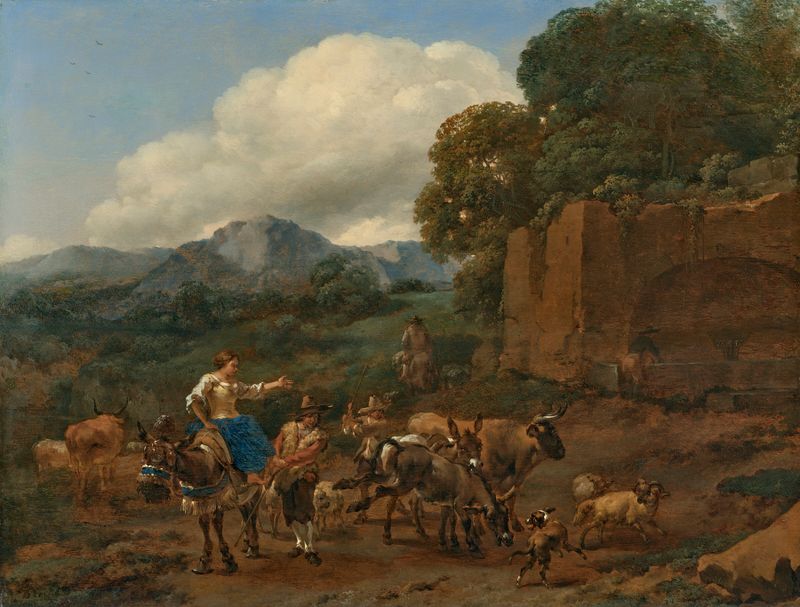
An Italianate landscape with a shepherdess on a mule and a shepherd, herding cattle, sheep, donkeys and dogs on a mountain track next to ruins
Nicolaes Pietersz Berchem
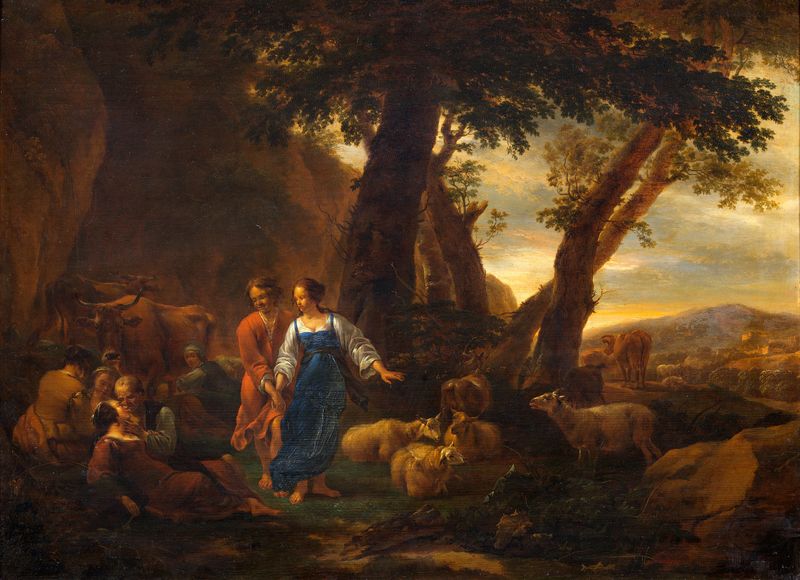
Landscape with Peasants and Cattle
Nicolaes Pietersz Berchem
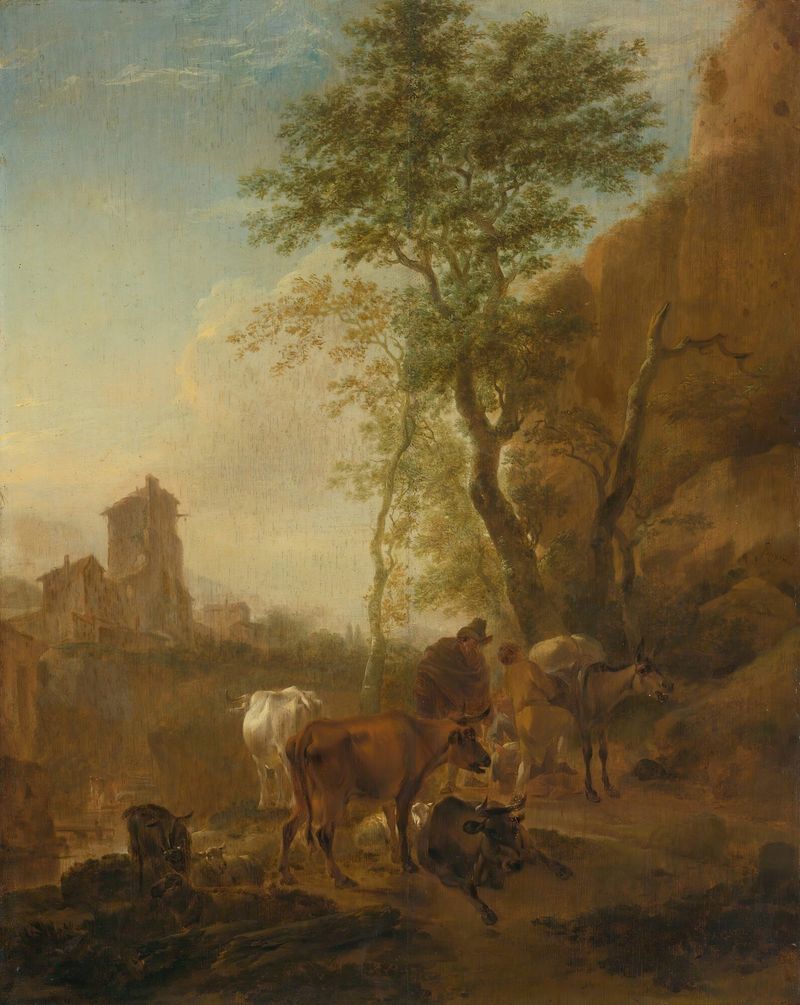
Italianate Landscape With Cows
Nicolaes Pietersz Berchem
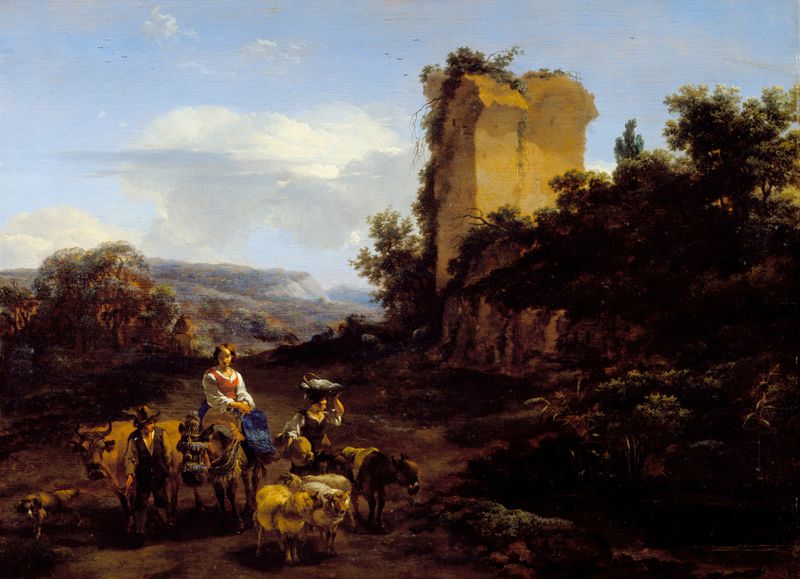
Landscape with Ruins and Travelers
Nicolaes Pietersz Berchem
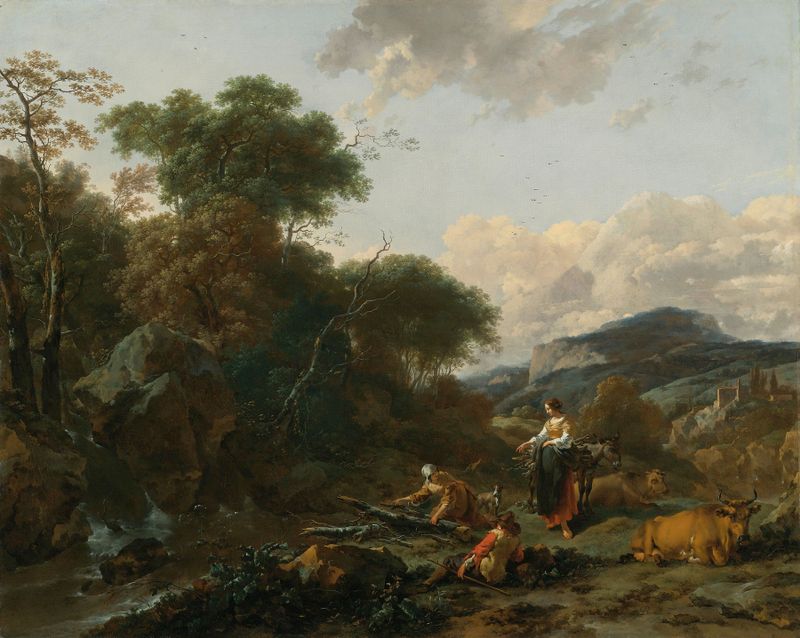
A Landscape With Figures
Nicolaes Pietersz Berchem
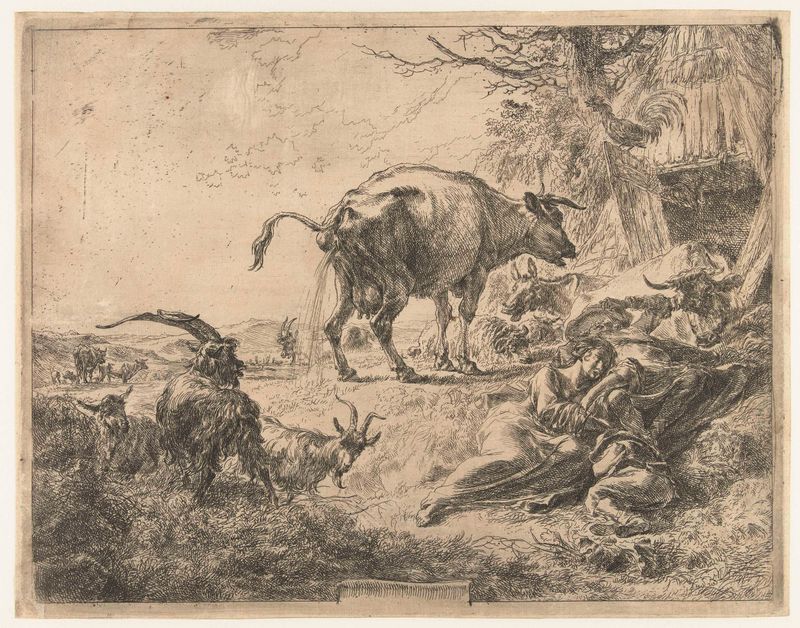
Slapende herdersfamilie en rustend vee
Nicolaes Pietersz Berchem
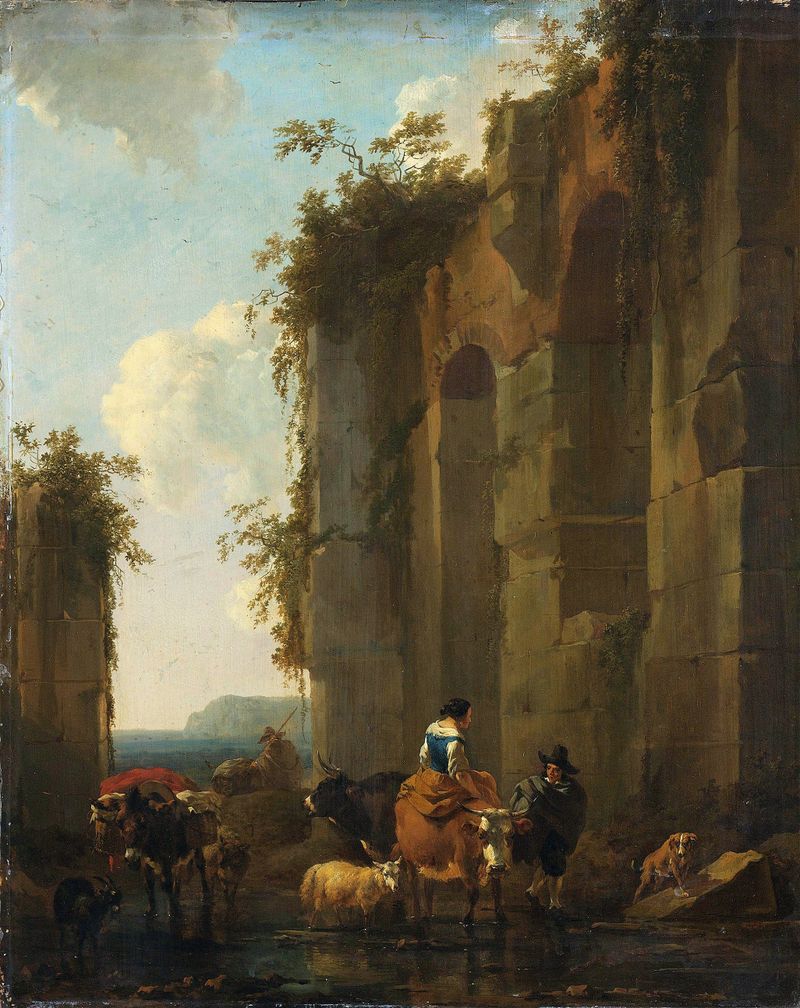
Ruins in Italy
Nicolaes Pietersz Berchem





