
Herderin op ezel en herder op paard steken beek over — History & Facts
Could a single brushstroke hold eternity? In Herderin op ezel en herder op paard steken beek over, the essence of pastoral life unfolds, a moment captured in serene ecstasy, where nature and humanity intertwine. Look to the left at the figure of the woman perched gracefully on her donkey, her posture relaxed yet dignified. The soft hues of her dress harmonize with the earth tones of the surrounding landscape, creating a sense of balance. Notice how the sunlight bathes the scene, illuminating the figures and casting gentle reflections in the shimmering stream, suggesting a world alive with fleeting beauty.
The composition leads the eye along the winding path, inviting you to engage with the journey ahead. Delve deeper into the work, and you notice the contrasts that Berchem employs. The tranquil expressions of both herder and maiden suggest a deep, unspoken connection to their surroundings, yet the flowing water symbolizes the passage of time—an eternal moment captured amid the ever-changing cycle of life. The juxtaposition of the figures’ calm and the vibrant life of nature hints at a harmony that can only be found in simplicity, revealing a profound sense of fulfillment. In 1655, Berchem painted this idyllic scene during a time when the arts flourished in the Dutch Golden Age.
Influenced by the pastoral genres and his travels through Italy, he sought to explore the relationship between man and nature, often focusing on the rural lifestyle. Amidst a period of socio-political change, his work serves as a reminder of the peace and joy found in pastoral life, mirroring the longing for simplicity that resonates through the ages.
More Artworks by Nicolaes Pietersz Berchem
Browse all →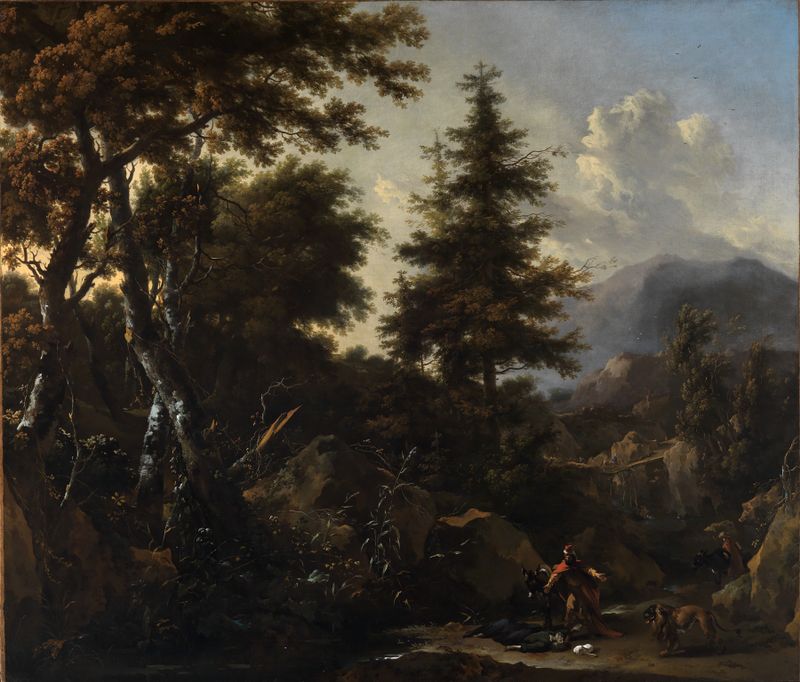
Schlucht im Bergwald mit alttestamentlicher Staffage
Nicolaes Pietersz Berchem
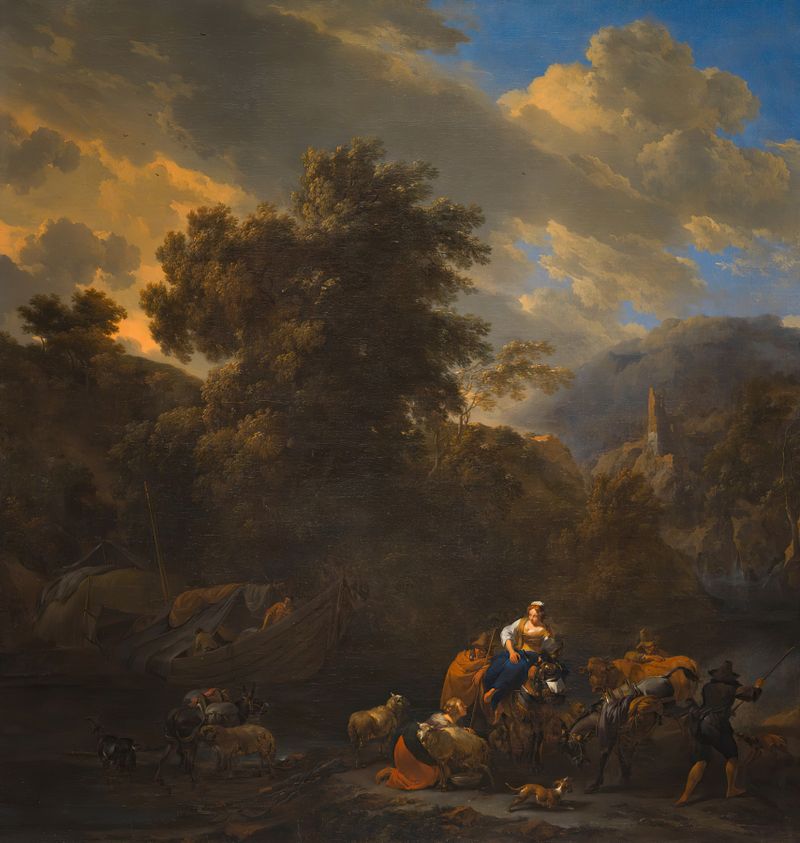
Italianate Landscape with Figures and Pack Animals on the Banks of a River
Nicolaes Pietersz Berchem
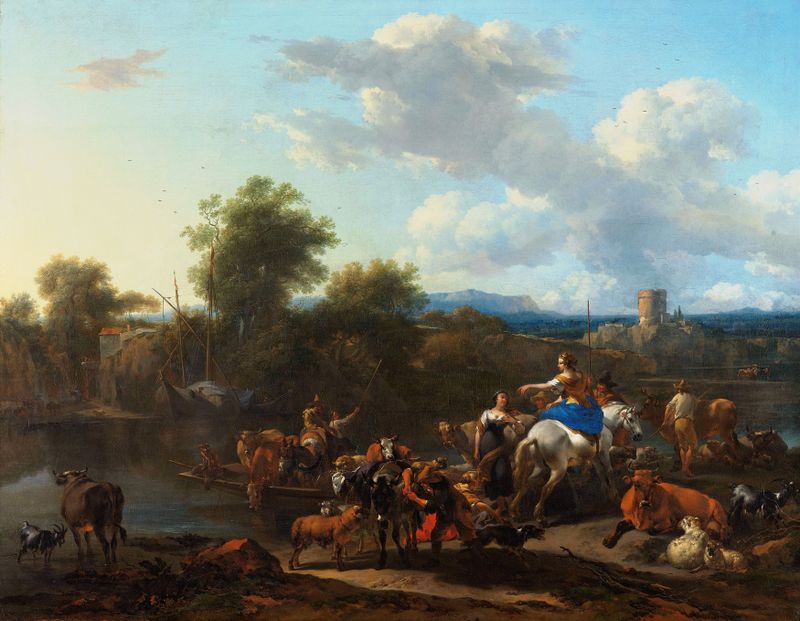
The Cattle Ferry
Nicolaes Pietersz Berchem
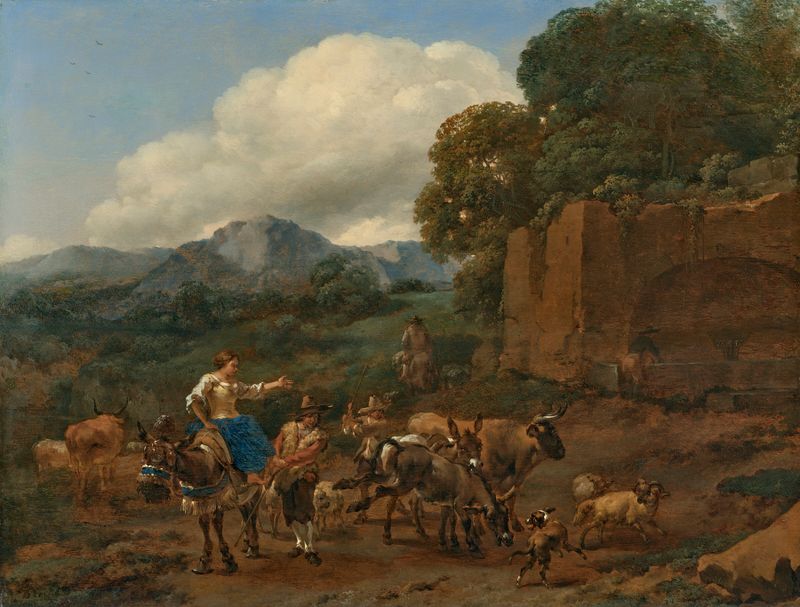
An Italianate landscape with a shepherdess on a mule and a shepherd, herding cattle, sheep, donkeys and dogs on a mountain track next to ruins
Nicolaes Pietersz Berchem
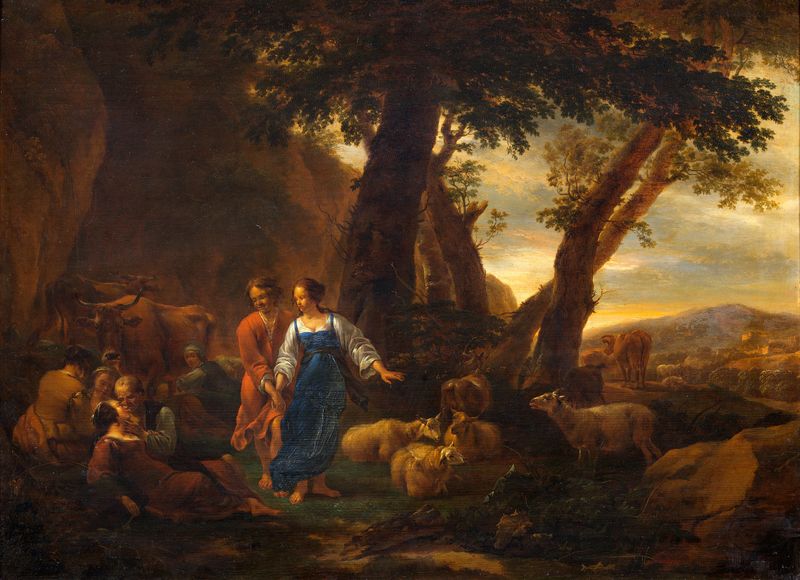
Landscape with Peasants and Cattle
Nicolaes Pietersz Berchem
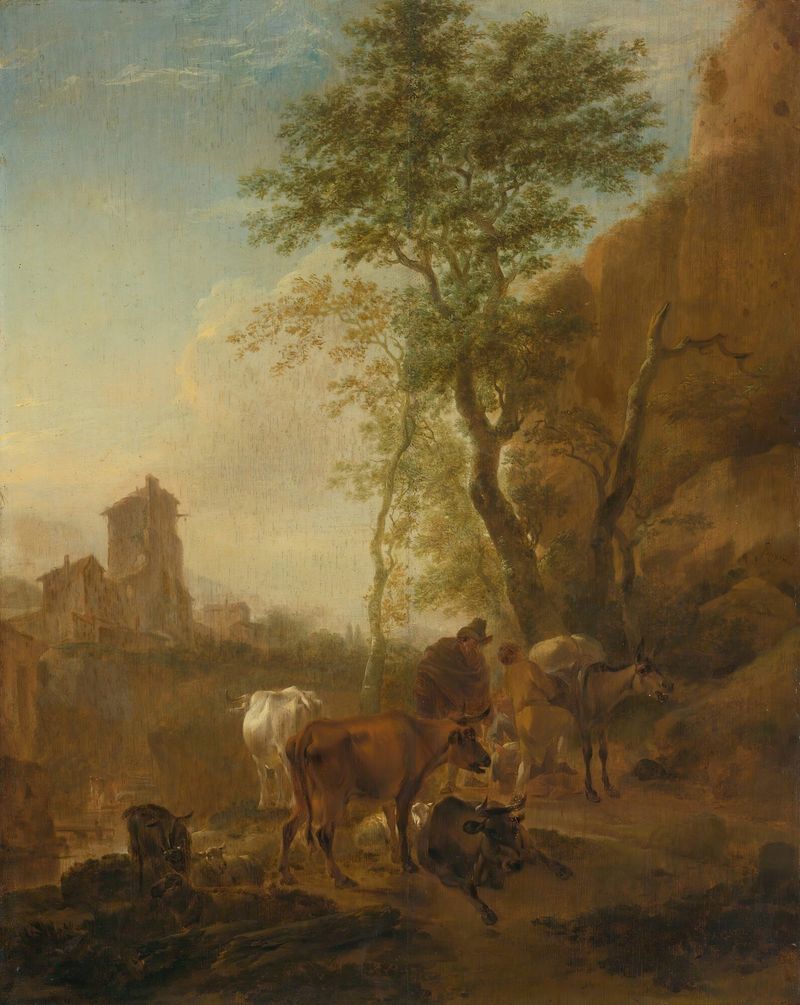
Italianate Landscape With Cows
Nicolaes Pietersz Berchem
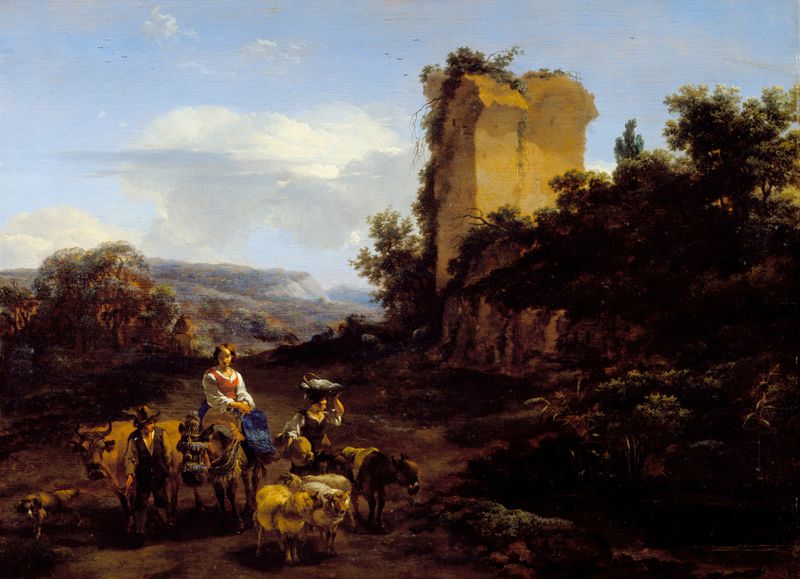
Landscape with Ruins and Travelers
Nicolaes Pietersz Berchem
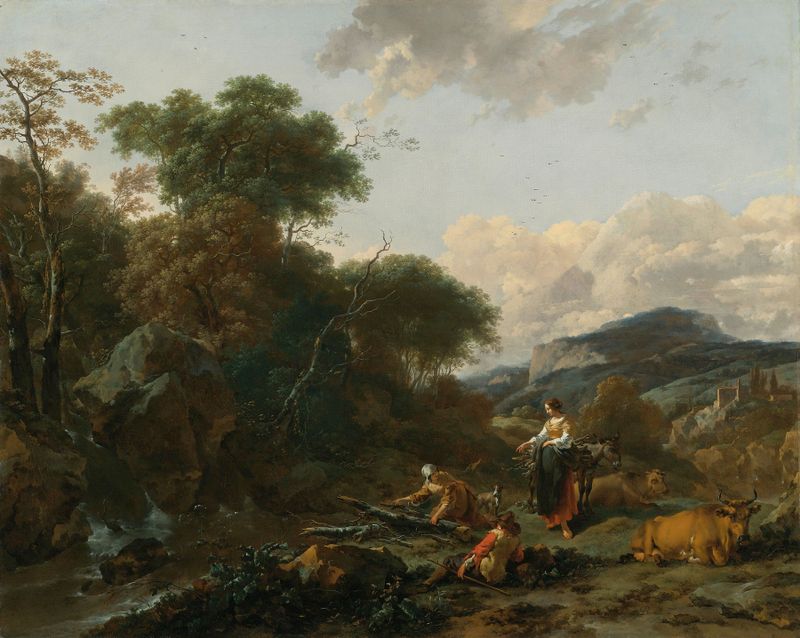
A Landscape With Figures
Nicolaes Pietersz Berchem
Slapende herdersfamilie en rustend vee
Nicolaes Pietersz Berchem
Ruins in Italy
Nicolaes Pietersz Berchem





