
Herdsmen Tending Cattle — History & Facts
What first draws the eye in Herdsmen Tending Cattle is not the cattle, but the drama of light and gesture: a herdsman in a striking red coat, arm outstretched, commands both animals and scene. His gesture is not just practical—it becomes a kind of conductor’s baton, guiding the slow choreography of the herd as the sun breaks through a tumult of clouds. The animals cluster around him, their bodies catching the golden light, each hide rendered with a different warmth or coolness, while the distant landscape and river shimmer in the morning haze.
The sky, vast and alive, seems to echo the herdsman’s movement, its clouds swirling above the calm below. This is a world where daily life and grandeur meet. The herdsmen, with their staffs and wide-brimmed hats, are not mere laborers but quiet protagonists in a pastoral drama. The low vantage point gives the cattle a monumental presence, while the river and castle on the horizon hint at a wider world beyond the pasture.
The careful play of shadow and sunlight, the way the animals’ bodies overlap and lead the eye across the canvas, all speak to the painter’s delight in the ordinary made extraordinary. The palette is earthy but luminous, setting a mood of calm anticipation—nature and work in perfect balance. Painted between 1655 and 1660, this work belongs to the Dutch Golden Age, when scenes of rural life were in high demand among urban collectors who longed for a vision of the countryside’s peace and prosperity. Artists like Aelbert Cuyp became celebrated for such landscapes, blending observation with idealization, and often inventing settings that were more poetic than real.
Today, Herdsmen Tending Cattle resides in the National Gallery of Art, a testament to the enduring fascination with a world where the everyday is bathed in the light of possibility. Let your gaze wander from the herdsman’s red sleeve to the distant towers, and imagine the slow passage of time on that sunlit hill.
More Artworks by Aelbert Cuyp

The Maas at Dordrecht
Aelbert Cuyp
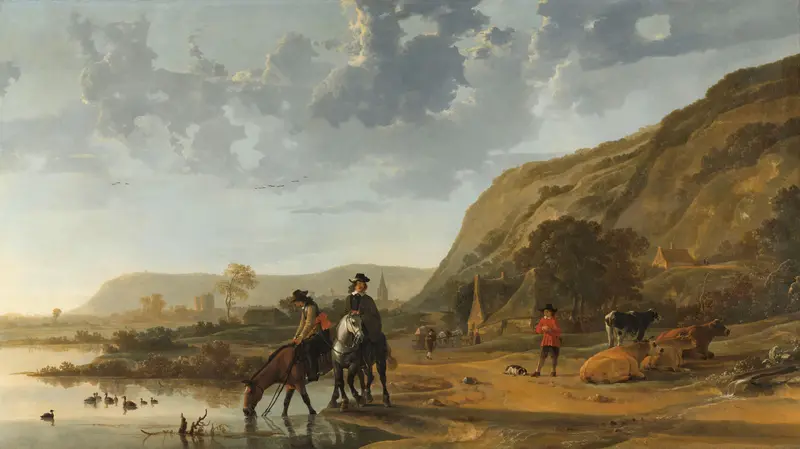
River Landscape with Riders
Aelbert Cuyp

The Maas at Dordrecht
Aelbert Cuyp
Gezicht op Dordrecht
Aelbert Cuyp
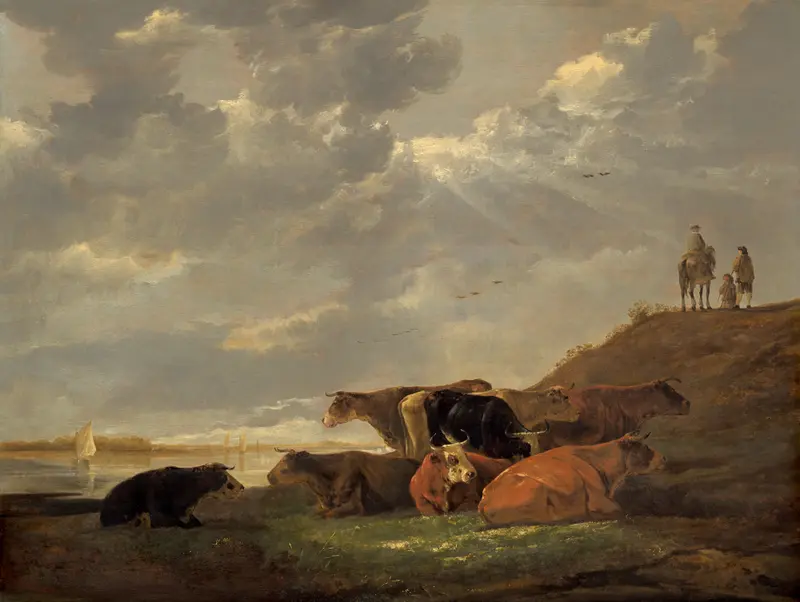
River Landscape with Cows
Aelbert Cuyp
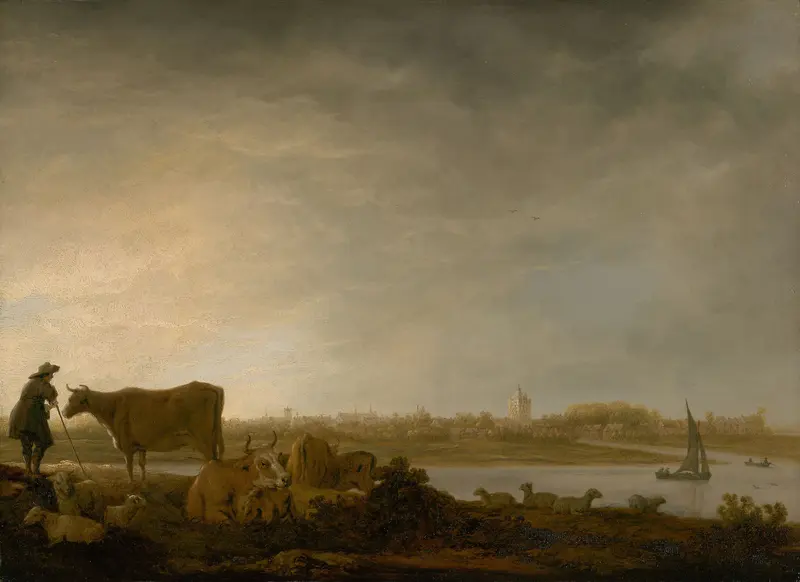
A View of Vianen with a Herdsman and Cattle by a River
Aelbert Cuyp
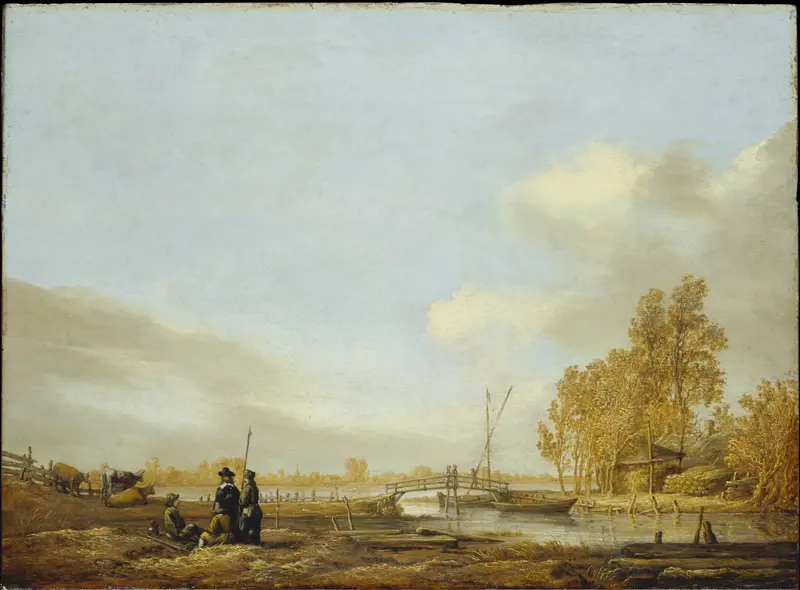
River Landscape with Footbridge
Aelbert Cuyp
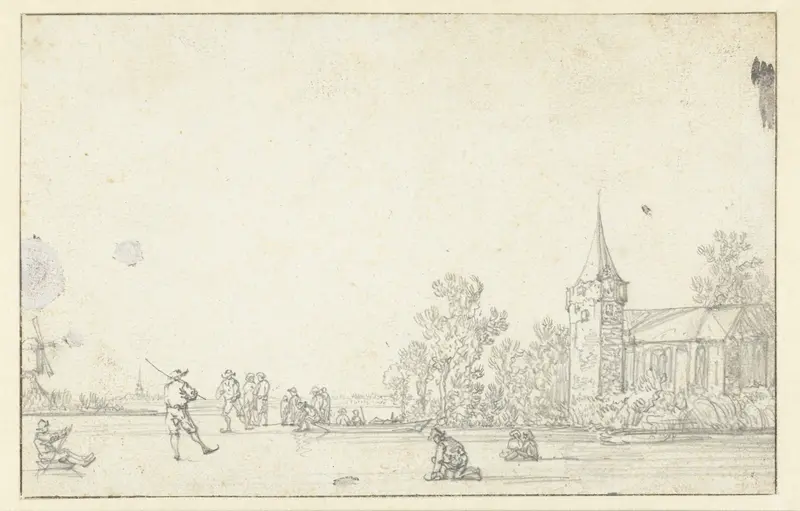
Bevroren rivier met schaatsers bij een kerk
Aelbert Cuyp

Cattle near a River
Aelbert Cuyp
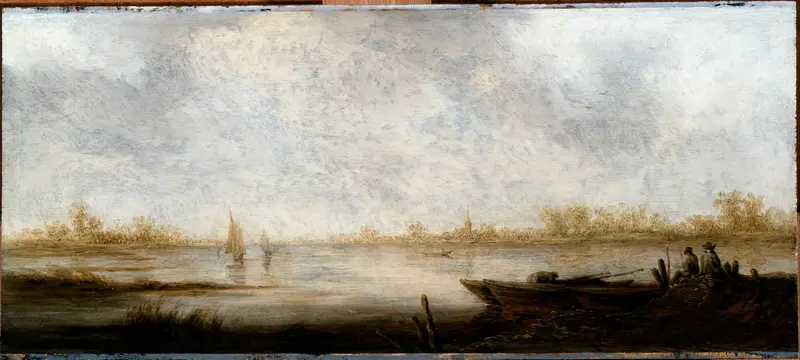
River Landscape
Aelbert Cuyp
More Landscape Art

The Starry Night
Vincent van Gogh

View of Delft
Johannes Vermeer

Water Lilies
Claude Monet

The Grand Canal, Venice, looking north-west from the Ca' Corner to the Ca' Contarini degli Scrigni, with the campanile of Santa Maria della Carità
Canaletto

Windsor Castle
Canaletto

The Grand Canal looking North-East from the Palazzo Dolfin-Manin to the Rialto Bridge
Canaletto