
Hirt und Herde in einer Berghöhle mit antikem Mauerwerk — History & Facts
When did color learn to lie? In Hirt und Herde in einer Berghöhle mit antikem Mauerwerk, a quiet chaos unfolds within the stone embrace of a mountain. Here, a shepherd tends to his flock, yet the tranquil scene holds an undercurrent of tension, as if nature itself whispers secrets amidst the rugged walls. Look to the left where the shepherd, cloaked in earthy tones, stands as a sentinel against the imposing rock formations. Notice how the warm sunlight filters through the crevices, casting a golden glow on the sheep, illuminating their wool with an almost surreal brightness.
The juxtaposition of the cool grays of the stone walls and the vibrant colors of the flock creates a striking contrast, inviting the viewer to consider the harmony and discord present in both nature and humanity. The shepherd's gaze is turned inward, lost in contemplation, while the sheep appear blissfully unaware of the timeless struggle between man and nature. This scene captures more than pastoral life; it hints at an underlying chaos, a reminder of the fragility of peace amid looming threats. The intricate detailing of the ancient masonry suggests a history that speaks of both resilience and decay, evoking thoughts on the passage of time and the cyclical nature of existence. Johann Heinrich Roos painted this work around 1670, during his time in Germany, when the Baroque movement was flourishing.
As an artist known for his landscapes and animal scenes, Roos sought to capture the beauty and complexity of rural life. At this time, Europe was transitioning through social and political upheaval, and his art reflects a yearning for solace, encapsulating the tension between the serenity of nature and the chaos of human experience.
More Artworks by Johann Heinrich Roos
Browse all →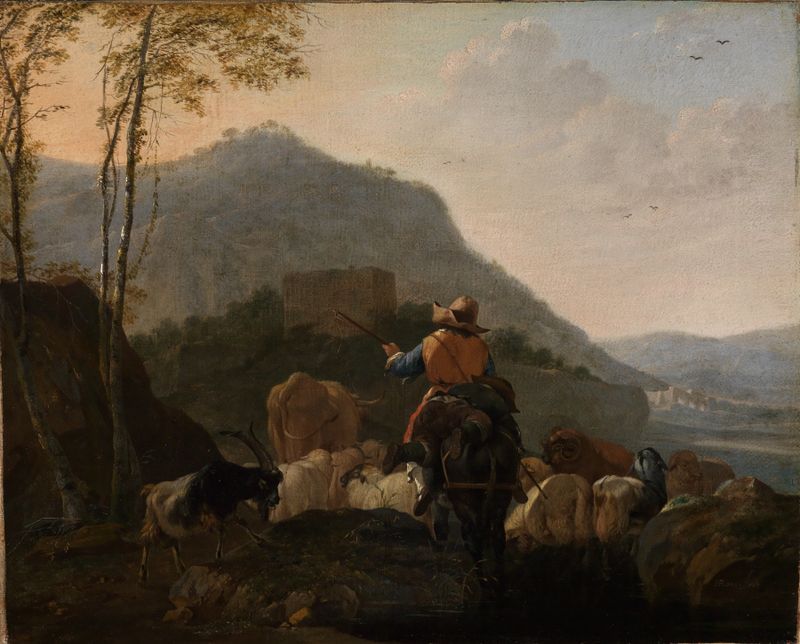
Ausziehende Hirten mit ihrer Herde in südlicher Berglandschaft
Johann Heinrich Roos
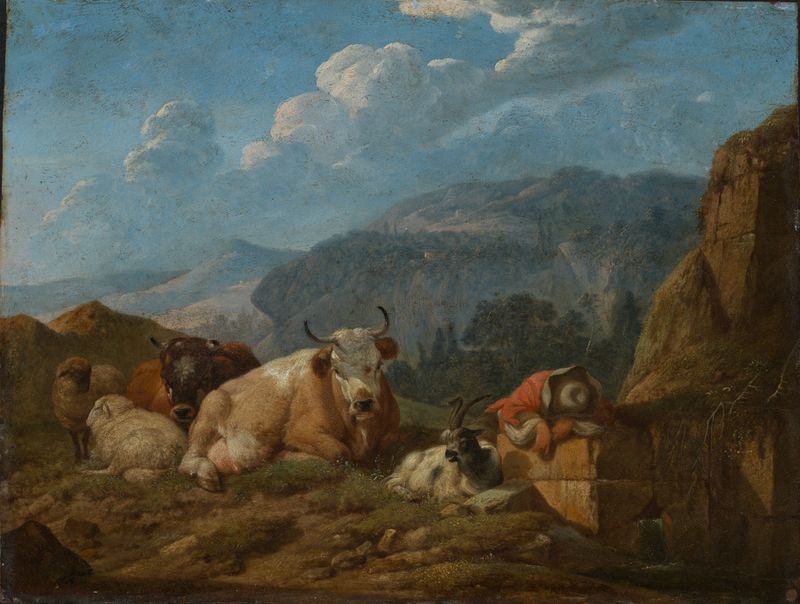
Italienische Berglandschaft
Johann Heinrich Roos
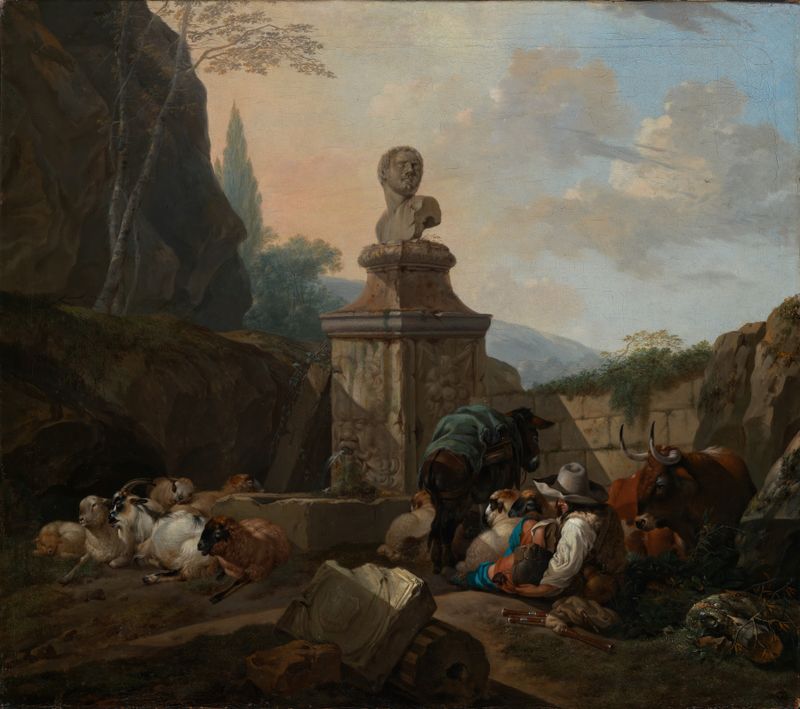
Ruhender Hirt und Herde an römischem Brunnen
Johann Heinrich Roos
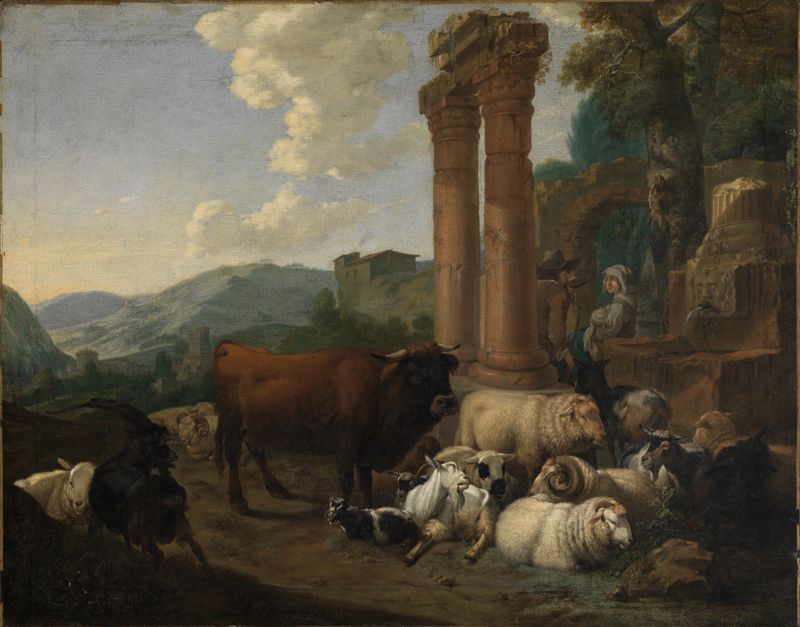
Hirtenszene in römischer Ruinenlandschaft
Johann Heinrich Roos
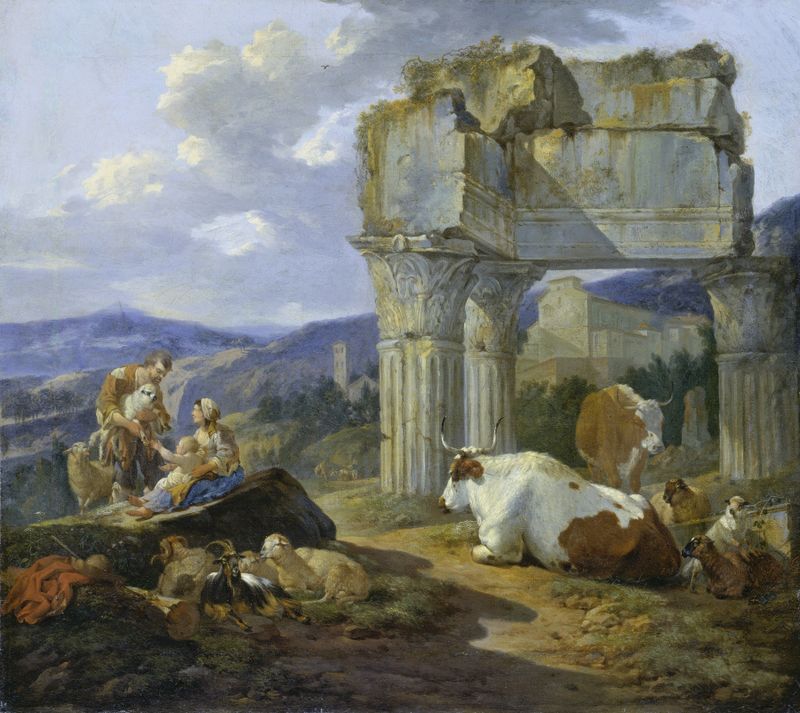
Shepherd’s Family at the Ruins of the Temple of Vespasian
Johann Heinrich Roos
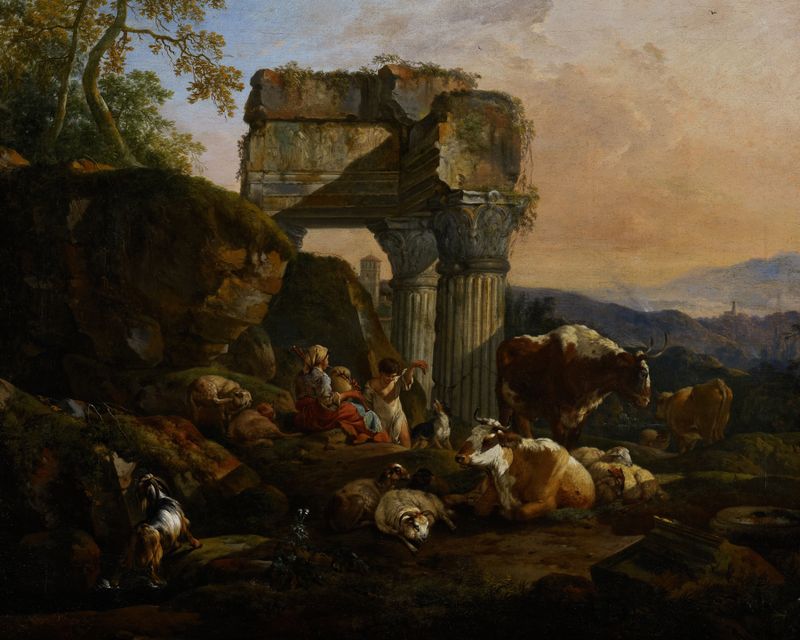
Roman Landscape with Cattle and Shepherds
Johann Heinrich Roos
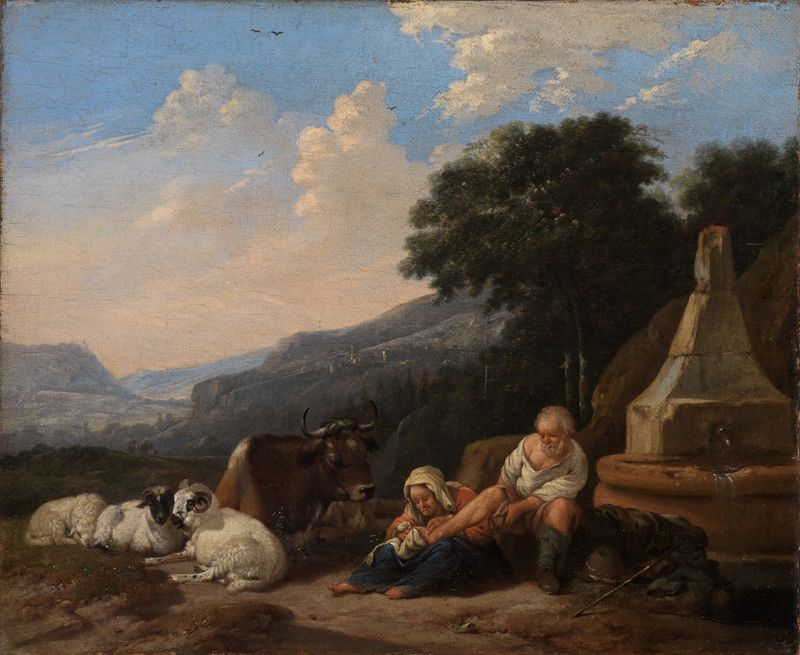
Berglandschaft mit Hirten am Brunnen
Johann Heinrich Roos
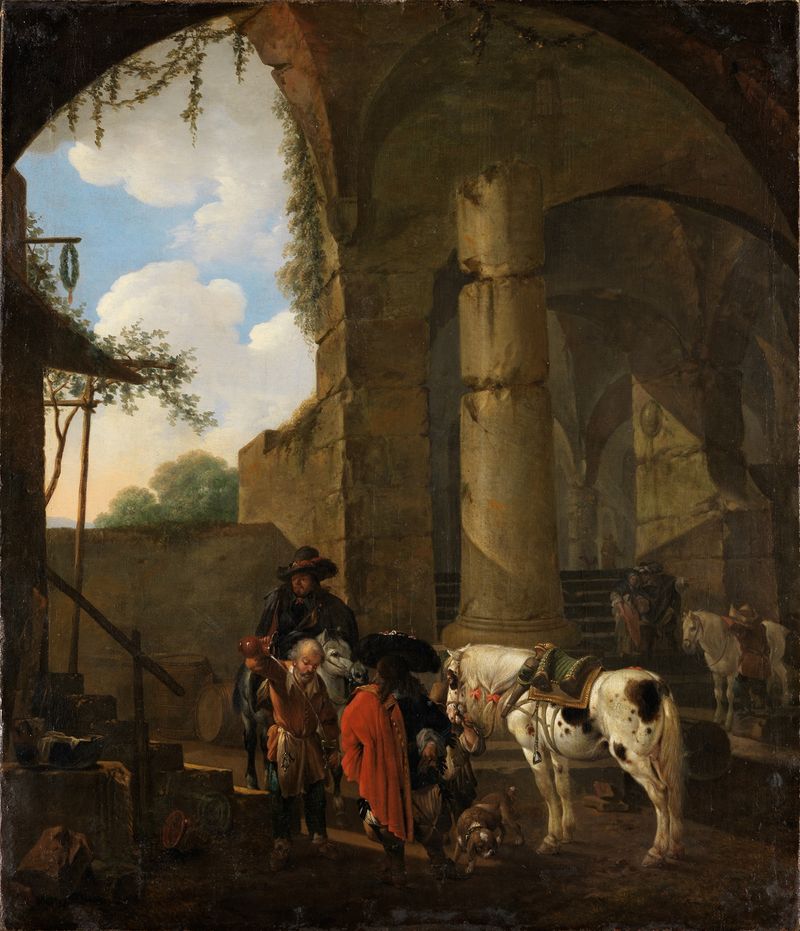
Osteria in römischer Ruine
Johann Heinrich Roos
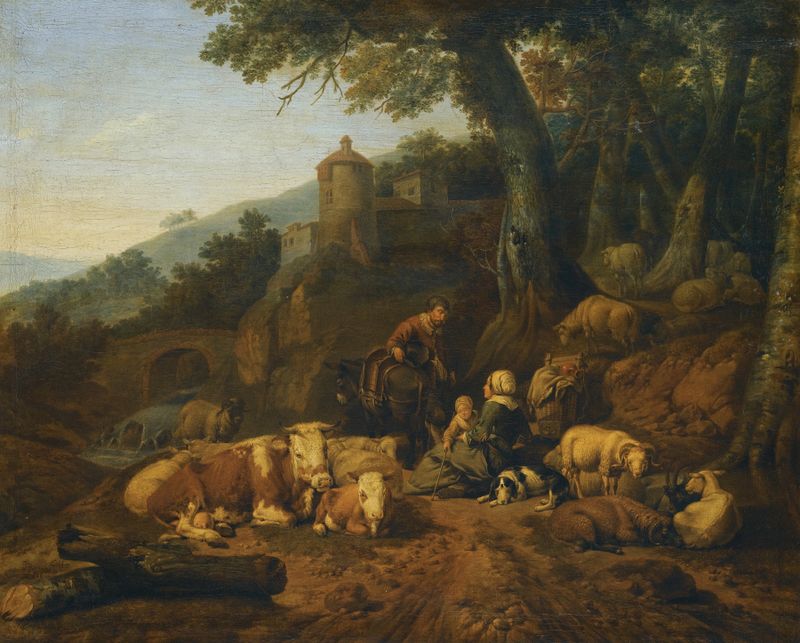
A Landscape With Drovers And Their Flock At Rest
Johann Heinrich Roos
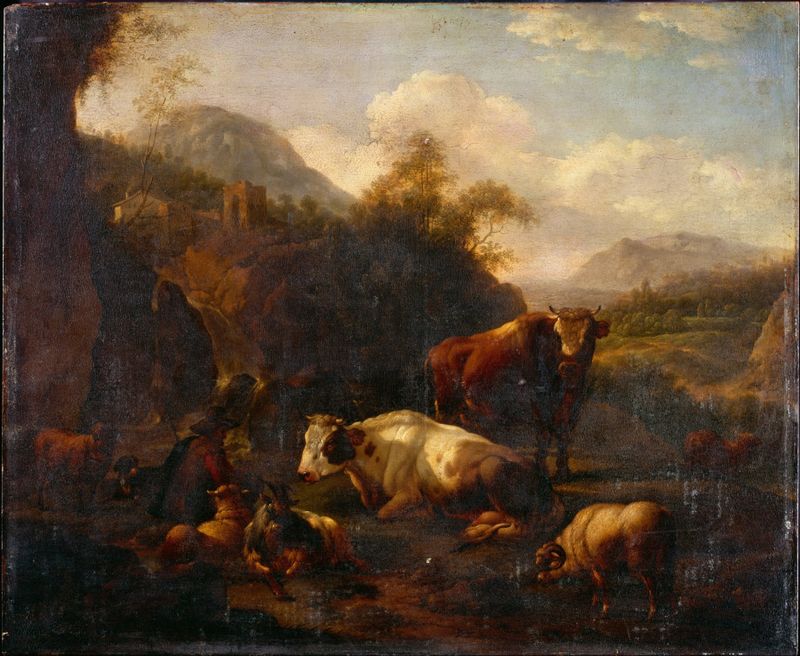
Landscape
Johann Heinrich Roos





