
Hirtenfamilie mit lagernder Herde in südlicher Landschaft — History & Facts
When did color learn to lie? The vibrant hues of nature can deceive, whispering promises of tranquility while concealing underlying fears. Focus on the harmonious blend of greens and golds in the landscape, where the sun casts a warm glow over the pastoral scene. Notice how the figures of the shepherd family coexist with their herd, tightly bound yet distant, their postures suggesting both ease and unease. The careful placement of the figures, with the child peeking from behind a rock, creates an intriguing tension, inviting the viewer to ponder their thoughts and emotions. Beneath the serene surface lies a deeper narrative—an unspoken fear of the unpredictability of nature.
The gentle curves of the landscape juxtapose with the sharp angles of the animals, hinting at a struggle between coexistence and survival. The soft light highlights the family’s expressions, revealing a delicate balance between hope and vulnerability, as they navigate their lives in an uncertain world. Johann Heinrich Roos painted this piece around 1672, during a time when he was establishing himself as a prominent landscape artist in Germany. The Baroque era was marked by a heightened appreciation for nature and its dramatic representations, yet the artist's work often explored the complexities of rural life.
As he captured the pastoral scene, Roos was also responding to the societal dynamics of his time, where idyllic landscapes served as both refuge and reminder of the fragility of existence.
More Artworks by Johann Heinrich Roos
Browse all →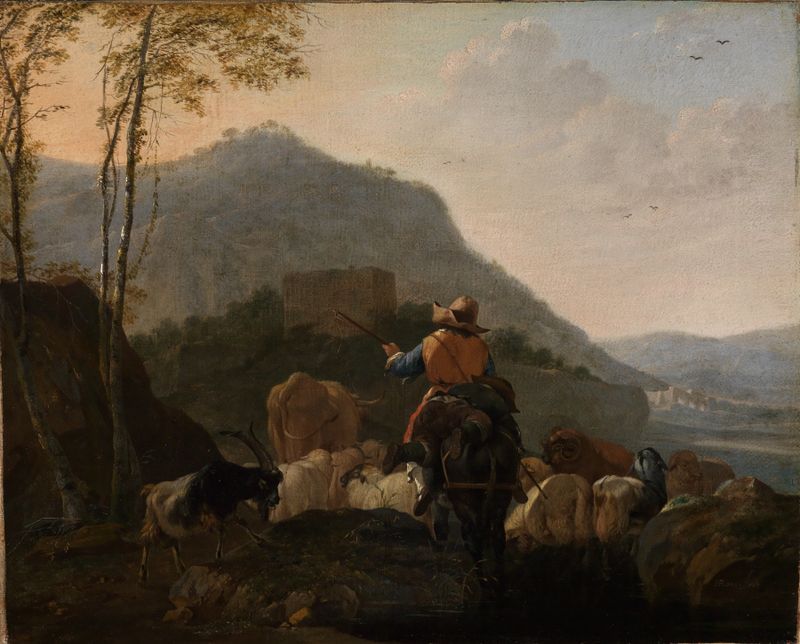
Ausziehende Hirten mit ihrer Herde in südlicher Berglandschaft
Johann Heinrich Roos
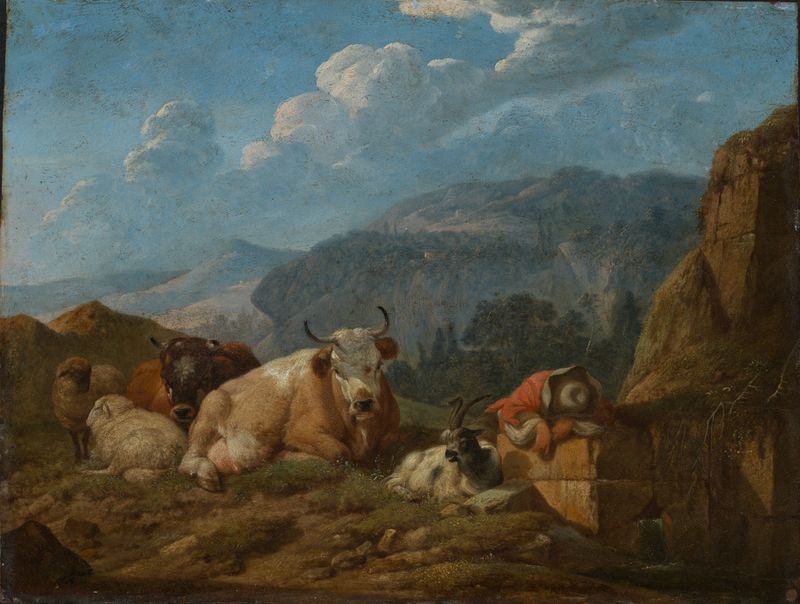
Italienische Berglandschaft
Johann Heinrich Roos
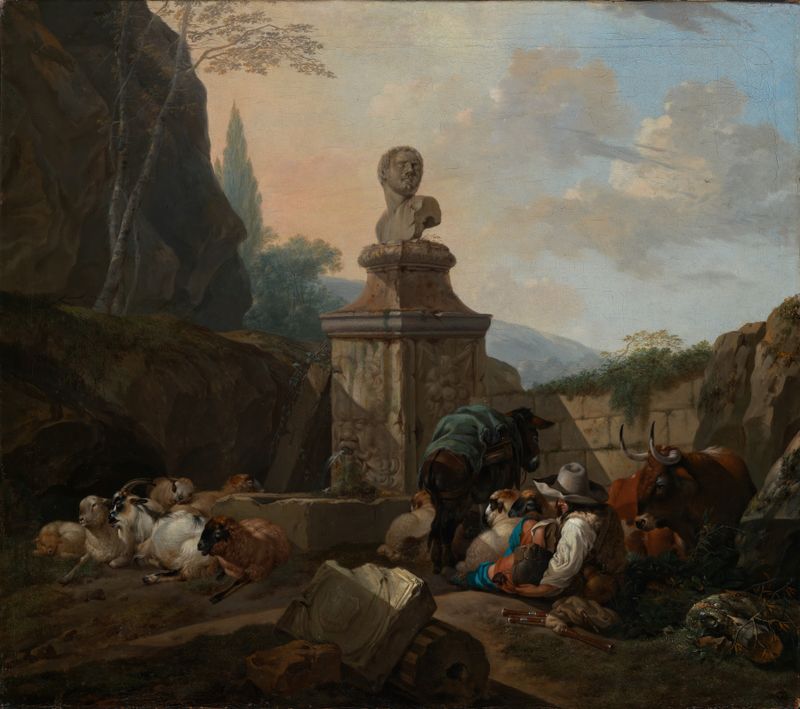
Ruhender Hirt und Herde an römischem Brunnen
Johann Heinrich Roos
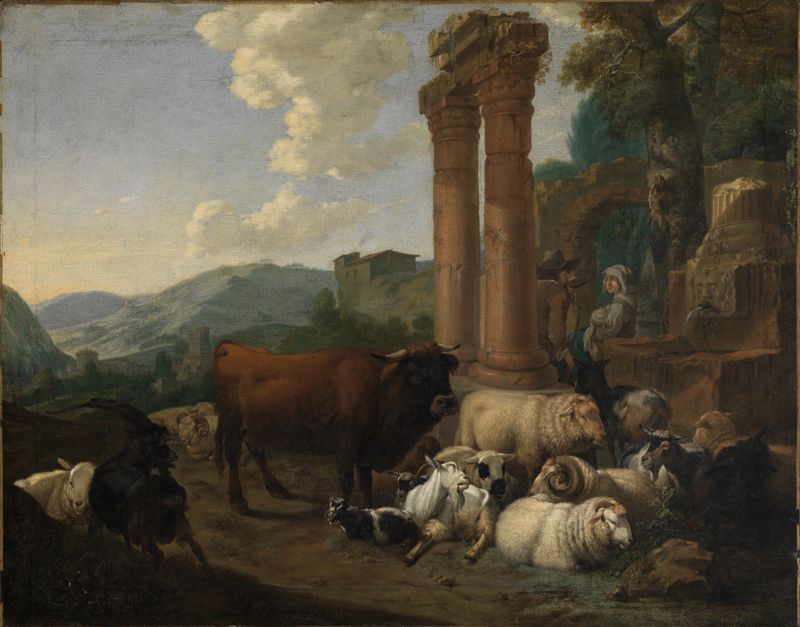
Hirtenszene in römischer Ruinenlandschaft
Johann Heinrich Roos
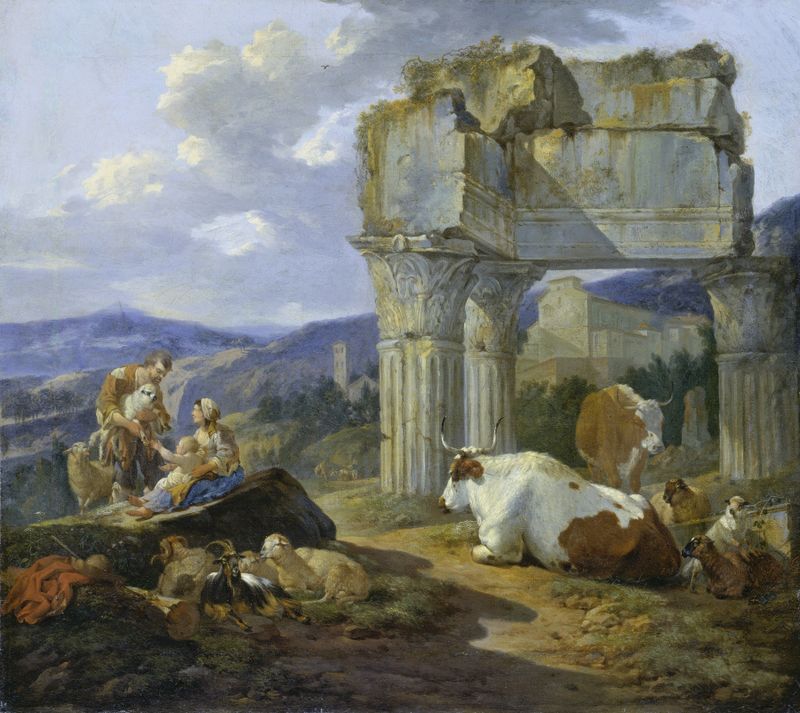
Shepherd’s Family at the Ruins of the Temple of Vespasian
Johann Heinrich Roos
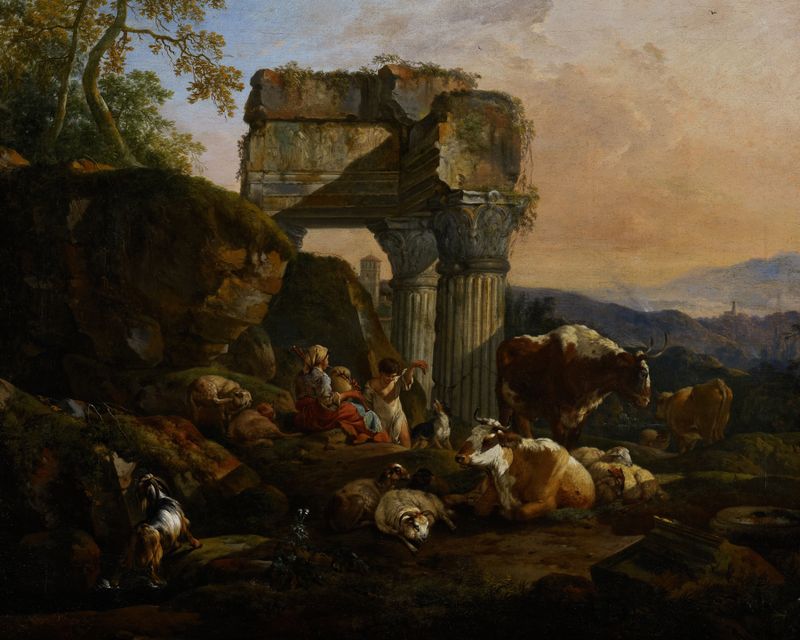
Roman Landscape with Cattle and Shepherds
Johann Heinrich Roos
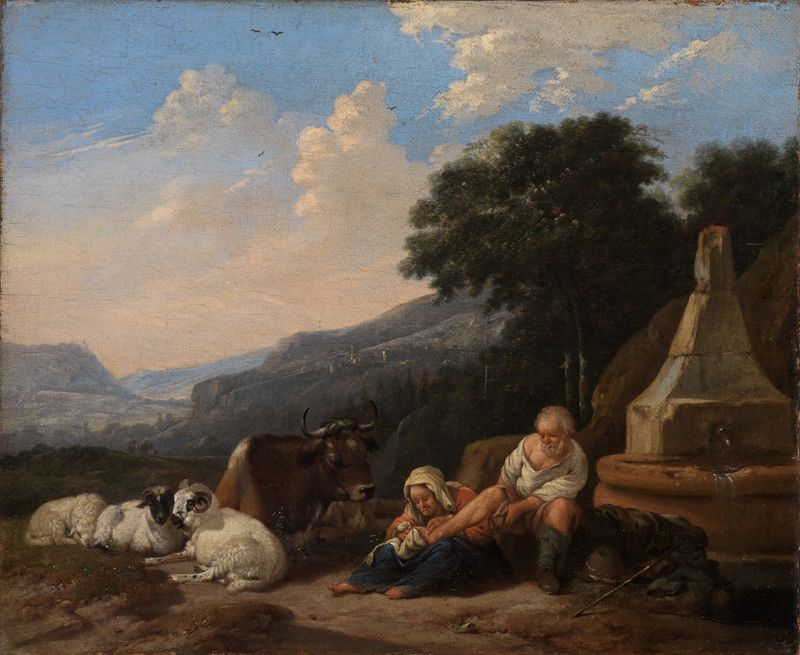
Berglandschaft mit Hirten am Brunnen
Johann Heinrich Roos
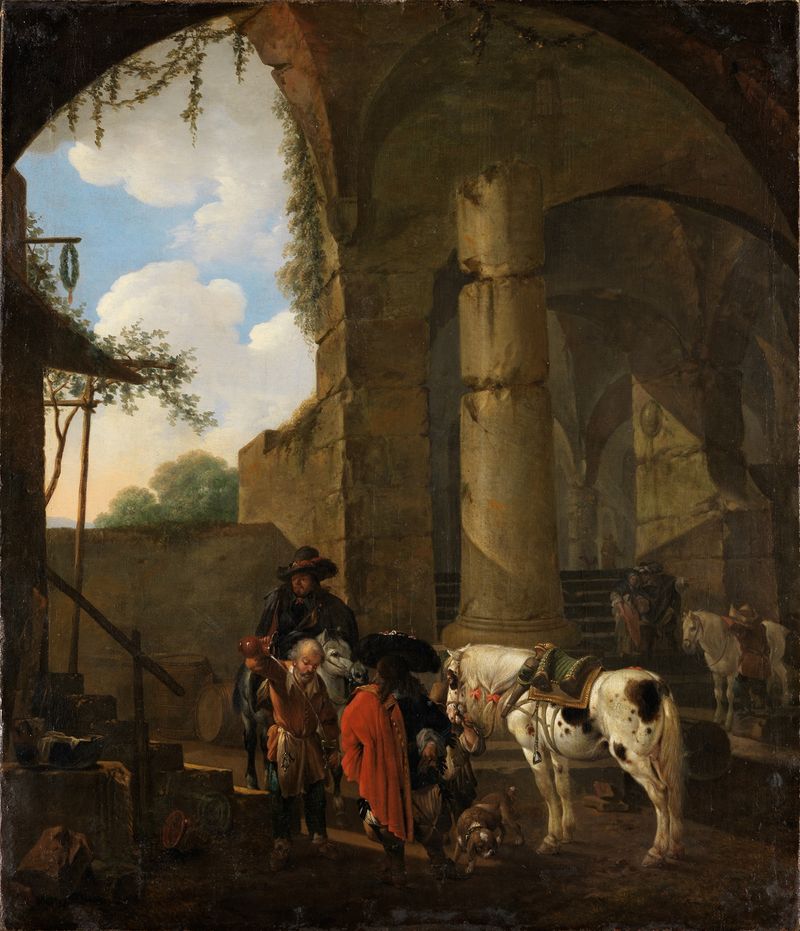
Osteria in römischer Ruine
Johann Heinrich Roos
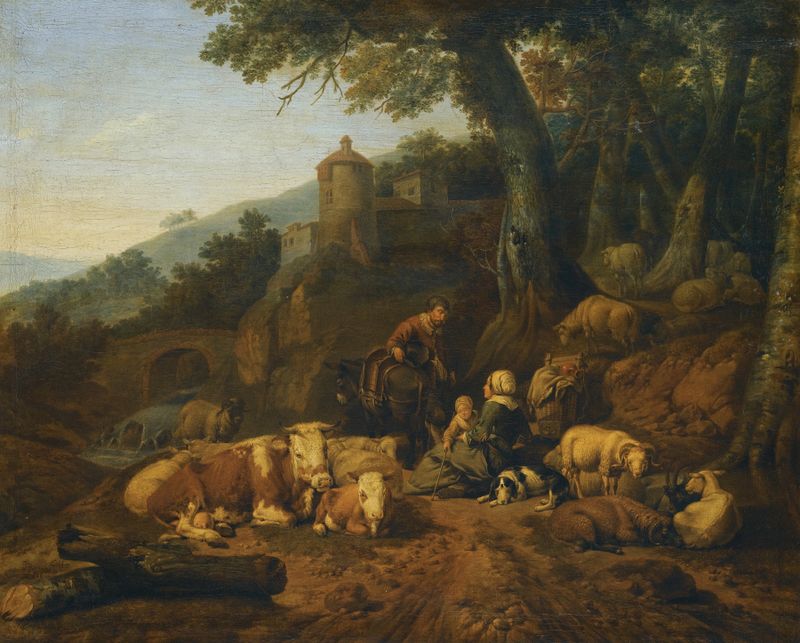
A Landscape With Drovers And Their Flock At Rest
Johann Heinrich Roos
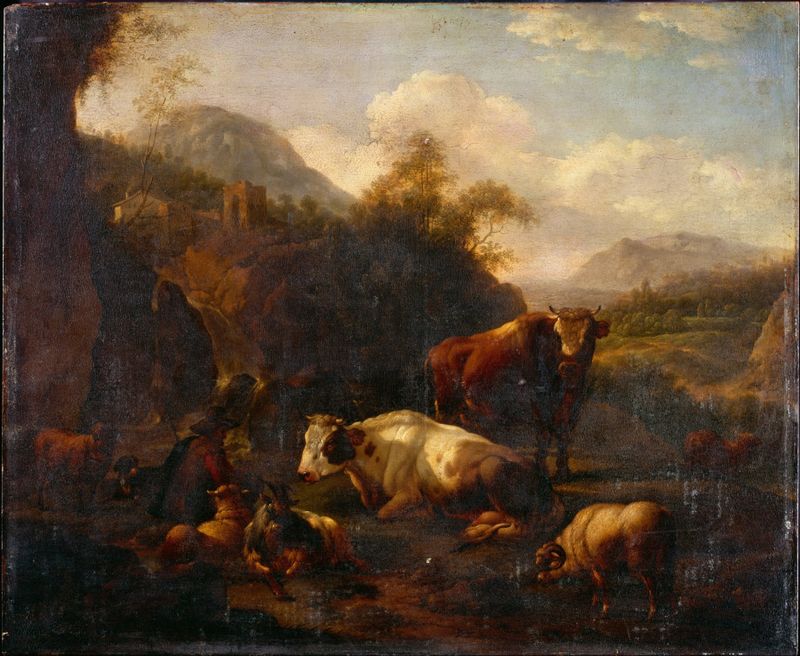
Landscape
Johann Heinrich Roos





