
Holy Family with the Infant St. John — History & Facts
What draws the eye first in Holy Family with the Infant St. John is the gentle choreography of hands and glances—a silent exchange that pulls the viewer into its circle. The Virgin’s head tilts in quiet affection, her gaze resting on the Christ Child, who sits on her lap, while the Infant St.
John reaches up, offering a slender reed cross. This is no stiff tableau: the children’s gestures are lively, even playful, their curls catching the soft light that bathes the scene. Joseph, half in shadow, leans in with a protective tenderness, his presence anchoring the intimacy of the group.
The palette—warm flesh, rose, and deep blue—sets a mood of domestic serenity, while the column and distant greenery hint at a world beyond this moment. Painted in Italy around 1515, this work belongs to a period when images of the Holy Family were prized for private devotion, intended to make sacred stories feel immediate and human. Artists like Antonio da Correggio infused these scenes with warmth and naturalism, reflecting the Renaissance’s growing interest in the emotional bonds between figures. Such paintings were often commissioned by wealthy patrons for their homes, serving as both objects of piety and displays of taste.
Today, this panel—transferred to canvas and now in the collection of the Los Angeles County Museum of Art—stands as a testament to that era’s search for grace in the everyday. Let your eyes linger on the exchange of looks and hands: this is where the heart of the painting quietly beats.
More Artworks by Antonio da Correggio

Virgin and Child with the Young Saint John the Baptist
Antonio da Correggio
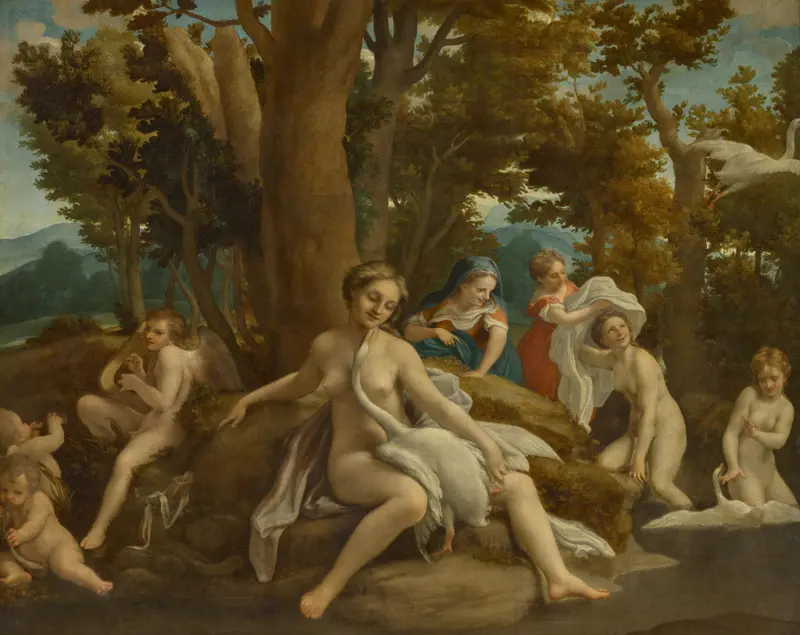
Leda and the Swan
Antonio da Correggio
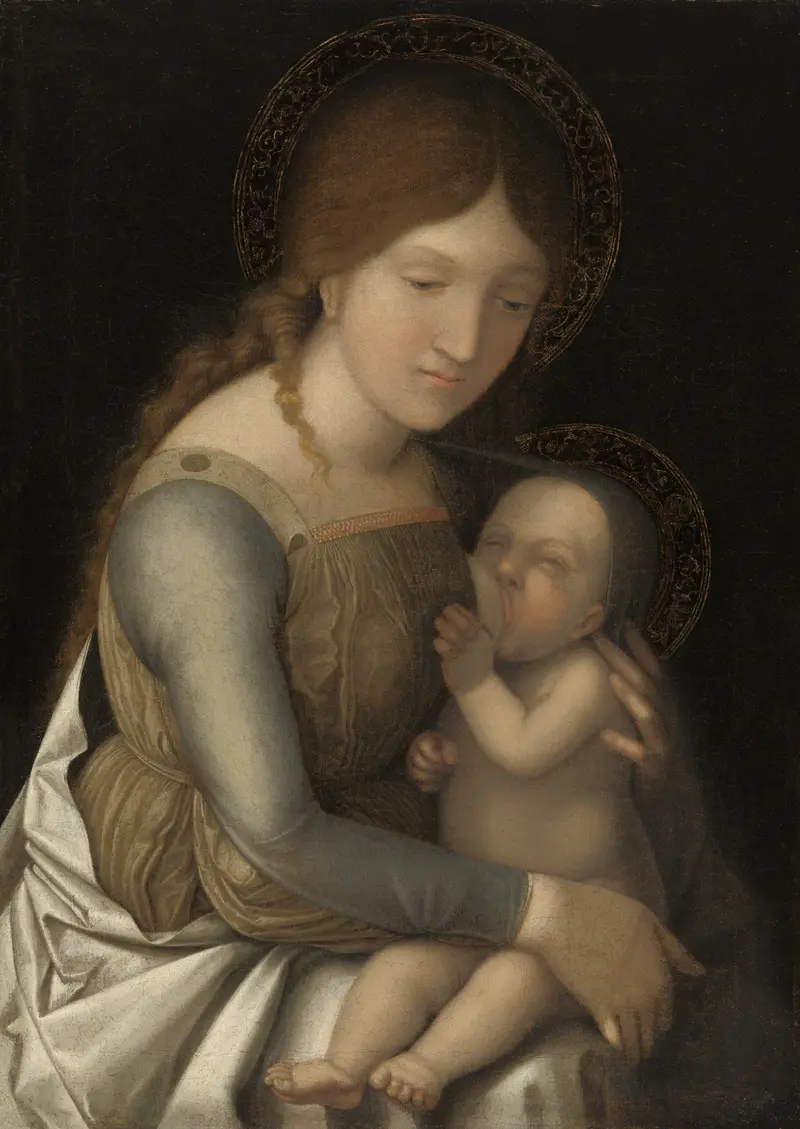
Madonna and Child
Antonio da Correggio
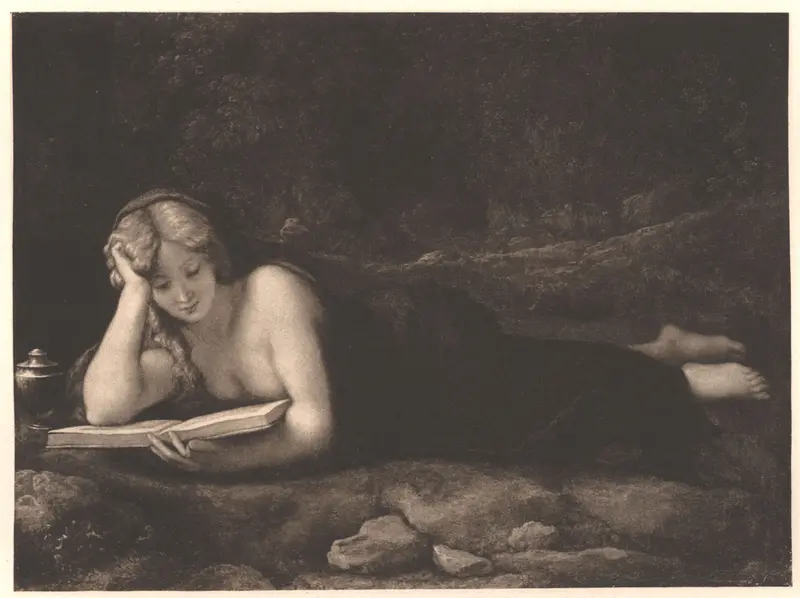
Penitent Magdalene
Antonio da Correggio
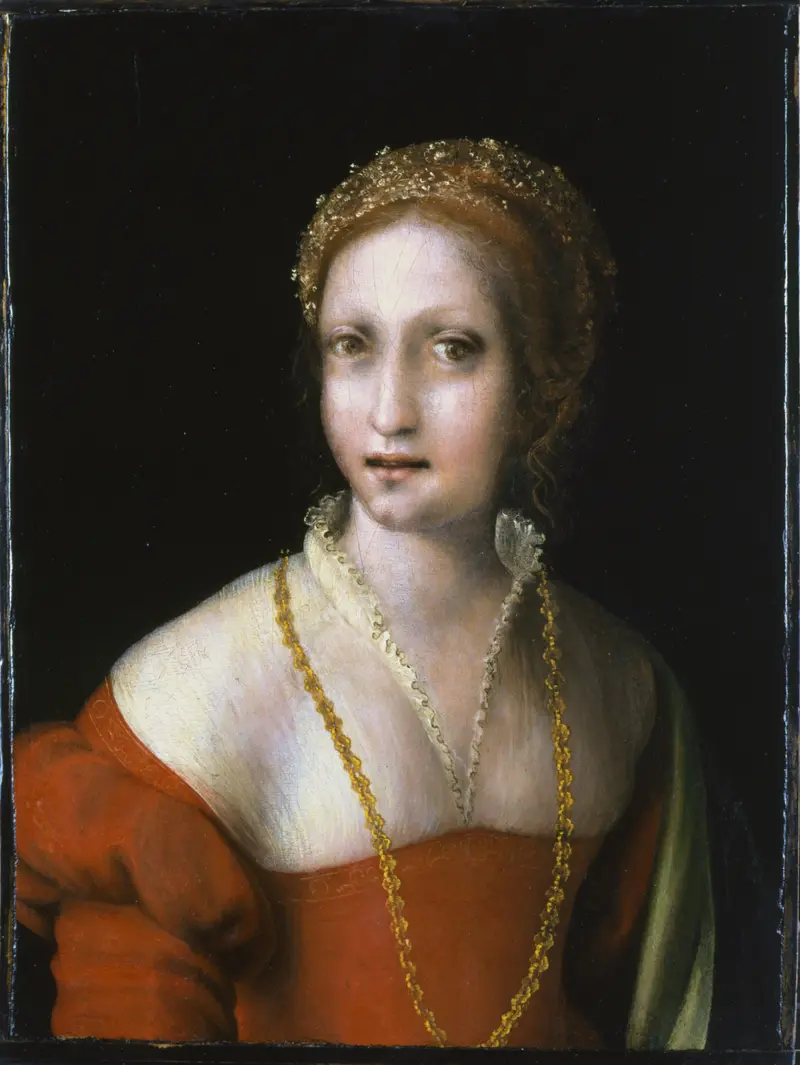
Portrait of a Young Girl
Antonio da Correggio
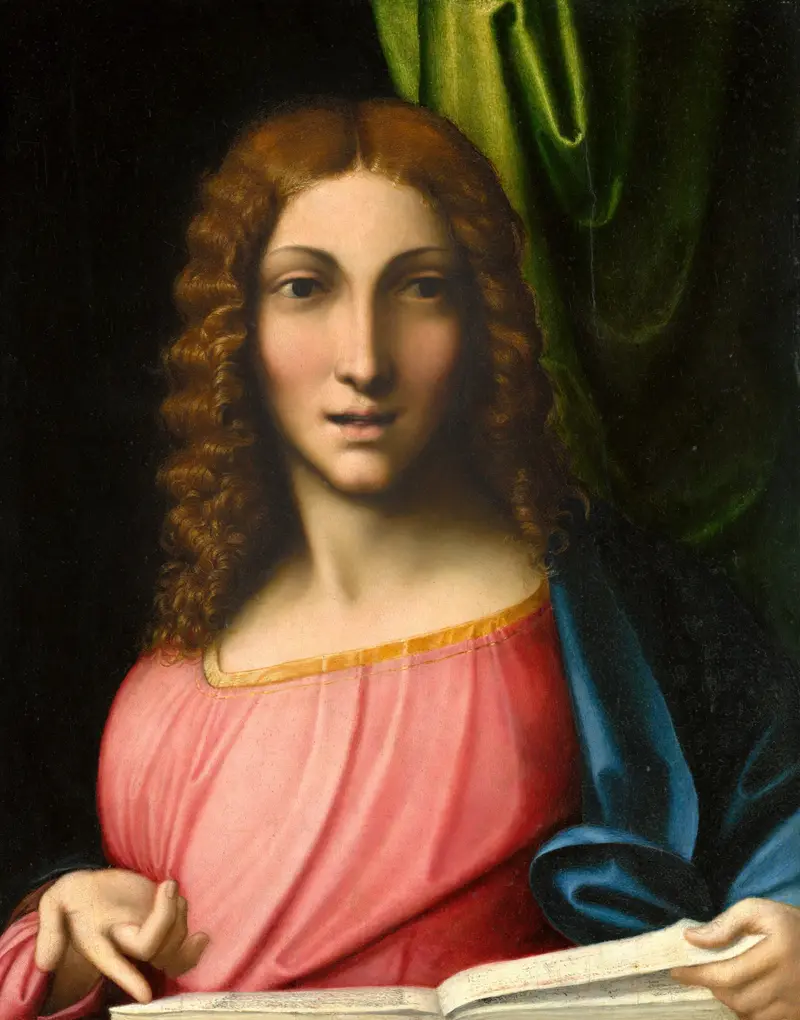
Christ in the Temple
Antonio da Correggio

Nativity
Antonio da Correggio
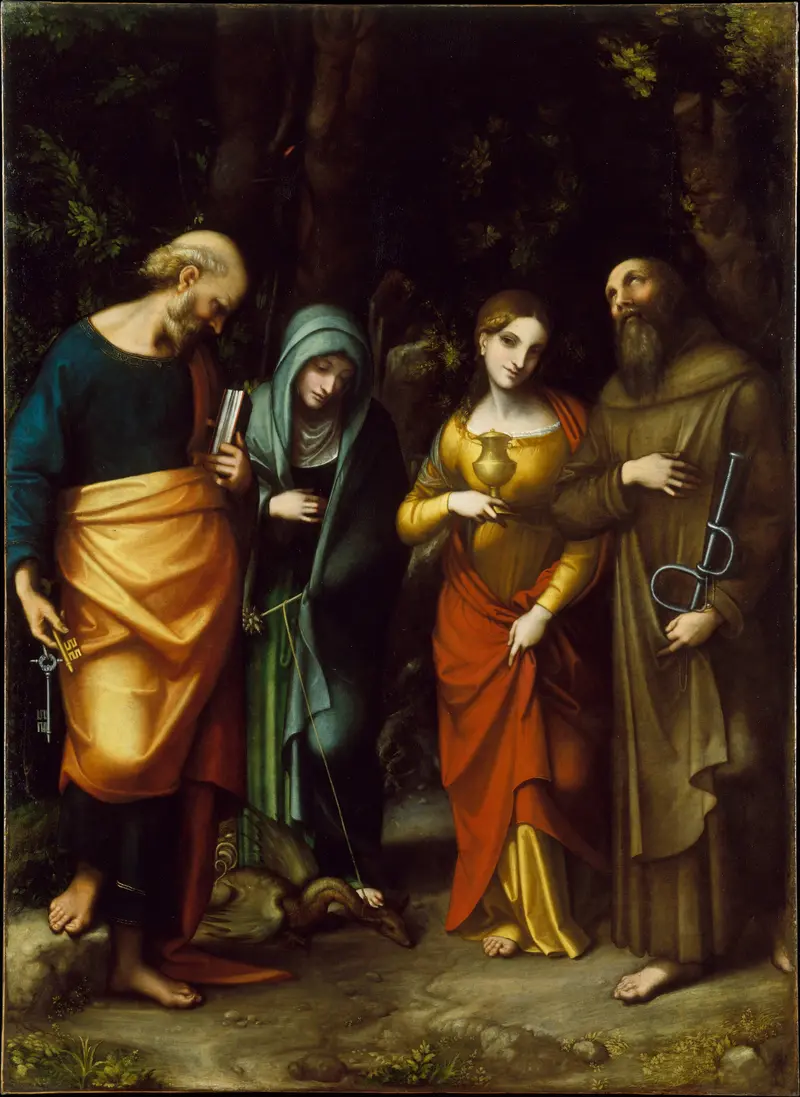
Saints Peter, Martha, Mary Magdalen, and Leonard
Antonio da Correggio
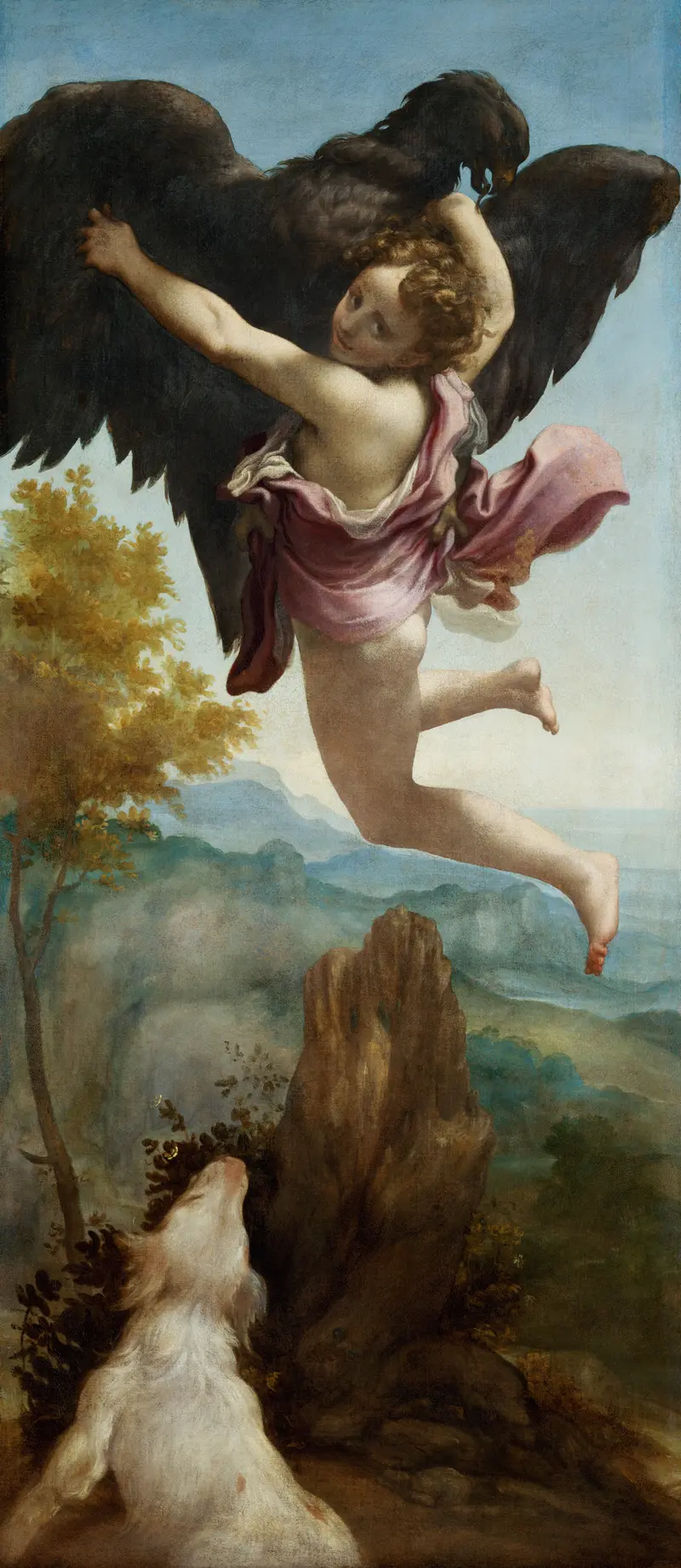
The Loves of Jupiter
Antonio da Correggio

Study for the "Madonna della Scodella" [recto]
Antonio da Correggio





