
The Loves of Jupiter — History & Facts
A boy is swept skyward, his body twisting in a moment of startled grace, as a great black eagle carries him aloft. The sweep of the eagle’s wings nearly fills the sky, their darkness a striking contrast to the boy’s luminous skin and the rose-colored drapery that flutters around him. Below, a white dog howls in helpless protest, its gaze following the impossible ascent.
The painter draws your eye up from the earthy browns and greens of the rocky landscape, through the vertical thrust of the composition, to the drama unfolding against the pale blue heavens. The boy’s expression is ambiguous—caught between fear, awe, and a strange calm—while the eagle’s talons grip firmly, signaling the power at play. Works like this, painted in the first half of the sixteenth century, belong to a world where mythological subjects were both a display of erudition and an opportunity for artists to test the limits of the human form. In the era of Correggio, the courts of northern Italy sought such scenes to decorate private chambers, celebrating stories from antiquity that were both beautiful and charged with meaning.
The date range of 1520–1540 places this painting in the heart of the High Renaissance, when artists were experimenting with movement, atmosphere, and emotion. Though history has kept few traces of this particular version, its bold composition and sensuous handling of paint invite us to linger, tracing the arc of the story as it soars from earth to sky.
More Artworks by Antonio da Correggio

Virgin and Child with the Young Saint John the Baptist
Antonio da Correggio
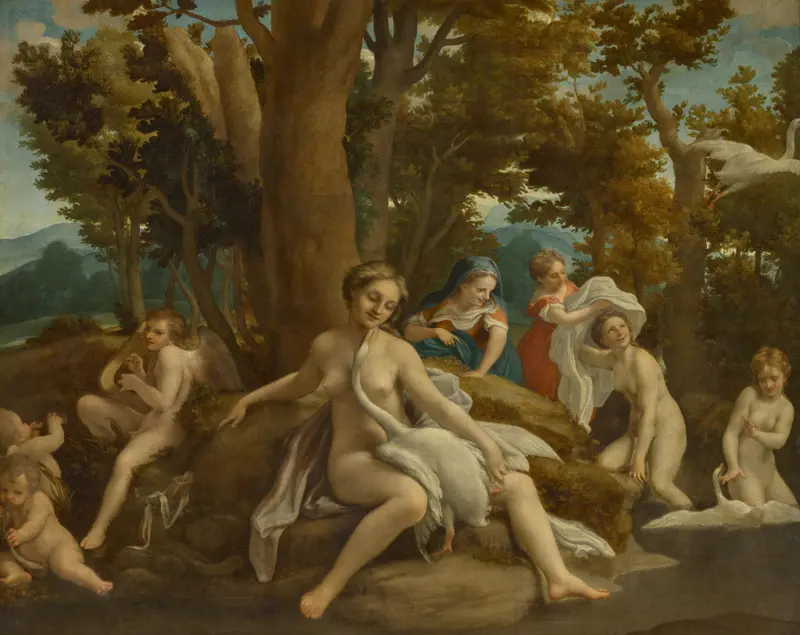
Leda and the Swan
Antonio da Correggio
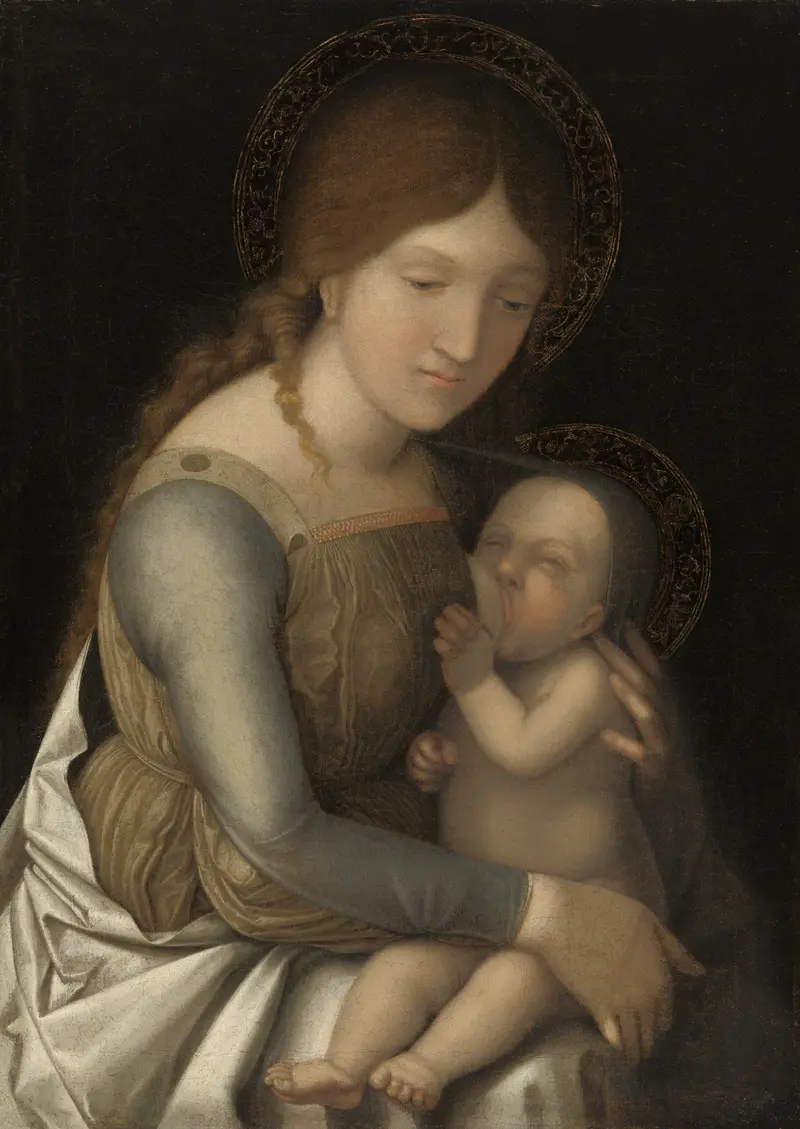
Madonna and Child
Antonio da Correggio
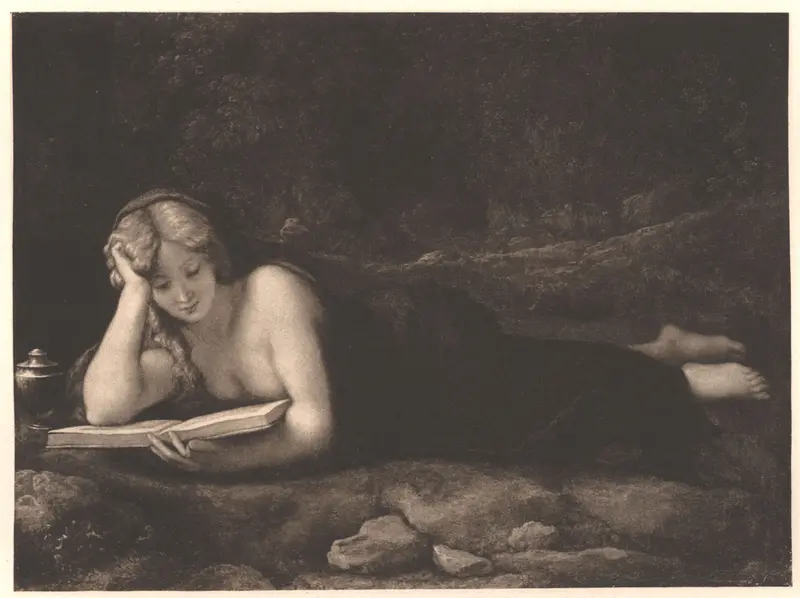
Penitent Magdalene
Antonio da Correggio
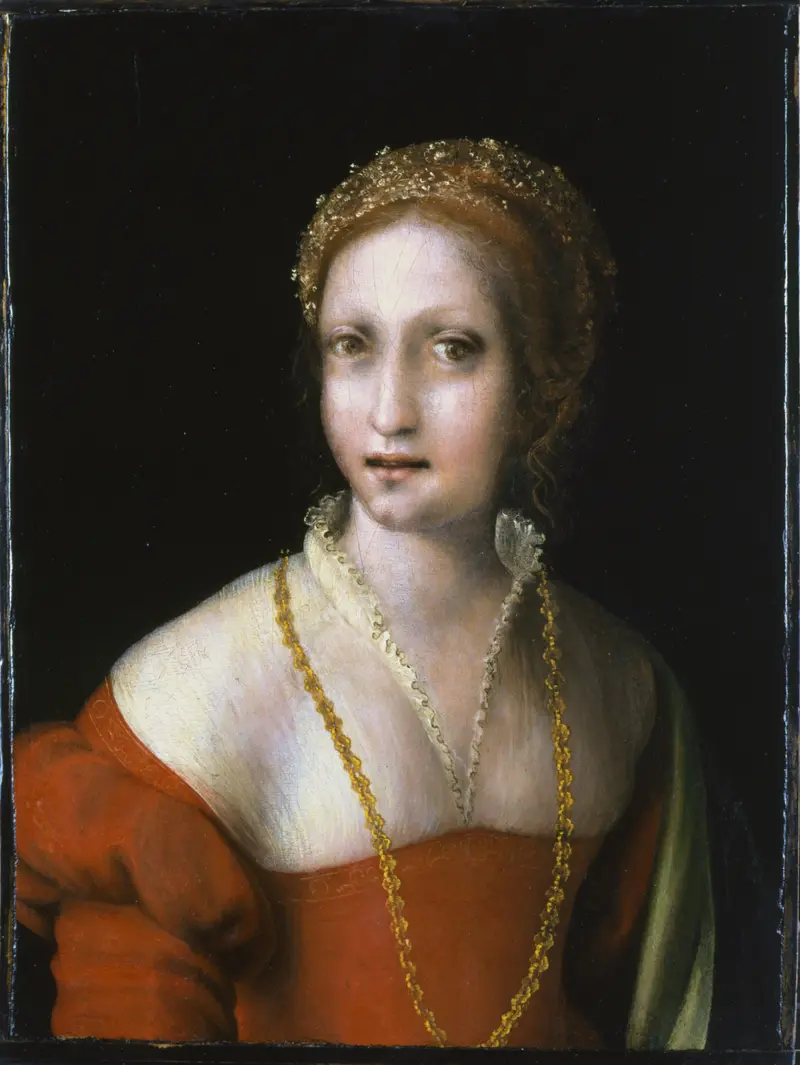
Portrait of a Young Girl
Antonio da Correggio
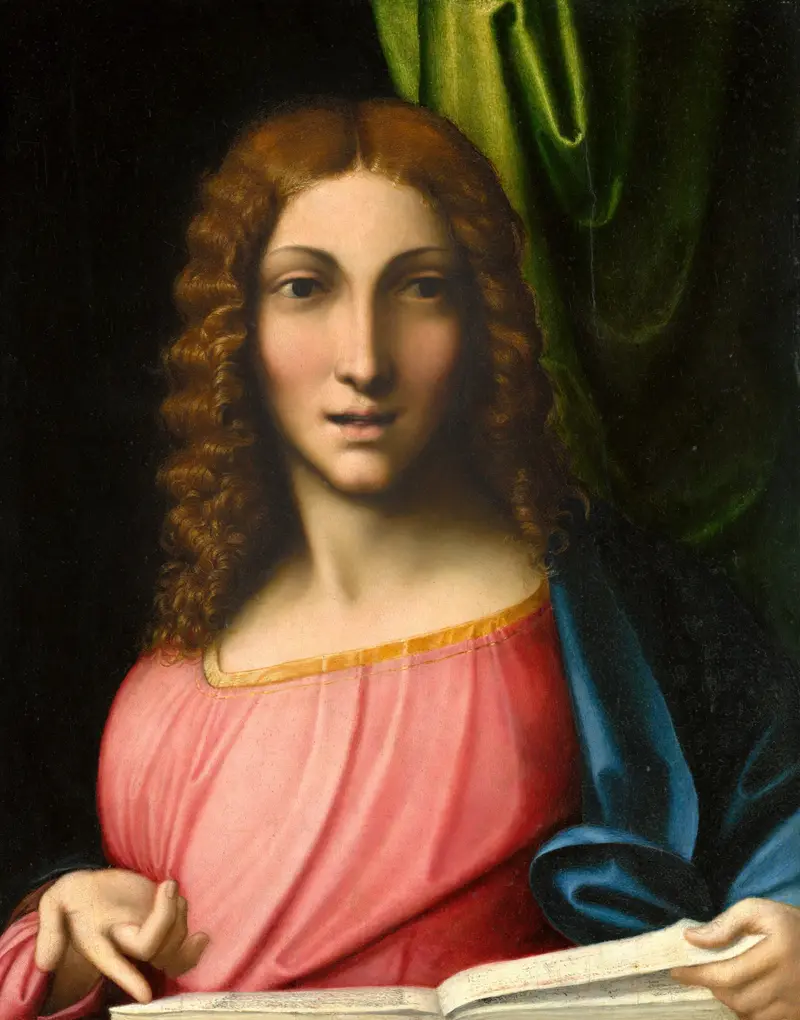
Christ in the Temple
Antonio da Correggio

Nativity
Antonio da Correggio
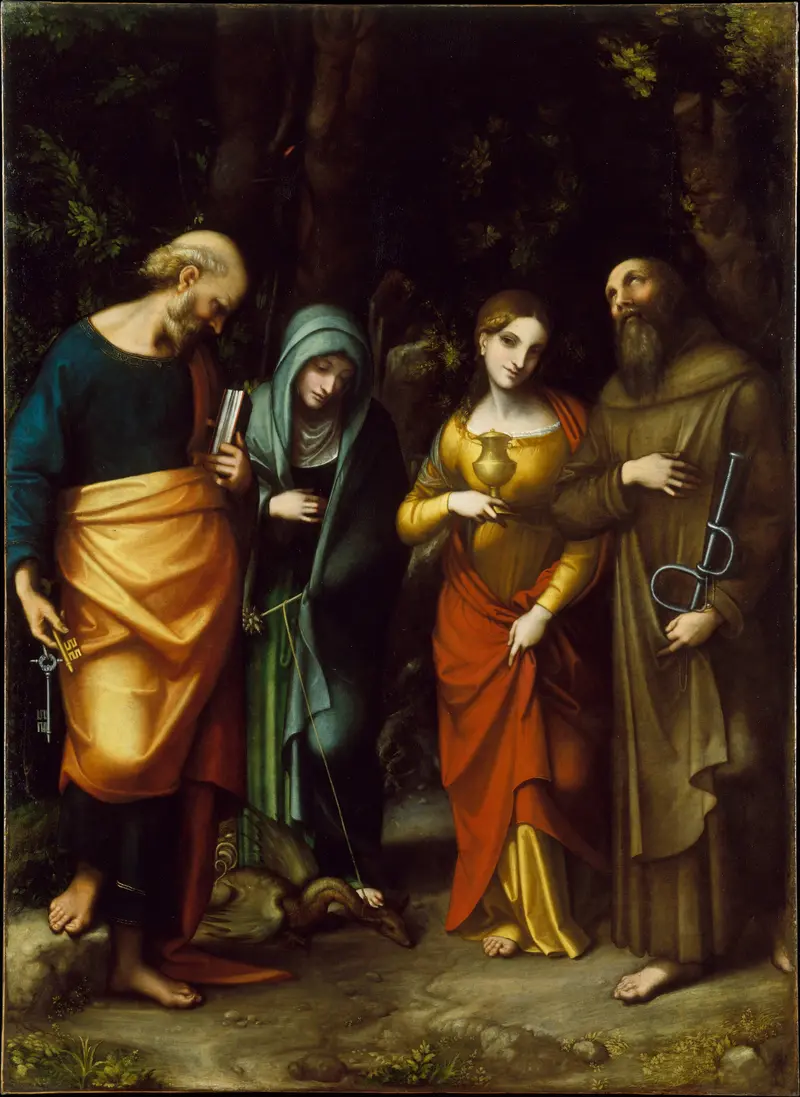
Saints Peter, Martha, Mary Magdalen, and Leonard
Antonio da Correggio

Study for the "Madonna della Scodella" [recto]
Antonio da Correggio
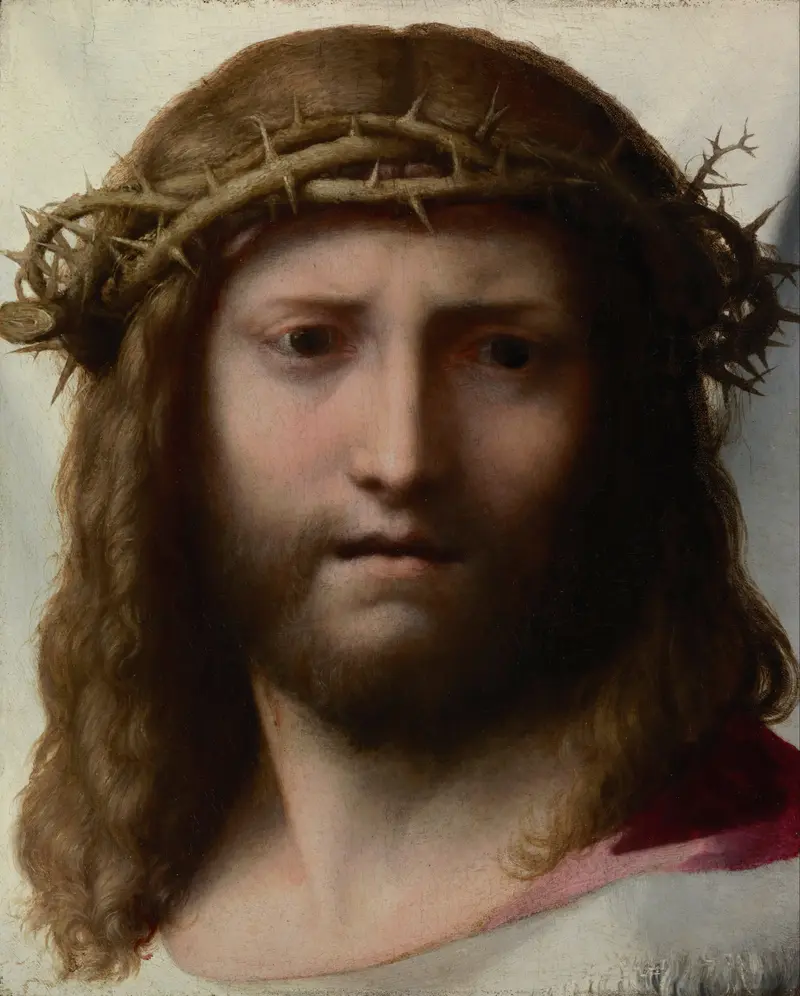
Head of Christ
Antonio da Correggio





