
Horsemen and Herdsmen with Cattle — History & Facts
A golden haze settles over the land, drawing the eye first to the two horsemen at the edge of a sunlit clearing. Their confident posture and fine dress suggest not only authority but a moment of pause, as if they are surveying the world they command. The painter, Aelbert Cuyp, leads us through the scene with light: from the crisp white of the lead horse, our gaze travels down a gentle slope, past herdsmen and cattle, to a distant river city that glows beneath a sky alive with drifting clouds and birds.
The long shadows and warm palette evoke the hush of late afternoon, a time when the day's work slows and the land itself seems to breathe. This is the world of the Dutch Golden Age, when landscapes like this—painted between 1655 and 1660—became prized possessions for prosperous citizens. Such works were not mere records of property, but celebrations of order, prosperity, and the harmony between man and nature. In the collection of the National Gallery of Art, Washington, D.C., Horsemen and Herdsmen with Cattle stands as a testament to a society in transition: the windmills and distant city hint at commerce and progress, while the herdsmen and riders recall an older, pastoral rhythm.
History has kept few traces of the individual stories behind these scenes, but the painting invites us to linger, to imagine ourselves in the golden light of a world both familiar and just out of reach.
More Artworks by Aelbert Cuyp

The Maas at Dordrecht
Aelbert Cuyp
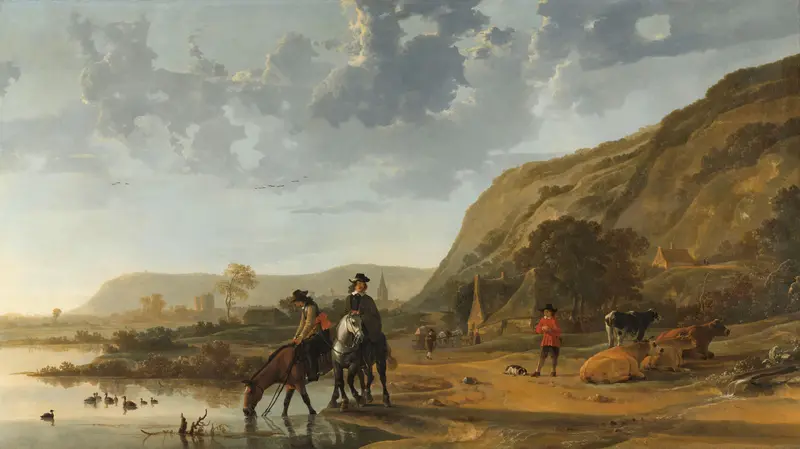
River Landscape with Riders
Aelbert Cuyp

The Maas at Dordrecht
Aelbert Cuyp
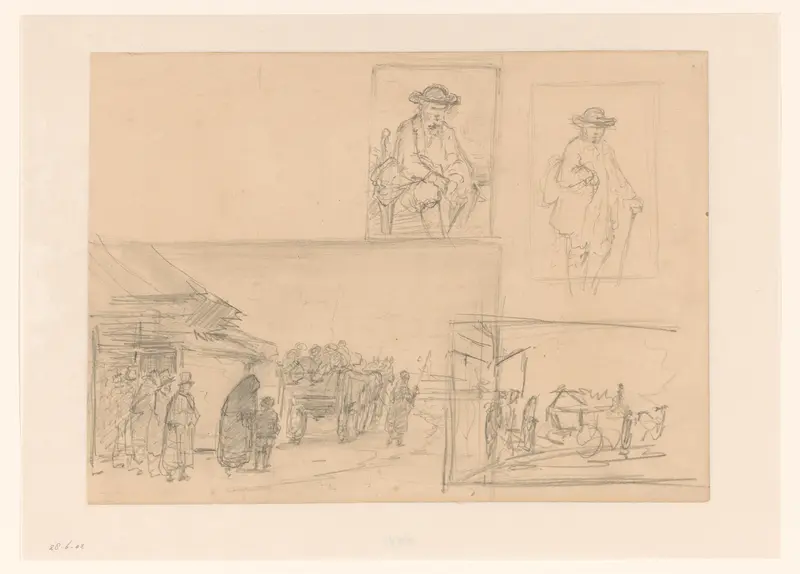
Gezicht op Dordrecht
Aelbert Cuyp
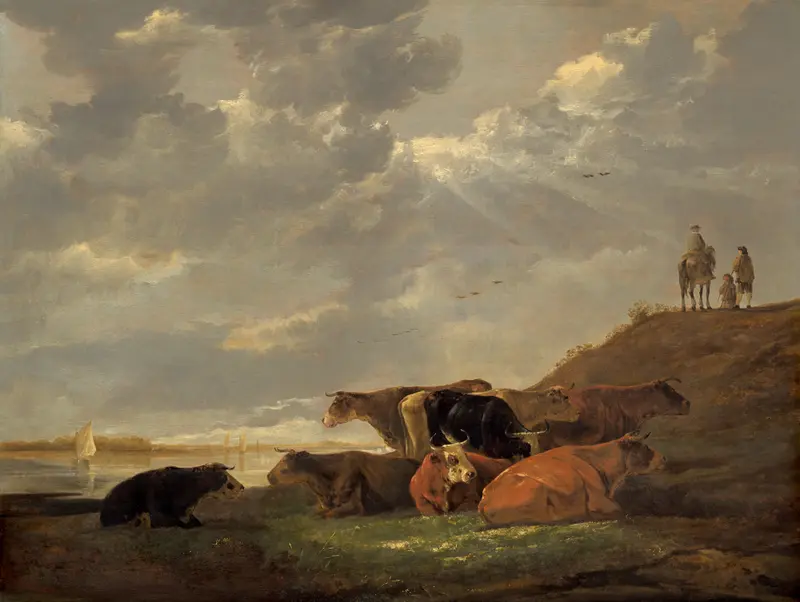
River Landscape with Cows
Aelbert Cuyp
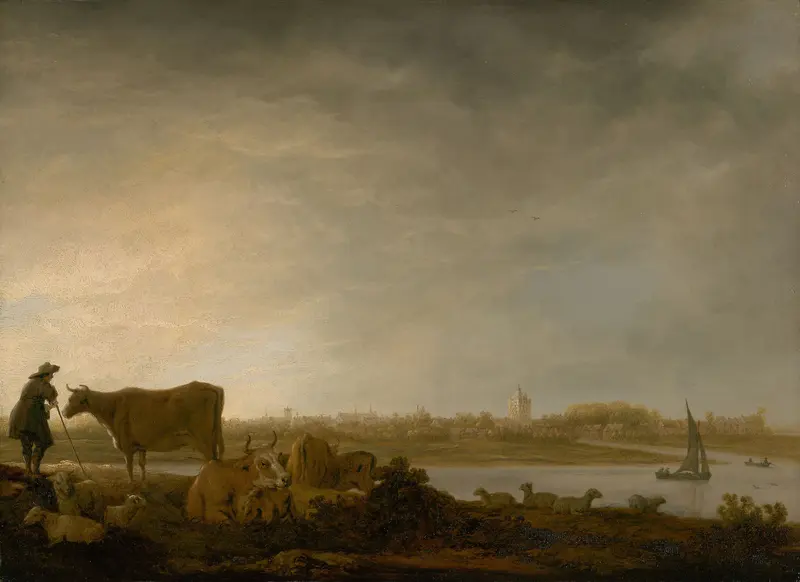
A View of Vianen with a Herdsman and Cattle by a River
Aelbert Cuyp
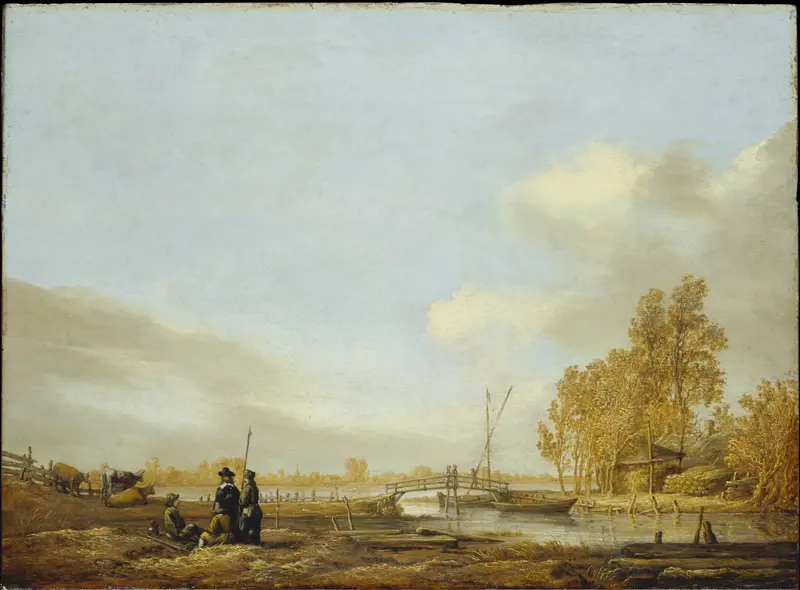
River Landscape with Footbridge
Aelbert Cuyp
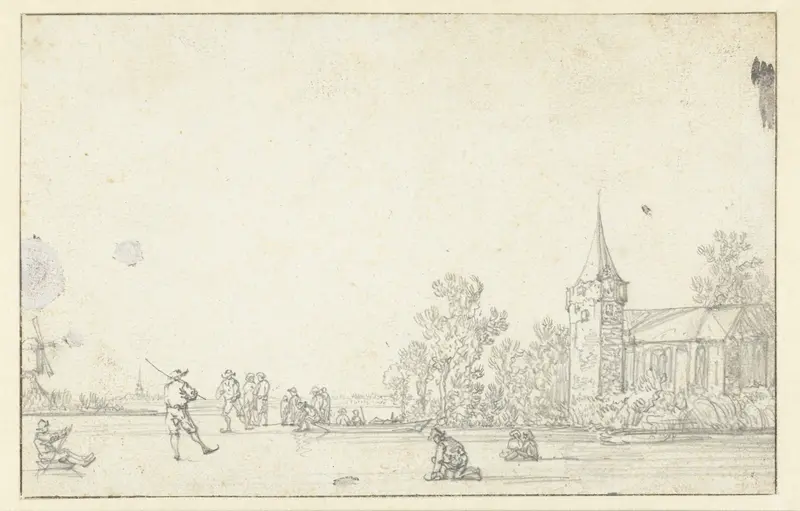
Bevroren rivier met schaatsers bij een kerk
Aelbert Cuyp

Cattle near a River
Aelbert Cuyp
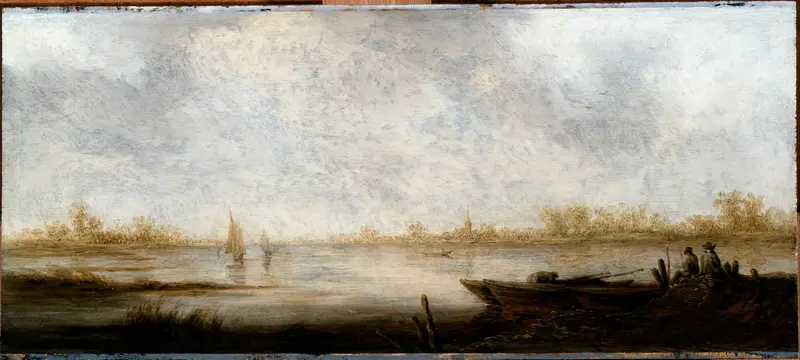
River Landscape
Aelbert Cuyp
More Landscape Art

The Starry Night
Vincent van Gogh

View of Delft
Johannes Vermeer

Water Lilies
Claude Monet

The Grand Canal, Venice, looking north-west from the Ca' Corner to the Ca' Contarini degli Scrigni, with the campanile of Santa Maria della Carità
Canaletto

Windsor Castle
Canaletto

The Grand Canal looking North-East from the Palazzo Dolfin-Manin to the Rialto Bridge
Canaletto