
House among Trees — History & Facts
When Georges Seurat painted House among Trees in 1883, he stood on the threshold of the artistic revolution that would soon make his name. This work dates from the crucial years just before Seurat unveiled his radical technique of Pointillism, and so it offers a rare glimpse of his early explorations. Unlike his later, meticulously dotted canvases, here he is still searching, experimenting with brushwork and light in a manner closer to the Impressionists he admired from afar.
The painting’s quiet subject and uncertain medium have left scholars debating its exact place in his development, but all agree it marks a pivotal moment: the calm before the storm of innovation. The scene is intimate and unassuming—a solitary house nestled among dense, leafy trees, their forms softened by a gentle haze. Seurat captures a fleeting moment, perhaps a late afternoon when the sun’s rays filter through the branches, dappling the walls and ground. The house itself is modest, almost receding into the greenery, suggesting a world where human presence is secondary to nature’s quiet dominance.
The brushwork is loose, the colors subdued, yet there is a careful balance in the composition, with vertical trunks and horizontal rooflines creating a sense of stability. Compared to the lively, bustling gardens of Claude Monet or the sunlit cottages of Camille Pissarro, Seurat’s approach here is more meditative, hinting at the analytic eye that would soon transform his art. The physical history of House among Trees is less documented than many of Seurat’s later works. It was likely painted during his summers spent sketching in the countryside outside Paris, a period when he produced numerous studies of rural architecture and landscape.
The painting’s ownership trail is unclear, and it has rarely been exhibited, perhaps overshadowed by the fame of A Sunday Afternoon on the Island of La Grande Jatte. Nevertheless, it stands as a testament to Seurat’s formative years, a quiet experiment that foreshadows his later innovations. Today, it offers viewers a rare window into the artist’s evolving vision, bridging the gap between Impressionism and the scientific rigor of Neo-Impressionism.
More Artworks by Georges Seurat
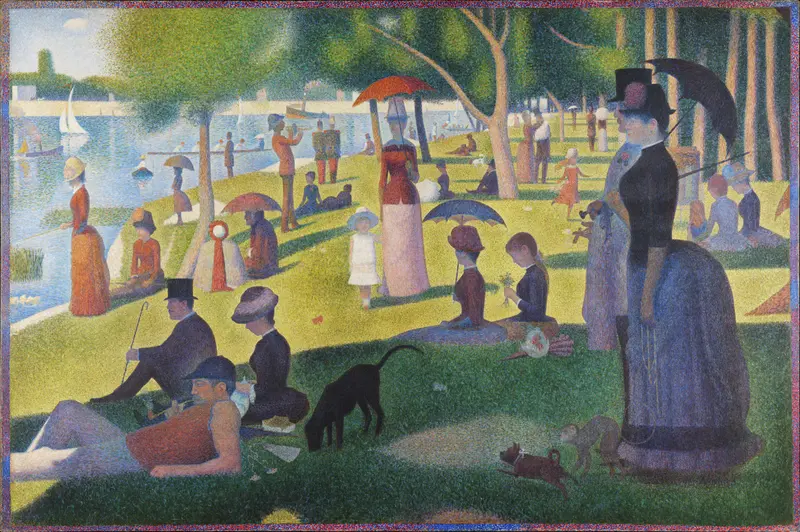
A Sunday Afternoon on the Island of La Grande Jatte
Georges Seurat
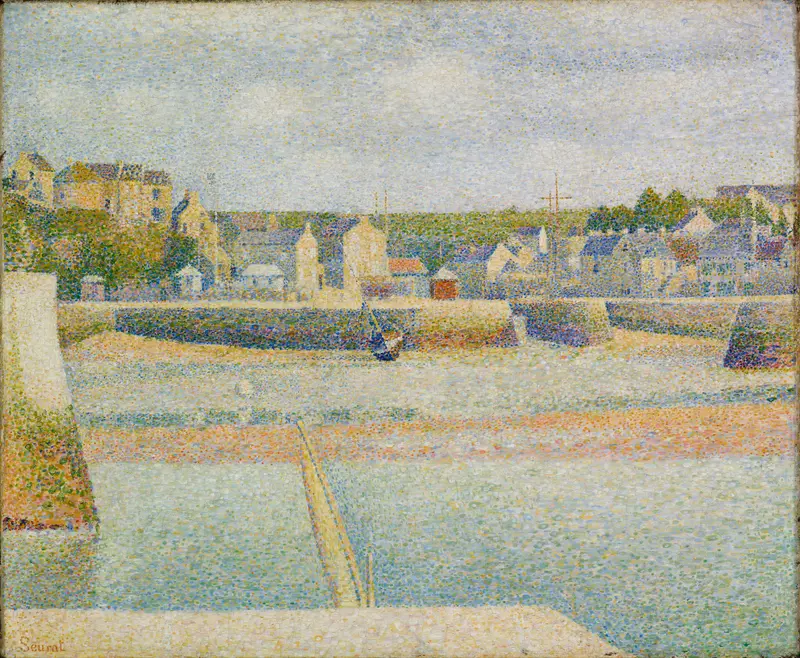
Port-en-Bessin, The Outer Harbor (Low Tide)
Georges Seurat
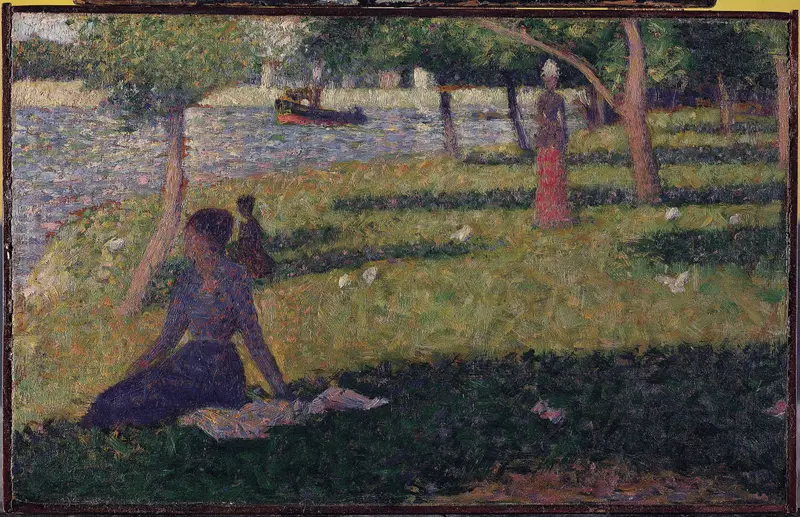
Étude pour ‘La Grande Jatte’ (Study for ‘La Grande Jatte’)
Georges Seurat
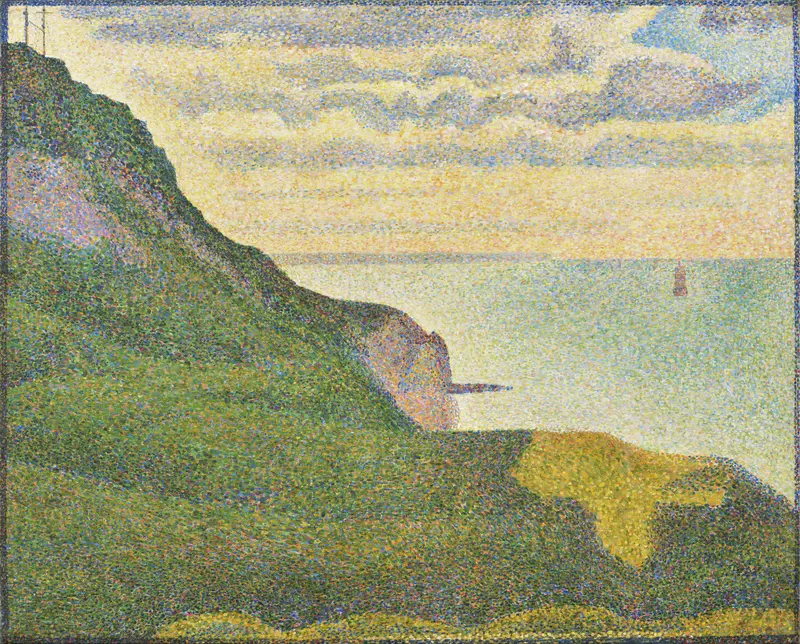
Seascape at Port-en-Bessin,Normandy
Georges Seurat
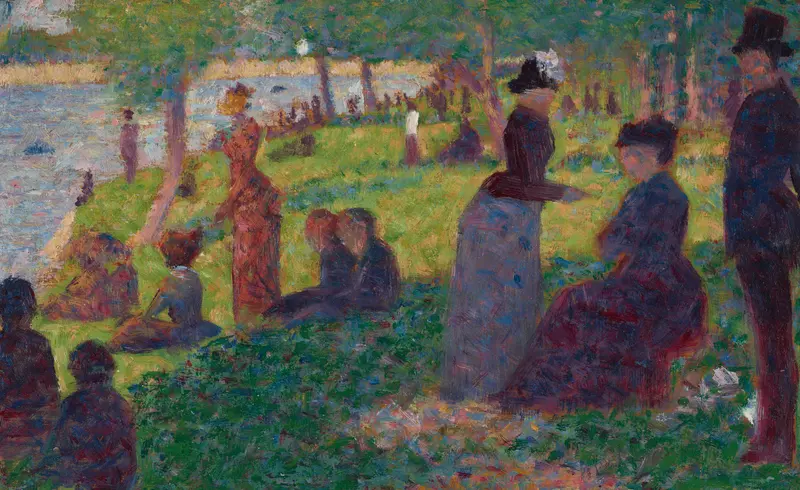
Oil Sketch for "A Sunday on La Grande Jatte — 1884"
Georges Seurat
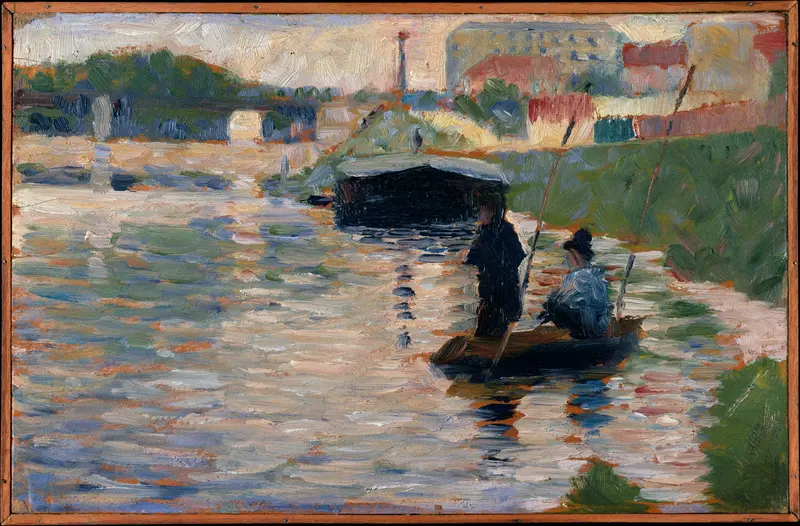
View of the Seine
Georges Seurat
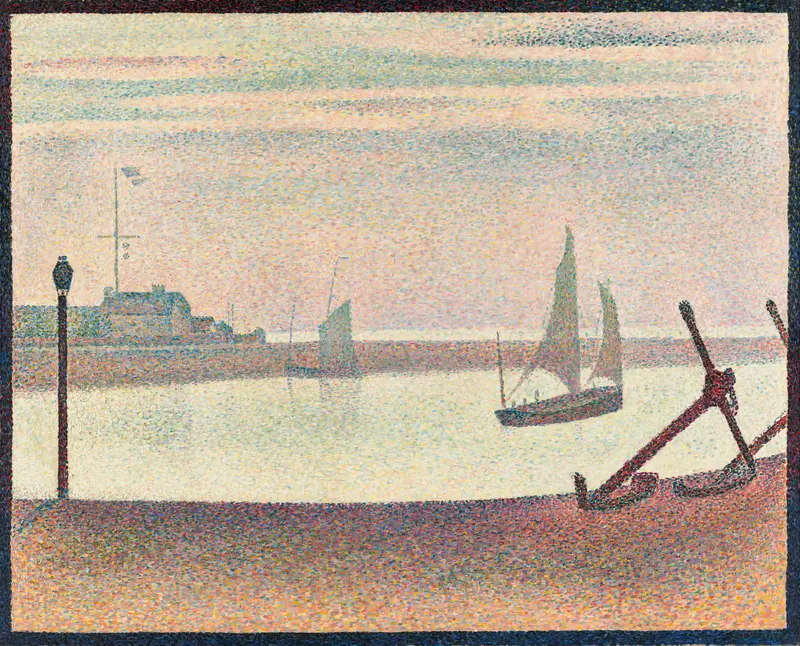
The Channel at Gravelines, Evening
Georges Seurat
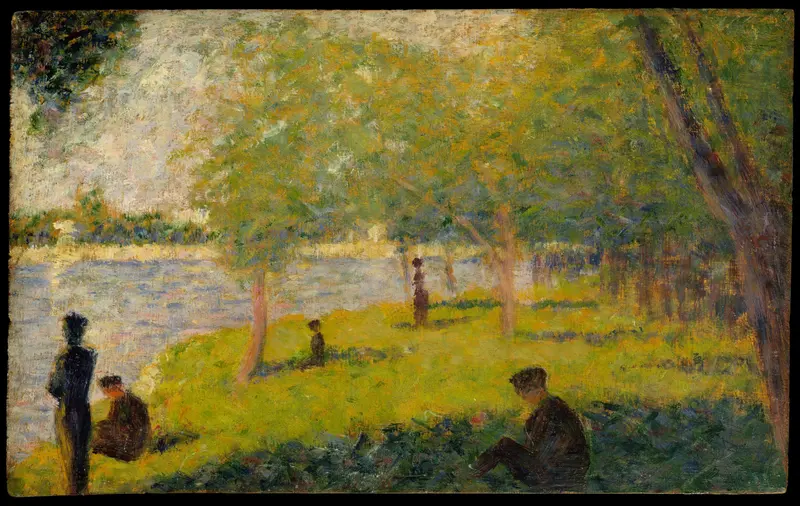
Study for ‘A Sunday on La Grande Jatte’
Georges Seurat
Study for A Sunday on La Grande Jatte
Georges Seurat
The Channel of Gravelines, Petit Fort Philippe
Georges Seurat
More Landscape Art

The Starry Night
Vincent van Gogh

View of Delft
Johannes Vermeer

Water Lilies
Claude Monet

The Grand Canal, Venice, looking north-west from the Ca' Corner to the Ca' Contarini degli Scrigni, with the campanile of Santa Maria della Carità
Canaletto

Windsor Castle
Canaletto

The Grand Canal looking North-East from the Palazzo Dolfin-Manin to the Rialto Bridge
Canaletto