
Huntsmen Halted — History & Facts
The eye is drawn first to the luminous, dappled horse at the center of Huntsmen Halted, its pale coat glowing against the darker woods and the cool, blue Dutch sky. The scene is a portrait of leisure and privilege, but it is also a moment of pause: three young men, richly dressed, linger in the shade, their hunt temporarily set aside. One stoops to adjust his boot, another sits astride his mount, and a third stands at ease, his gaze meeting the viewer’s with a quiet confidence.
The dogs drink from a shallow pool, their bodies echoing the relaxed posture of their masters, while the distant castle and open landscape hint at lands owned and controlled. Every detail—the gold embroidery, the ornate saddles, the careful handling of light—signals status, but also a kind of studied nonchalance, as if this tableau of wealth and power is as natural as the changing sky. Painted in the early 1650s by Aelbert Cuyp, this work belongs to a world where hunting was not only a sport but also a display of social rank, and such paintings were prized by the Dutch elite. The three huntsmen are the sons of Cornelis van Beveren, a prominent diplomat and patron from Dordrecht, Cuyp’s own city.
In this era, Dutch artists were perfecting the art of the landscape and the portrait, often merging the two to create images that celebrated both the land and those who ruled it. Huntsmen Halted now hangs at The Barber Institute of Fine Arts, a reminder of a time when the boundaries between portrait, genre, and landscape painting were being redrawn—and when the possession of land, animals, and leisure was a story worth telling in oil and canvas. The stillness here is deceptive: look again, and the painting’s quiet moment brims with the ambitions and hierarchies of its age.
More Artworks by Aelbert Cuyp

The Maas at Dordrecht
Aelbert Cuyp
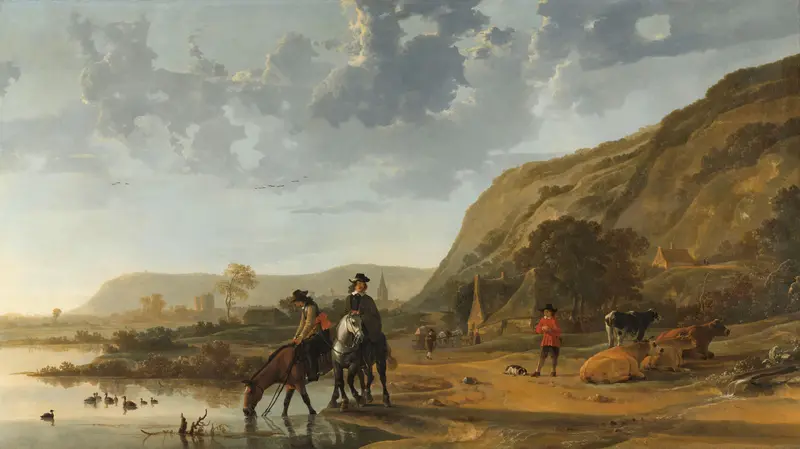
River Landscape with Riders
Aelbert Cuyp

The Maas at Dordrecht
Aelbert Cuyp
Gezicht op Dordrecht
Aelbert Cuyp
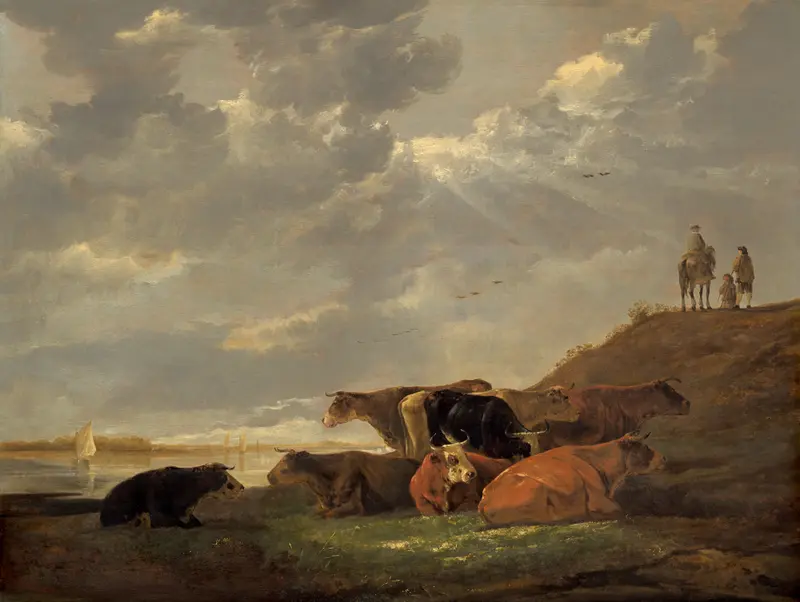
River Landscape with Cows
Aelbert Cuyp
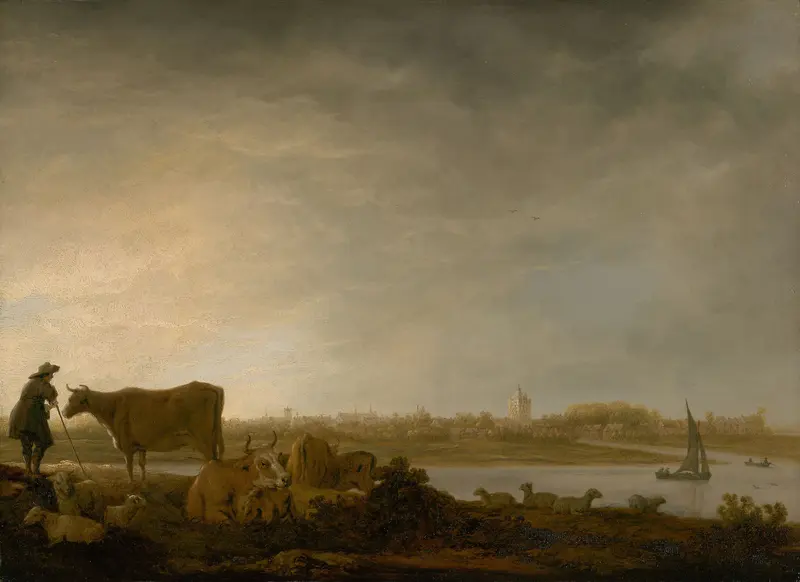
A View of Vianen with a Herdsman and Cattle by a River
Aelbert Cuyp
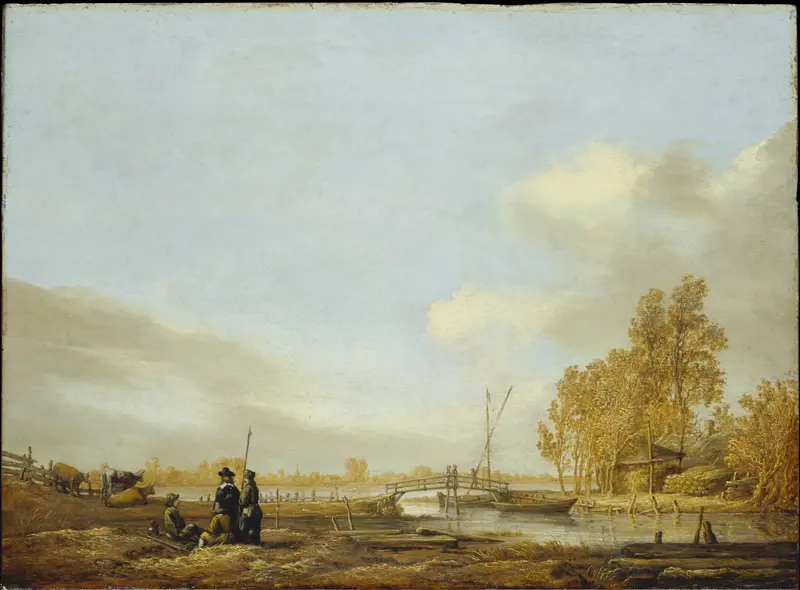
River Landscape with Footbridge
Aelbert Cuyp
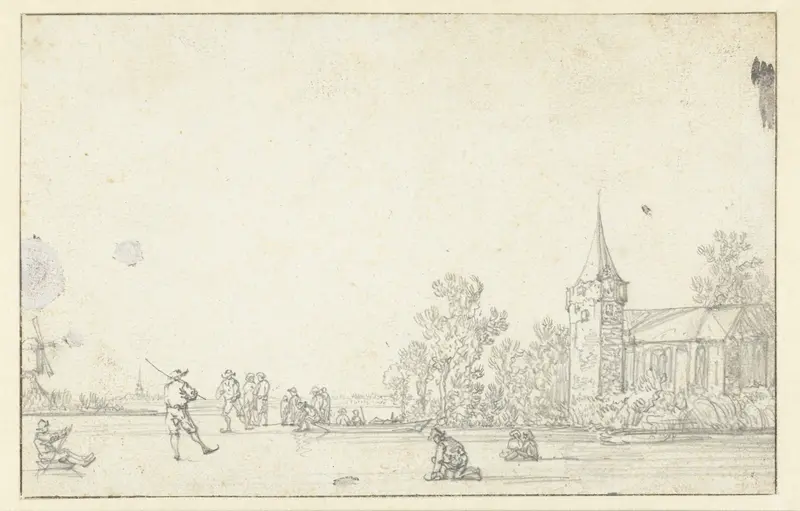
Bevroren rivier met schaatsers bij een kerk
Aelbert Cuyp

Cattle near a River
Aelbert Cuyp
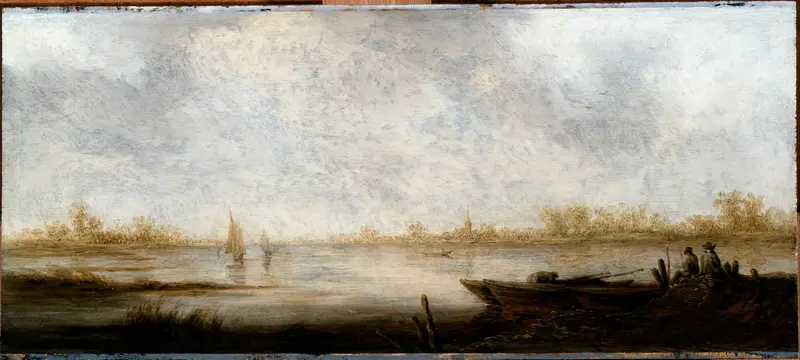
River Landscape
Aelbert Cuyp
More Landscape Art

The Starry Night
Vincent van Gogh

View of Delft
Johannes Vermeer

Water Lilies
Claude Monet

The Grand Canal, Venice, looking north-west from the Ca' Corner to the Ca' Contarini degli Scrigni, with the campanile of Santa Maria della Carità
Canaletto

Windsor Castle
Canaletto

The Grand Canal looking North-East from the Palazzo Dolfin-Manin to the Rialto Bridge
Canaletto