
Im Prater bei der Hochschaubahn, Riesenrad u. Filmpalast — History & Facts
What if silence could speak through light? The vibrant energy of Im Prater bei der Hochschaubahn, Riesenrad u. Filmpalast invites us into a realm where ecstasy dances just beyond the edges of sound, captured in a moment of palpable joy. Look to the center of the canvas, where a magnificent Ferris wheel rises against a twilight sky, illuminated by a warm, inviting glow. The swirling colors of dusk are mirrored in the faces of the carnival-goers, their expressions a tapestry of excitement and anticipation.
Notice how the artist applies bold brushstrokes to convey movement, while softer washes of color in the background suggest a sense of depth and atmosphere, drawing our gaze into the unfolding scene. The contrast between light and shadow plays a pivotal role, evoking a sense of fleeting moments in life. In the foreground, joyous figures seem to emerge from the darkness, their silhouettes vibrant against the carnival lights. This suggests an underlying tension between the ecstasy of the fairground and the shadows of a world marked by uncertainty and chaos during the early 1940s.
The vibrant palette contrasts both the innocence of amusement and the weight of historical context, creating an evocative sense of longing and celebration intertwined. Created in 1942, this work emerged during a tumultuous period for Oskar Laske, as Europe faced the horrors of World War II. While the artist found himself in Vienna, his painting reflects not just a moment of leisure but also a desire to capture fleeting happiness amidst the surrounding despair. During this time, artistic expression served as a vital refuge, offering both escape and reflection on the nature of joy amidst adversity.
More Artworks by Oskar Laske
Browse all →
Faschingsumzug am Stock im Eisen Platz
Oskar Laske

Schönbrunn (Winter)
Oskar Laske
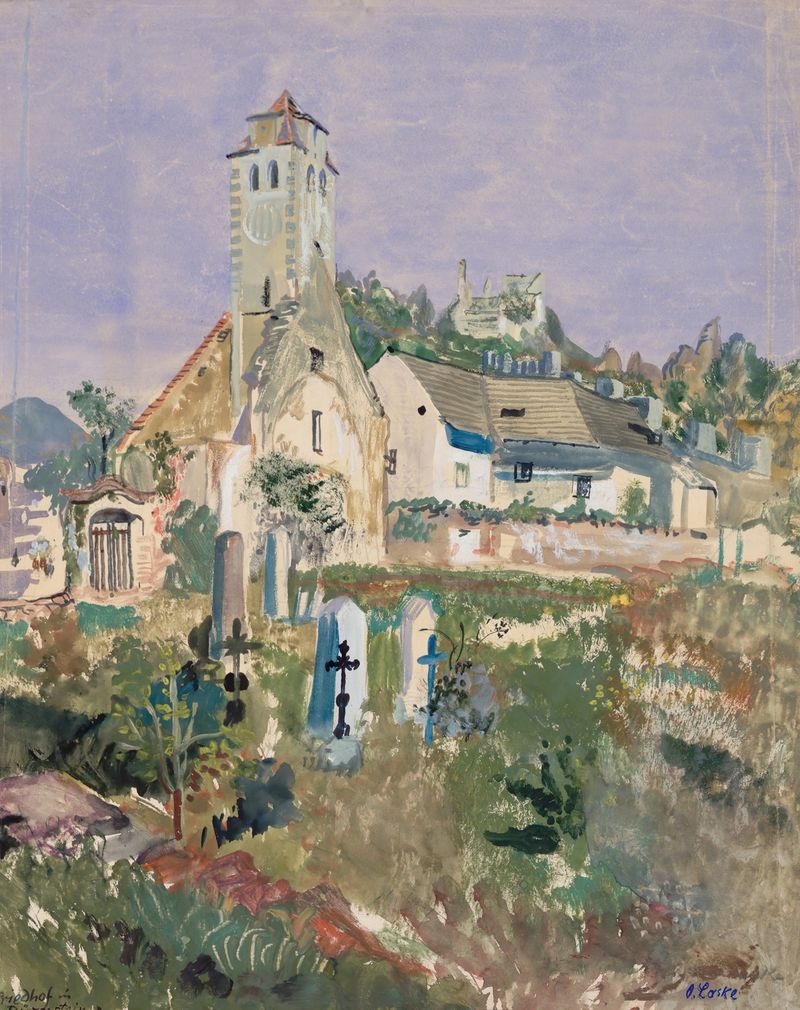
Friedhof in Dürnstein
Oskar Laske

Pratermotiv an der alten Donau
Oskar Laske

Frühjahrsnebel in Niederösterreich
Oskar Laske

Begräbnis des Wiener Bürgermeisters Dr. Karl Lueger
Oskar Laske

Maria Theresien-Denkmal mit Blick gegen das Burgtor
Oskar Laske
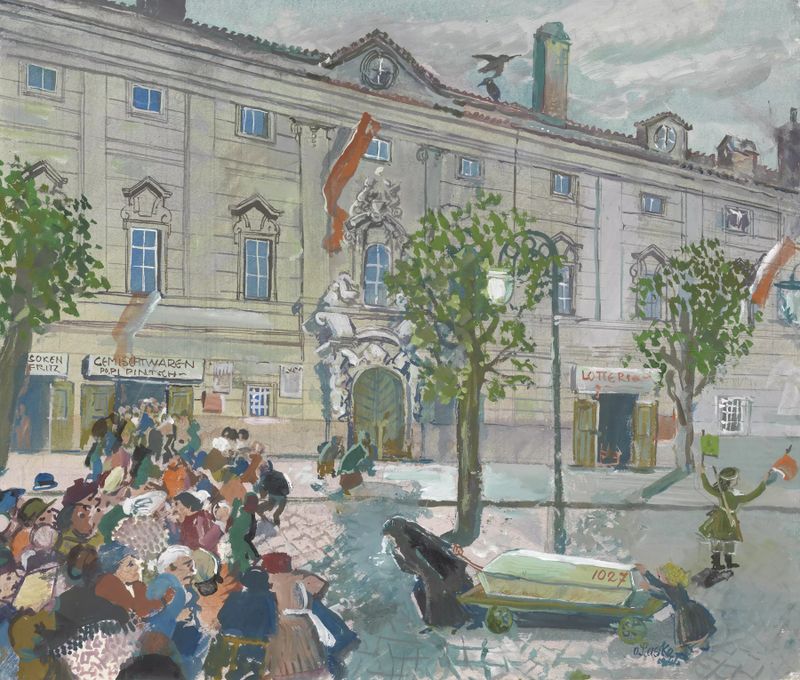
Wiener Straßenbild vom Mai 1945
Oskar Laske

Winterlandschaft in Pressbaum
Oskar Laske

Ansicht von Positano
Oskar Laske





