
In Realms of Fancy — History & Facts
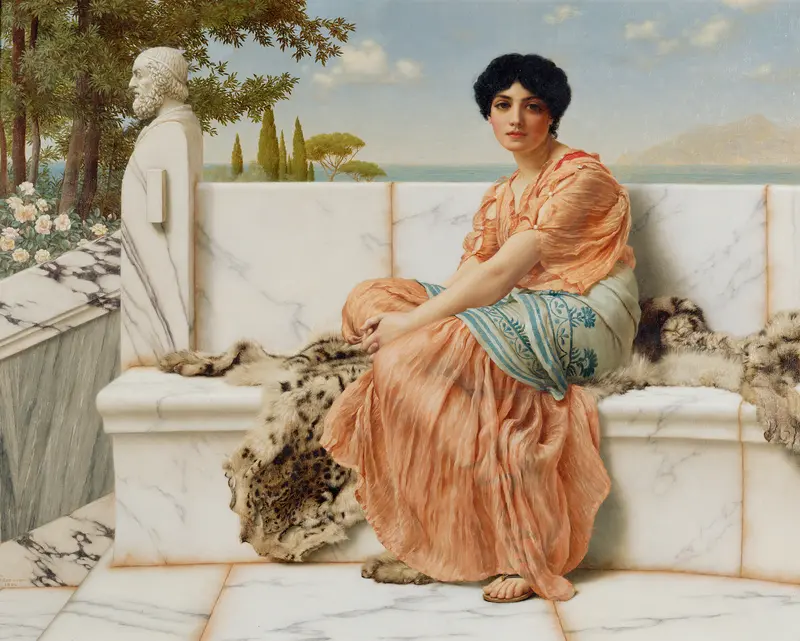
What draws the eye first in In Realms of Fancy is the languor of the reclining figure, her arm draped behind her head as if she has surrendered entirely to her daydreams. The artist, John William Godward, invites us to linger over every detail: the delicate transparency of the red fabric, the way it clings and falls in soft folds, the gentle flush of the sitter’s cheek, and the marble ledge that coolly separates her from a sunlit world beyond. The horizon is low, granting the sky and distant mountains a commanding presence, while the leafy boughs above her frame her reverie, suggesting both shelter and escape.
Every element in the composition seems tuned to the mood of idle, luxurious contemplation—the open hand, the half-closed eyes, the subtle interplay of warm and cool tones. Painted in 1911, this work belongs to a late flowering of the Neoclassical revival in British art, a genre that delighted in imagined scenes of antiquity, often populated by solitary women lost in thought. Such paintings were rarely direct commissions by the early twentieth century; rather, they catered to collectors who longed for the calm and order of a vanished classical world, even as modernity pressed in. Godward was among the last of the Victorian classicists, and his meticulous technique and taste for marble, silk, and Mediterranean light found a devoted audience.
Today, In Realms of Fancy resides in the Art Renewal Center Museum, a quiet testament to an era when artists and viewers alike sought refuge in the imagined serenity of ancient times—an invitation, still, to pause and dream alongside its subject.
More Artworks by John William Godward

Eighty and eighteen
John William Godward
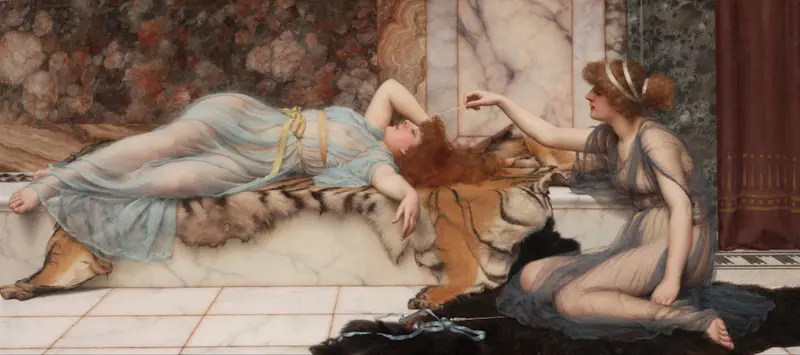
Mischief and Repose
John William Godward
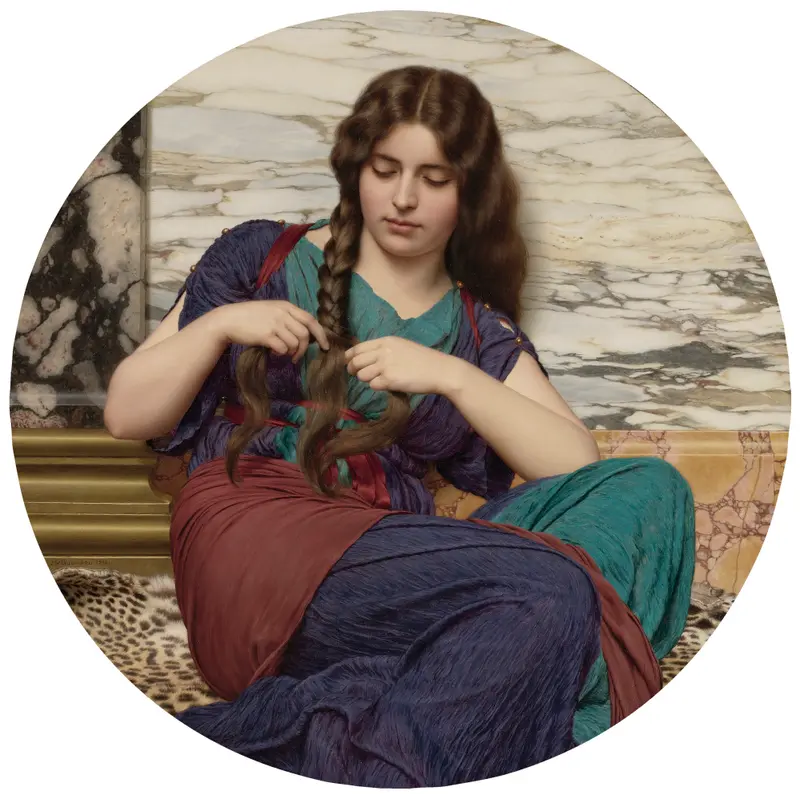
A Congenial Task
John William Godward
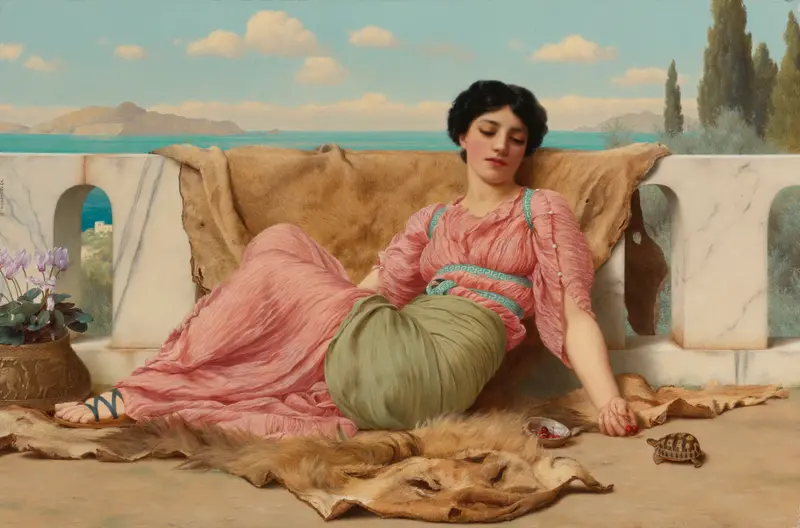
The Quiet Pet
John William Godward
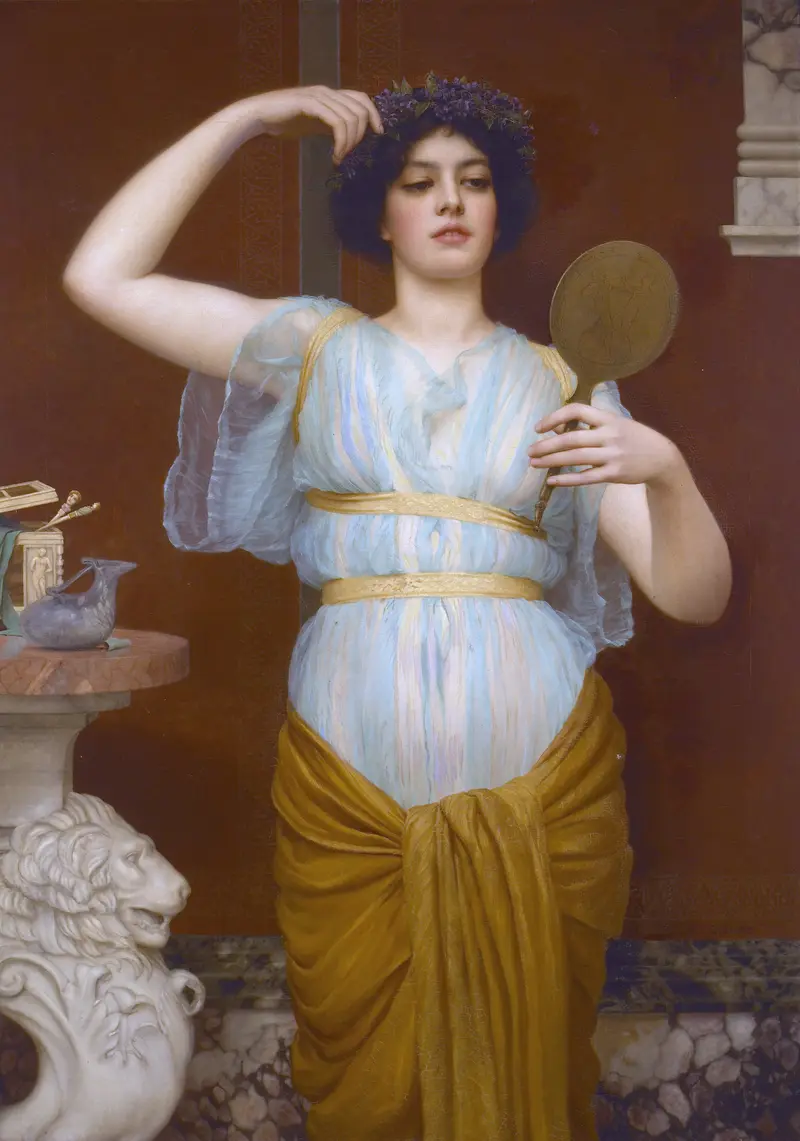
Ione
John William Godward
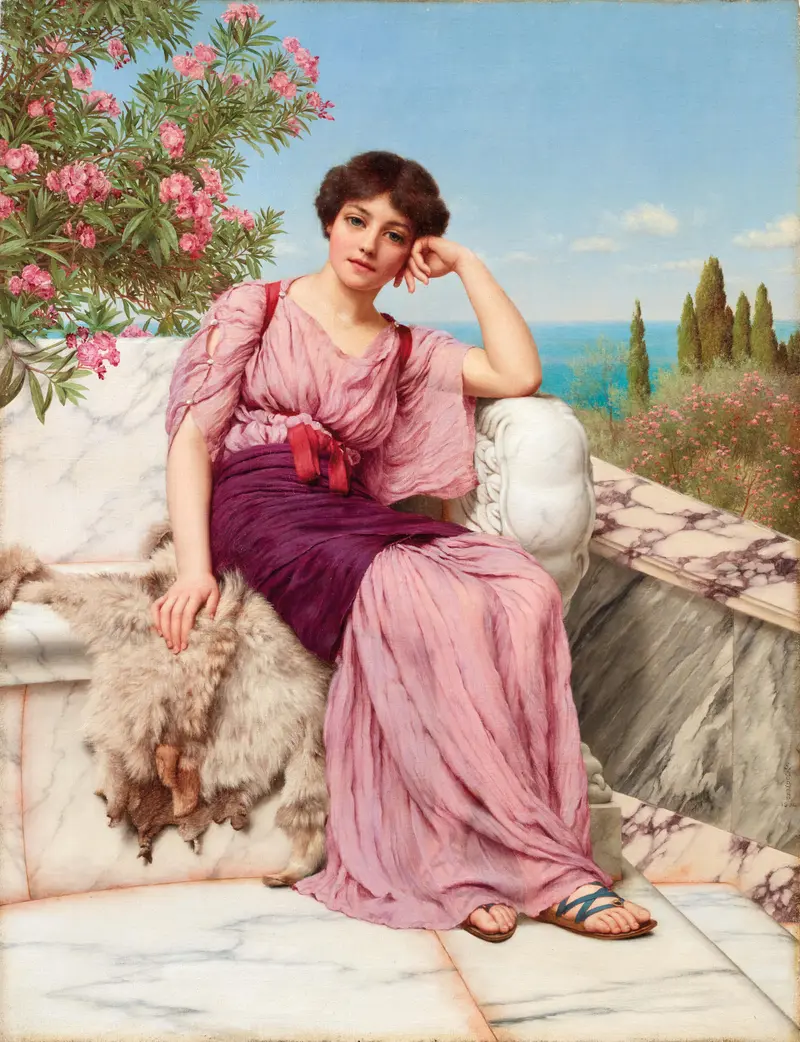
Sweet Dreams
John William Godward
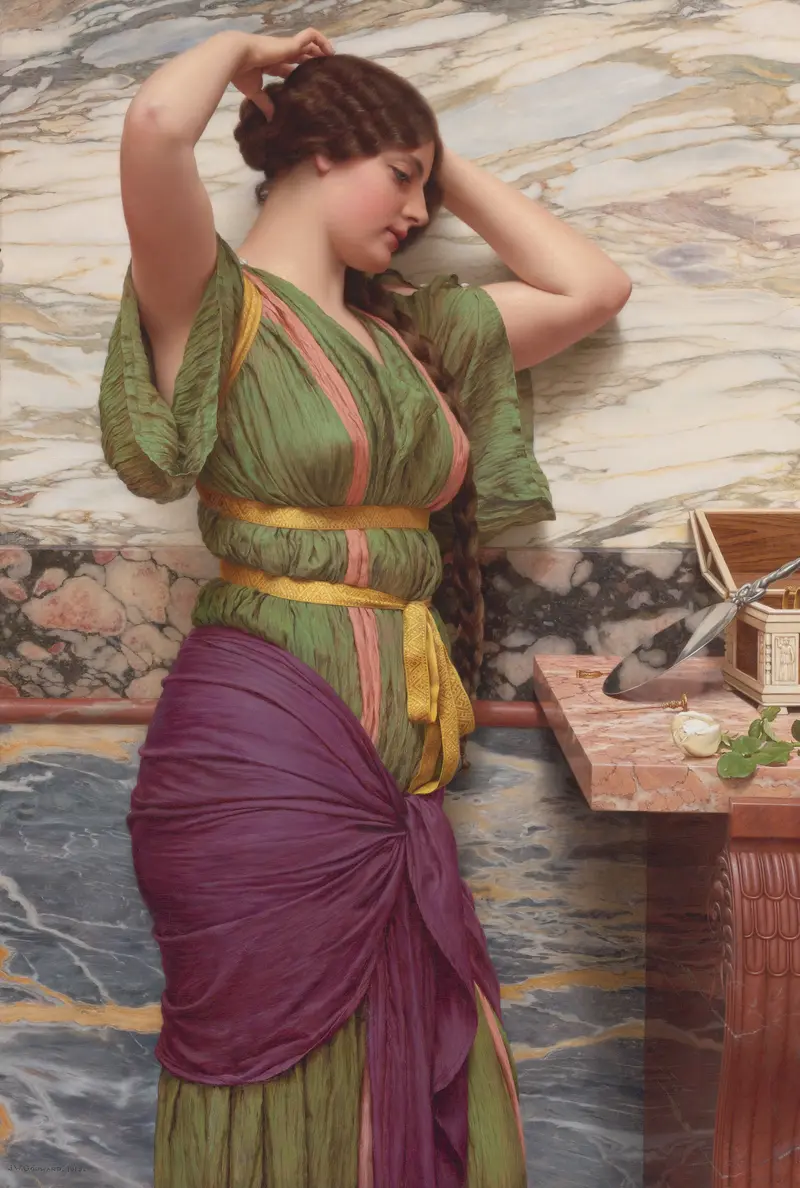
A Fair Reflection
John William Godward
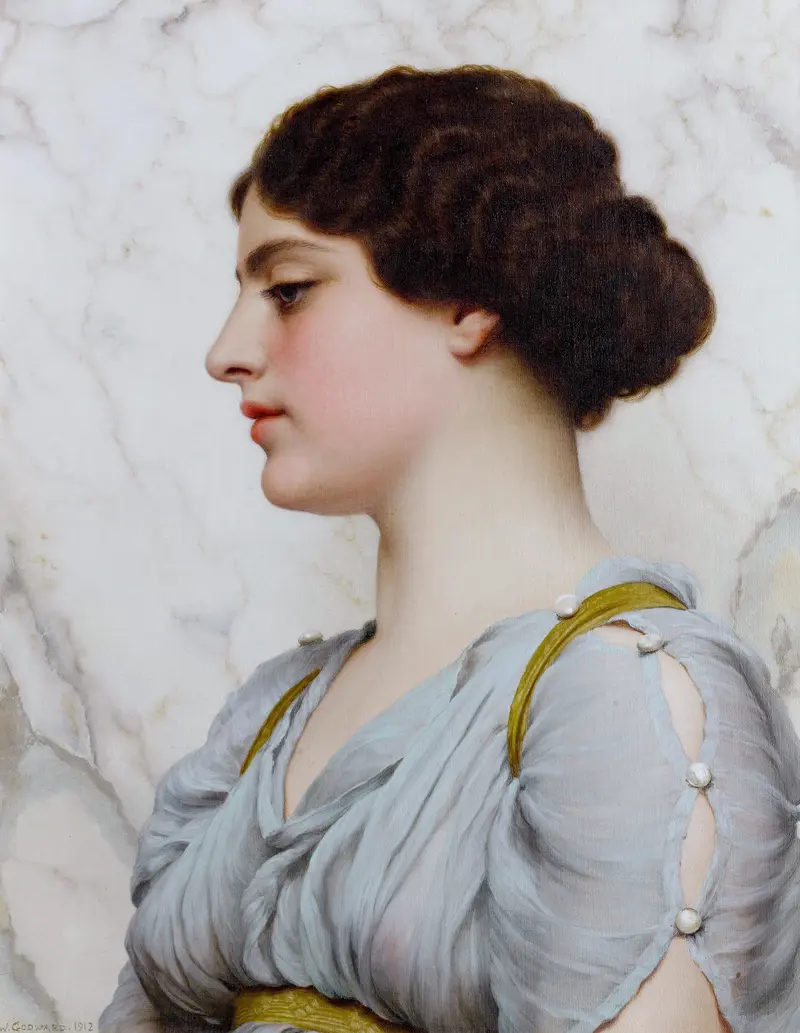
A Roman Beauty
John William Godward
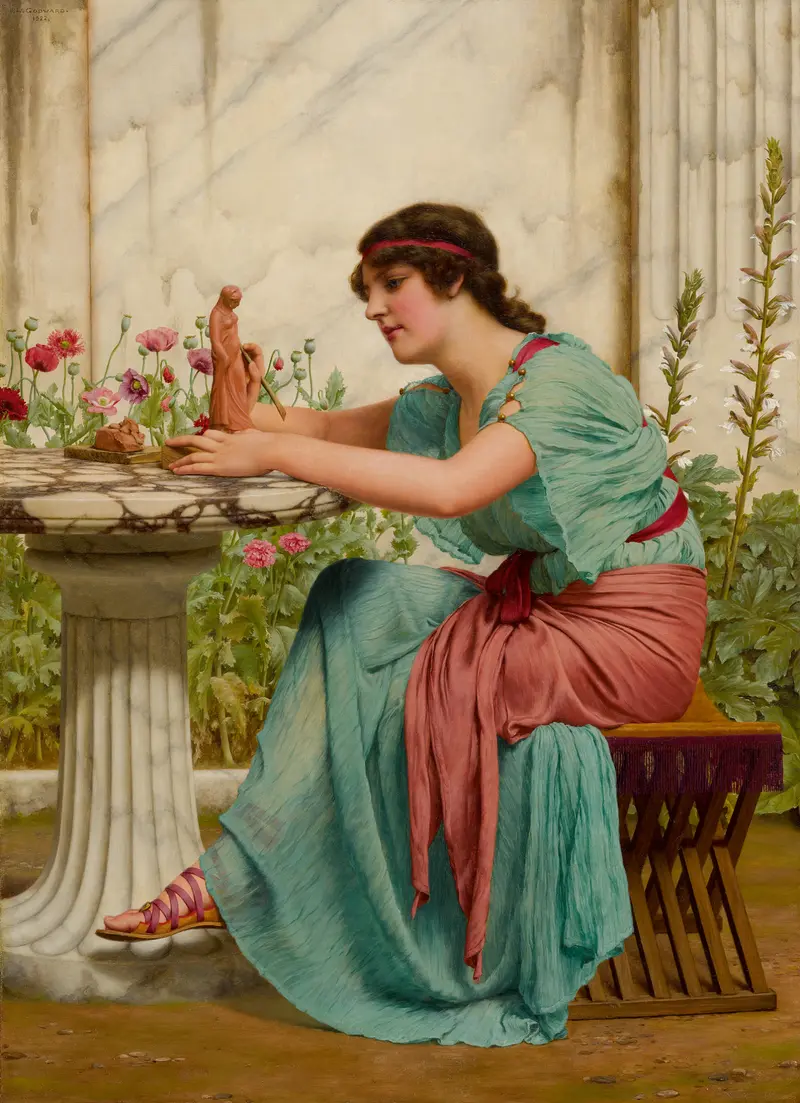
A Dilettante
John William Godward
Reverie
John William Godward



