
In the Foothills — History & Facts
What first draws the eye in In the Foothills is the gentle contrast between the humble, lived-in farmstead and the distant silhouette of a castle perched high above the rolling landscape. The thatched roof glows with the last warmth of afternoon, patched and mossy, while chickens scatter in the muddy yard and a cart trundles along a rutted track. The painter leads us from the earthy immediacy of daily life—mud on boots, a figure resting in the doorway—upward through layers of soft green, past grazing sheep and shaded trees, to the hazy, almost dreamlike fortress on the hill.
That castle, half-lost in mist, is less a destination than a memory, a reminder of history looming over the present. Painted in 1861, this work belongs to a moment when artists across Europe and America were fascinated by the meeting of nature, rural labor, and the remnants of a feudal past. Albert Bierstadt, though best known for his grand American landscapes, here turns a careful eye to the quieter rhythms of European countryside, perhaps in the north of the Alps as suggested by the source. Such scenes were prized by a growing middle class eager for images of both progress and rootedness, and often found their way into private parlors and drawing rooms.
The painting’s journey is largely unrecorded, now held in the Bridgeman Art Library, but its mood—half nostalgia, half observation—invites us to linger, to follow the muddy path back into the picture and imagine the stories unfolding beneath that ancient castle’s gaze.
More Artworks by Albert Bierstadt

A Storm in the Rocky Mountains, Mt. Rosalie
Albert Bierstadt
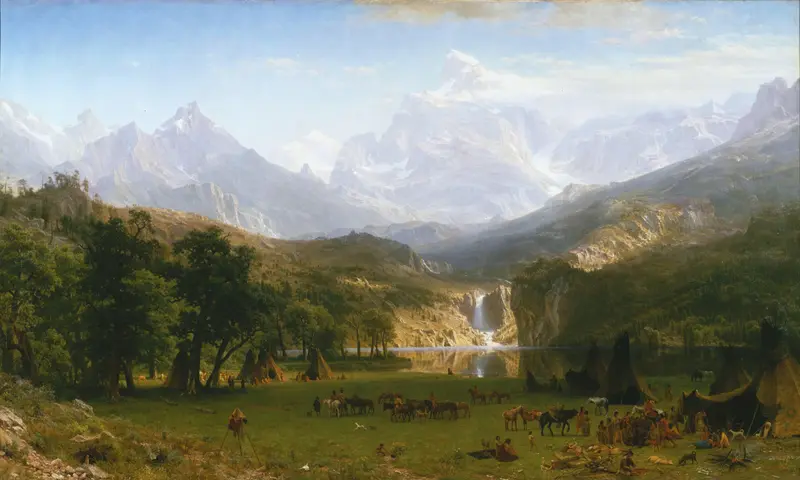
The Rocky Mountains, Lander's Peak
Albert Bierstadt
Niagara from the American Side
Albert Bierstadt
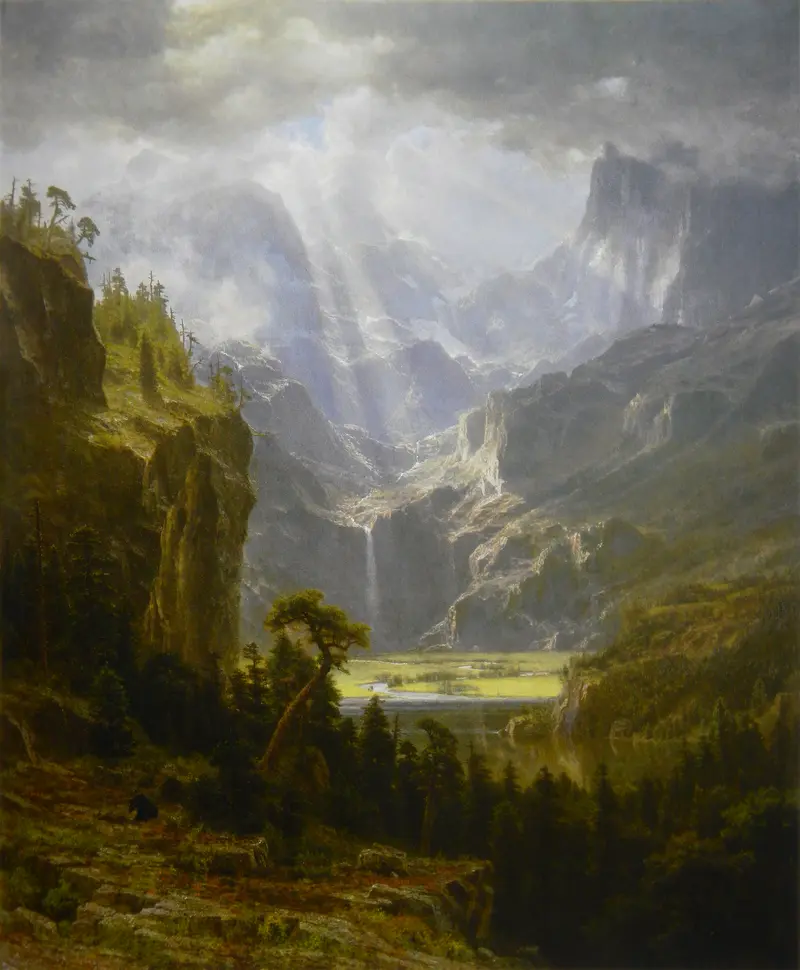
Rocky Mountains, Lander’s Peak
Albert Bierstadt

Valley of the Yosemite
Albert Bierstadt
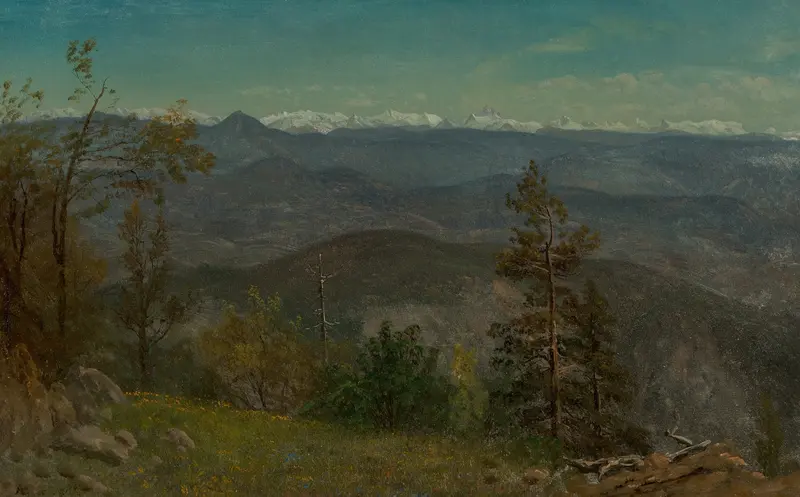
Yosemite Valley, California
Albert Bierstadt
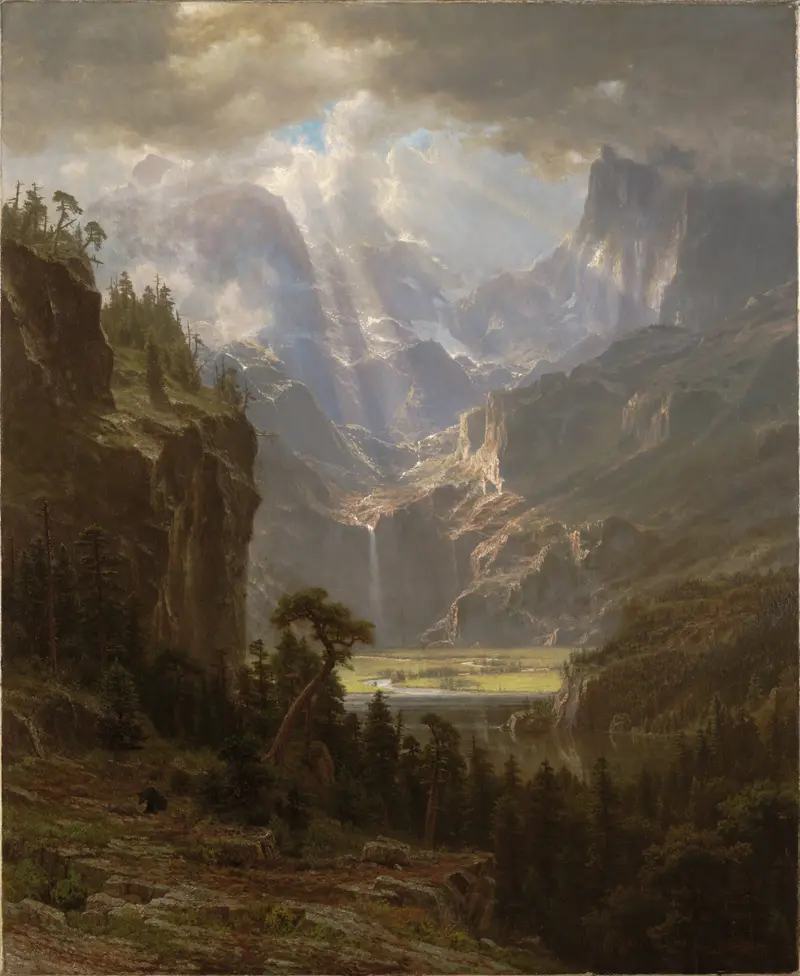
Rocky Mountains, "Lander's Peak"
Albert Bierstadt

Laramie Peak
Albert Bierstadt
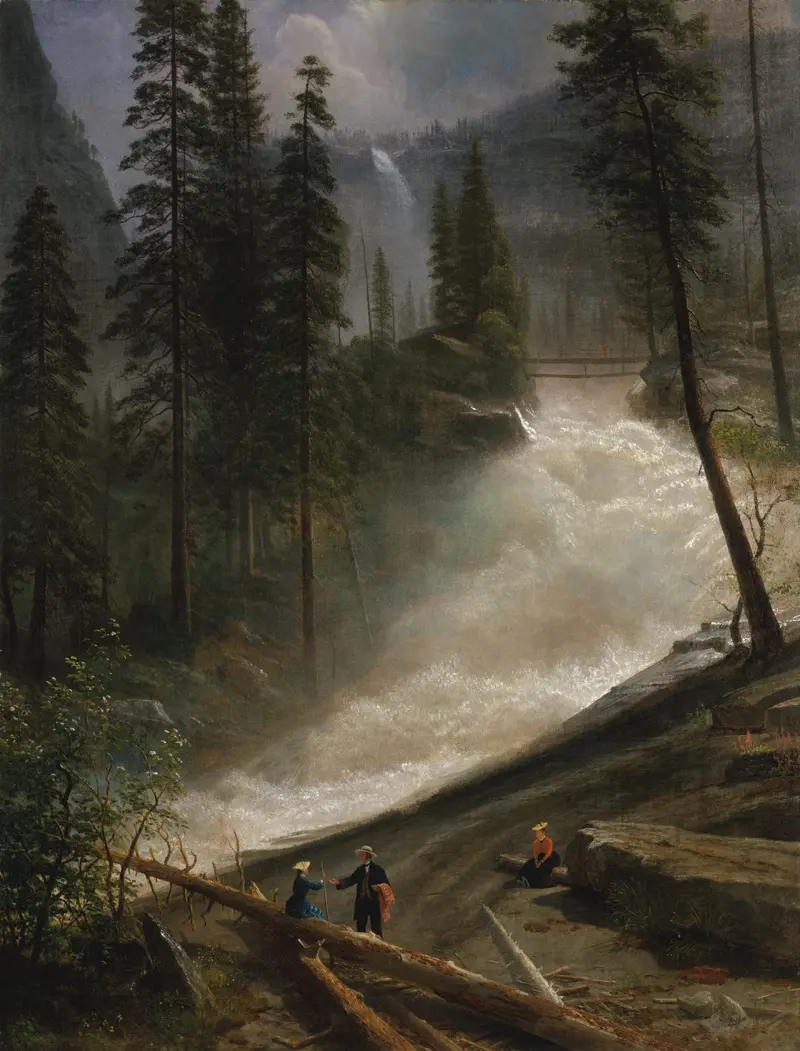
Nevada Falls, Yosemite
Albert Bierstadt
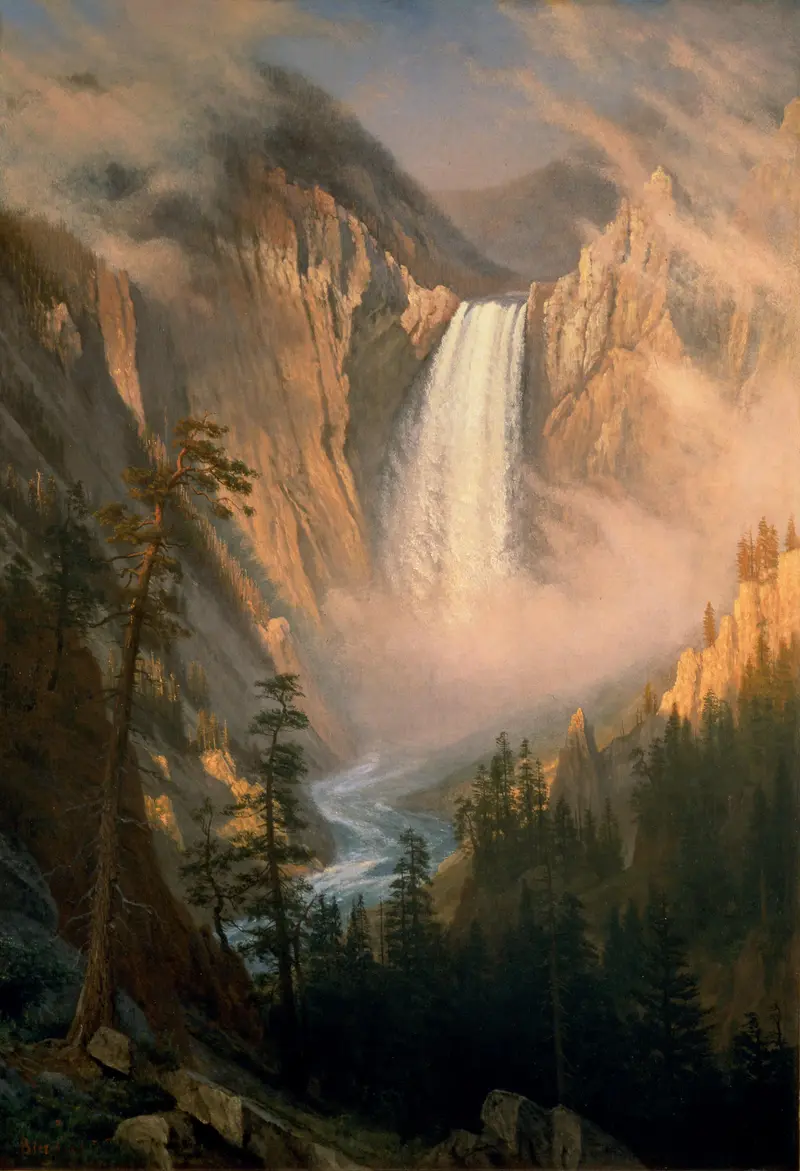
Yellowstone Falls
Albert Bierstadt
More Landscape Art

The Starry Night
Vincent van Gogh

View of Delft
Johannes Vermeer

Water Lilies
Claude Monet

The Grand Canal, Venice, looking north-west from the Ca' Corner to the Ca' Contarini degli Scrigni, with the campanile of Santa Maria della Carità
Canaletto

Windsor Castle
Canaletto

The Grand Canal looking North-East from the Palazzo Dolfin-Manin to the Rialto Bridge
Canaletto