
In the Woods — History & Facts
Can paint confess what words never could? In In the Woods, the ethereal quality of light weaving through the trees invites a dialogue with the subconscious, urging the viewer to explore the dreamlike essence of nature. Look to the left at the soft whispers of green that blanket the forest floor, where dappled sunlight filters through the leaves. The palette of muted greens and browns creates a sense of tranquility, while the gentle brush strokes evoke a feeling of safety and warmth. Notice how the trees stand sentinel, their trunks sturdy and grounded, yet the subtle movement in the foliage hints at a delicate breeze, infusing the scene with life and mystery. Beneath the surface, this painting reveals a contrast between the serene and the unknown.
The light, representing enlightenment and hope, struggles to penetrate the darker recesses of the woods, symbolizing the complexities of the human experience. Each shadow holds a secret, suggesting that even within nature's beauty lies an inherent tension between clarity and obscurity, comfort and fear. This duality speaks to the viewer's own journey, urging introspection and inviting dreams to flourish. Inness created this work in 1866, during a period when he was deeply involved in the American sublime, focusing on the spiritual connection to nature.
Living in New Jersey, he was influenced by the Hudson River School and began exploring more atmospheric renderings, seeking to express emotional resonance through landscapes. This painting marks a significant moment in his evolution as an artist, melding realism with personal interpretation and a sense of transcendental wonder.
More Artworks by George Inness
Browse all →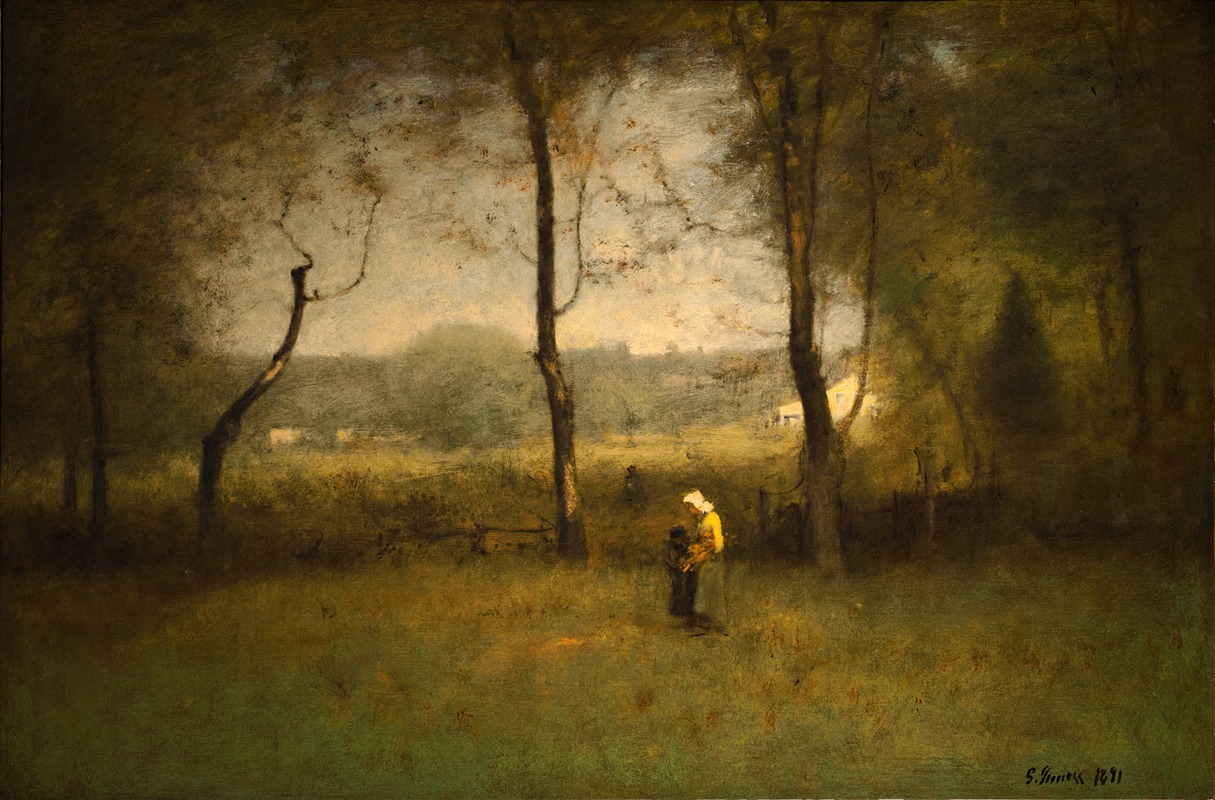
Autumn Woods
George Inness
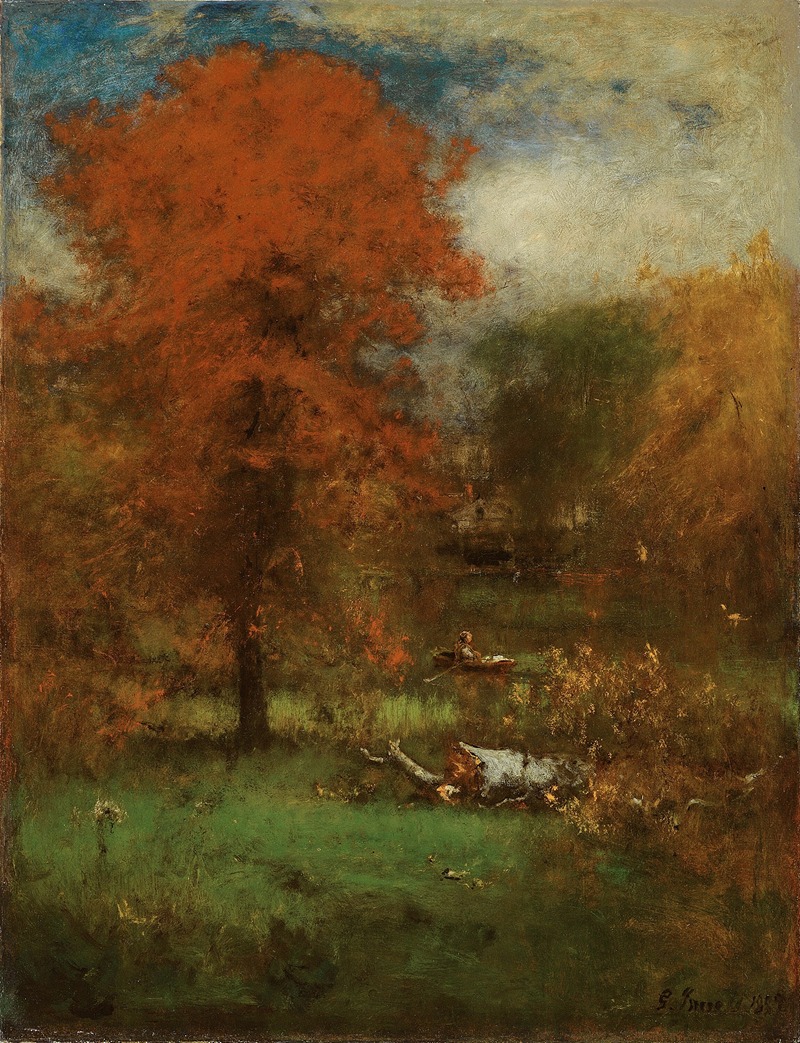
The Mill Pond
George Inness
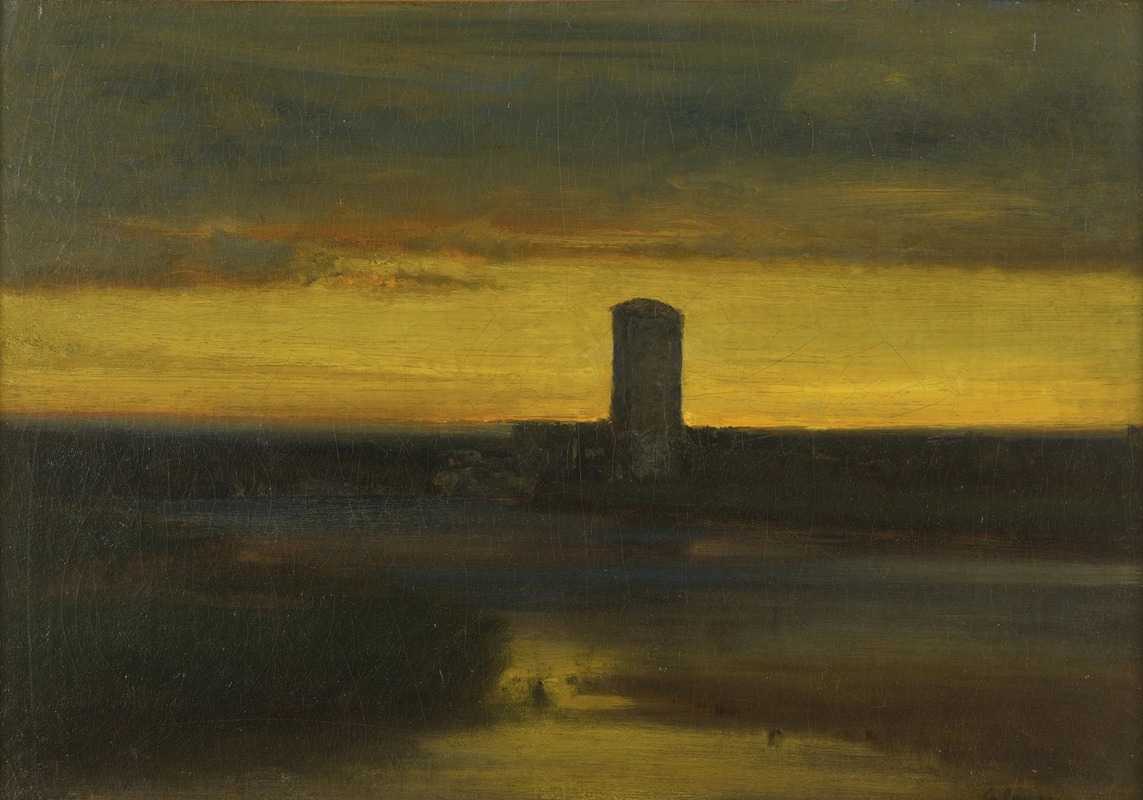
Afterglow
George Inness
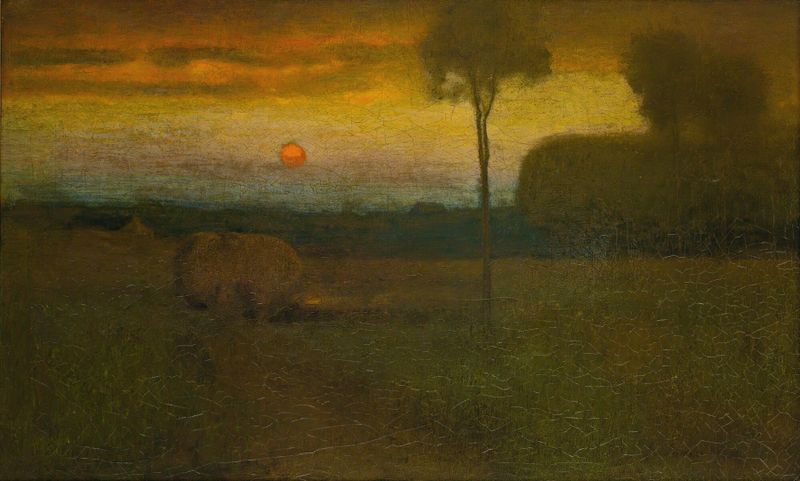
Landscape (Evening Landscape)
George Inness

Montclair
George Inness

View in Berkshire County, Massachusetts, Clearing Off after a September Storm
George Inness

October
George Inness
Landscape, Sunset
George Inness
Afterglow
George Inness
Catskill Mountains
George Inness





