
Intercession of Christ and Mary before God the Father — History & Facts
Few images in Dutch art so directly capture the intercessory power of Mary alongside Christ as Intercession of Christ and Mary before God the Father by Abraham Bloemaert. In the wake of the Counter-Reformation, Marian devotion was a flashpoint in the religious conflicts that divided Europe, and this painting stands as a rare testament to the persistence of Catholic themes in the Protestant-dominated Netherlands. The work’s composition and subject are unusual for Bloemaert, who is better known for mythological scenes and landscapes, suggesting a special commission—perhaps for a clandestine Catholic chapel or a private patron seeking comfort in turbulent times. At the center of the canvas, Christ and Mary kneel before the imposing figure of God the Father, their gestures pleading on behalf of humanity.
Christ displays the wounds of the Passion, his right hand raised in supplication, while Mary, robed in blue, bows her head and joins her hands in prayer—a visual embodiment of her role as intercessor. God the Father, enthroned and radiant, extends a gesture of blessing, surrounded by cherubim and a golden light that spills across the figures. The dramatic contrast of light and shadow, a hallmark of the Baroque style, intensifies the emotional urgency of the scene.
Unlike Rubens’s exuberant and crowded depictions of the heavenly court, Bloemaert’s interpretation is intimate, focusing on the direct appeal to divine mercy. The exact origins and early history of this painting are not fully documented, reflecting the challenges of tracing Catholic devotional art in the Dutch Republic. Abraham Bloemaert was a central figure in the Utrecht school, and this work likely dates from his mature period, when he was known for blending Northern realism with Italianate grandeur. Surviving records do not indicate the original patron or intended location, but similar works often adorned hidden churches or private oratories.
Today, Intercession of Christ and Mary before God the Father is valued for its rare subject and as a testament to Bloemaert’s versatility, standing out among his more secular commissions and landscapes. Its presence in a modern collection offers a glimpse into the spiritual anxieties and hopes of its time.
More Artworks by Abraham Bloemaert

Adam and Eve
Abraham Bloemaert
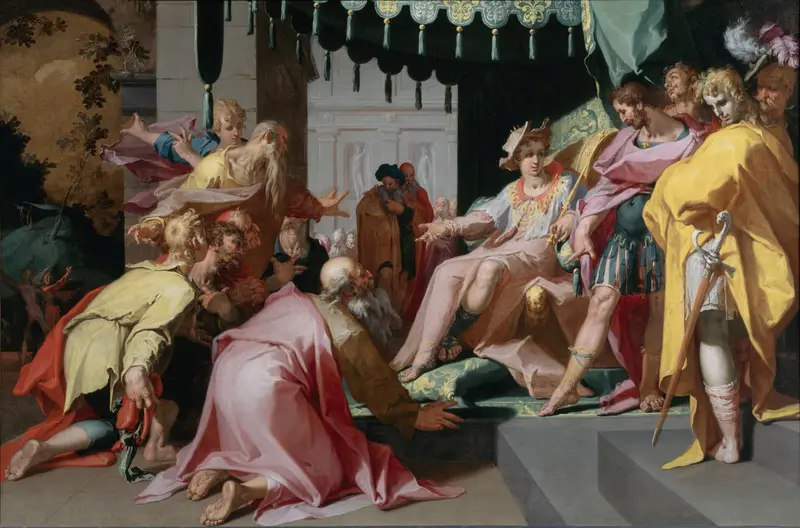
Joseph and his Brothers
Abraham Bloemaert
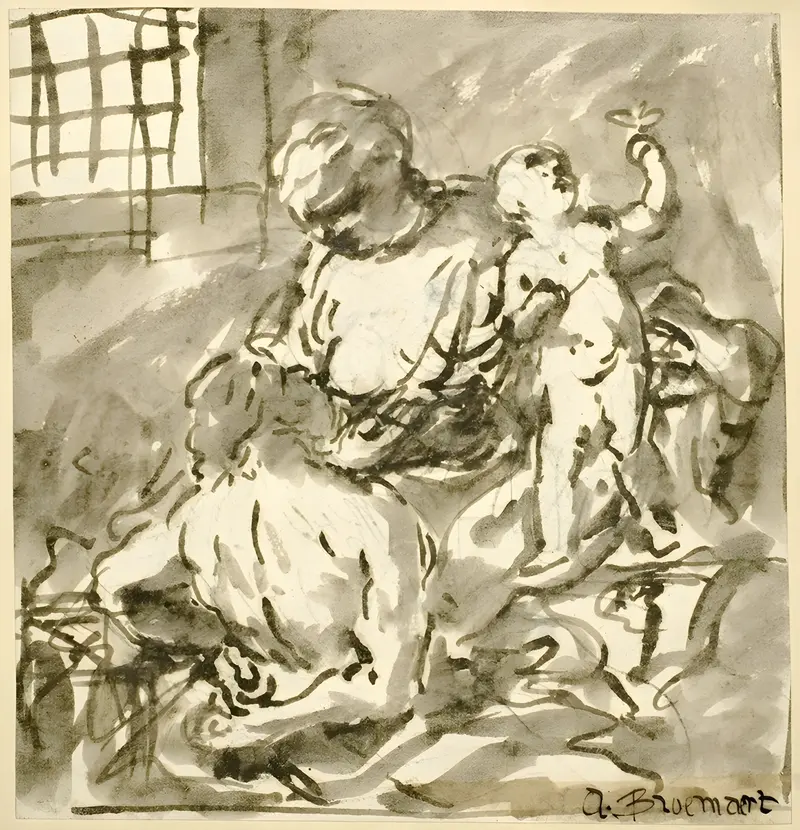
Caritas Romana
Abraham Bloemaert
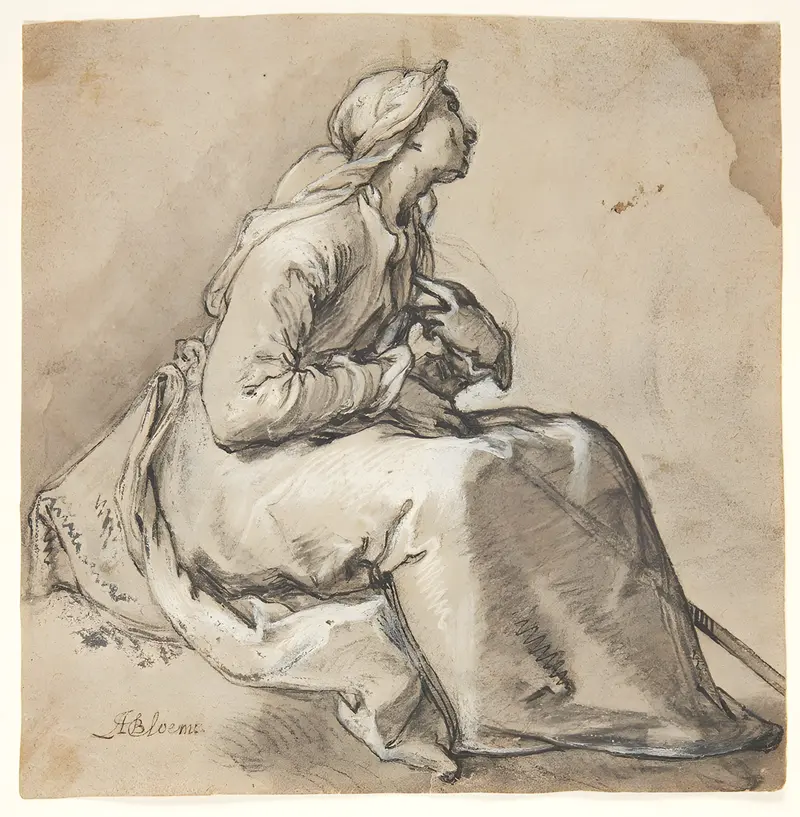
A seated woman facing right
Abraham Bloemaert
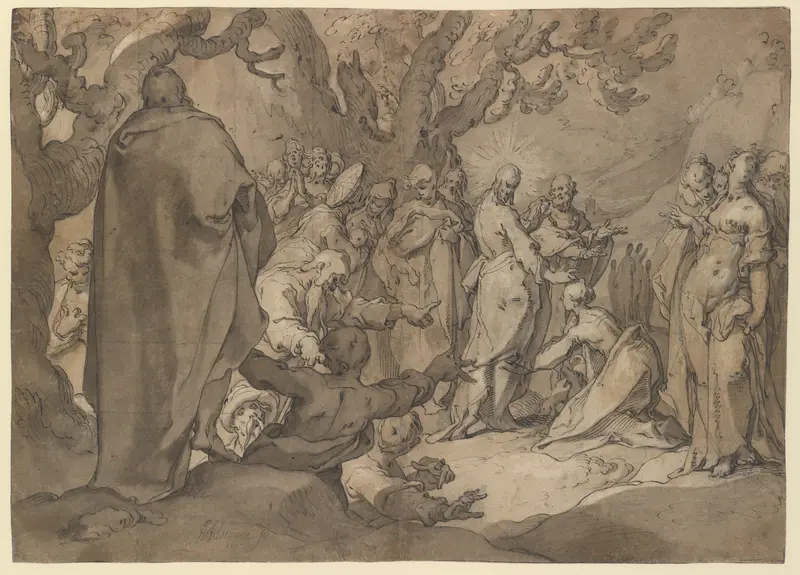
Christ and the Canaanite Women
Abraham Bloemaert
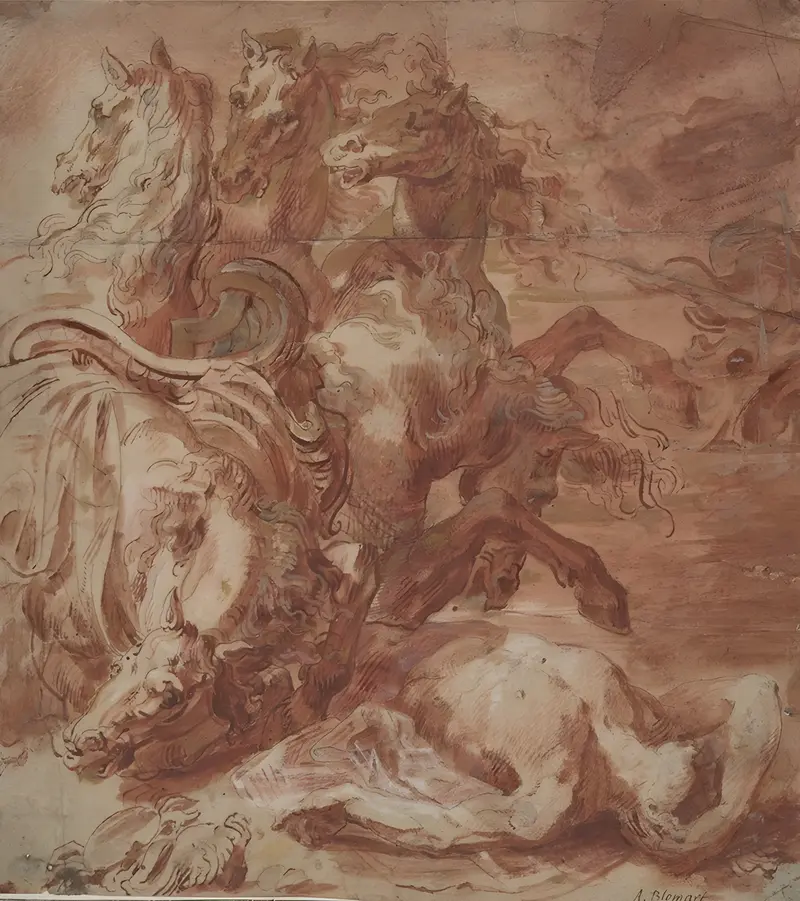
Hippolytus
Abraham Bloemaert
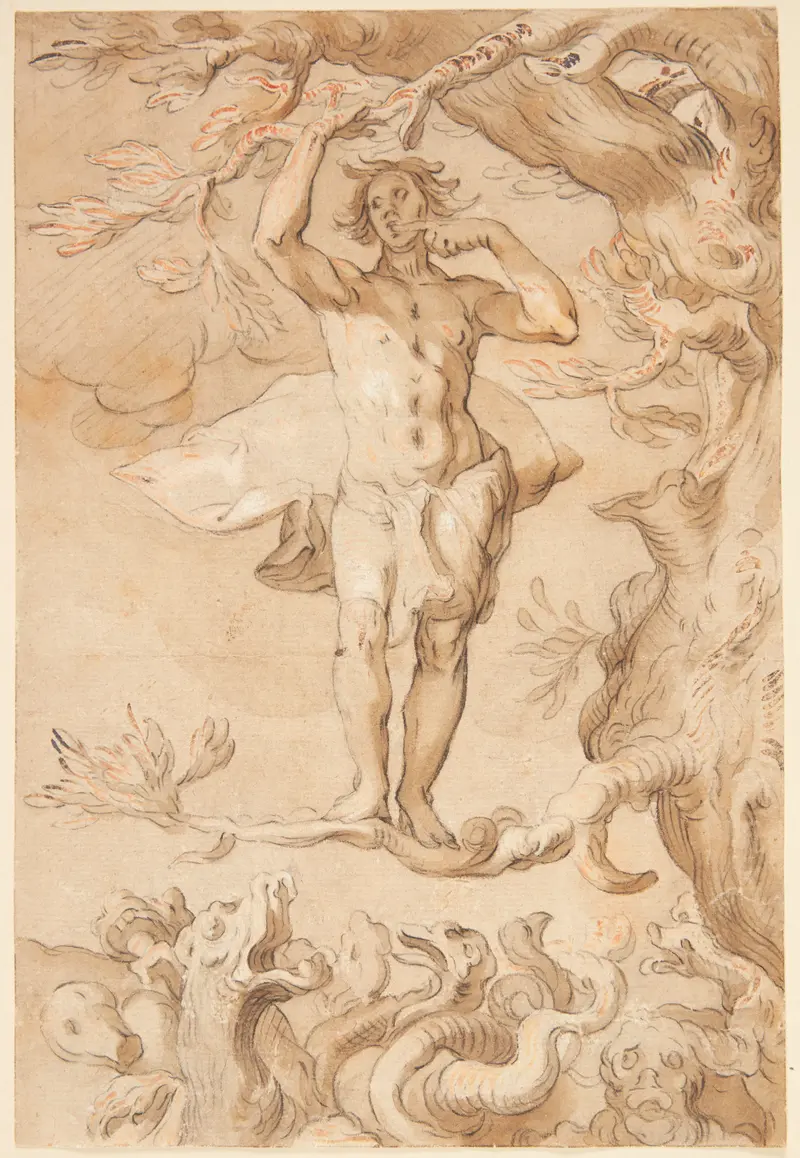
Den menneskelige glædes skrøbelighed En mand, der jages af en drage, klynger sig til en gren, mens han slikker honning af sin finger
Abraham Bloemaert

Moses Striking the Rock
Abraham Bloemaert
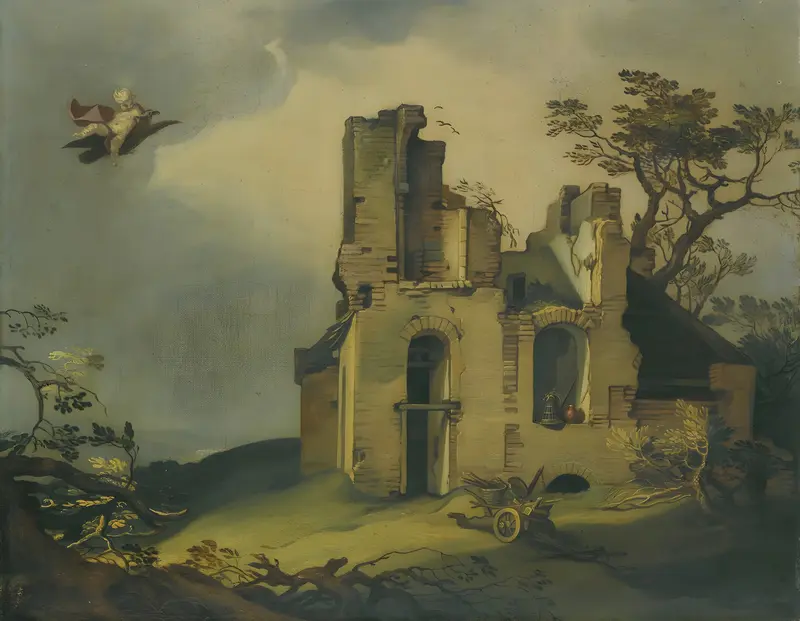
A Landscape With Ruins, With The Rape Of Ganymede
Abraham Bloemaert
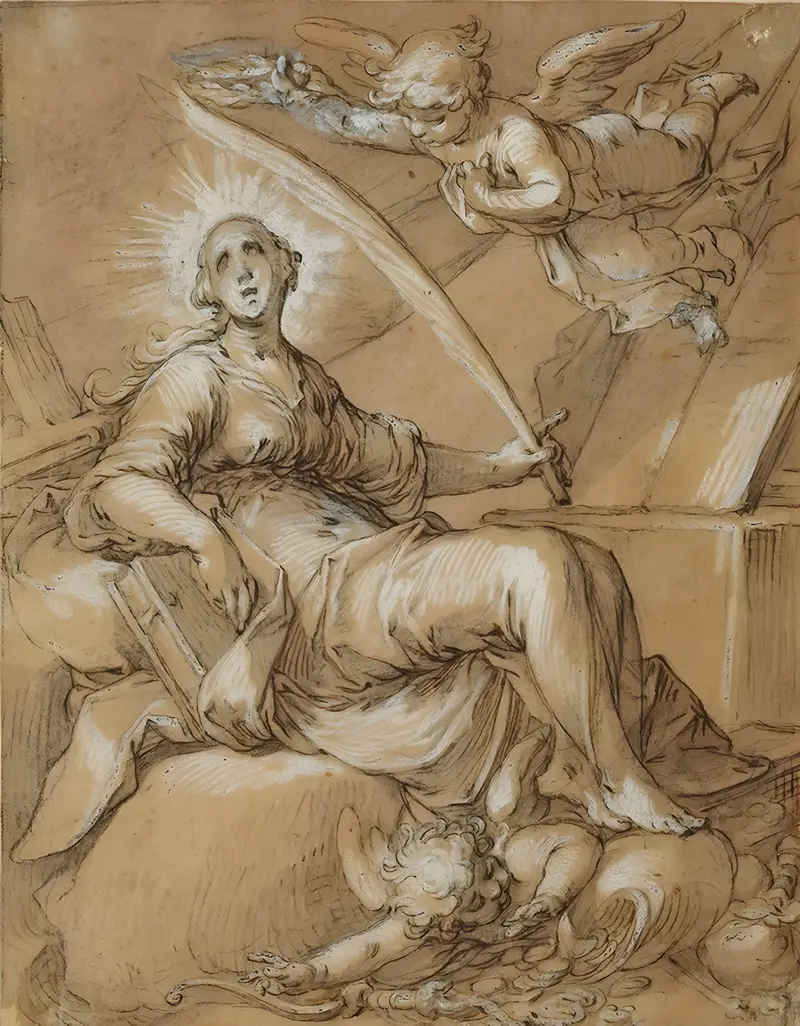
Sainte Catherine
Abraham Bloemaert





