
Interior of a grotto with a rock-pool, frogs, salamanders and a bird's nest — History & Facts
A thicket of flowers bursts from cool shadow, their petals almost luminous against the damp gloom of the grotto. At first, the eye is drawn to the extravagant bouquet—lilies, poppies, a heavy peony—each rendered with a precision that seems to slow time. But linger, and the painting reveals itself as a miniature wilderness: frogs crouch at the water’s edge, salamanders glisten on the rocks, and a bird guards her nest from a perch above.
The stillness is deceptive; every detail is a clue in a quiet drama of survival and shelter, the grotto’s darkness sheltering life both fragile and alert. Light slips in from the left, guiding the gaze through tangled stems and glossy leaves, then up to the bird’s nest, where nature’s cycle continues above the pool’s murky surface. Painted around 1670, Interior of a grotto with a rock-pool, frogs, salamanders and a bird's nest belongs to a world where the boundaries between art and natural science were porous, and collectors prized such works for their ability to capture the marvels of creation. In the Dutch Golden Age, artists like Abraham Mignon elevated the still life into a stage for nature’s complexity, reflecting both the curiosity and the anxieties of a society fascinated by cataloguing the world.
These paintings were often destined for private homes, where they served as meditations on beauty, transience, and the hidden workings of life. History has kept few traces of this particular canvas beyond its date and its passage through collections, but its intricate surface invites us to look closer—each glance rewarded with another secret, another small creature nestled in the shadows.
More Artworks by Abraham Mignon

Still Life with Flowers and a Watch
Abraham Mignon
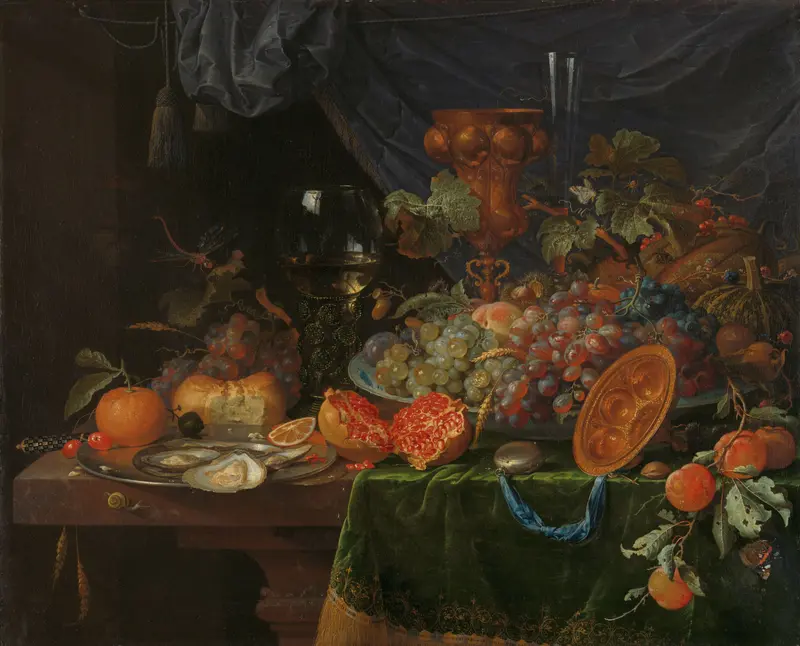
Still Life with Fruit and Oysters
Abraham Mignon
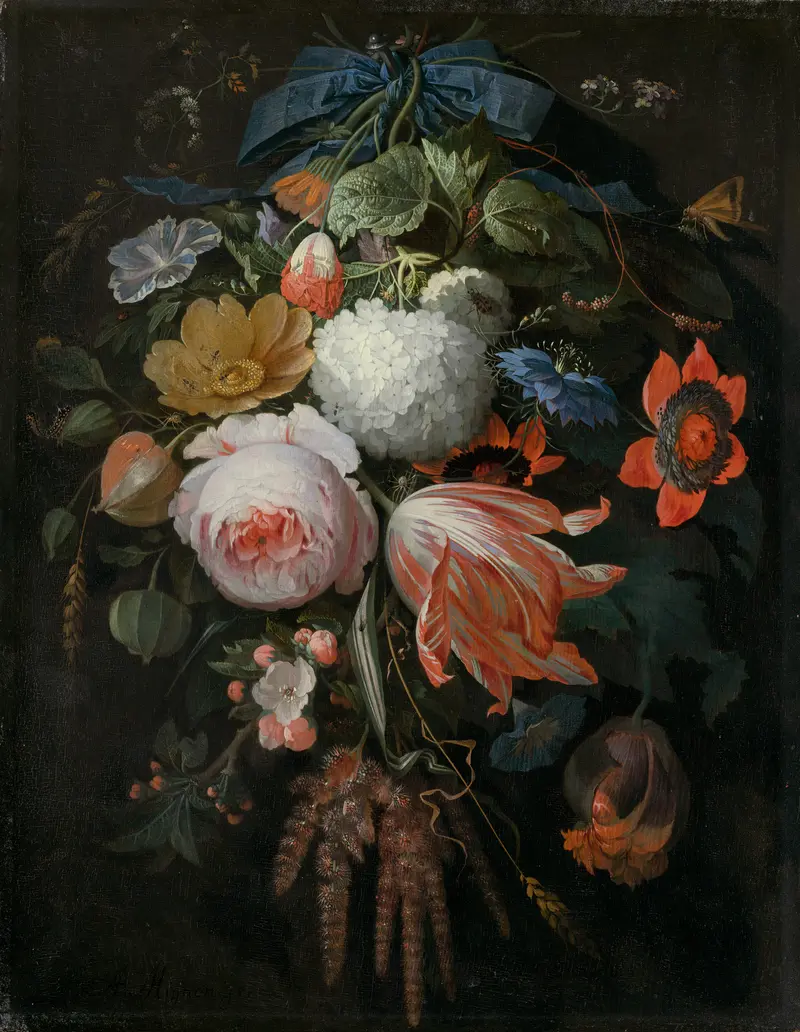
A Hanging Bouquet of Flowers
Abraham Mignon
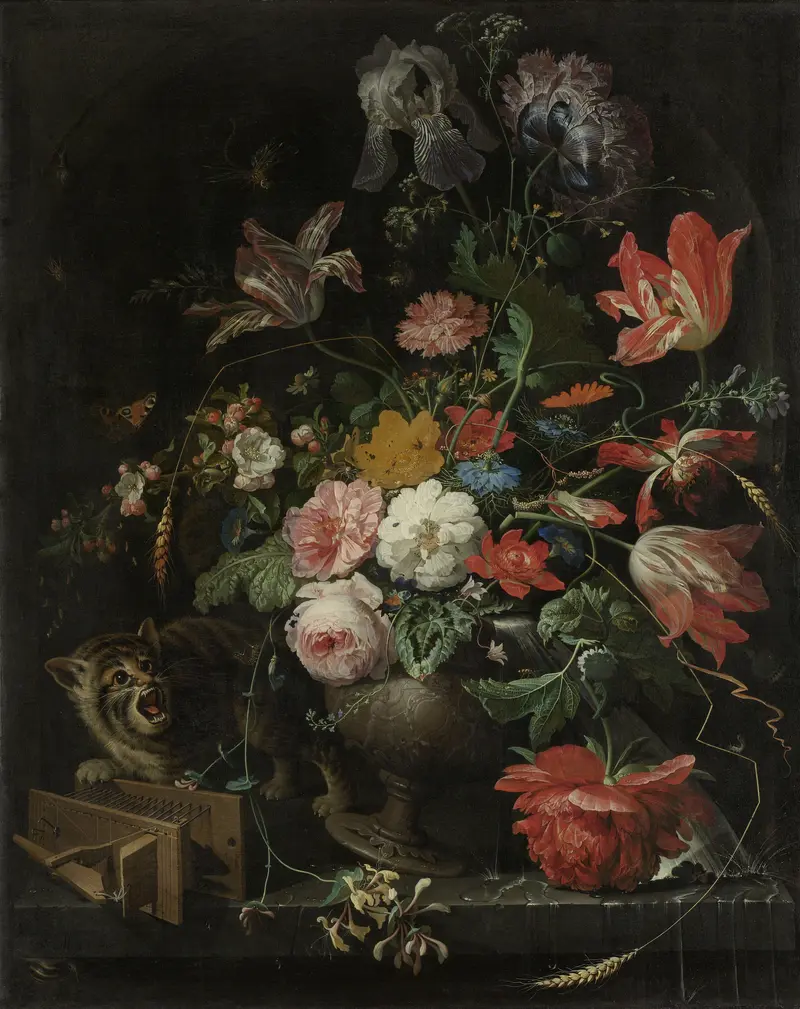
Bouquet with cat and mousetrap
Abraham Mignon
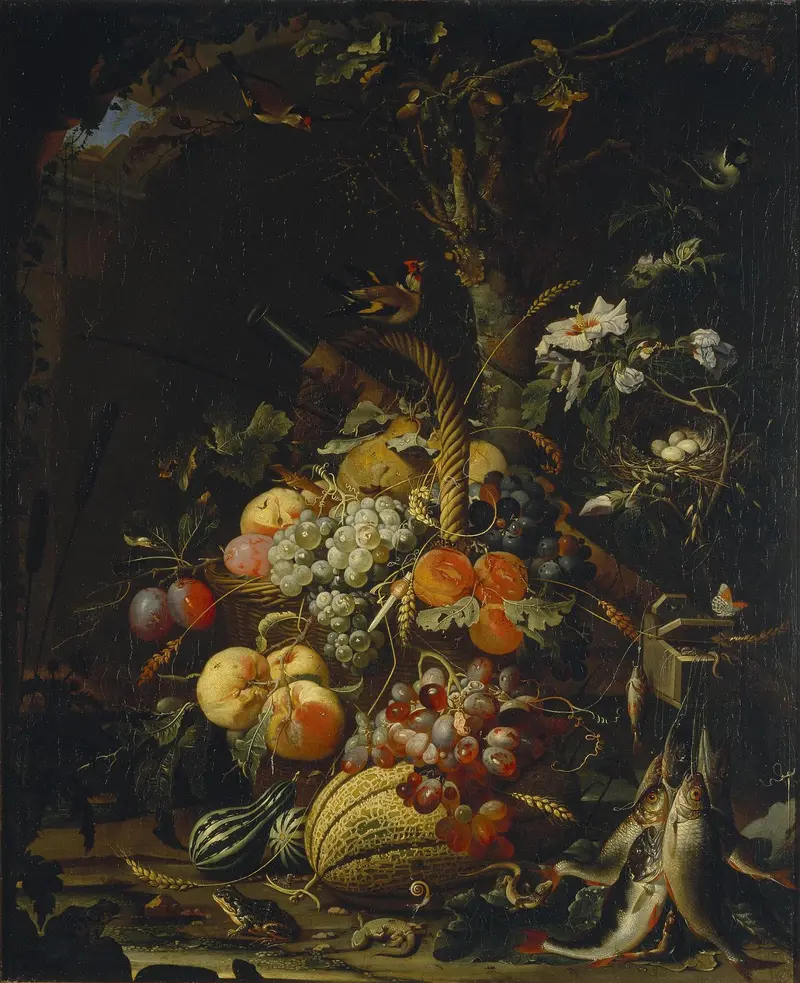
Forest floor still life with fruit, fish and a bird's nest
Abraham Mignon
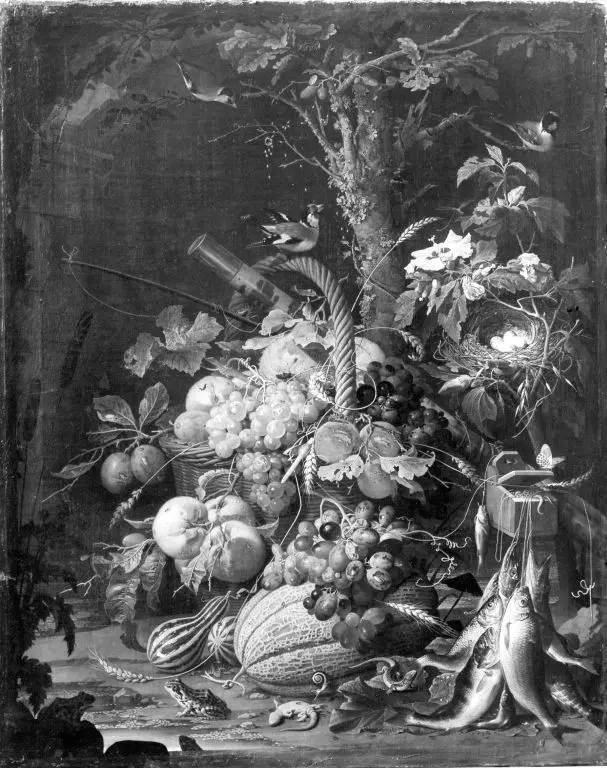
Still life with fruit, fish and a bird's nest
Abraham Mignon
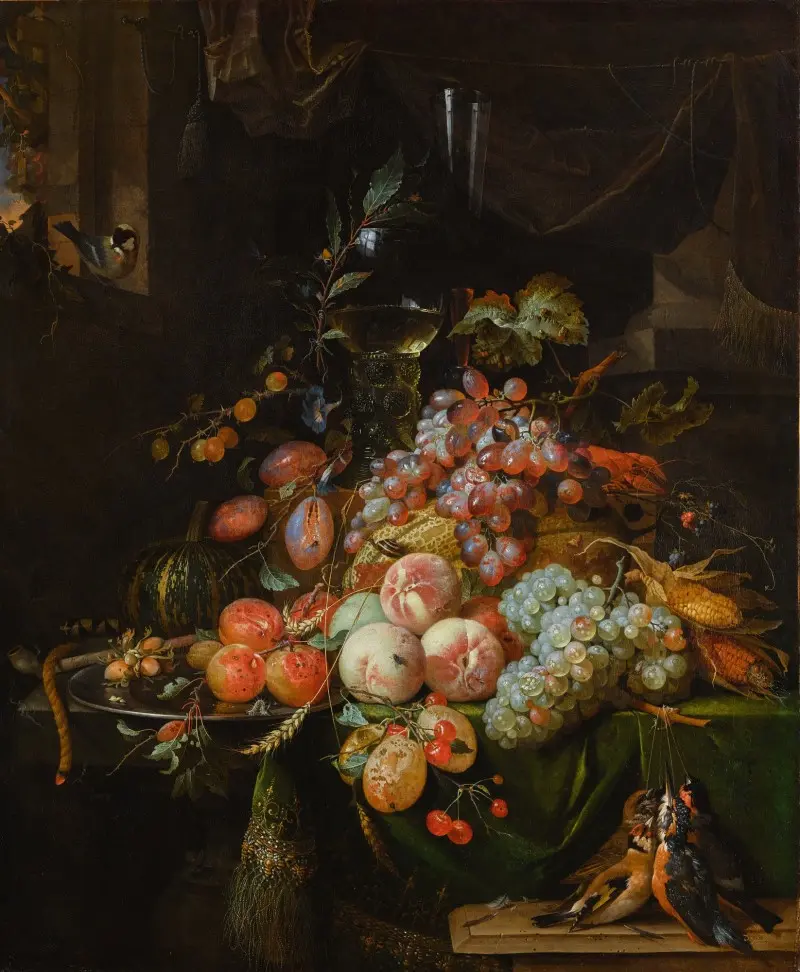
Still Life with Plums, Peaches, Apricots, Grapes and a Melon
Abraham Mignon
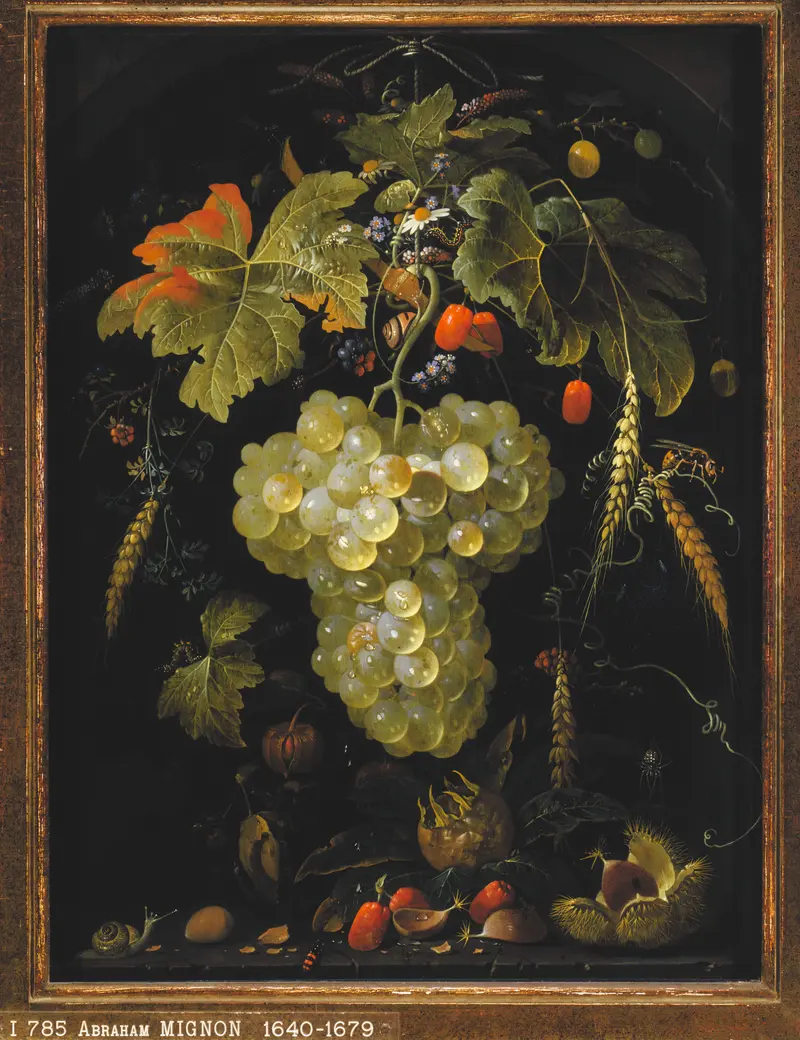
Festoon of fruit suspended from a rope, in a niche
Abraham Mignon
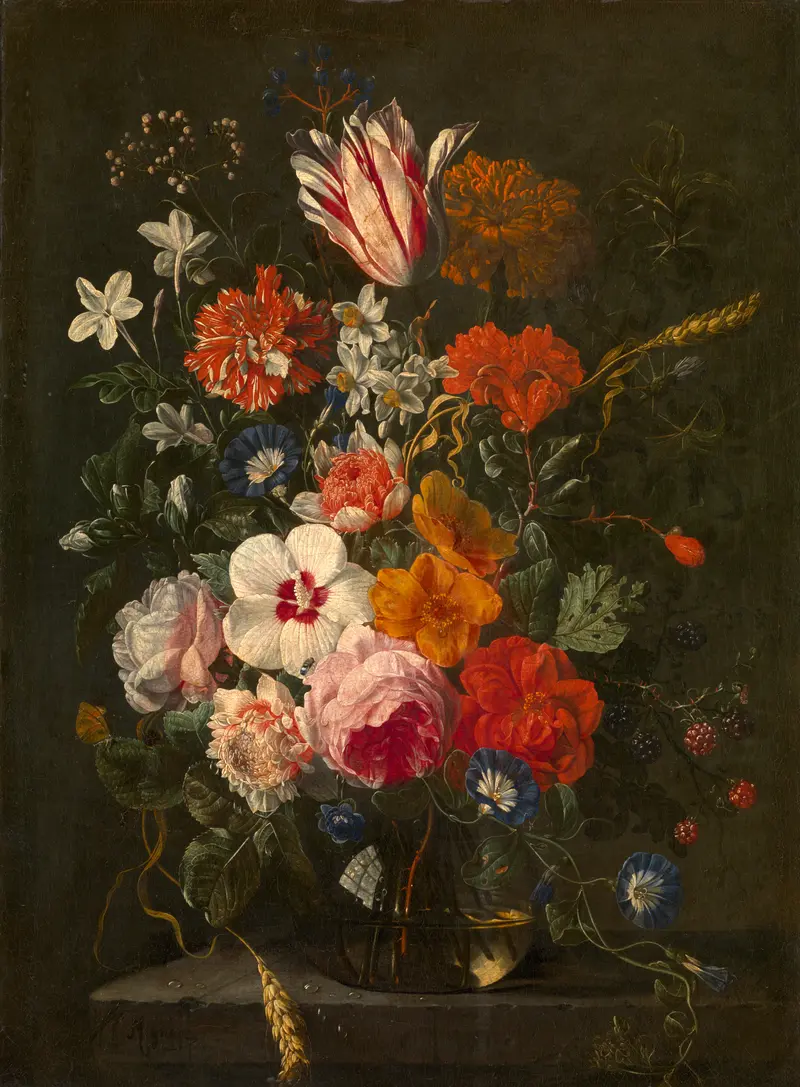
Flowers and a branch of berries in a glass vase on a stone ledge
Abraham Mignon
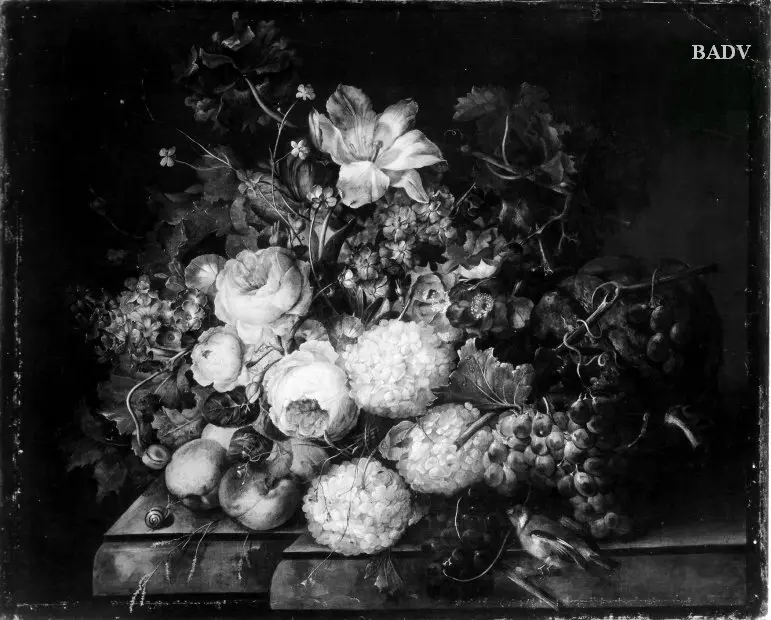
Flowers and fruit on a plinth
Abraham Mignon





