
Interior with a Still Life — History & Facts
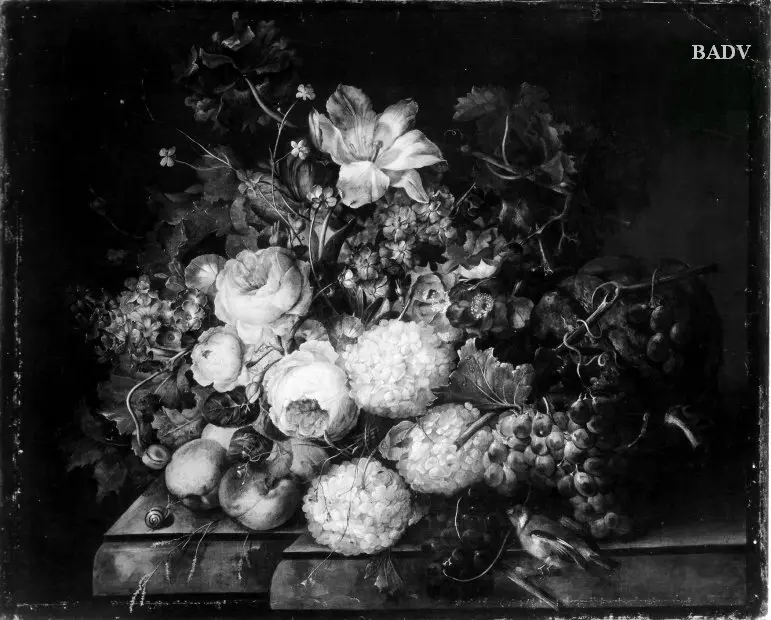
A single shaft of light slices through the dimness, catching on the bloom of grapes and the downy skin of peaches, turning fruit into treasure. The scene is a drama of abundance and decay: a table groans beneath the weight of summer’s riches—clusters of grapes, curling leaves, and scattered kernels of corn—while a goldfinch perches quietly at the window, a silent witness to the feast. Every object seems to be in conversation with its neighbor: the glass goblet reflects the glint of metal, the velvet drapery above threatens to slip and join the chaos below, and a snail inches toward the edge as if to escape the spectacle.
The painter’s hand lingers on the textures—smooth, rough, glistening, bruised—inviting the viewer to linger, too, and notice the moment when beauty tips toward excess. Works like this, painted in 1670 by Abraham Mignon, belong to a world obsessed with the fleeting nature of pleasure and the richness of everyday life. In the Dutch Republic, still lifes were more than decoration; they were meditations on prosperity, trade, and the passage of time, often commissioned by wealthy merchants eager to display both taste and moral reflection. The meticulous arrangement of fruit and luxury objects in Interior with a Still Life reflects the era’s fascination with the senses and the fragility of fortune.
History has kept few traces of this specific painting’s journey, but its presence in a modern collection—recorded today at Art UK—reminds us how seventeenth-century eyes found meaning in the ordinary, and how much remains to be discovered in a single, carefully painted leaf.
More Artworks by Abraham Mignon

Still Life with Flowers and a Watch
Abraham Mignon
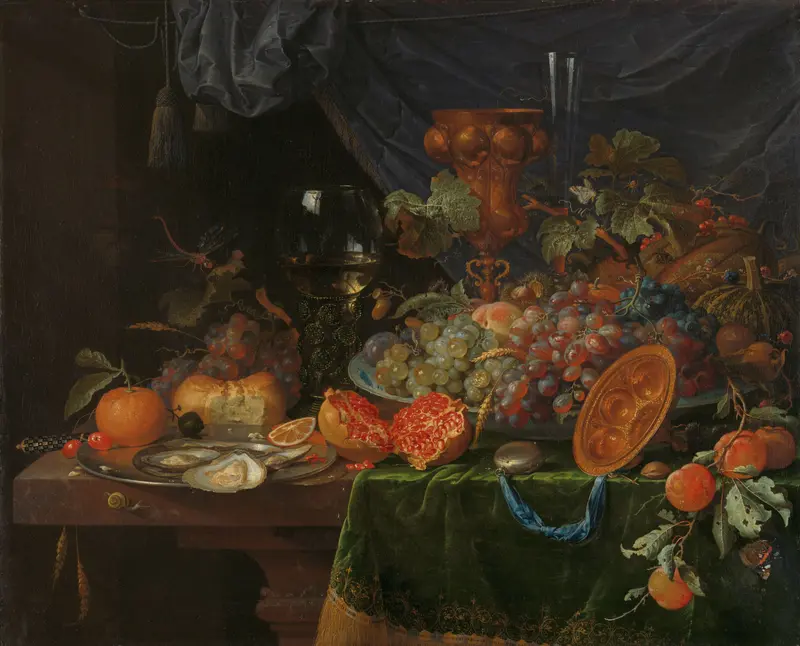
Still Life with Fruit and Oysters
Abraham Mignon
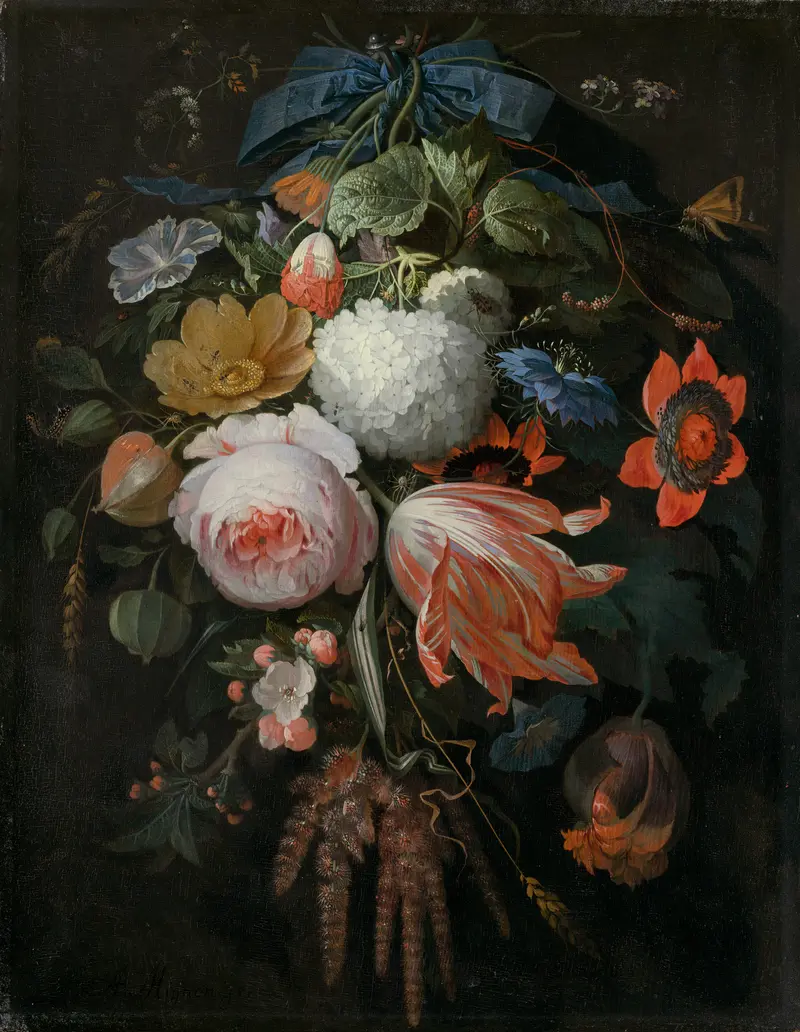
A Hanging Bouquet of Flowers
Abraham Mignon
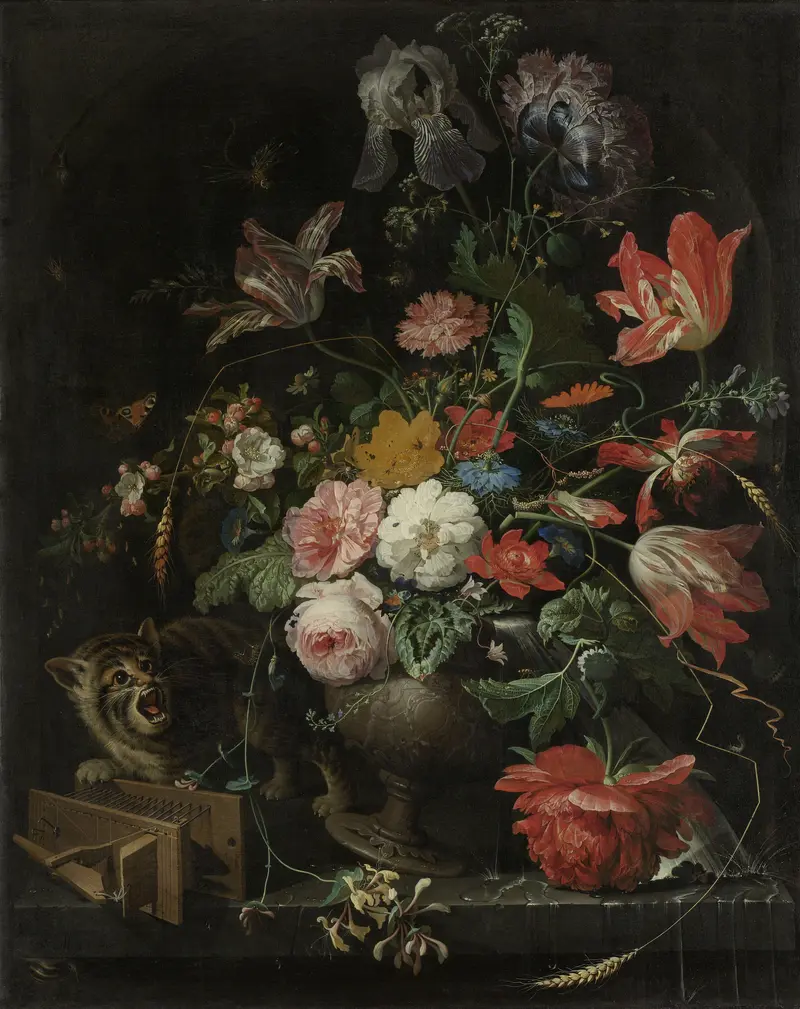
Bouquet with cat and mousetrap
Abraham Mignon
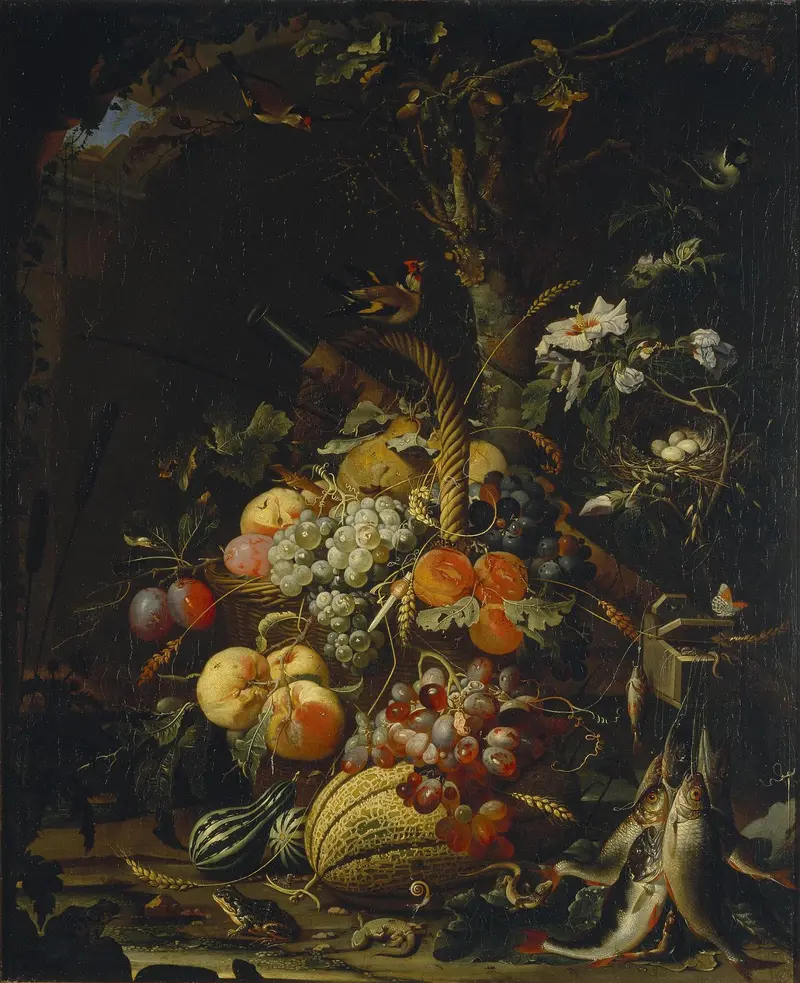
Forest floor still life with fruit, fish and a bird's nest
Abraham Mignon
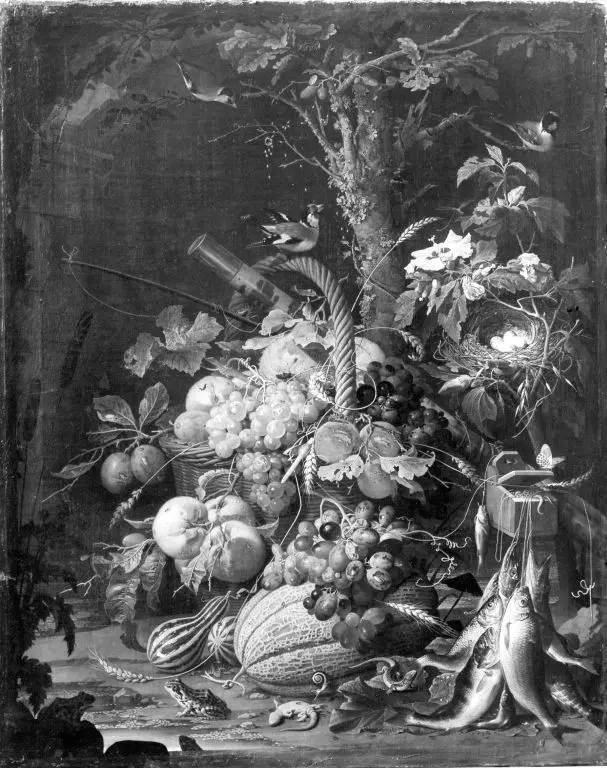
Still life with fruit, fish and a bird's nest
Abraham Mignon
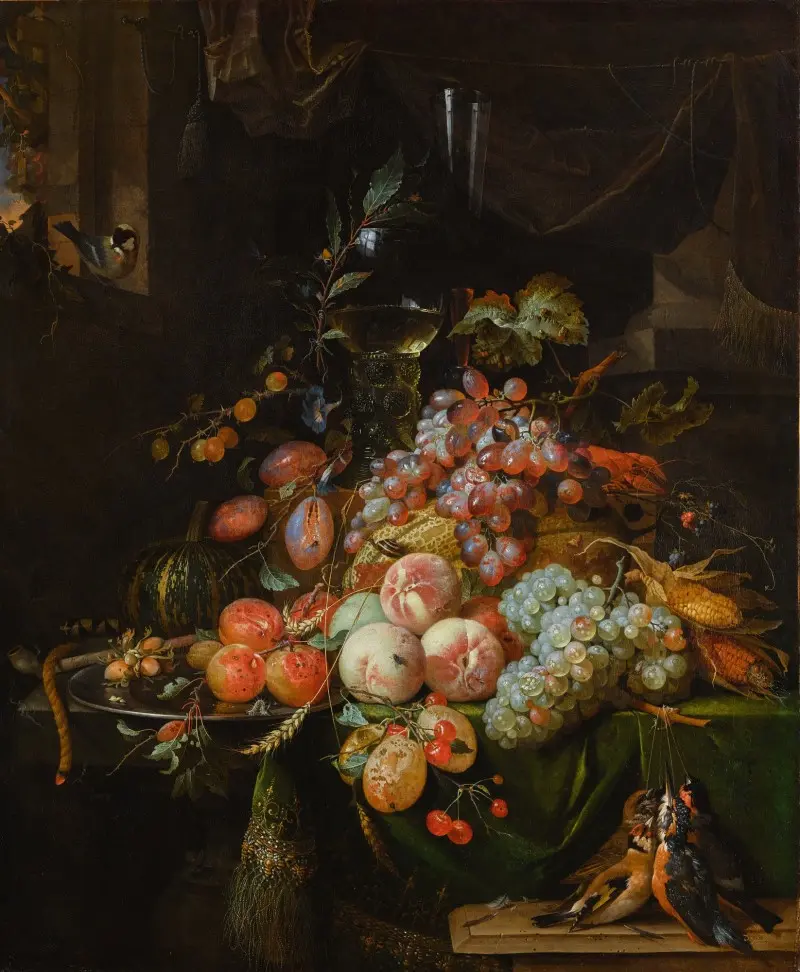
Still Life with Plums, Peaches, Apricots, Grapes and a Melon
Abraham Mignon
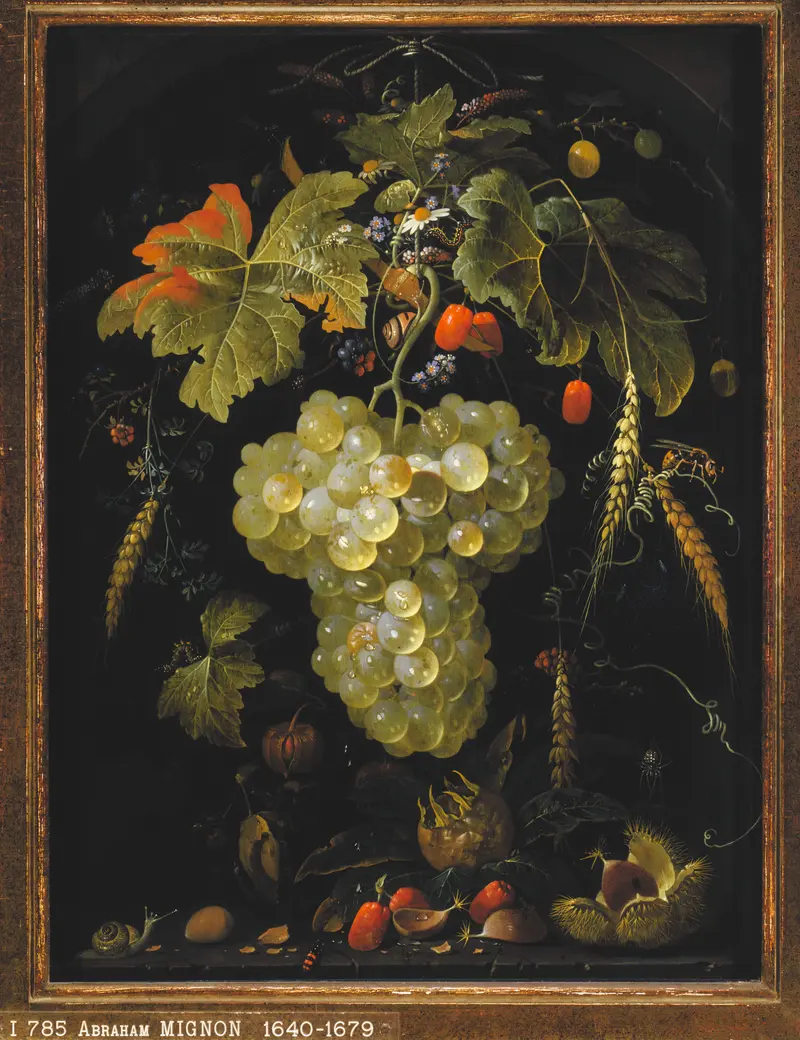
Festoon of fruit suspended from a rope, in a niche
Abraham Mignon
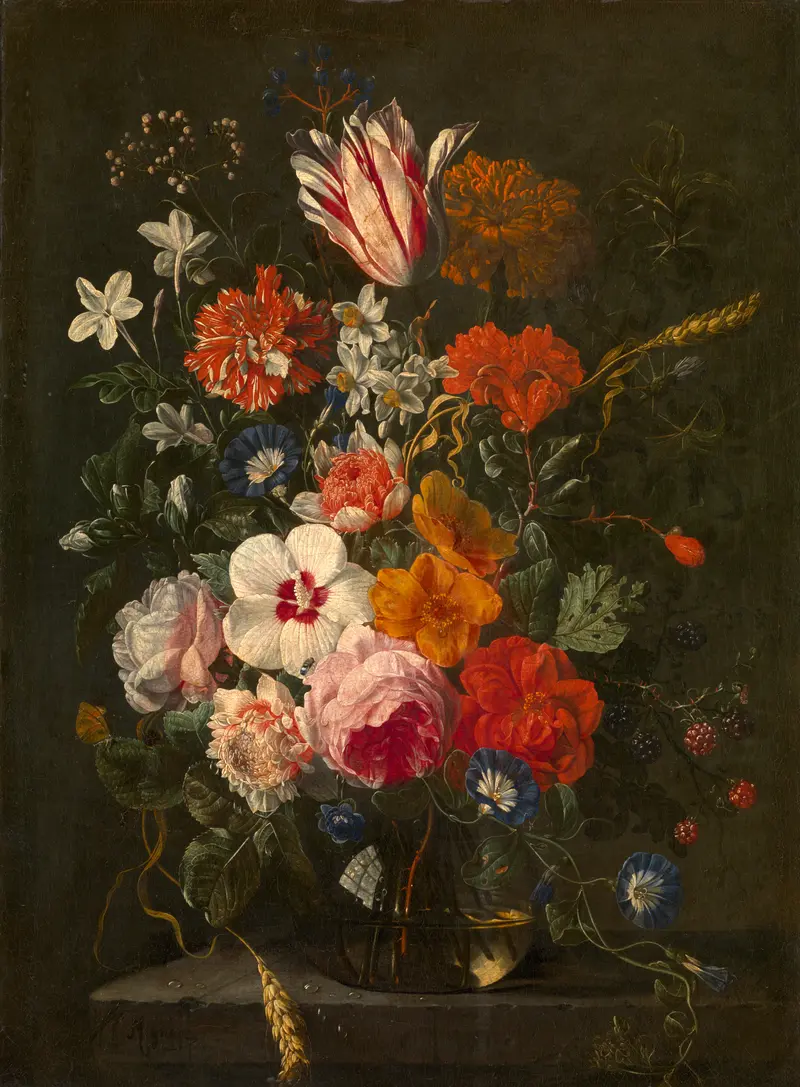
Flowers and a branch of berries in a glass vase on a stone ledge
Abraham Mignon
Flowers and fruit on a plinth
Abraham Mignon





