
Ionian Dancing Girl — History & Facts
The first thing that catches the eye in Ionian Dancing Girl is the young woman's gaze—unapologetically direct, almost challenging, as if she knows she is both the subject and the spectacle. The painter, John William Godward, invites us to linger over every detail: the wreath of deep purple flowers crowning her curls, the gauzy yellow dress edged in lavender, the tambourine loosely held in her hand. Her pose—one arm draped with casual confidence over a spotted animal pelt, the other resting against cool marble—signals a moment of rest after movement, the energy of the dance still lingering in her posture.
The Mediterranean landscape behind her, with its cypress trees and distant blue mountains, frames her in a world at once ancient and imagined, a stage for reverie. Painted in 1902, this work belongs to a late flowering of Victorian classicism, when artists like Godward conjured visions of ancient Greece and Rome for a society hungry for beauty and escape. These images, often commissioned for private homes, offered viewers a fantasy of antiquity—one filtered through the lens of Edwardian taste and technical precision. Godward’s meticulous surfaces and idealized figures were celebrated for their craftsmanship, even as the world around him was changing rapidly.
Today, Ionian Dancing Girl resides in the Bonhams collection, its exact journey through history only partly recorded. The painting’s allure endures in the tension between languor and latent motion, inviting us to imagine the music that has just faded from the air.
More Artworks by John William Godward

Eighty and eighteen
John William Godward
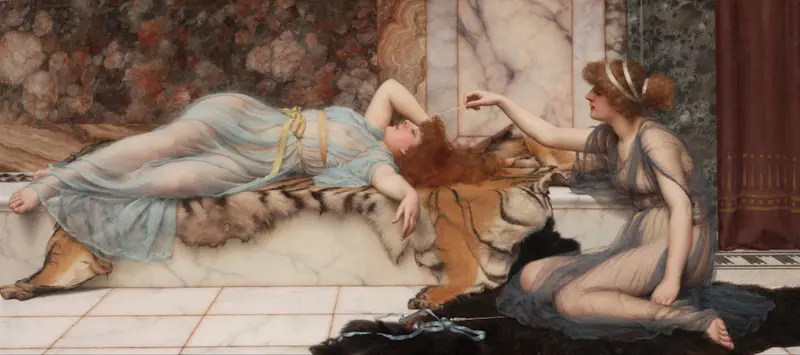
Mischief and Repose
John William Godward
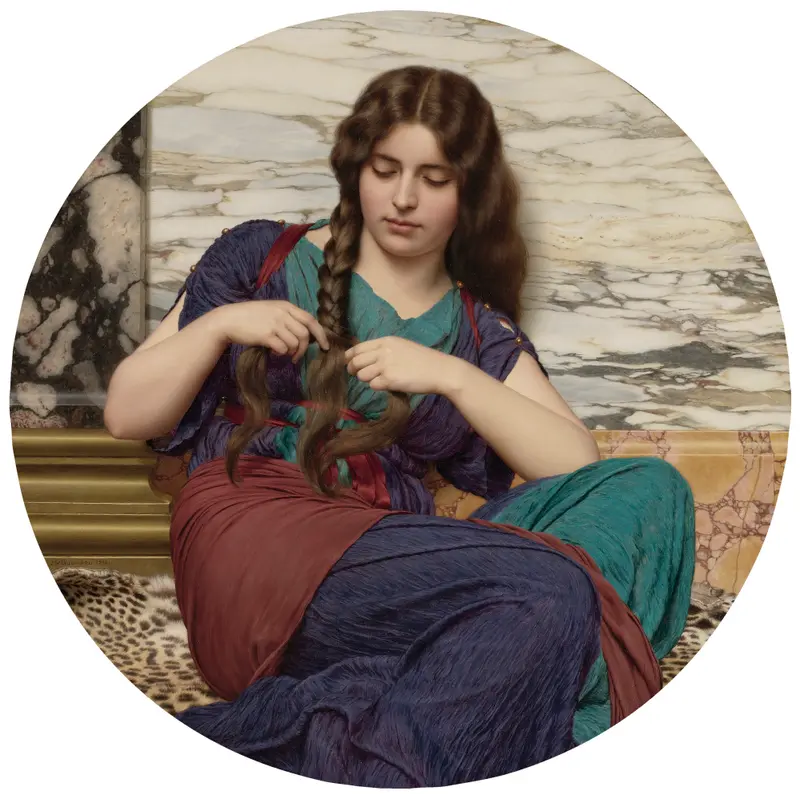
A Congenial Task
John William Godward
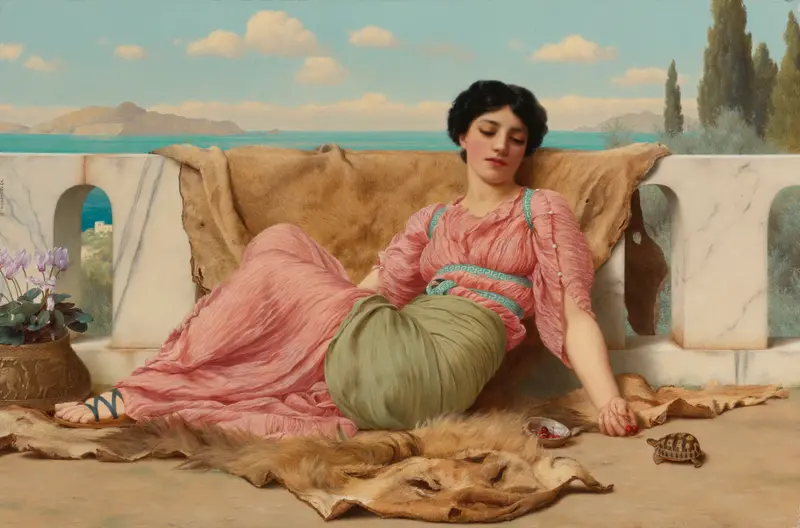
The Quiet Pet
John William Godward
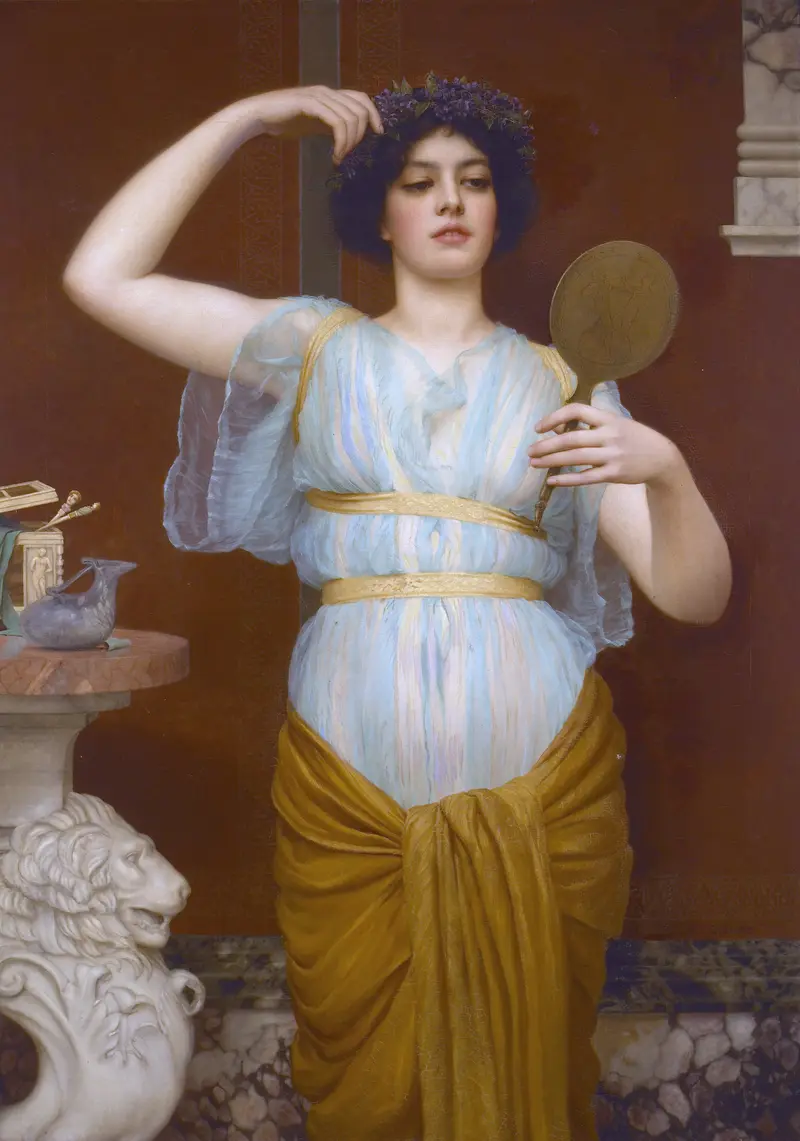
Ione
John William Godward
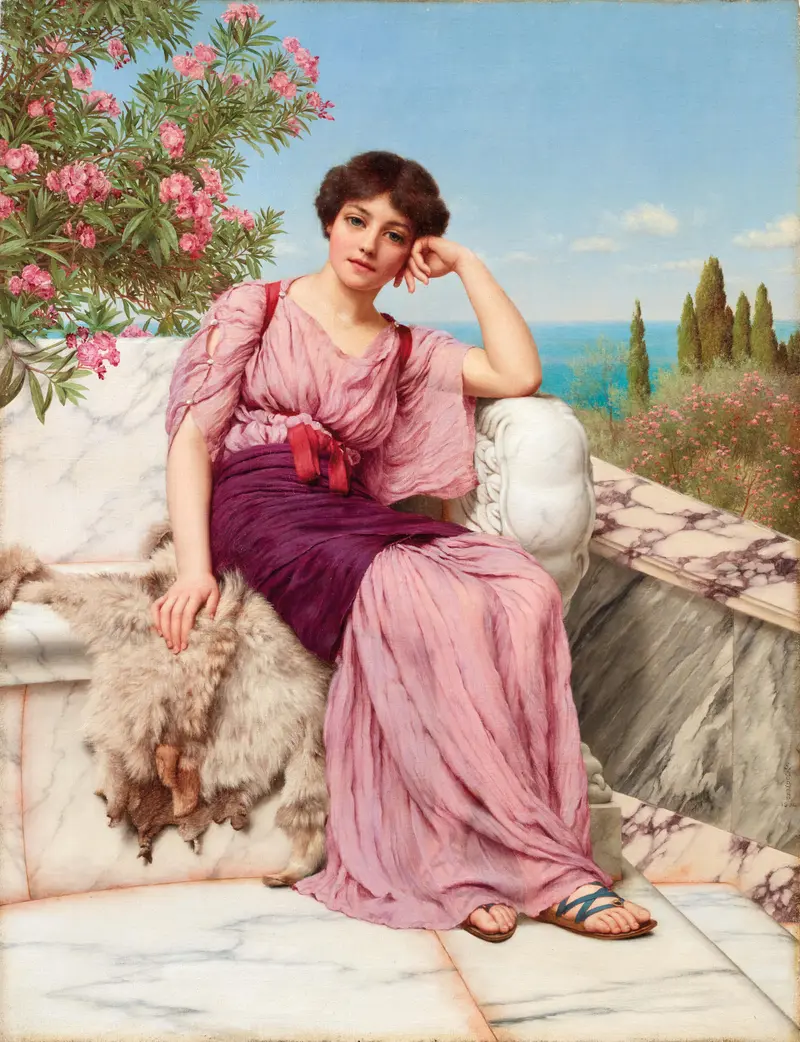
Sweet Dreams
John William Godward
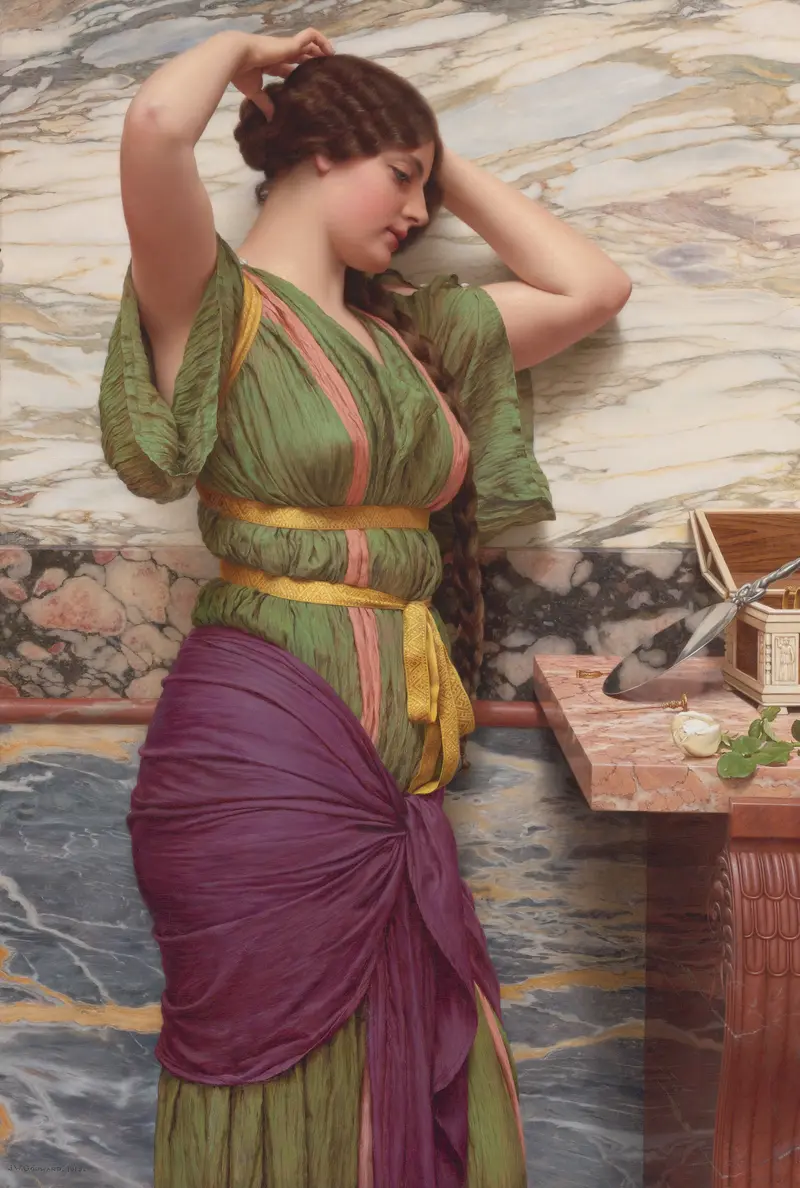
A Fair Reflection
John William Godward
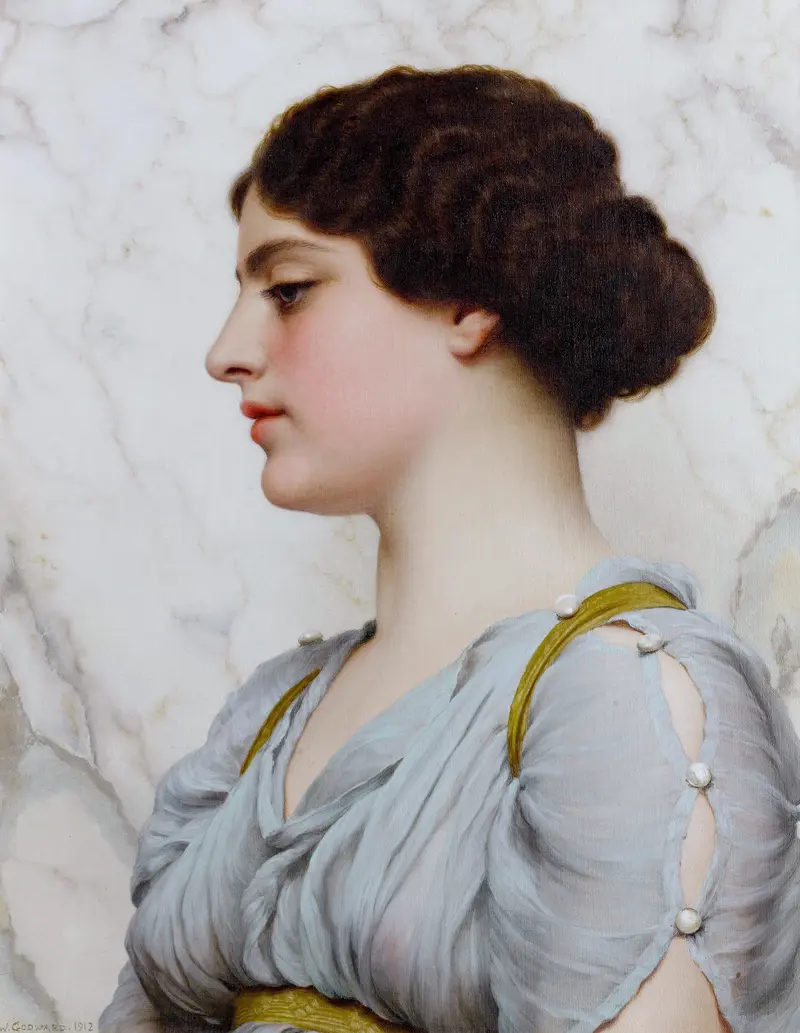
A Roman Beauty
John William Godward
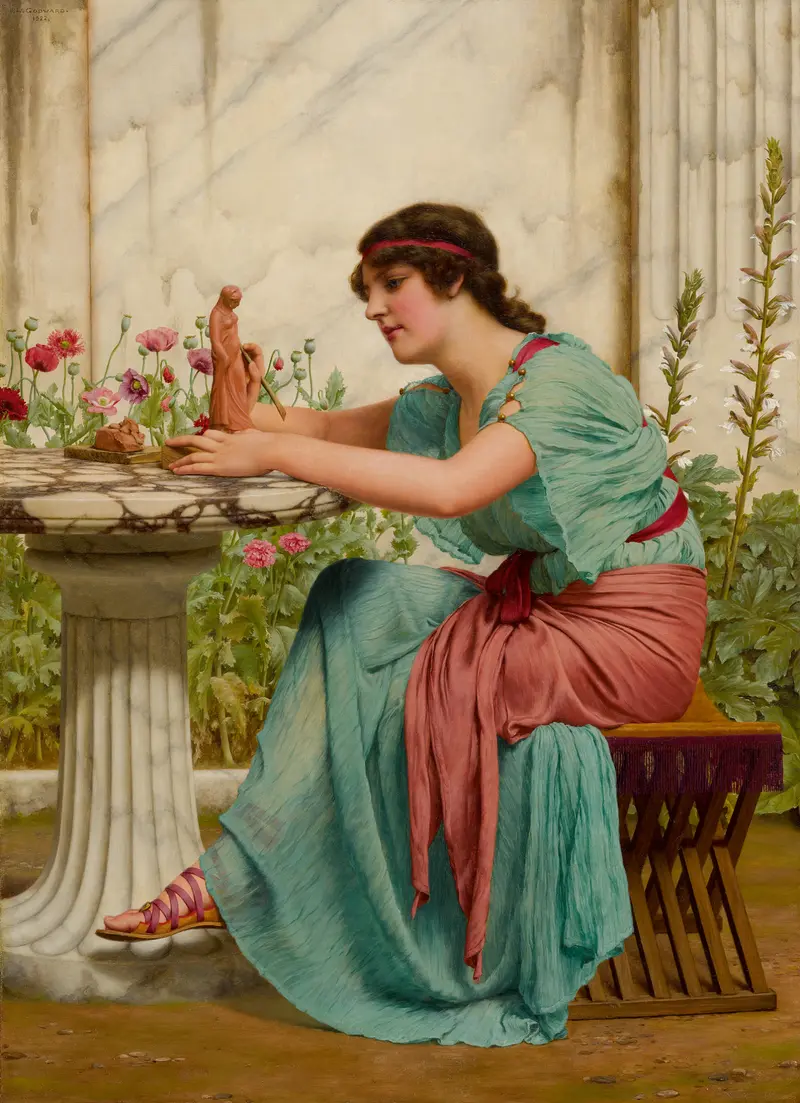
A Dilettante
John William Godward
Reverie
John William Godward



