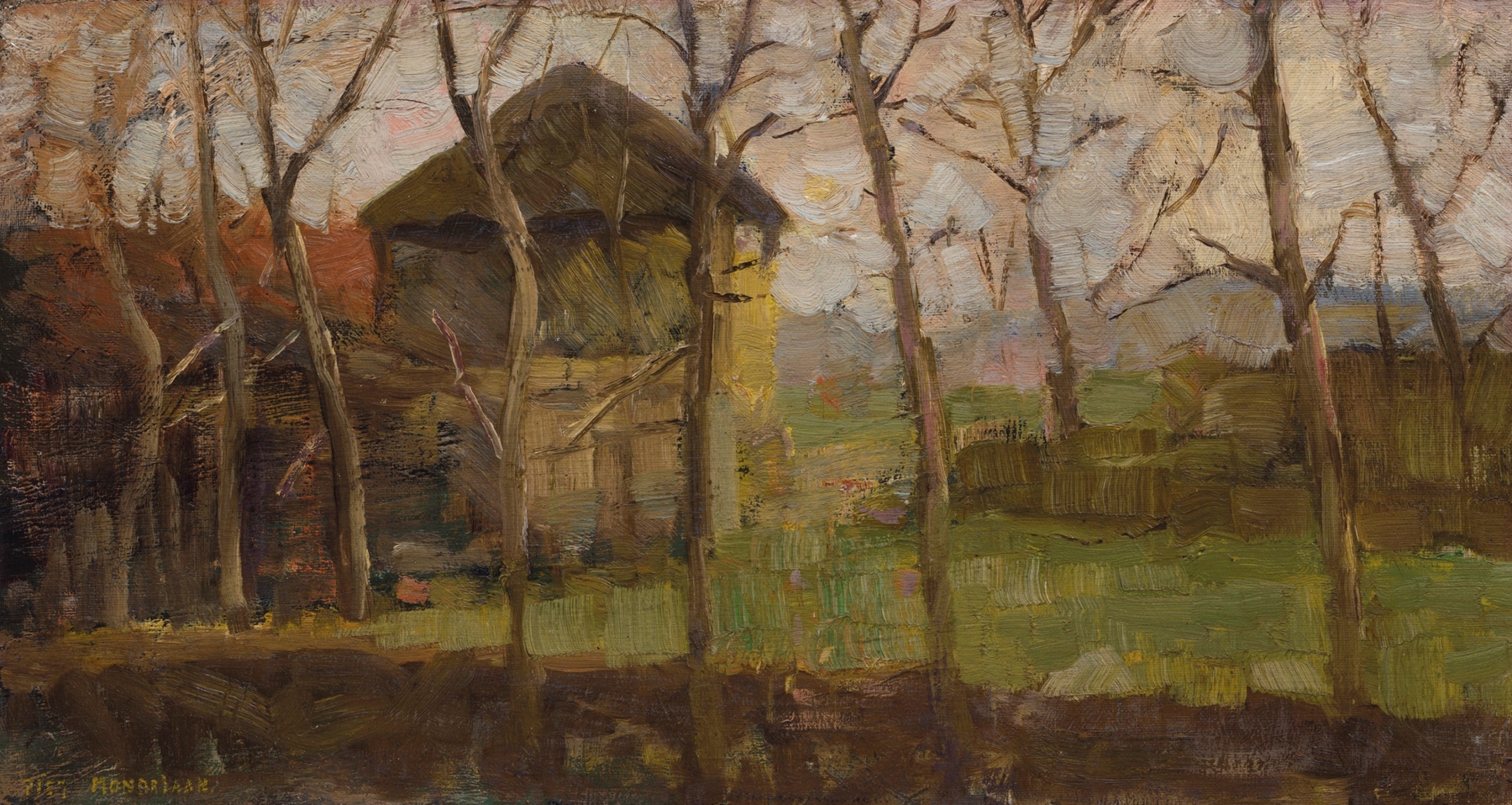
Irrigation ditch with wood gate at left — History & Analysis
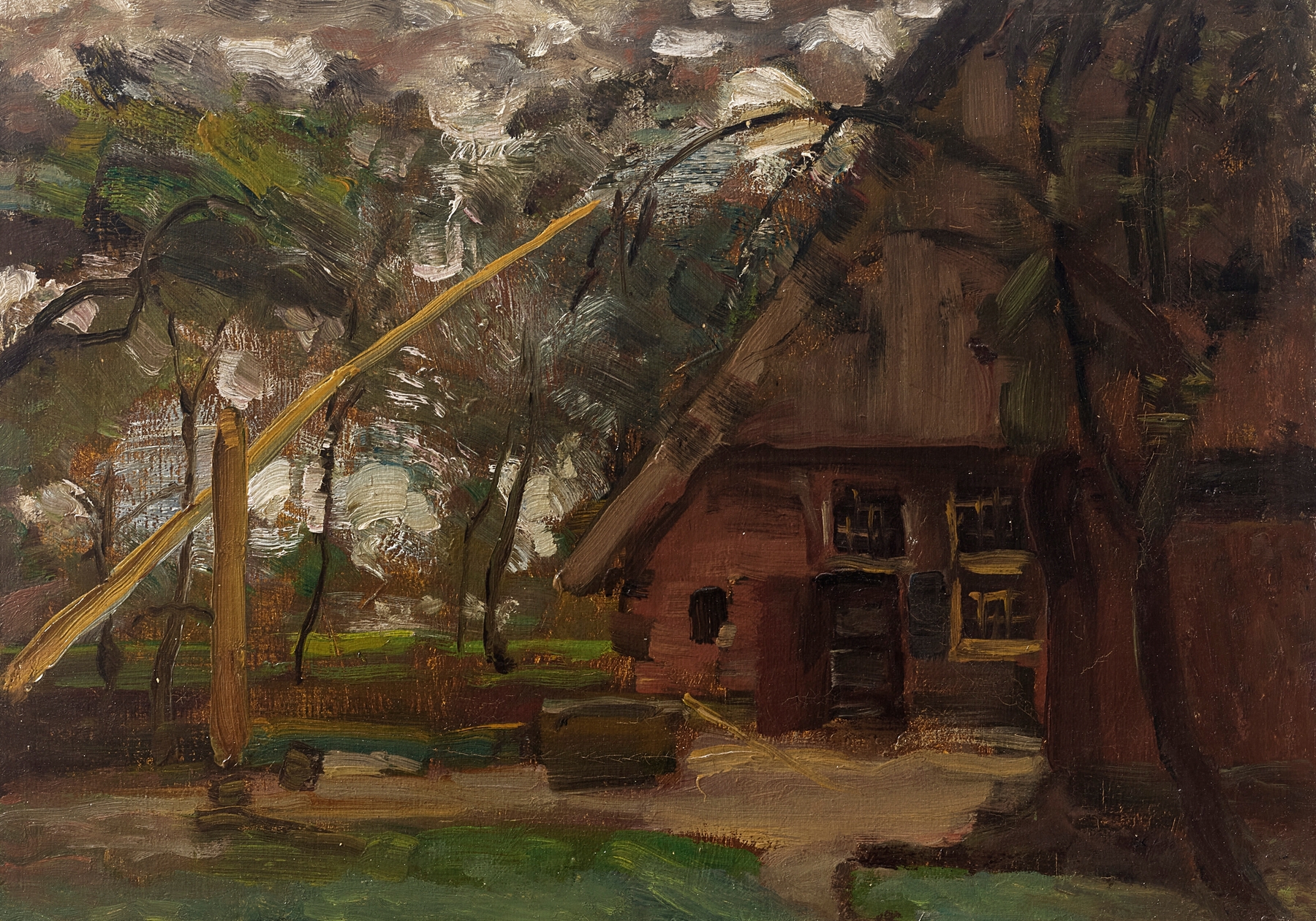
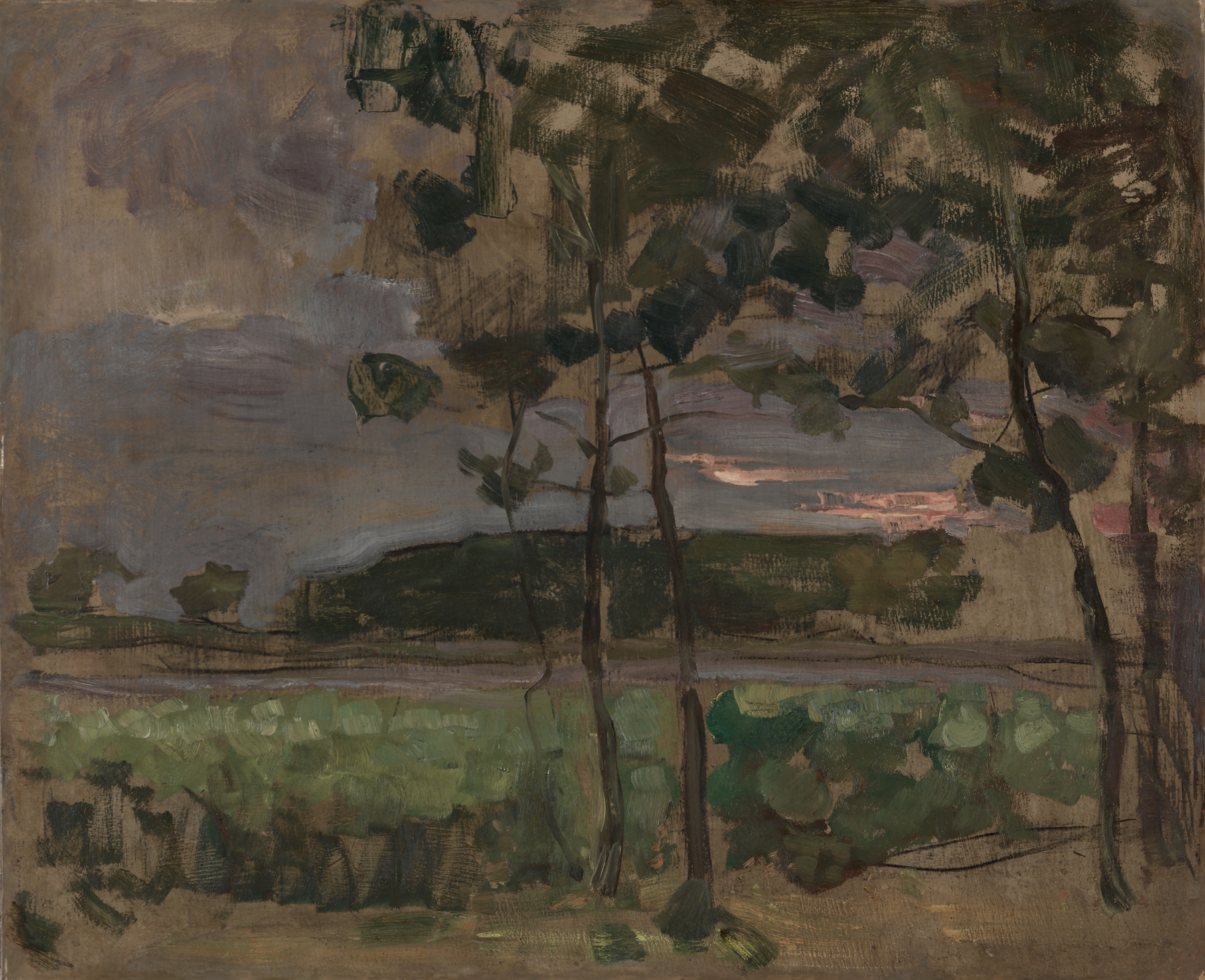
What secret hides in the quiet of the canvas? In Irrigation ditch with wood gate at left, serenity envelops the viewer, inviting reflection and contemplation. Look to the left at the weathered wooden gate, its textured surface imbued with the gentle touch of time. The earthy browns and muted greens of the landscape create a harmonious backdrop, guiding the eye toward the tranquil irrigation ditch that weaves through the composition. Notice how the play of light dances upon the water’s surface, sparkling like hidden gems, while the soft brushstrokes evoke a sense of calm and fluidity.
This painting, steeped in natural beauty, creates a delicate balance between form and the organic world, reflecting Mondrian’s emerging style. In this serene landscape, one can infer the tension between the constructed and the natural. The gate stands as a symbol of human intervention amidst a tranquil scene, hinting at the delicate relationship we have with nature. The ditch, a conduit of life, flows silently, suggesting both nourishment and the passage of time.
Hidden in these simple details lies an exploration of existence; the artist captures a moment that resonates with the viewer’s own introspective journey. During the period of 1894-1895, Mondrian was based in the Netherlands, engaged in his early artistic explorations. This work aligns with his gradual transition from realism toward abstraction, reflecting his desire to distill the essence of nature. At this time, the art world was grappling with various movements, and Mondrian was at the forefront of redefining artistic expression, laying the groundwork for his future iconic works.