
Jesus in the house of Martha and Mary — History & Facts
What first seizes the eye in Jesus in the house of Martha and Mary by Adriaen van Utrecht is not the sacred conversation, but the riotous abundance of the kitchen: game birds, cabbages, gourds, and hanging meats crowd the left half of the canvas, their textures rendered with almost theatrical relish. The painter draws you into the world of Martha, who stands mid-gesture, her apron stained and her posture restless, as if caught between duty and exasperation. The light, golden and concentrated, falls across her arm and face, guiding us from the labor of the kitchen to the quiet drama at the right, where Jesus sits calmly, hand raised in gentle instruction, and Mary listens at his feet, her gold dress pooling in soft folds.
The dog at center, alert and almost comical, seems to bridge the two worlds—earthly toil and spiritual contemplation. This is a scene beloved by seventeenth-century painters: the moment when Martha, overwhelmed by her work, appeals to Jesus to rebuke her sister Mary, who has chosen to listen rather than serve. In van Utrecht’s hands, the story becomes a meditation on abundance and distraction. The sheer weight of the produce and game signals both prosperity and the burdens of daily life, while the contrasting composure of Jesus and Mary offers a visual pause, a stillness at the heart of the bustle.
The palette, rich with browns, golds, and reds, sets a mood of warmth but also of gravity, reminding the viewer that the choice between action and contemplation is never simple. This painting, created between 1627 and 1652, belongs to a world where such moral lessons were painted for private homes, their meanings debated over dinner tables much like the one Martha prepares. Look again at Martha’s hand, poised between the kitchen and the Christ—it is there that the painting’s true tension lives.
More Artworks by Adriaen van Utrecht
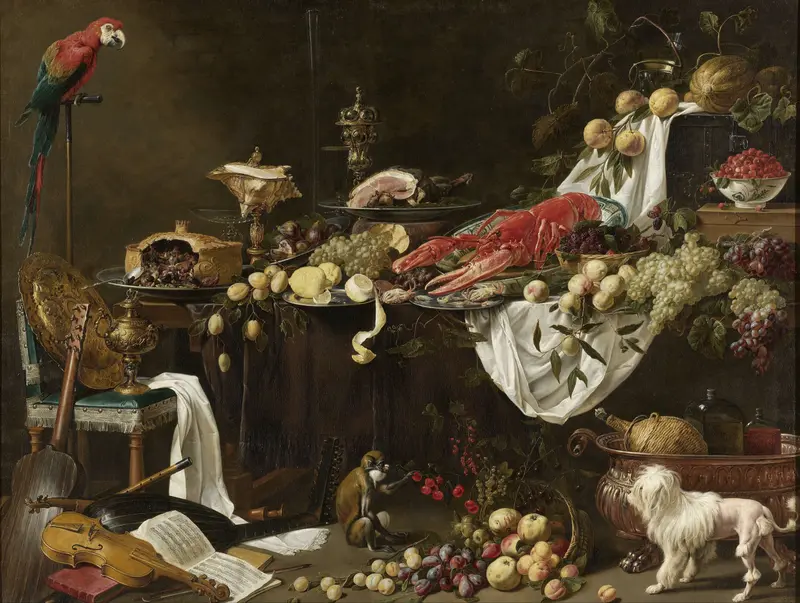
Banquet Still Life
Adriaen van Utrecht
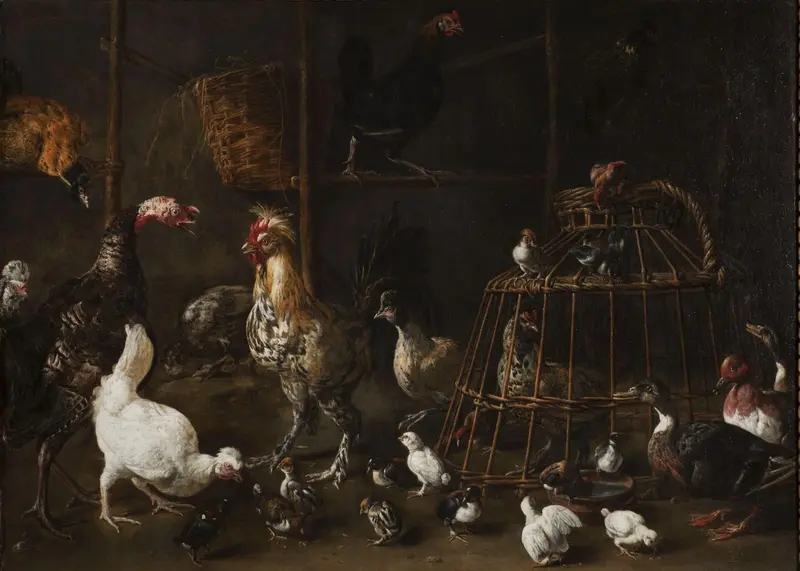
A barn interior with a turkey
Adriaen van Utrecht
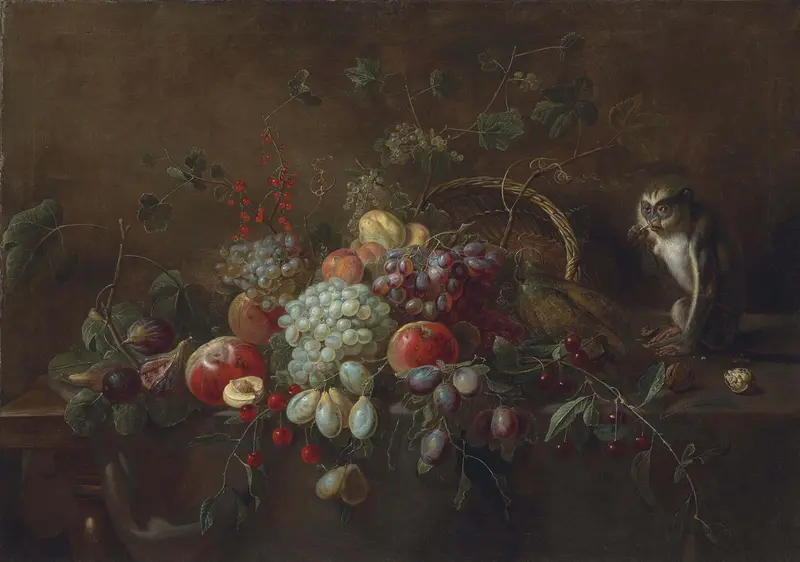
Grapes, apples, plums, figs and other fruit on a partly draped wooden table, a monkey eating walnuts by an upturned woven basket
Adriaen van Utrecht
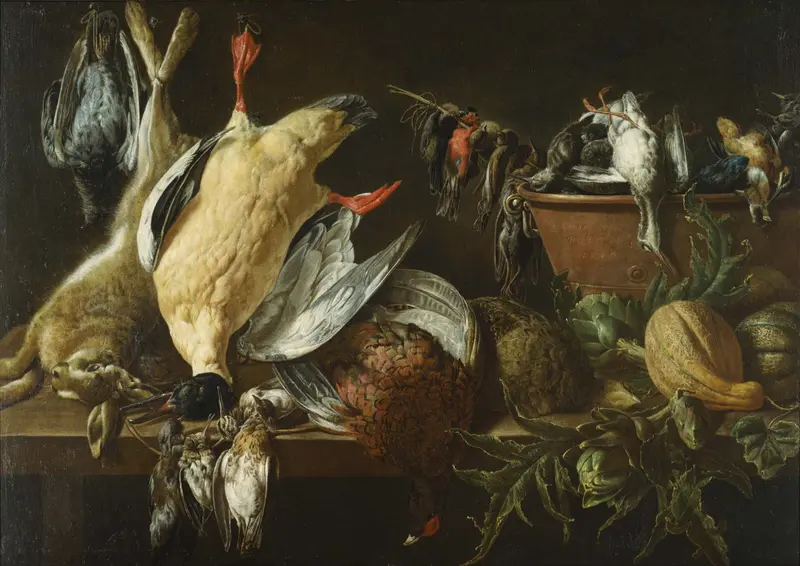
Still Life with Games and Vegetables
Adriaen van Utrecht
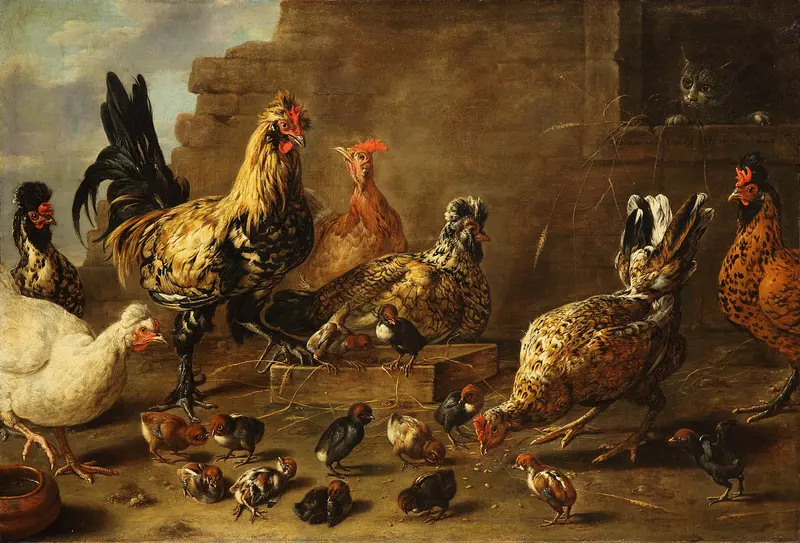
The chicken yard
Adriaen van Utrecht
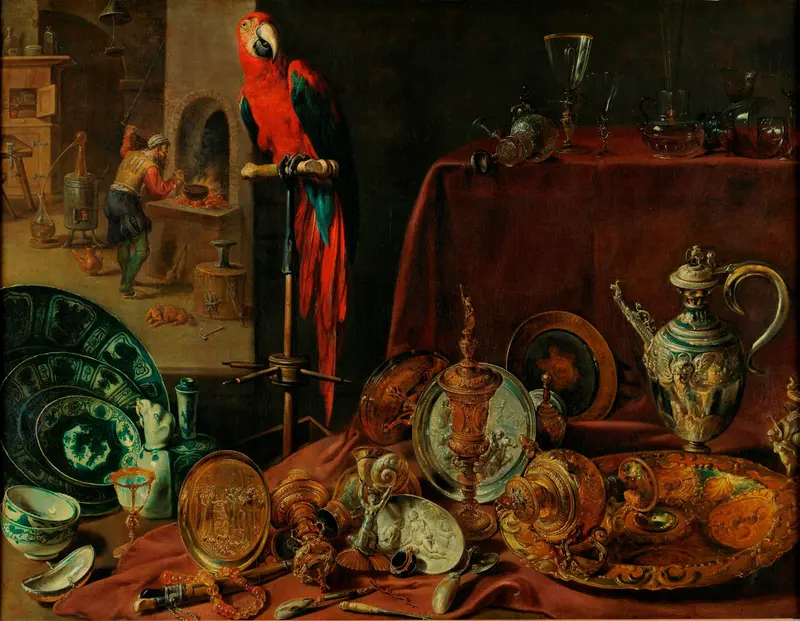
Still life with parrot, an allegory of fire
Adriaen van Utrecht
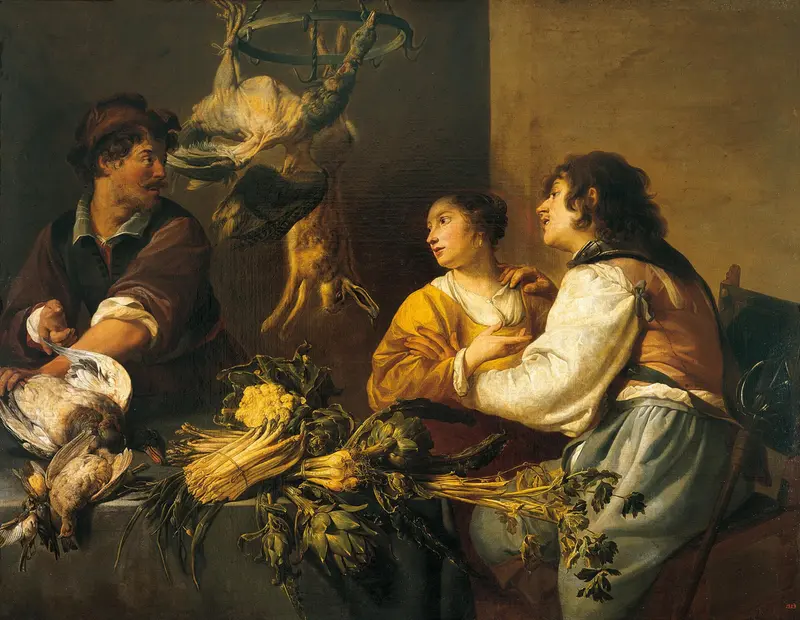
Kitchen
Adriaen van Utrecht
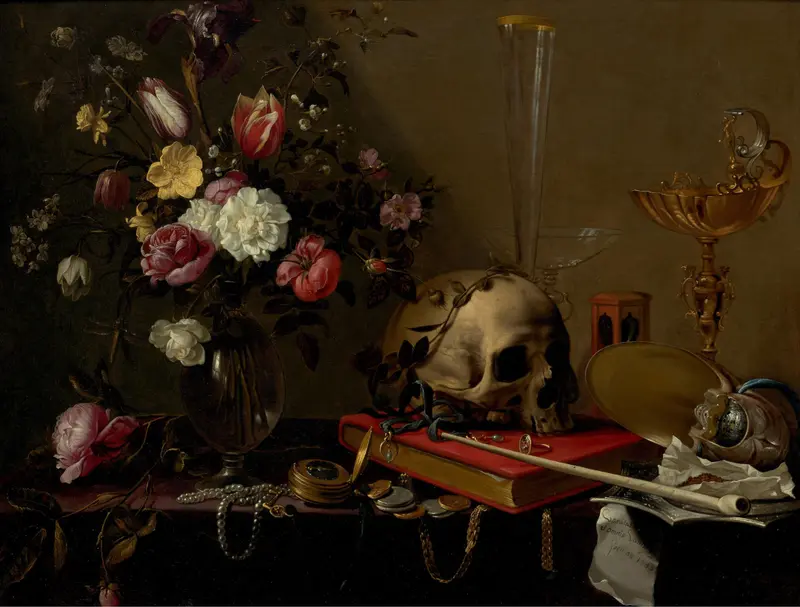
Vanitas - Still Life with Bouquet and Skull
Adriaen van Utrecht
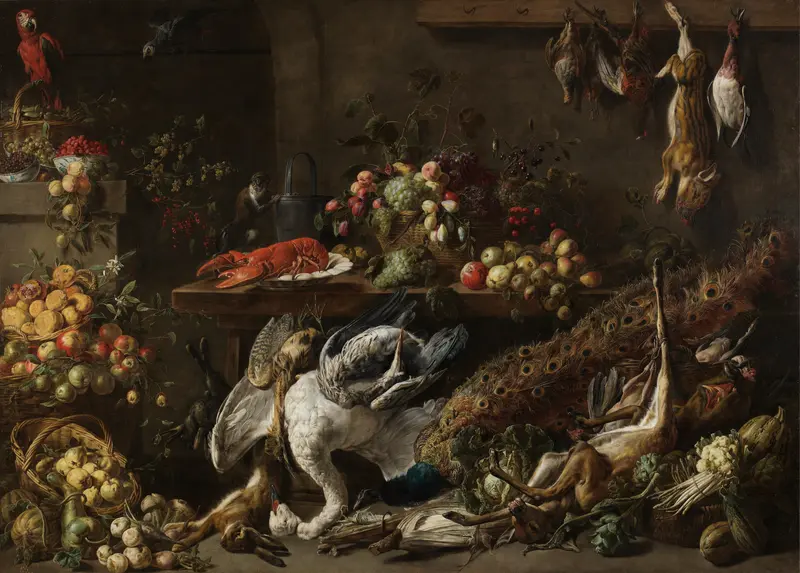
A Larder
Adriaen van Utrecht
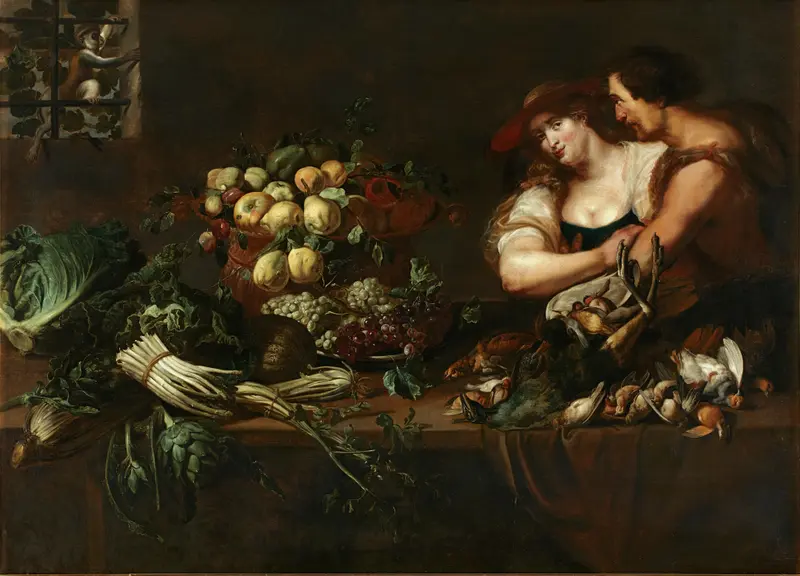
A Kitchen Still Life with Figures
Adriaen van Utrecht
More Genre Scene Art

Banquet of the Officers of the St George Civic Guard
Frans Hals

Rembrandt and Saskia in the Scene of the Prodigal Son
Rembrandt van Rijn

Bal du moulin de la Galette
Pierre-Auguste Renoir

Quadrille at the Moulin Rouge
Henri de Toulouse-Lautrec

A Burial at Ornans
Gustave Courbet

When Will You Marry?
Paul Gauguin