
Job and His Daughters — History & Facts
When William Blake completed Job and His Daughters in 1800, he was already deeply immersed in his own mythic vision of the Bible, but this work stands out as one of the earliest known treatments by Blake of the Book of Job—a subject he would revisit with obsessive intensity throughout his life. Unlike his more famous engraved series from the 1820s, this painting is a rare, early experiment, and its exact medium remains a subject of scholarly debate. The uncertainty about whether it is watercolor, tempera, or mixed media only adds to the intrigue surrounding this piece, which survives as a testament to Blake’s restless creativity at the dawn of the nineteenth century. In the scene, Job sits surrounded by his three daughters, their hands gently clasping his in a moment of hard-won peace after suffering.
Blake chooses the instant after Job’s trials, when God restores his fortunes and family, as described in the final verses of the Book of Job. The daughters’ luminous garments and flowing hair set them apart, symbols of innocence and renewal, while Job’s aged face and clasped hands suggest both gratitude and humility. The composition’s symmetry and the ethereal light enveloping the group recall the visionary clarity found in Blake’s later illustrations, yet here the figures remain grounded, their gestures intimate and human.
Unlike Rembrandt’s darker, more introspective Job on the Dunghill, Blake’s interpretation radiates hope and reconciliation. The early provenance of Job and His Daughters is uncertain, as no documented patron or initial exhibition survives, but its style and subject firmly anchor it in Blake’s London circle around 1800. The painting’s rediscovery in the twentieth century brought renewed attention to Blake’s experiments in narrative art, especially as scholars traced connections to his later, more famous engraved Job series. Today, the work is held in a public collection, valued not only for its rarity but as a pivotal link in Blake’s lifelong engagement with biblical themes.
It offers a glimpse into the artist’s evolving technique and his enduring fascination with the trials and triumphs of the human soul.
More Artworks by William Blake
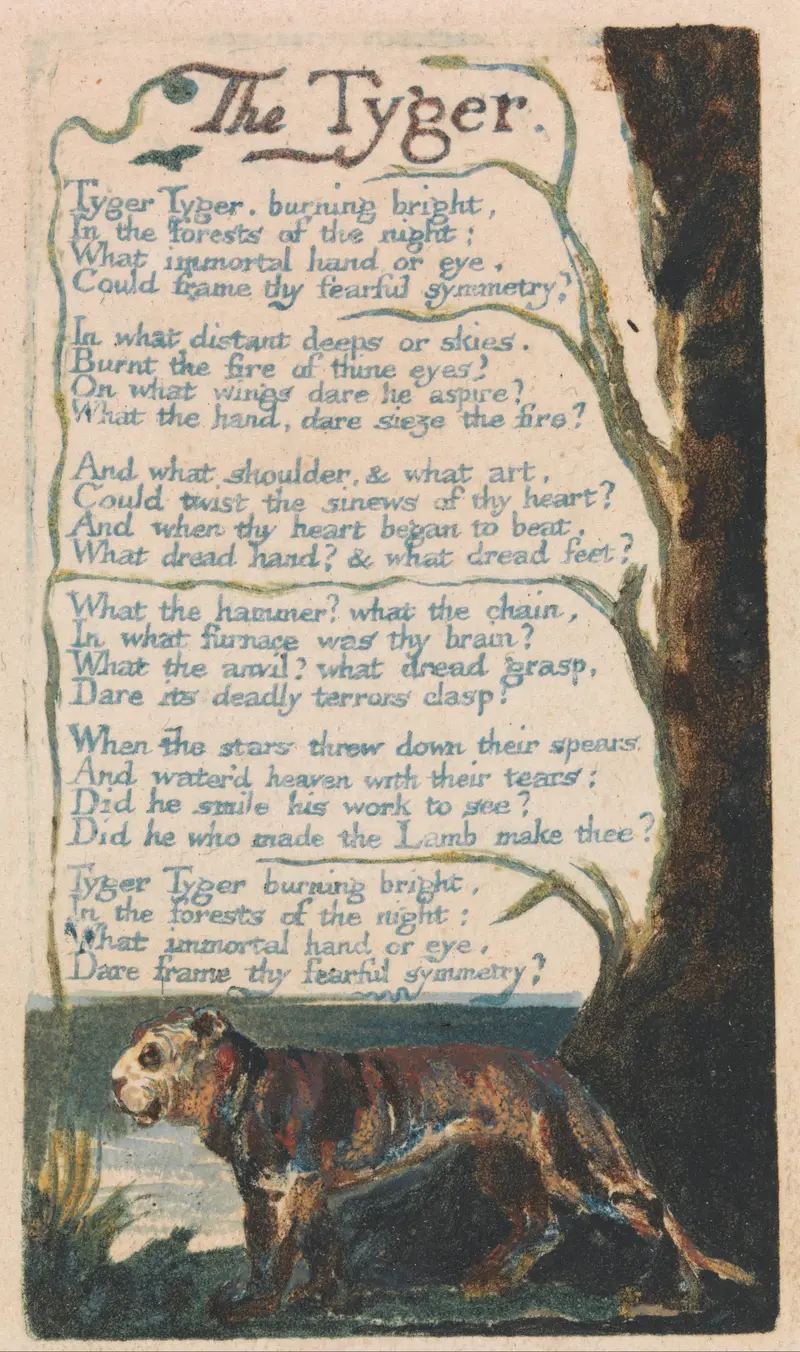
The Tyger
William Blake

Christ Blessing
William Blake
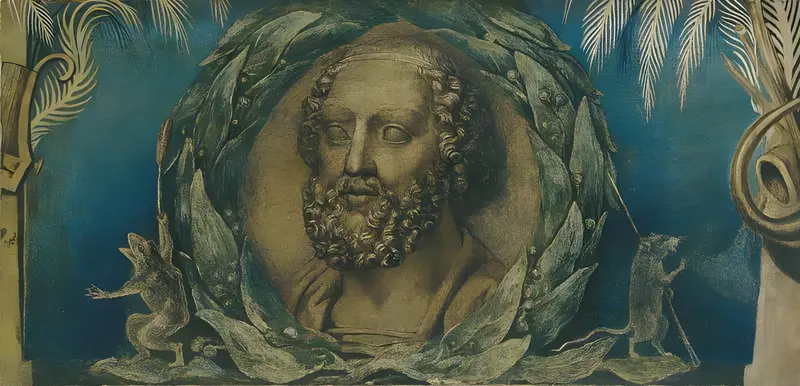
Homer
William Blake
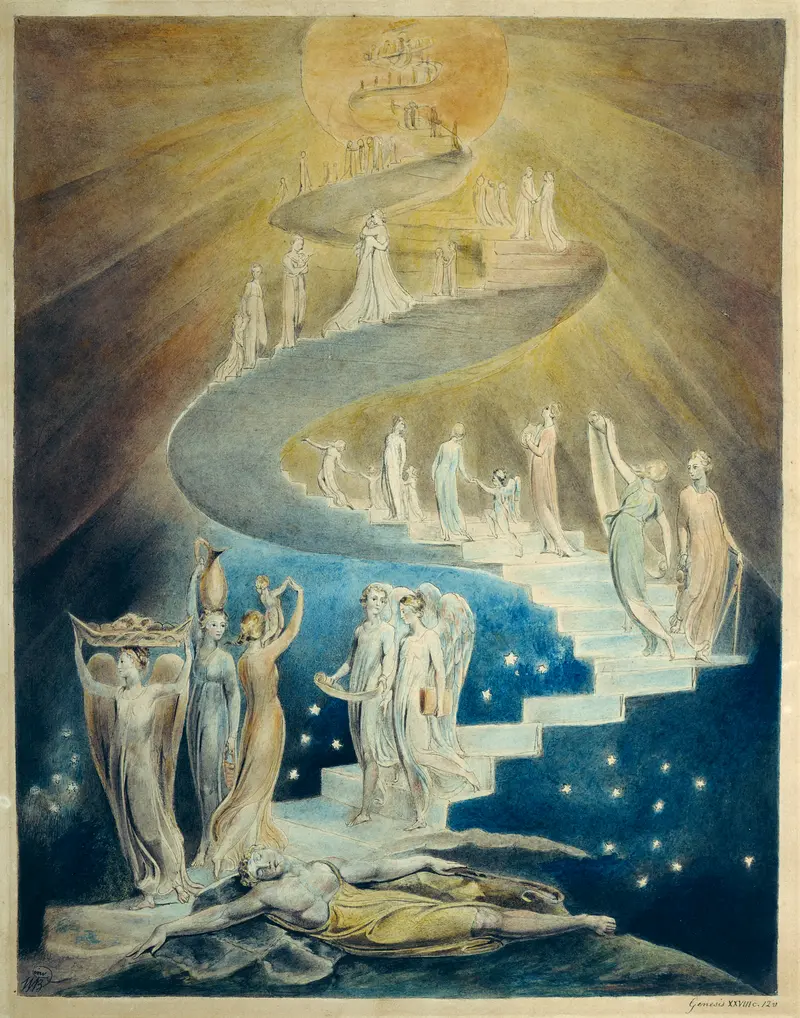
Jacob's Ladder
William Blake
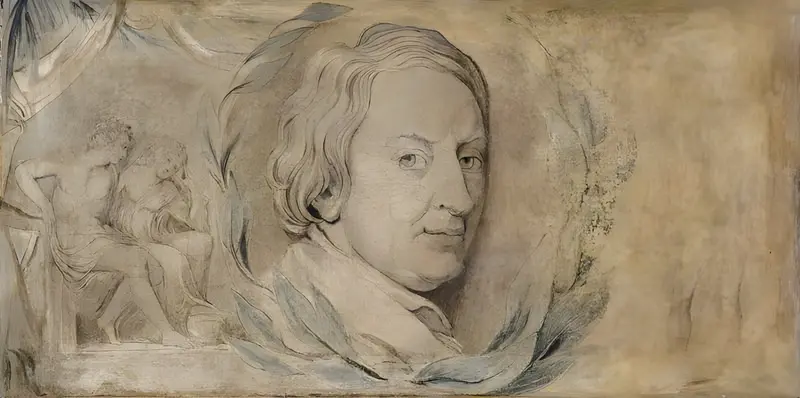
John Dryden (1631–1700)
William Blake

Landscape near Felpham
William Blake
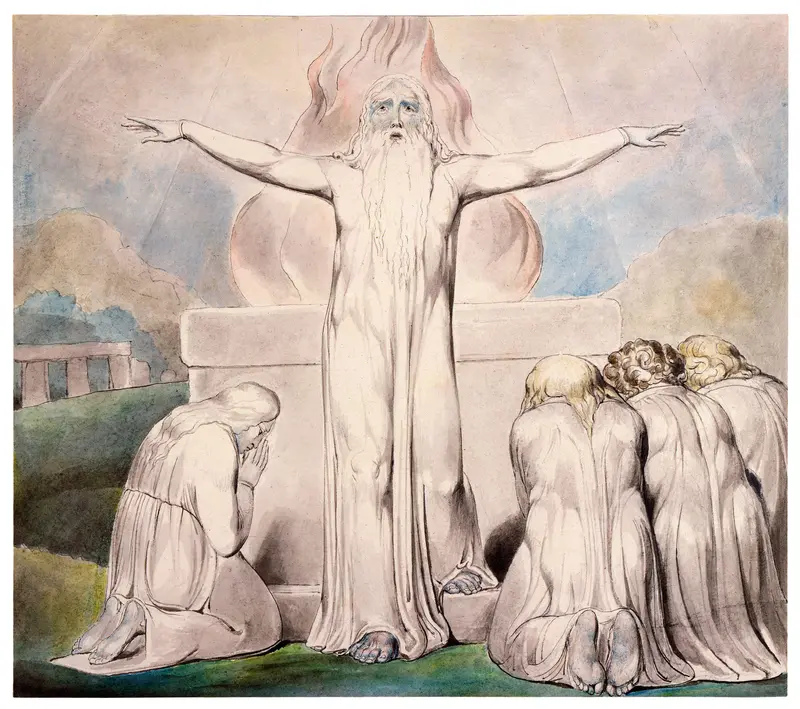
Sacrifice of Job
William Blake
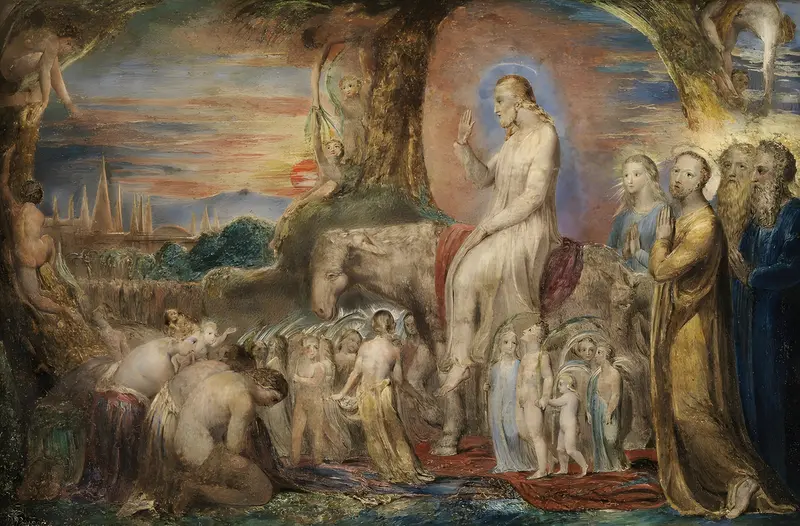
Christ's Entry into Jerusalem
William Blake
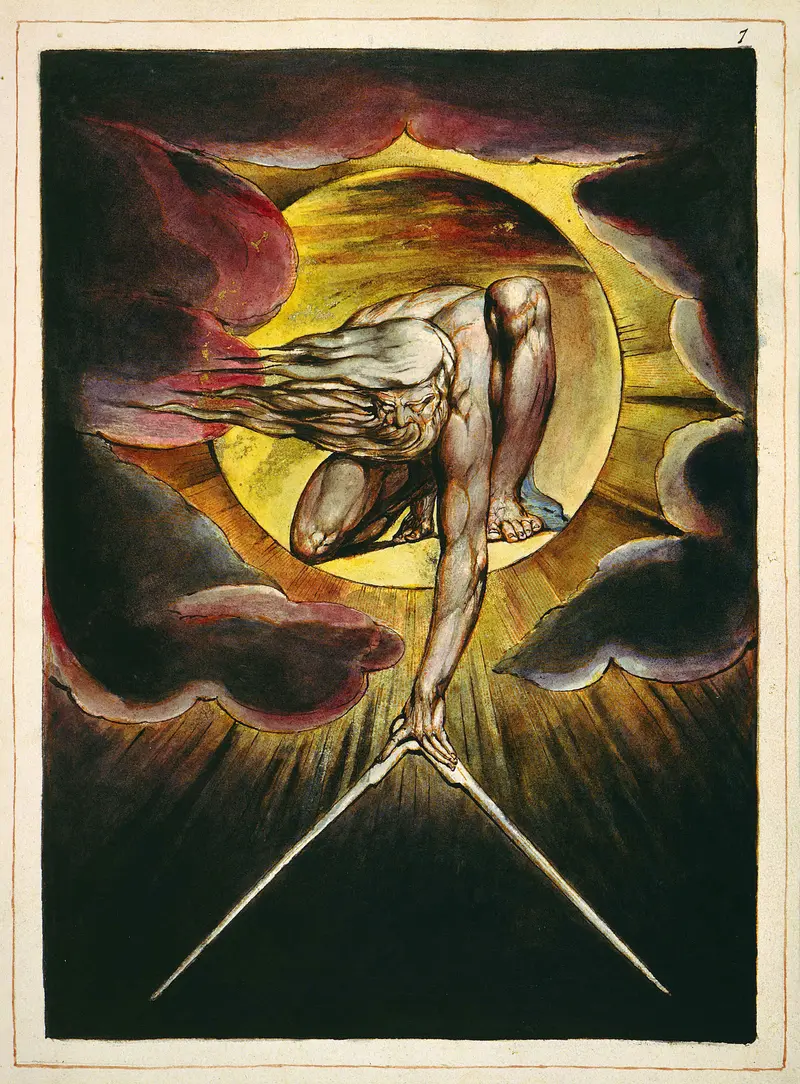
The Ancient of Days
William Blake
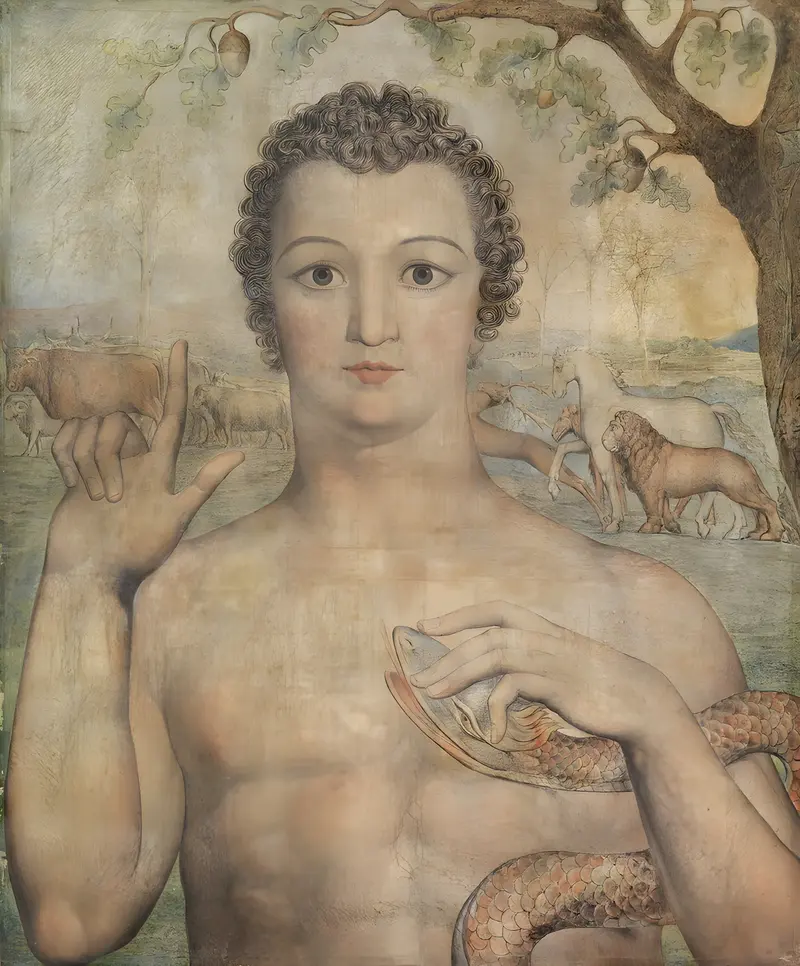
Adam Naming the Beasts
William Blake





