
Jonatan vraagt het vertrouwen van David — History & Facts
In Jonatan vraagt het vertrouwen van David, this duality of emotion unfolds, revealing a fragile trust amidst an undercurrent of loss. The painting encapsulates a moment where confidence is both a gift and a burden, where bonds are tested by the shadows of fate. Look to the left at the young man with a visage of earnestness and vulnerability, his hand extended with hope. The delicate interplay of light illuminates the tension across his brow, while the rich, earthy tones of the background draw your gaze deeper into the narrative.
Notice how Holbein masterfully uses texture—soft highlights on the skin contrast with the heaviness of the dark drapery, symbolizing the weight of their impending decision. The subtle expressions evoke a profound emotional gravity, with the surrounding figures hovering as witnesses to a pact that feels precarious. The positioning of bodies creates an invisible line of trust that feels fragile, emphasizing the dichotomy of loyalty and betrayal. As you delve deeper, the tension between the figures embodies the human experience—how love and loyalty exist alongside the specter of loss, suggesting that even the strongest bonds can be laced with uncertainty. Created in 1538, Holbein was living in England, deeply embedded in the court of Henry VIII.
This period was marked by political intrigue and personal upheaval, reflecting the artist's own challenges in navigating the complexities of allegiance and identity. In this context, the painting serves not just as a visual narrative but as a poignant commentary on the fragile nature of trust, resonating with the tumult of the age.
More Artworks by Hans Holbein (II)
Browse all →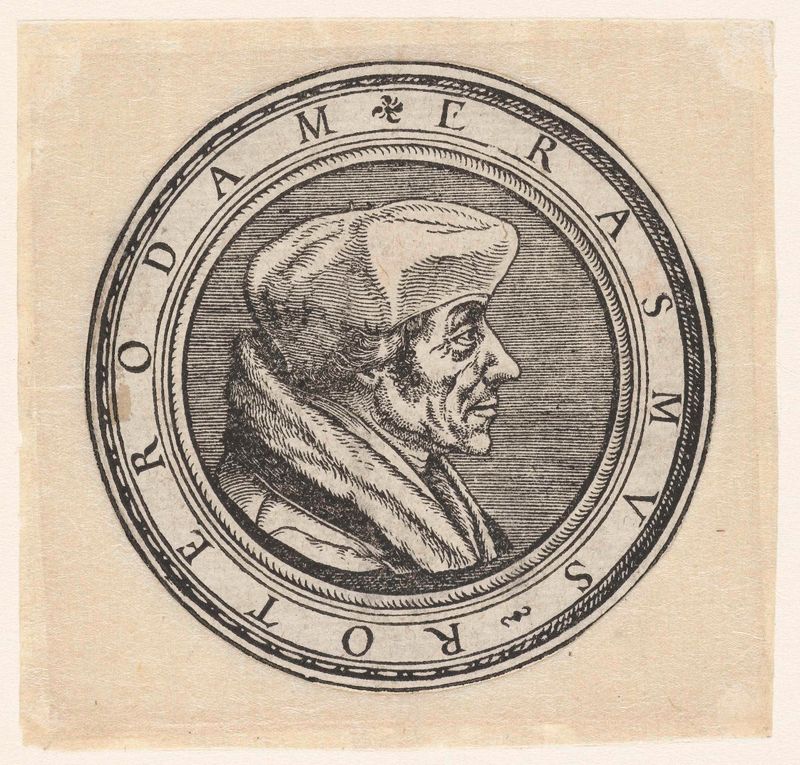
Portret van Erasmus
Hans Holbein (II)
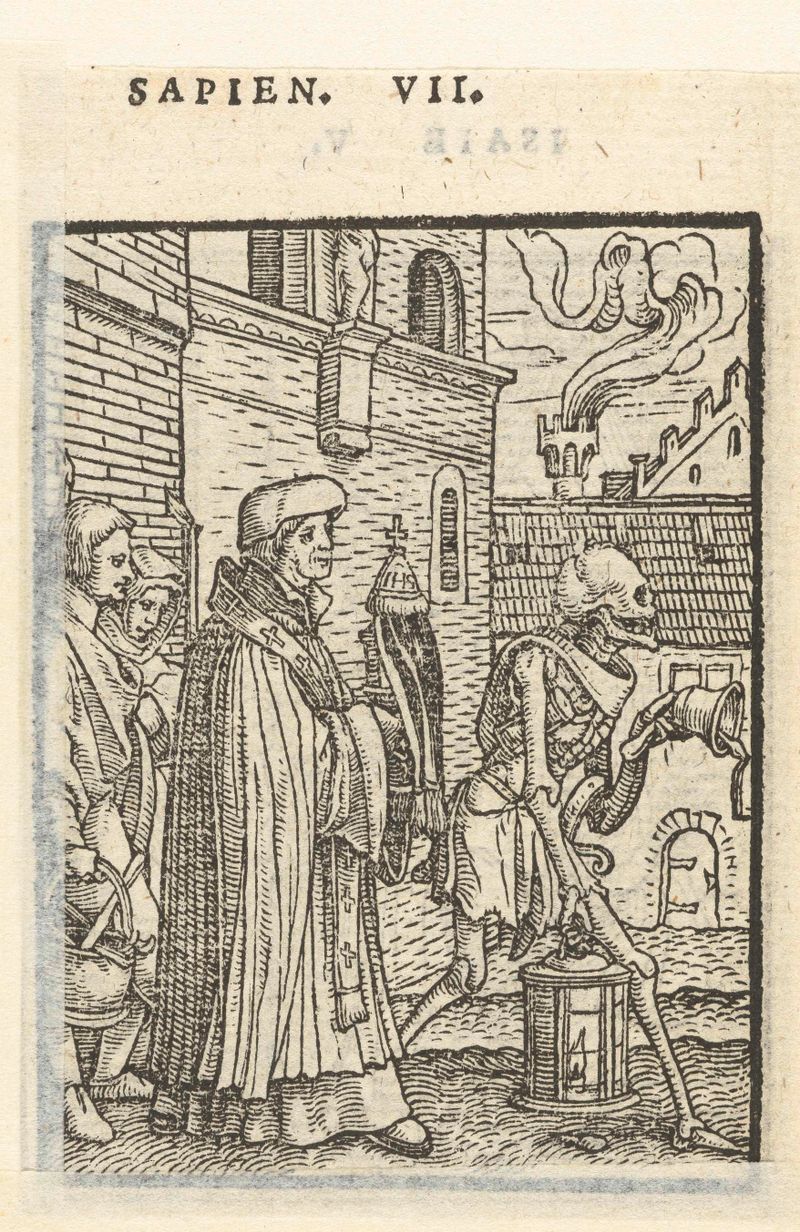
Priester en de Dood
Hans Holbein (II)
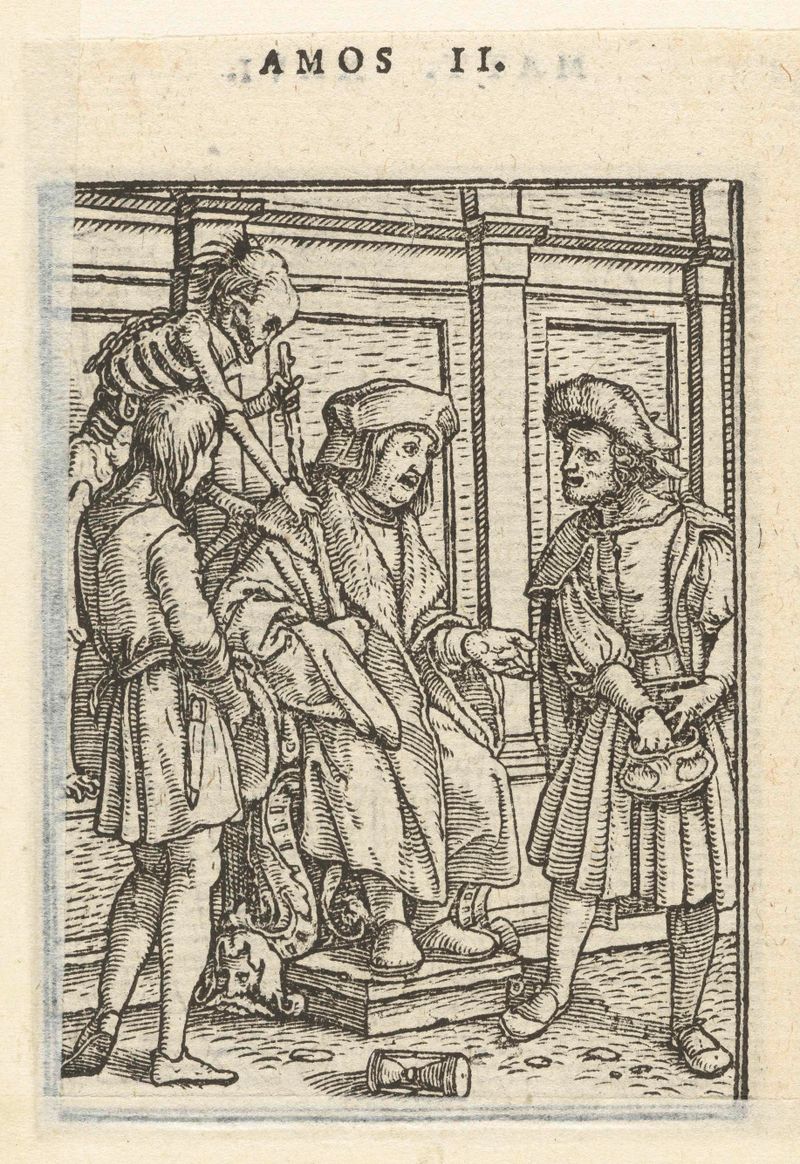
Rechter en de Dood
Hans Holbein (II)
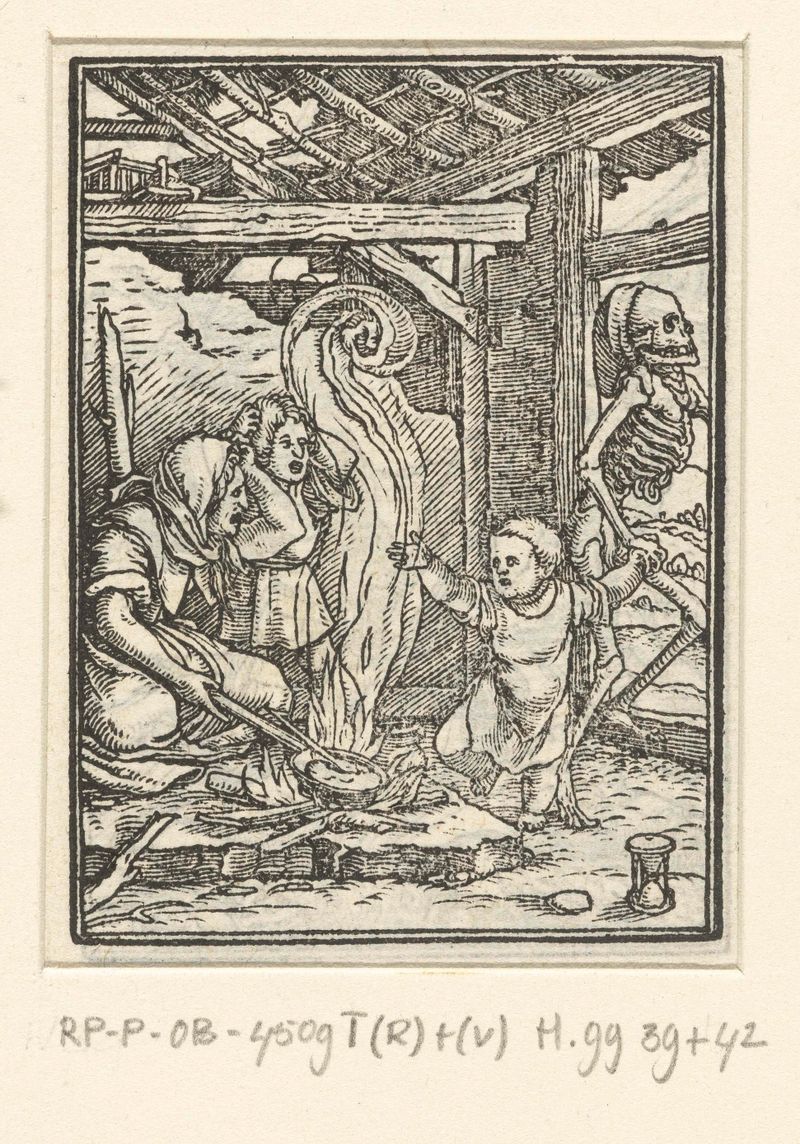
Kind en de Dood
Hans Holbein (II)
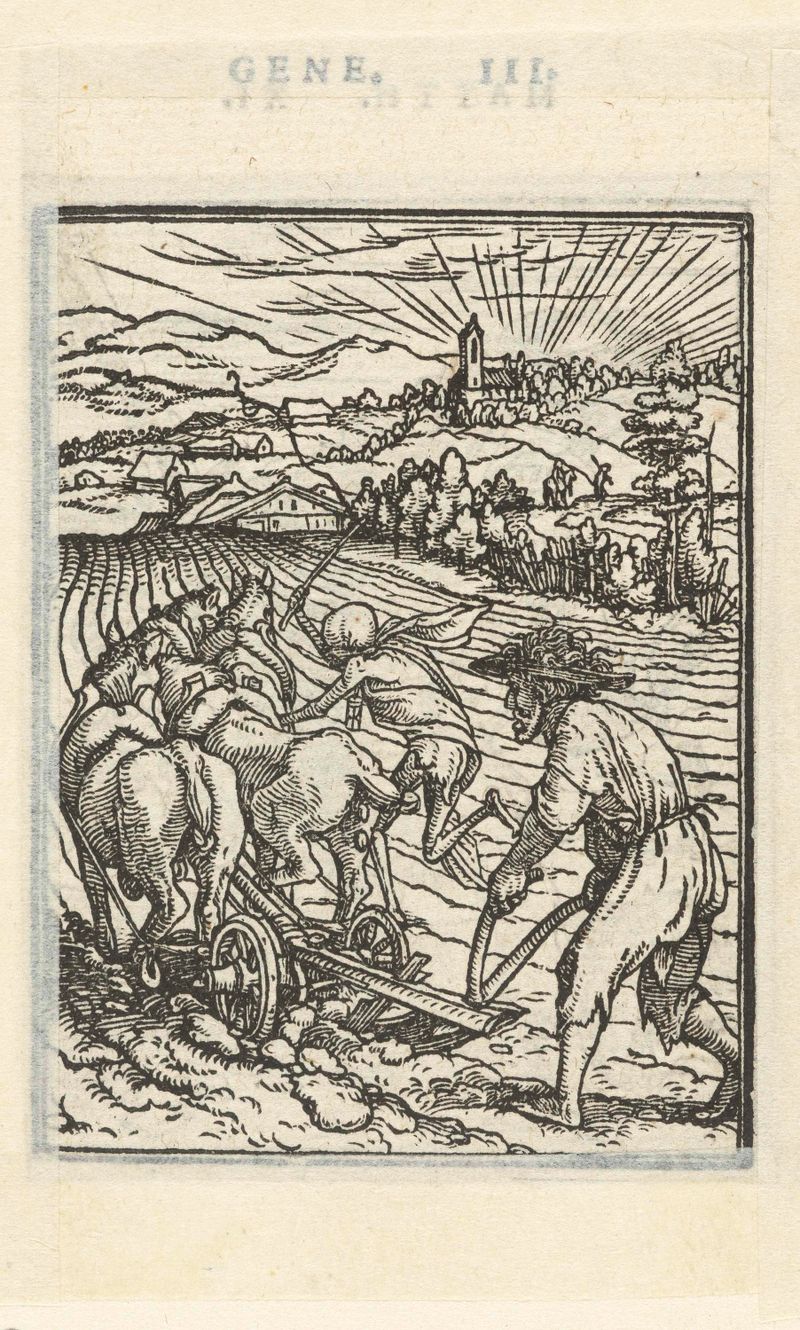
Boer en de Dood
Hans Holbein (II)
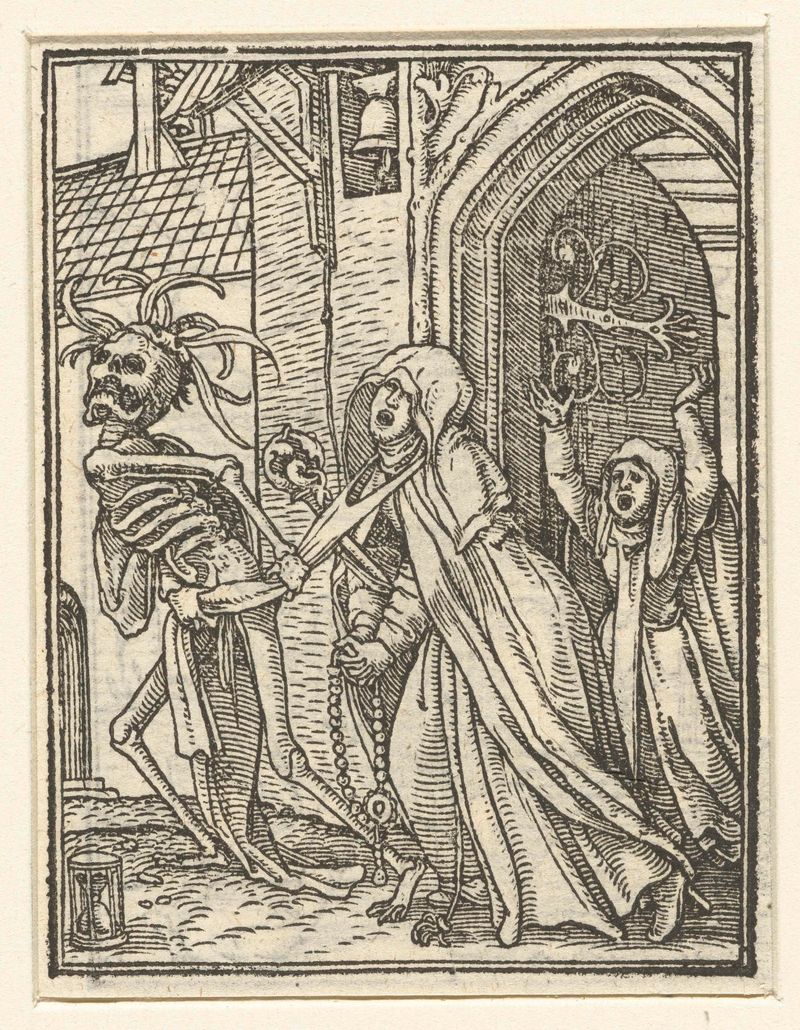
Abdis en de Dood
Hans Holbein (II)
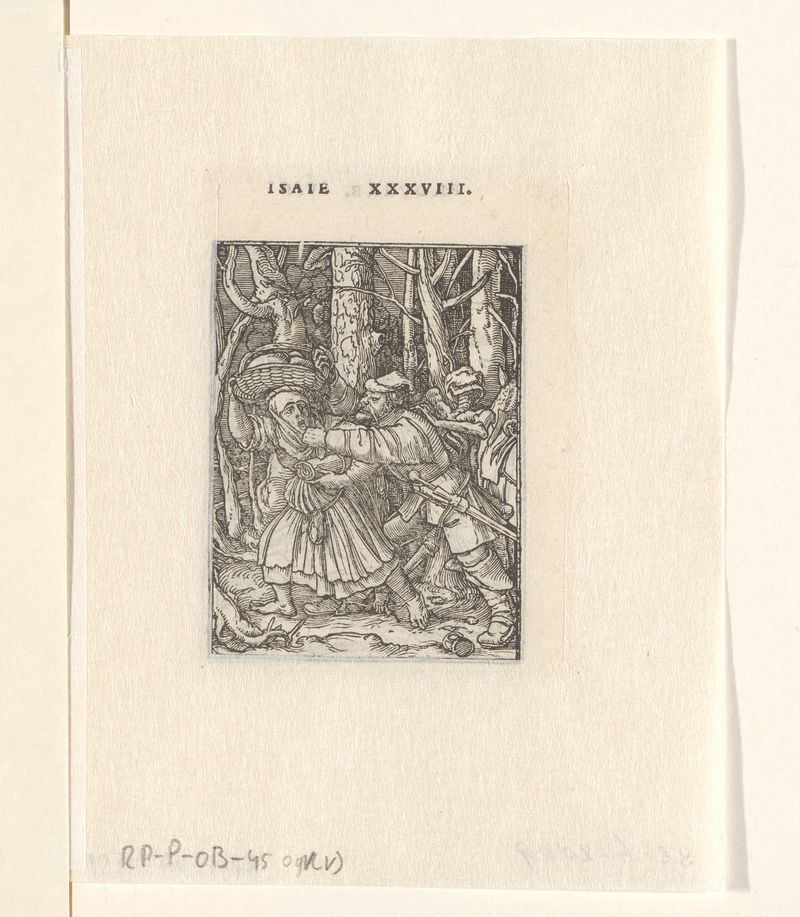
Dief en de Dood
Hans Holbein (II)
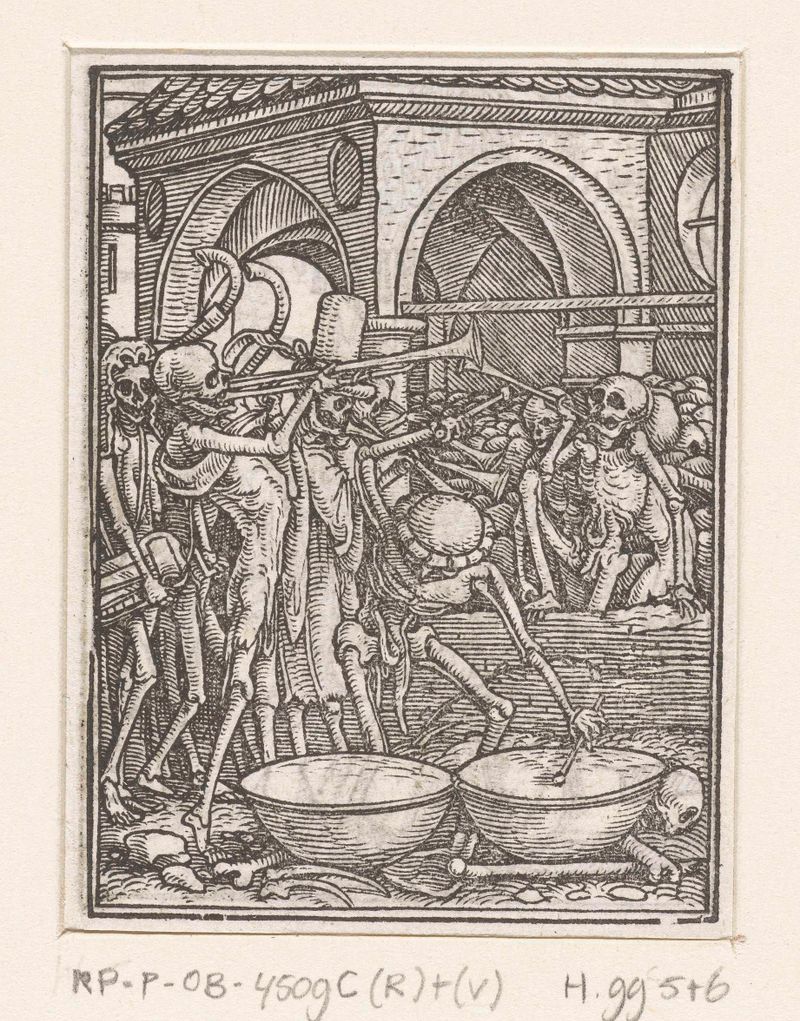
Skeletons Making Music from Dance of the Dead
Hans Holbein (II)
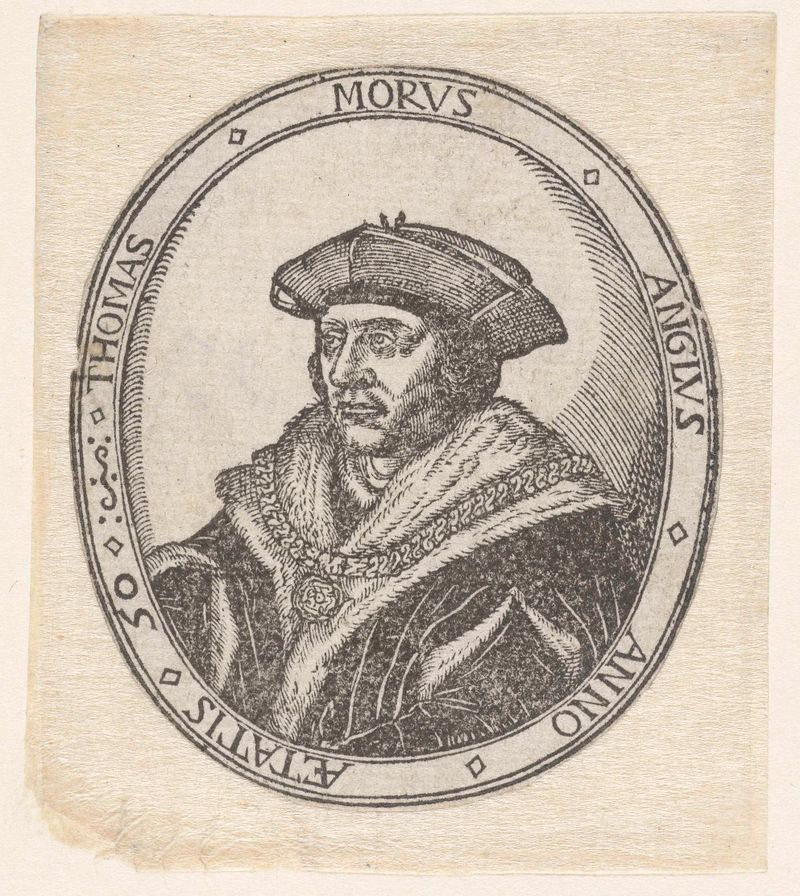
Portret van Thomas More
Hans Holbein (II)
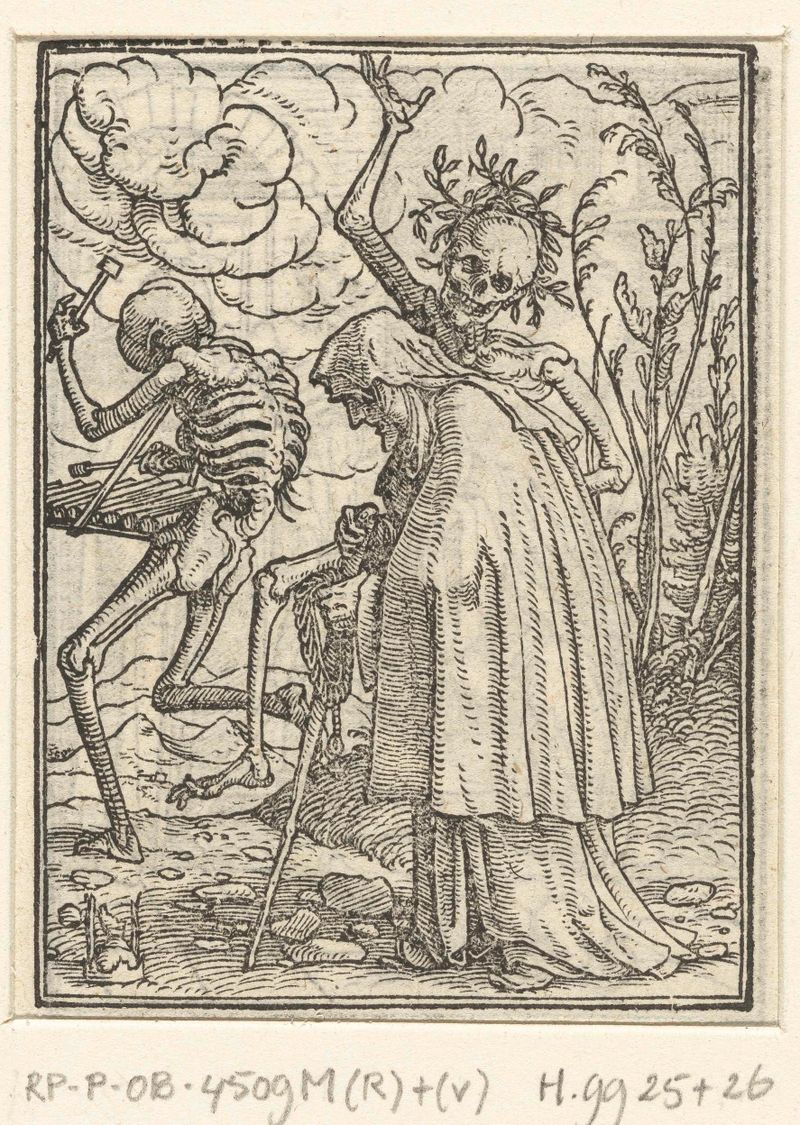
Oude vrouw en de Dood
Hans Holbein (II)





