
Kensington Gardens — History & Facts
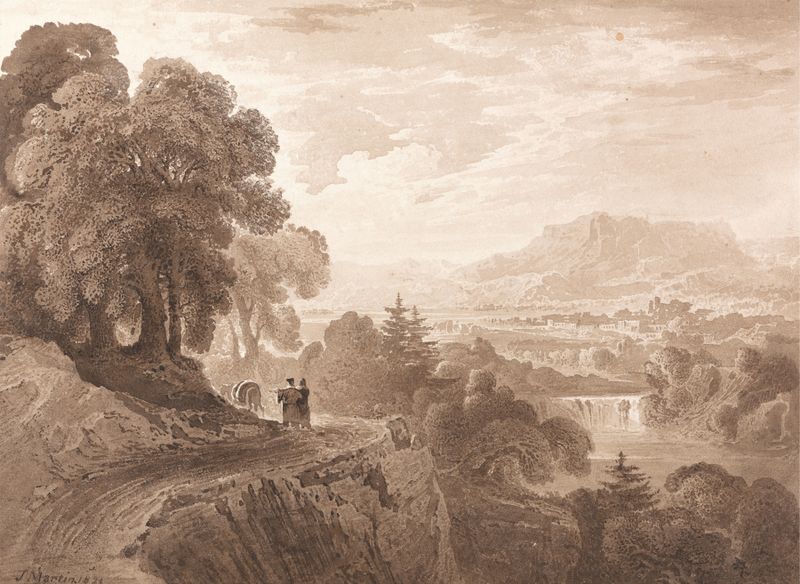
In the dappled light of a late afternoon, shadows stretch beneath towering trees as figures meander through a serene landscape. A gentle breeze stirs the leaves, whispering secrets between the branches. In the distance, a solitary spire rises, casting an air of quiet majesty over the scene, while sunlight filters through the foliage, creating a tapestry of light and shadow that dances upon the ground. Look to the left at the intricately detailed foliage, where the leaves shimmer in a spectrum of greens, revealing the artist's deft brushwork.
The soft blending of colors draws your gaze toward a winding path that beckons the viewer deeper into the composition. Notice how the figures, though small and delicate, are harmoniously integrated into the landscape, as their postures and expressions convey a sense of tranquility and connection to nature. The interplay between light and shadow not only enhances the illusion of depth but also underscores the transient beauty of the moment. Symbolically, the figures reflect the duality of solitude and companionship, inviting contemplation on the nature of existence.
The towering trees loom like guardians, suggesting the presence of both nature's majesty and its impermanence, while the distant spire hints at human aspiration amidst the serene natural world. John Martin, a prominent figure in the Romantic movement, painted Kensington Gardens in 1815 during a time when the genre was evolving to emphasize emotional depth and sublime beauty. Living in London, Martin was influenced by the burgeoning interest in landscape as an expression of the human experience. This period marked a shift in art, as artists sought to capture not just likeness but the essence of a moment, a theme beautifully encapsulated in this enchanting masterpiece.
More Artworks by John Martin
Browse all →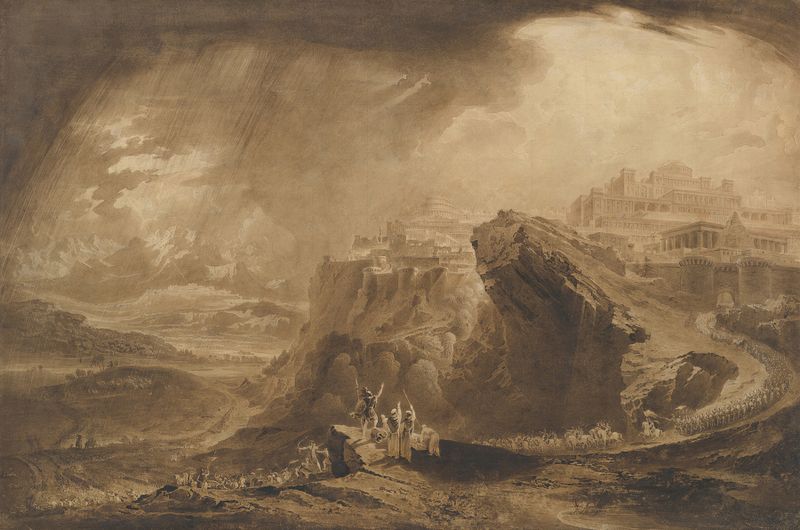
Joshua Commanding the Sun to Stand Still Upon Gibeon
John Martin
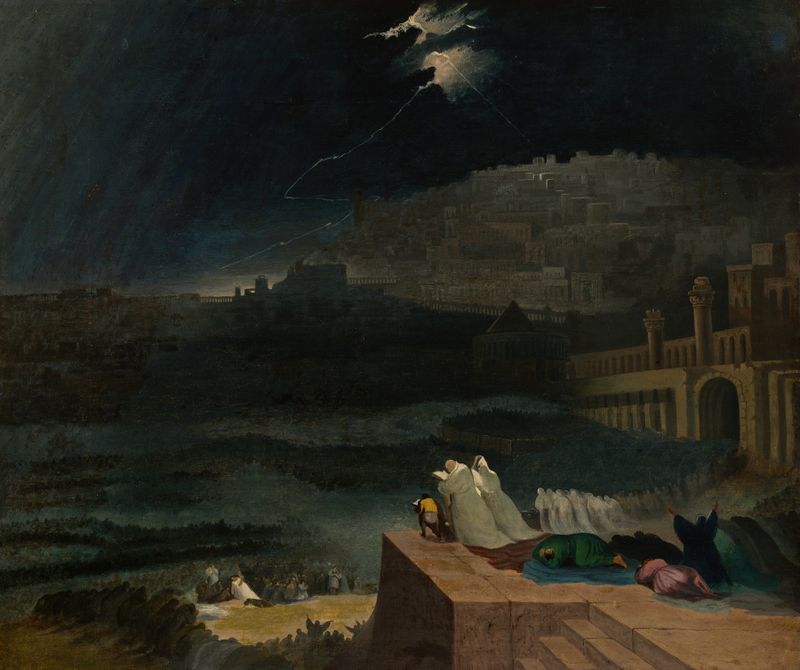
Repentance of Nineveh
John Martin

Sadak in Search of the Waters of Oblivion
John Martin
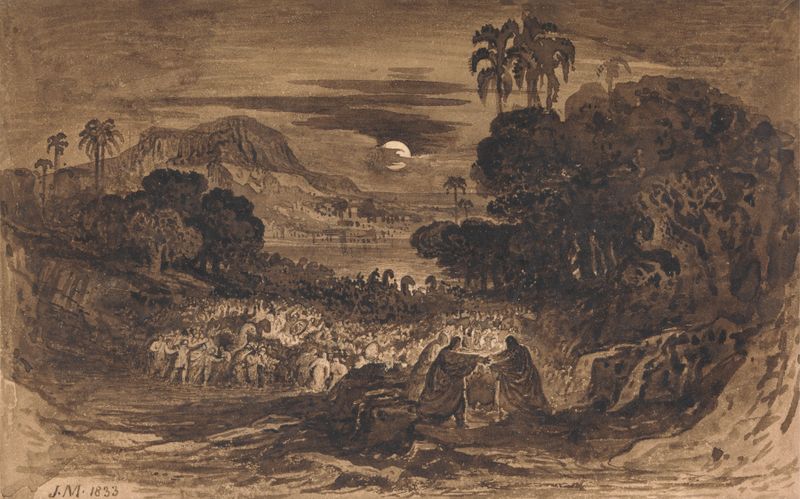
The Rescue of Lot
John Martin

The Valley of the Tyne, My Native Country near Henshaw
John Martin

The City Of God And The Waters Of Life
John Martin
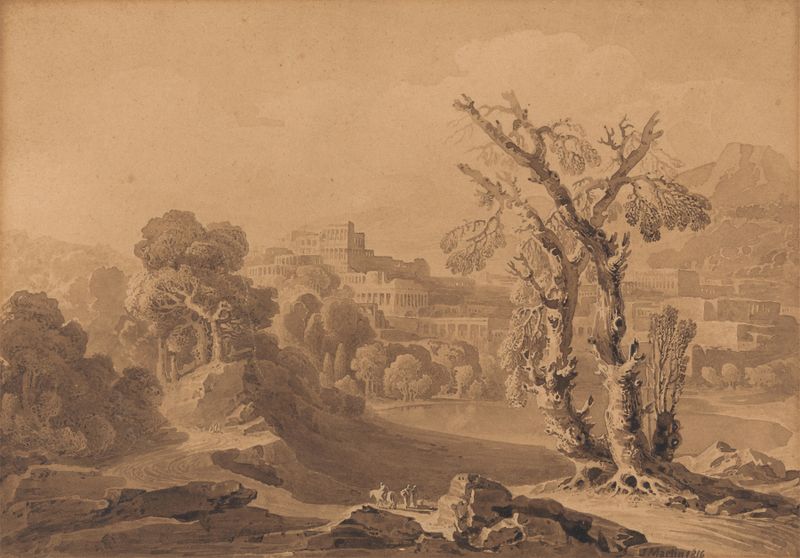
Classical City in Landscape
John Martin

Marcus Curtius
John Martin
Travelers on a Road above a River
John Martin

Ruins of an Ancient City
John Martin





