
Klassische Landschaft — History & Facts
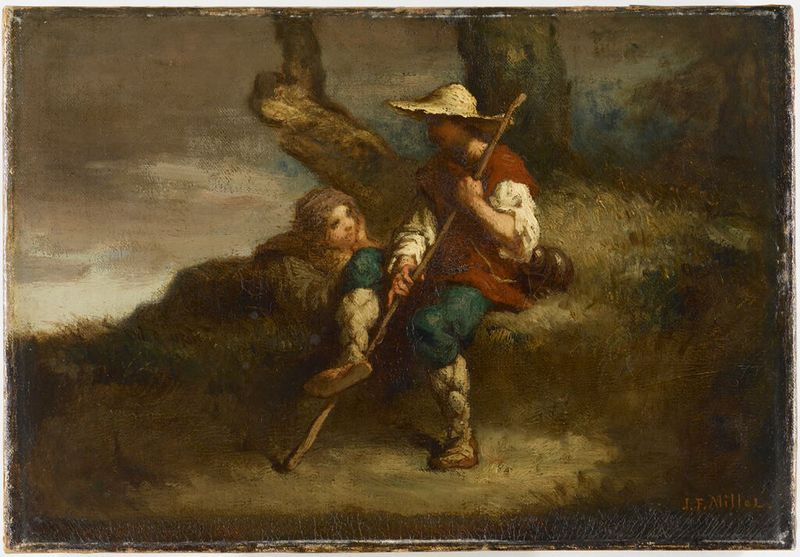
In the realm of innocence, where the hues of nature whisper secrets untold, a profound connection unfolds. Focus first on the soft earth tones that dominate the canvas, where gentle greens and muted browns blend seamlessly, inviting you to explore. Notice how the distant horizon rises, cloaked in a delicate mist, giving rise to a sense of serenity. The strokes are tender yet sure, every brush of paint a testament to the harmony of land and sky.
A solitary figure moves through this tranquil landscape, echoing the quietude that envelops the scene and drawing your gaze deeper into the natural world. Within this serene panorama, the contrast between the figure and the vast landscape becomes a meditation on innocence. The lone traveler, seemingly insignificant against nature's grandeur, evokes feelings of solitude and reflection. This balance suggests the eternal dance between humanity and the earth — a reminder of our fleeting presence in a world so grand.
The subtle interplay of light and shadow hints at the duality of existence, where innocence and experience converge, urging viewers to ponder their own journey through life. Created during a time when the rural experience was often romanticized, this painting reflects the artist’s deep connection to the land and the laboring class. Millet, painting in France in the mid-19th century, was influenced by the burgeoning realism movement, seeking to elevate the humble and overlooked aspects of everyday life. This period also marked a shift in artistic expression, as artists began to explore themes of social justice and the dignity of labor, making his work not just a representation of landscape, but a commentary on human experience.
More Artworks by Jean-François Millet
Browse all →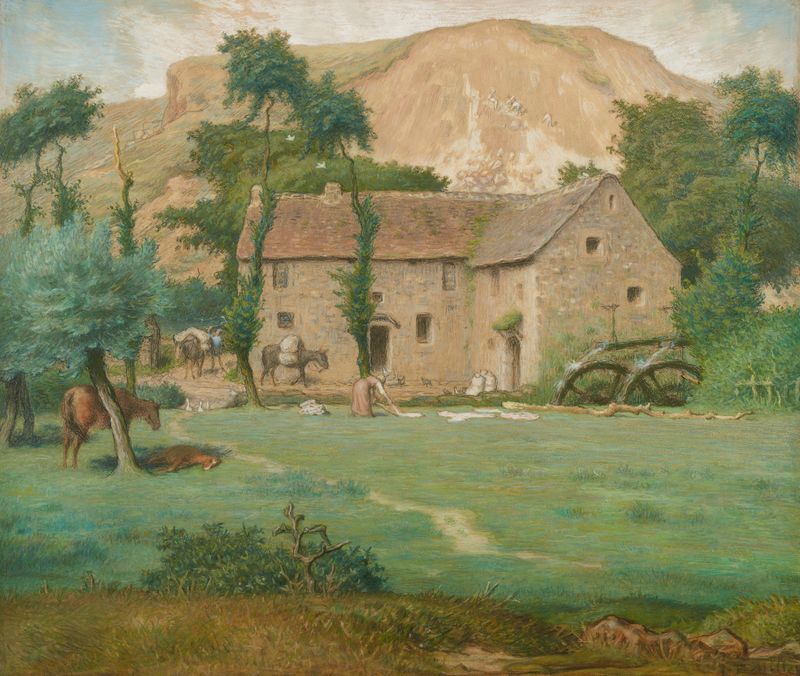
Watermill at the Foot of a Mountain, Allier
Jean-François Millet
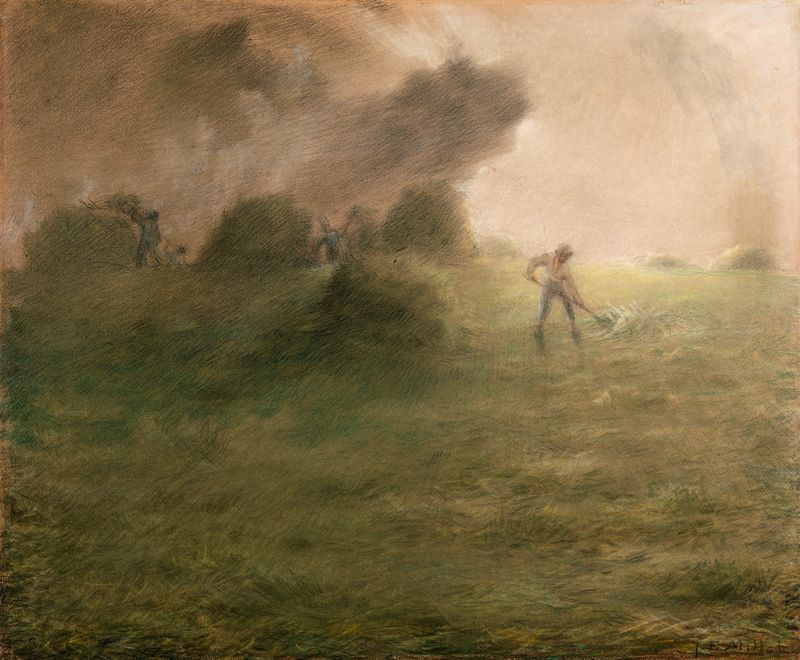
A Storm during Haymaking
Jean-François Millet
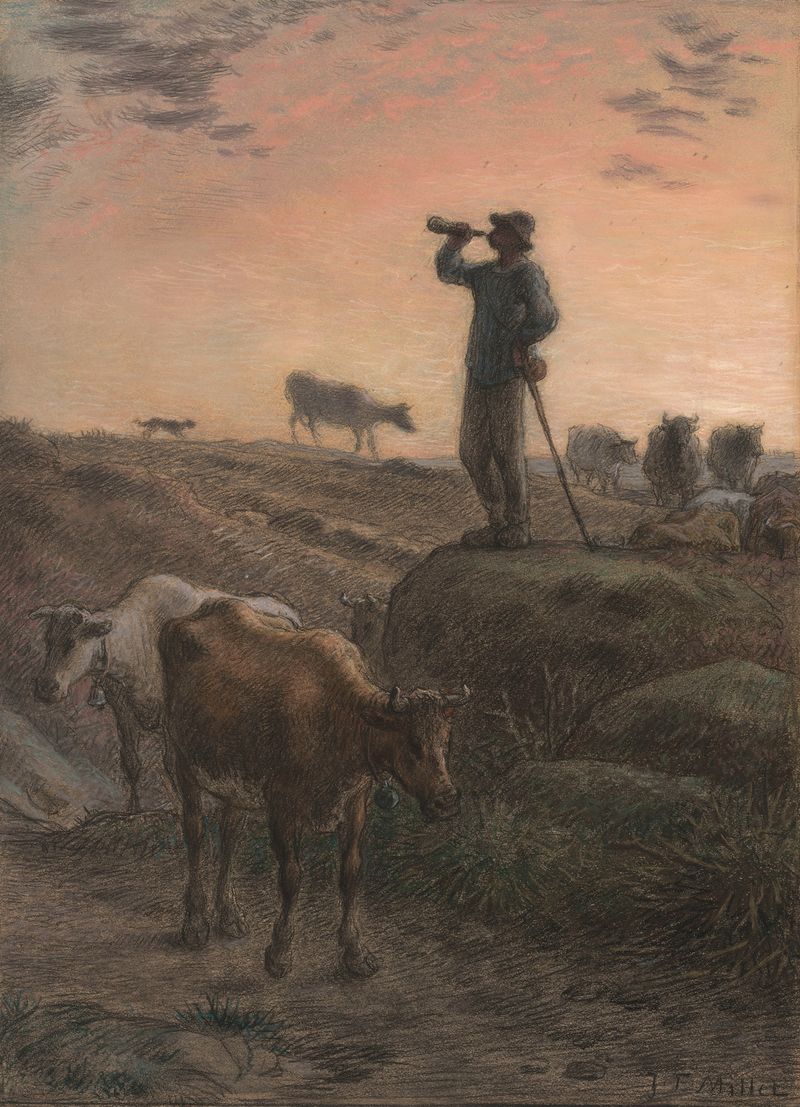
Calling Home the Cows
Jean-François Millet
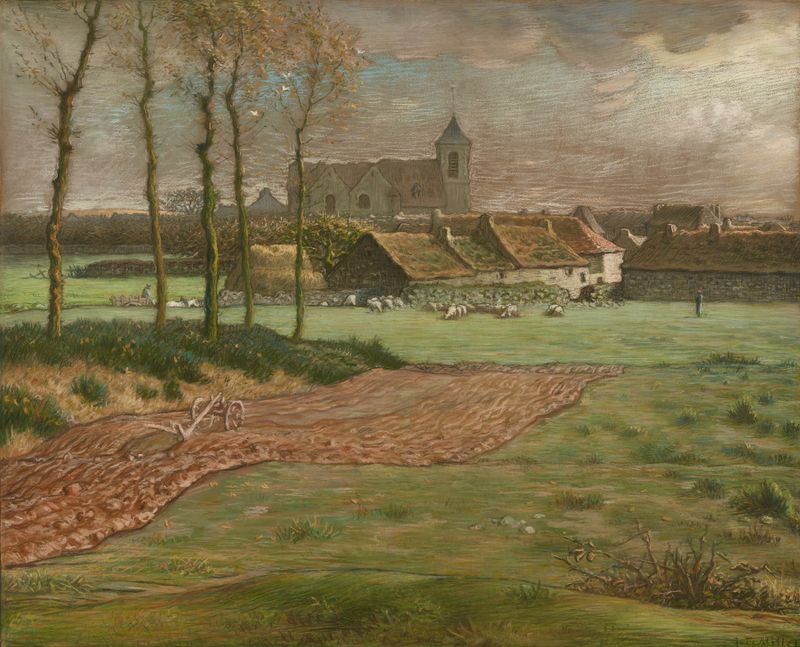
The Church at Chailly
Jean-François Millet
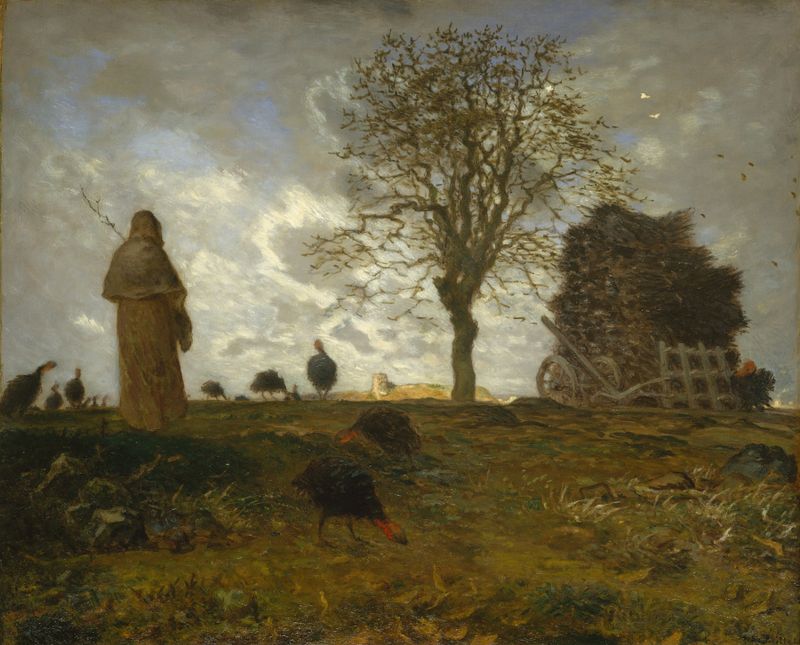
Autumn Landscape with a Flock of Turkeys
Jean-François Millet
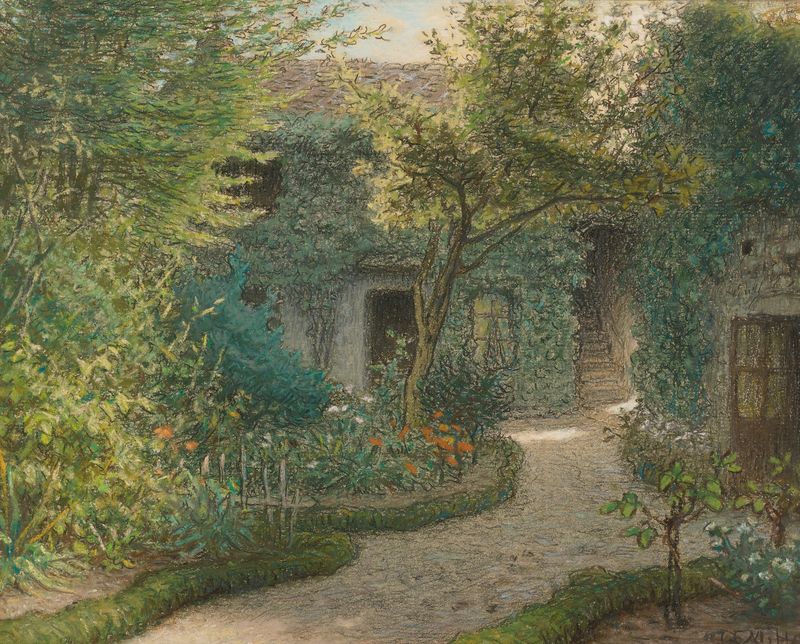
Théodore Rousseau’s House In Barbizon
Jean-François Millet
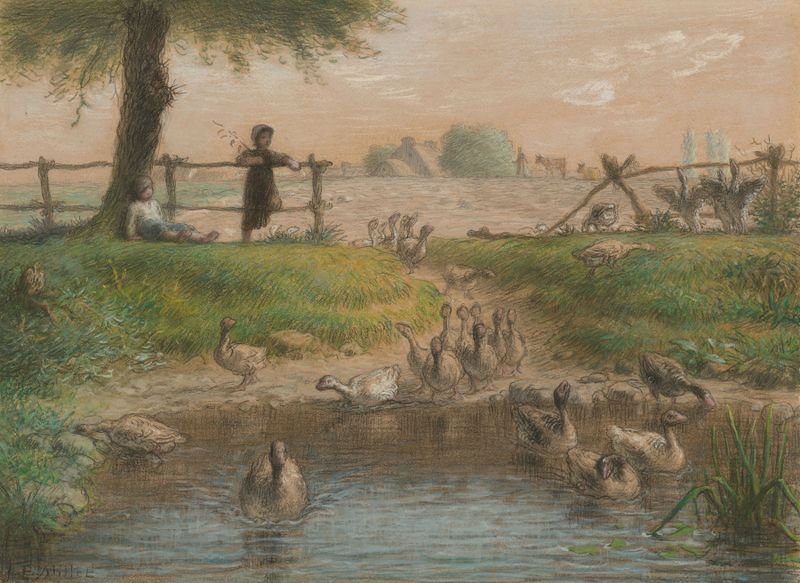
Peasant Children at Goose Pond
Jean-François Millet
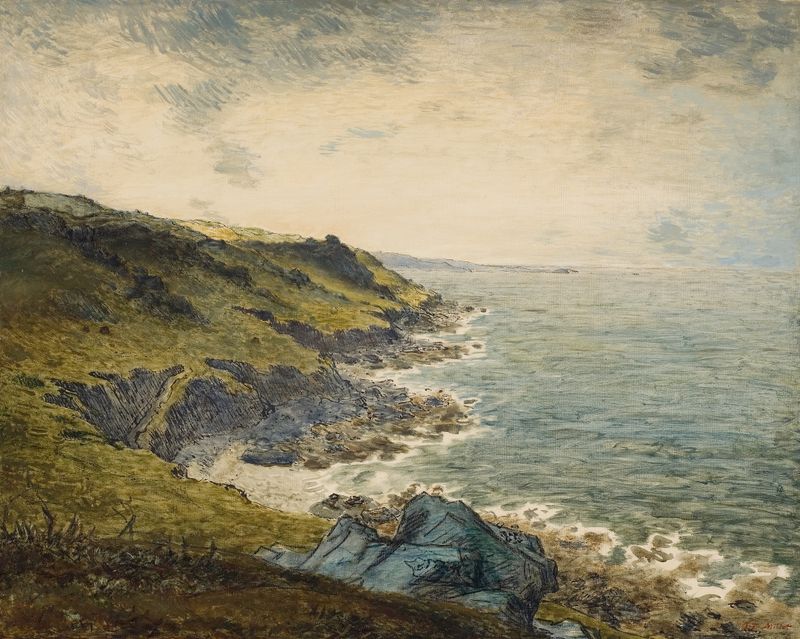
The Coast at Gréville
Jean-François Millet
Shepherds Resting
Jean-François Millet
The Old Mill
Jean-François Millet





