
La Belle Ferronnière — History & Facts
A woman sits before a dark, featureless background, her upper body turned three-quarters to the viewer while her gaze meets the front directly. Her hair is parted in the center and drawn smoothly back, with a narrow band, the ferronnière, crossing her forehead and fastened with a small jewel above the brow. Her skin is rendered with a soft, luminous modeling, the light falling from the left and gently illuminating her face, neck, and the folds of her dress, while the background remains in deep shadow.
A grey parapet runs along the bottom edge, separating the sitter from the viewer and grounding her presence within the space. The composition is tightly framed, with the figure filling most of the panel and the setting reduced to essentials, emphasizing her direct, enigmatic expression. The background is an uninterrupted expanse of deep black, with no visible objects, scenery, or architectural elements behind the figure.
The edges and corners of the painting are sharply defined, with the figure's right elbow nearly touching the right margin and her left shoulder close to the left edge. The light falls most strongly on the left side of her face and chest, leaving the right side of her body and the folds of her sleeve in partial shadow. The paint handling on the parapet is smoother and more matte compared to the softly blended transitions and delicate highlights used on the skin and fabric. The painting known as La Belle Ferronnière was created by Leonardo da Vinci in 1495.
The identity of the sitter has been debated, with the painting also known as Portrait of an Unknown Woman.
Sources: Wikidata Q656434 · Wikipedia: La Belle Ferronnière · Image source (Wikimedia Commons)
More Artworks by Leonardo da Vinci

Sheet of Studies
Leonardo da Vinci
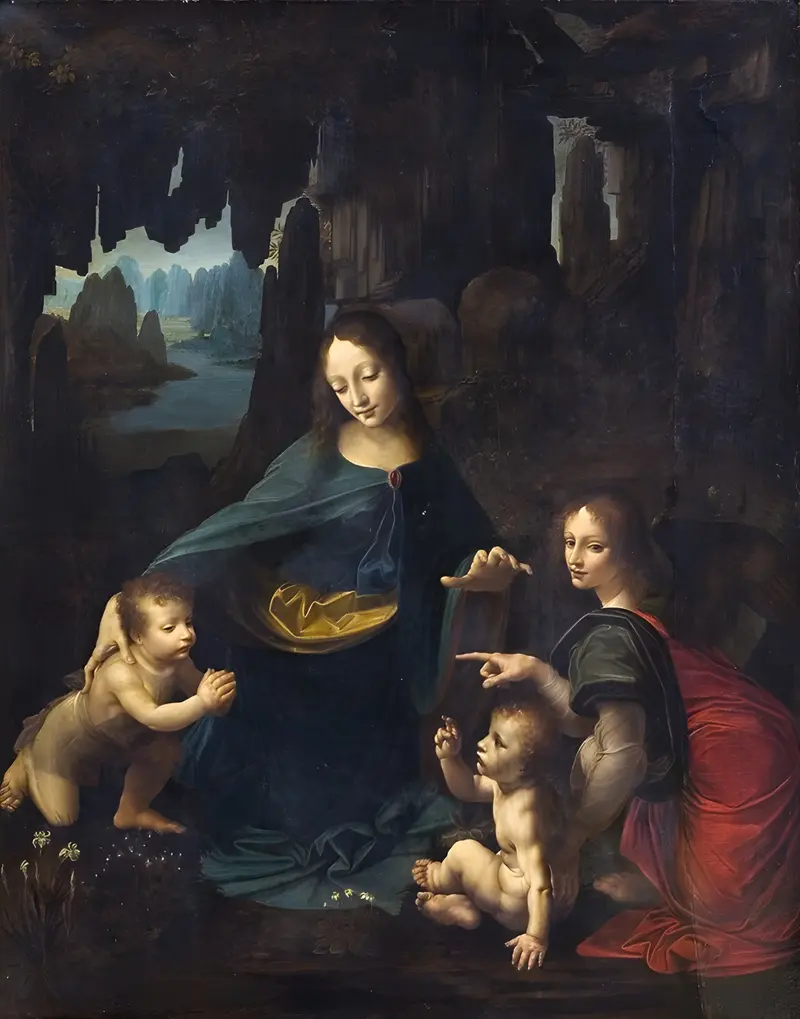
The Virgin of the Rocks
Leonardo da Vinci
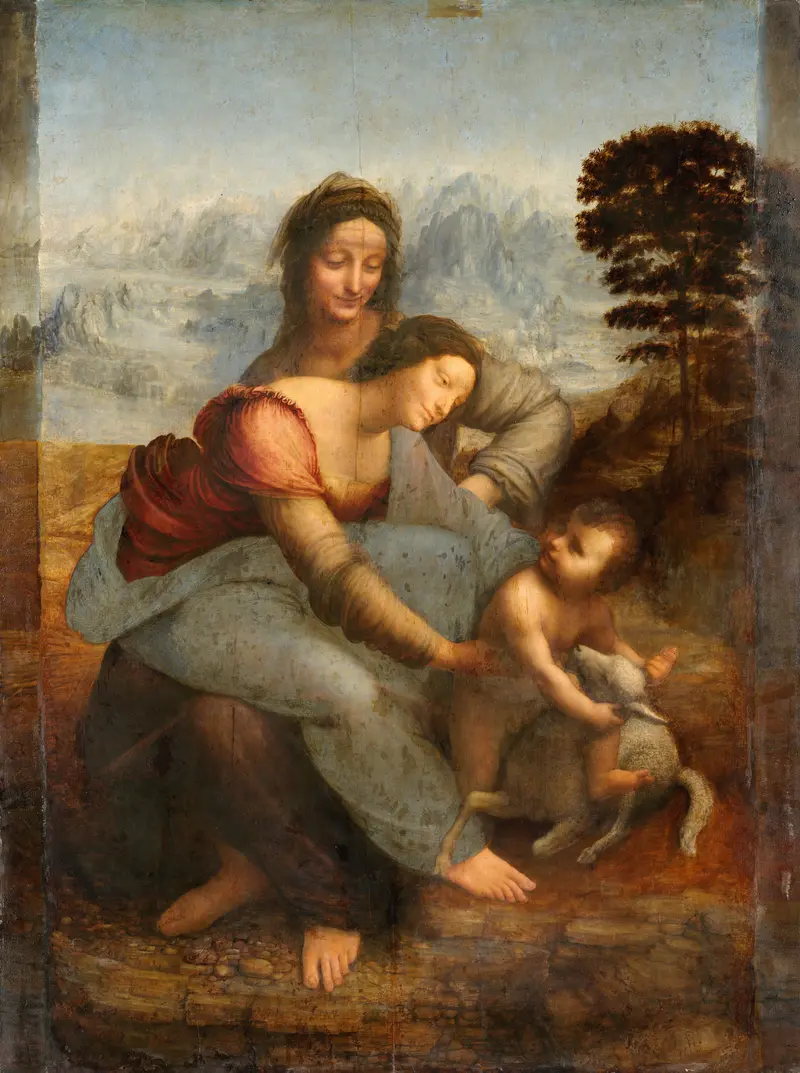
The Virgin and Child with St. Anne
Leonardo da Vinci
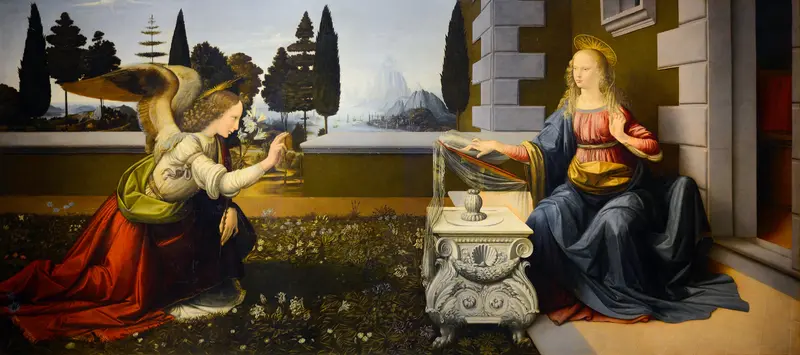
Annunciation
Leonardo da Vinci
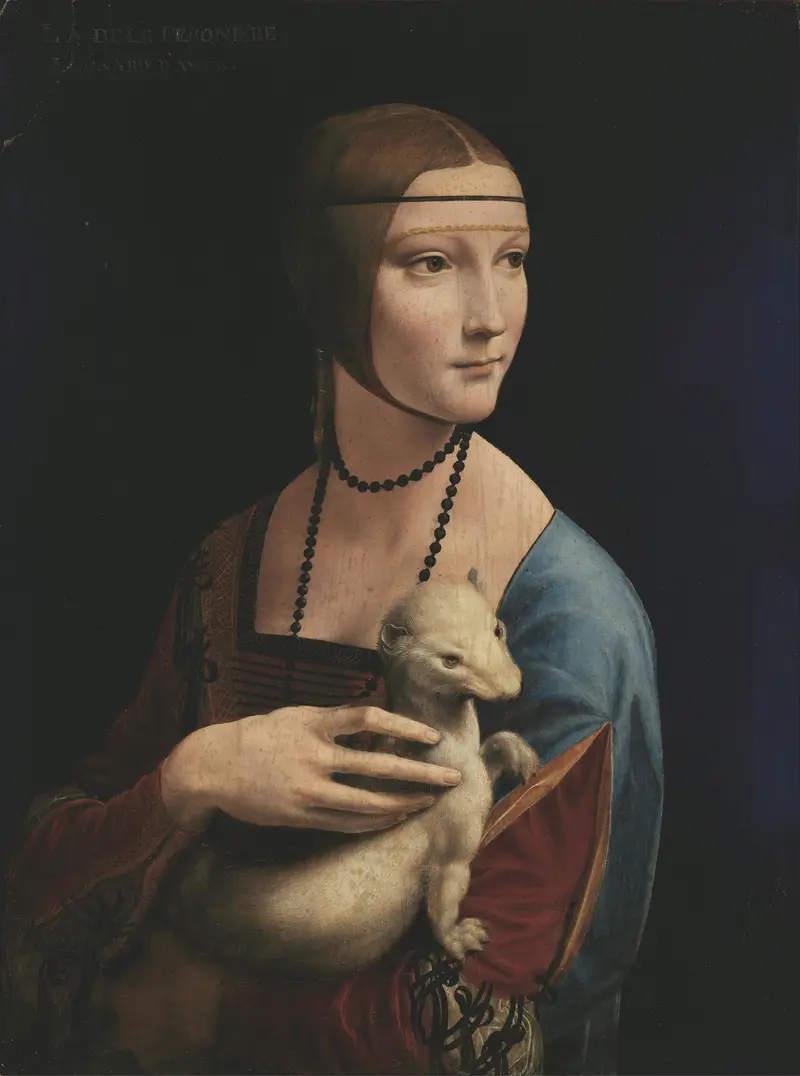
Lady with an Ermine
Leonardo da Vinci
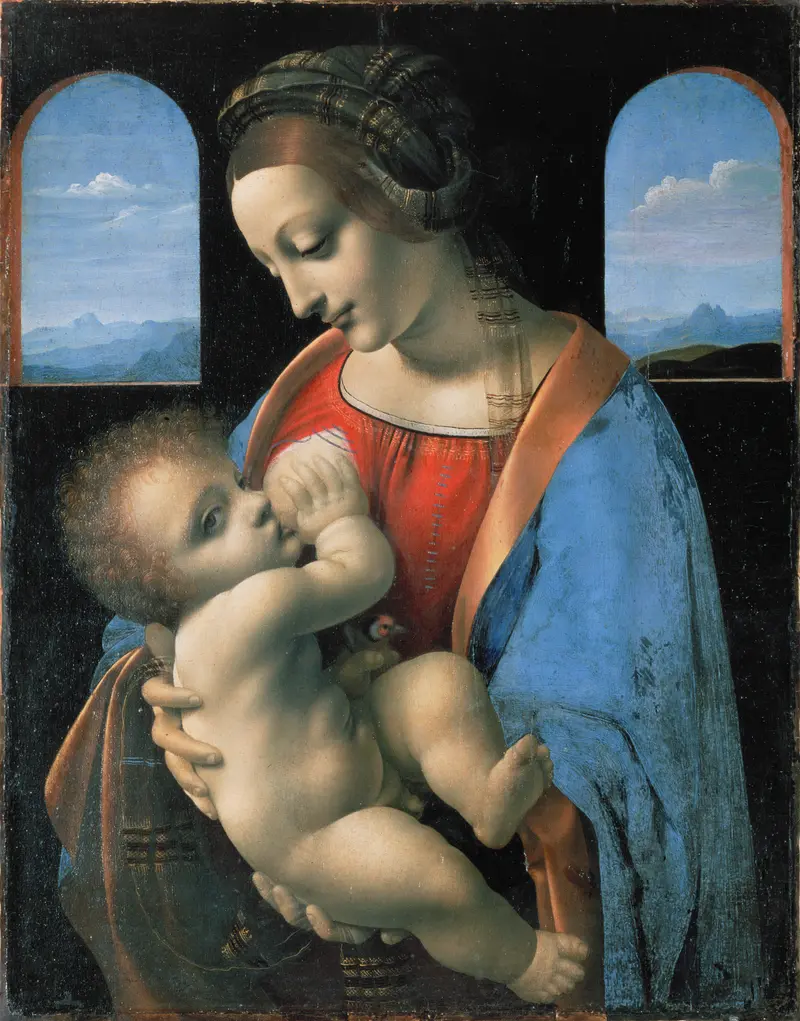
Madonna Litta
Leonardo da Vinci
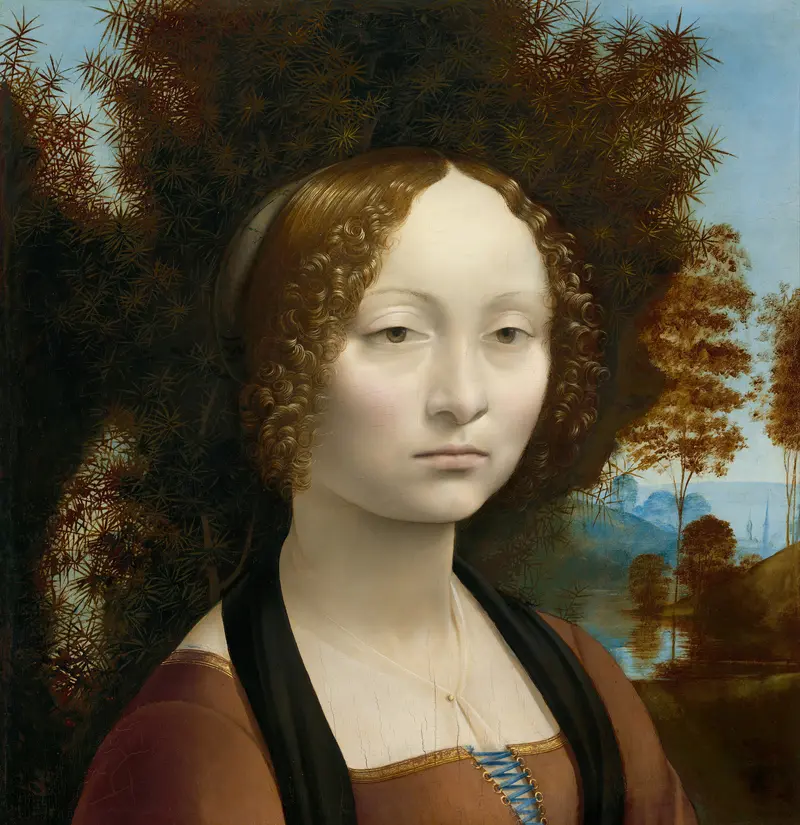
Ginevra de' Benci
Leonardo da Vinci
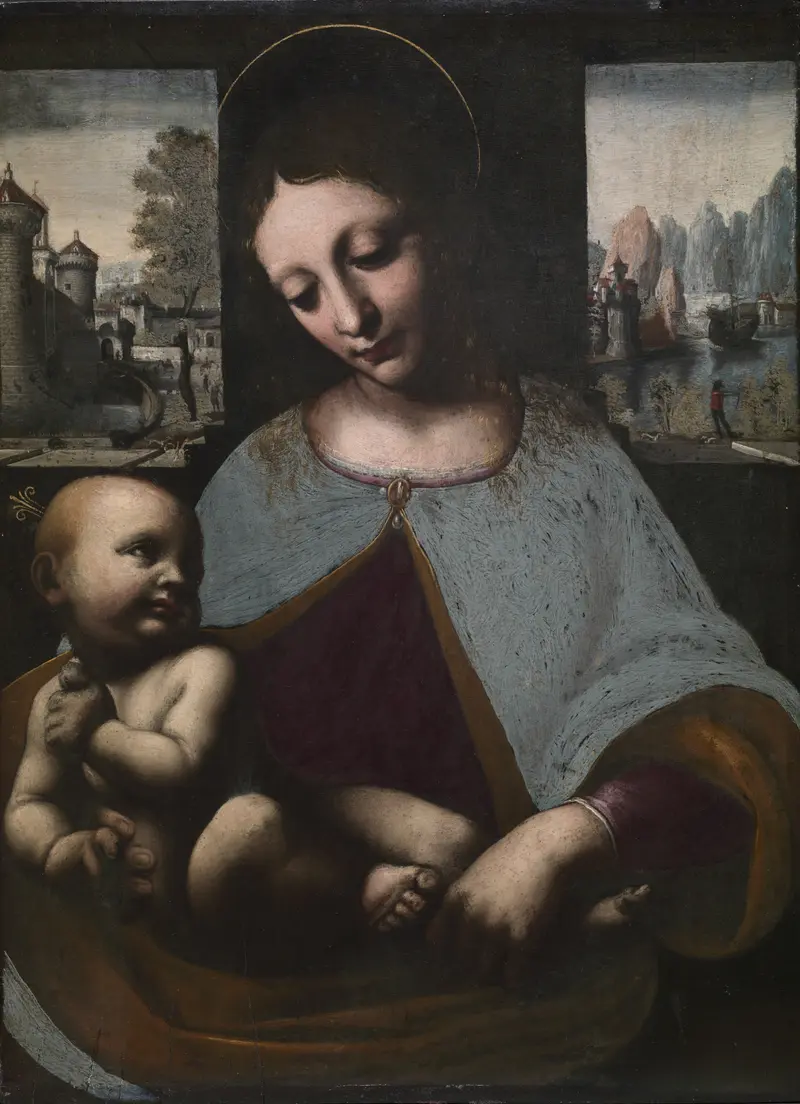
Virgin and Child
Leonardo da Vinci

Head of an Old Man, and Studies of Machinery
Leonardo da Vinci
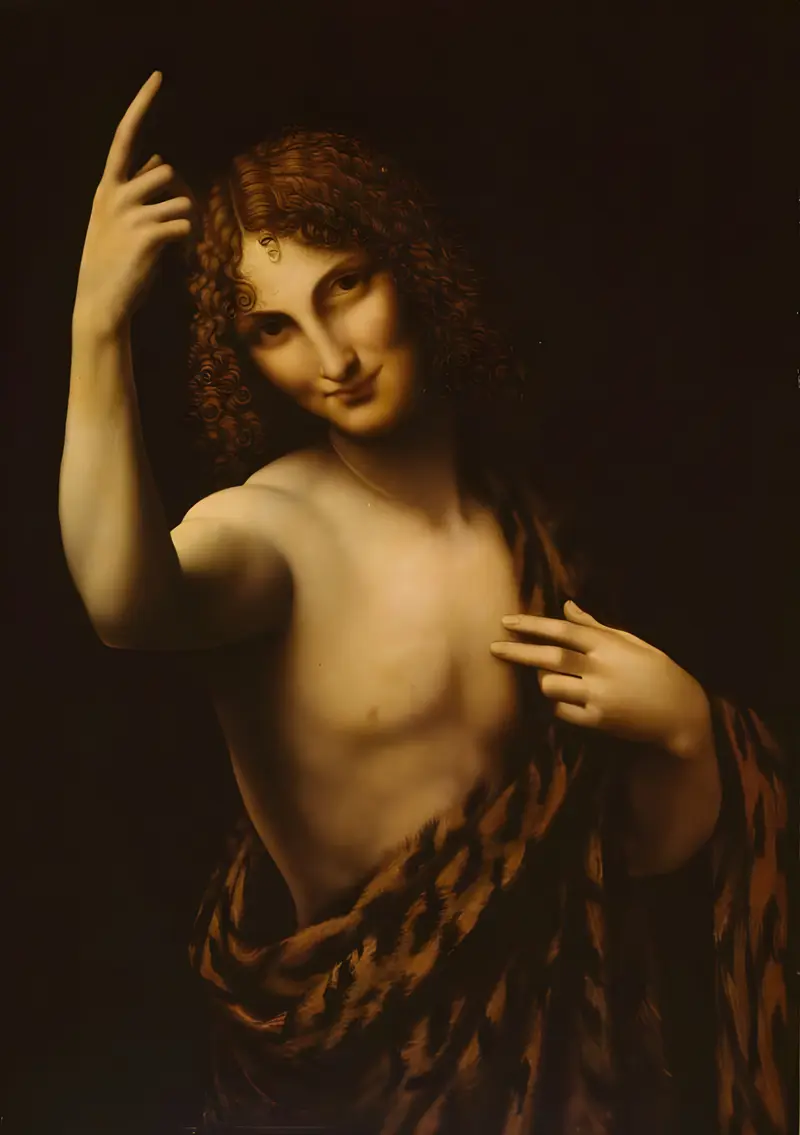
Saint John the Baptist
Leonardo da Vinci





