
Lady with an Ermine: meaning and location
Lady with an Ermine is a portrait by Leonardo da Vinci (1452–1519), painted in Milan around 1490 and a masterpiece of the Italian Renaissance. It shows Cecilia Gallerani, a young woman at the court of Ludovico Sforza, holding a white ermine. It is also called Portrait of Cecilia Gallerani or Lady with a Weasel, in Polish Dama z gronostajem. It is the only painting by Leonardo in Poland and hangs in the Czartoryski Museum, part of the National Museum in Kraków.
- What it shows: Cecilia Gallerani, seen half-length, turns toward someone outside the picture, holding a white ermine on her left arm and resting her right hand on its back.
- Pose and light: the three-quarter view, instead of the profile usual until then, suggests movement, and a single light source from the upper right models the figure in three dimensions.
- The costume: a red dress with a square neckline, a blue mantle over the left shoulder, a string of dark beads, and hair parted in the middle under a transparent veil, in the Spanish fashion that reached the Milan court around 1490.
- A repainted background: the background was painted over in black in the 19th century; originally it was blue-grey and modelled with light, so the figure seemed to emerge from half-darkness.
- Medium and size: oil and tempera on a walnut panel, 53.4 × 39.3 cm. The inscription at upper left, “LA BELE FERONIERE / LEONARD D’AWINCI”, was added at Puławy, where the sitter was mistaken for the woman in Leonardo’s La Belle Ferronnière, now in the Louvre.
- How it reached Kraków: Adam Jerzy Czartoryski bought it in Italy around 1800; it was shown from 1809 in the Gothic House at Puławy, kept in Paris at the Hôtel Lambert after 1831, and moved to the Czartoryski Museum in Kraków in 1882.
Sources: National Museum in Kraków, catalogue record MNK XII-209 · National Museum in Kraków: collection page · Wikidata Q474338
Questions and answers about the painting
Where is Lady with an Ermine today?
The painting is in Kraków, Poland, in the Czartoryski Museum, a branch of the National Museum in Kraków at ul. Pijarska 15. The museum’s catalogue places it in Room VII, devoted to Leonardo, on the second floor of the palace; its inventory number is MNK XII-209. It came to the Czartoryski Museum in 1882, and the palace reopened after a full renovation on 20 December 2019.
Source: National Museum in Kraków, catalogue record MNK XII-209 · National Museum in Kraków: the Czartoryski Museum · Polish Ministry of Culture: the Czartoryski Museum reopens (20 December 2019)
Was Leonardo’s portrait stolen in the Second World War?
Yes. In September 1939 the painting fell victim to a planned Nazi looting operation and was taken to Germany, earmarked for the museum Hitler planned in Linz. It later passed to Hans Frank, the Governor-General of occupied Poland, and at the end of the war was taken to Bavaria, where a special military mission found it. It was held at the Munich Central Collecting Point from June 1945 to April 1946 and returned to Kraków in 1946. Raphael’s Portrait of a Young Man, looted from the same collection, is still missing.
Source: National Museum in Kraków, catalogue record MNK XII-209 · National Museum in Kraków: the Czartoryski Museum · Wikidata Q474338 (collection history)
How much is the painting worth, and why was it sold in 2016?
The painting has no market price: since 2017 it has belonged to the National Museum in Kraków. On 29 December 2016 the Polish State Treasury bought the whole Czartoryski collection, about 86,000 museum objects and 250,000 library items, from the Princes Czartoryski Foundation for €100 million, to protect it from sale or export. According to Poland’s Ministry of Culture, the foundation had insured Lady with an Ermine alone for €300 million when lending it abroad.
Source: Polish Ministry of Culture, statement of 30 April 2018 · National Museum in Kraków: the Czartoryski Museum
What does the ermine in the painting mean?
The ermine is read as a coded reference to the duke and to Cecilia herself. Ludovico Sforza received the Order of the Ermine from the King of Naples in 1488 and was nicknamed “Ermellino Bianco”, white ermine. The Greek word for the animal, galê, also echoes her surname, Gallerani. In iconography the ermine stood for purity; the National Museum in Kraków adds that it may allude to her intimacy with the duke and possibly to her pregnancy.
Source: National Museum in Kraków: collection page · National Museum in Kraków, catalogue record MNK XII-209
Who is the woman in Leonardo’s portrait?
Lady with an Ermine portrays Cecilia Gallerani (c. 1473–1536), painted at about 16 or 17 at the Milan court of Ludovico Sforza, called il Moro (1452–1508). She was the duke’s mistress from 1489 to 1491 and bore him a son, Cesare, in 1491. Contemporaries praised her learning and called her a muse; she also wrote poetry. A sonnet by the court poet Bernardo Bellincioni and her 1498 letters with Isabella d’Este record her portrait by Leonardo; it was first linked to this painting around 1900.
Source: National Museum in Kraków: collection page · National Museum in Kraków, catalogue record MNK XII-209 · Wikidata Q474338 (depicts)
Is the painting in the public domain?
Yes. Leonardo da Vinci died in 1519, so his paintings are free of copyright everywhere, and the National Museum in Kraków marks this work CC0 – Public domain. A faithful photograph of a public-domain painting adds no new copyright in the United States or the European Union, so you can download this image and use it in personal or commercial projects. Public Domain Images for Commercial Use explains how.
Source: Wikidata Q762 (died 2 May 1519) · National Museum in Kraków, catalogue record (CC0)
More Artworks by Leonardo da Vinci

Sheet of Studies
Leonardo da Vinci
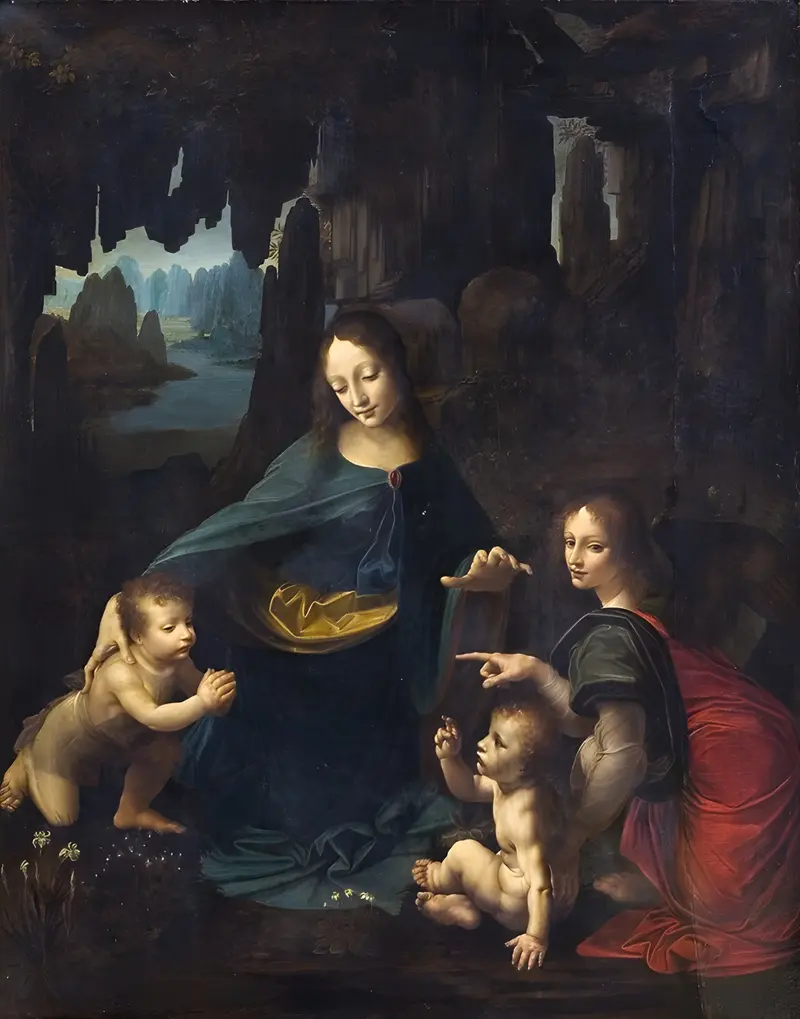
The Virgin of the Rocks
Leonardo da Vinci
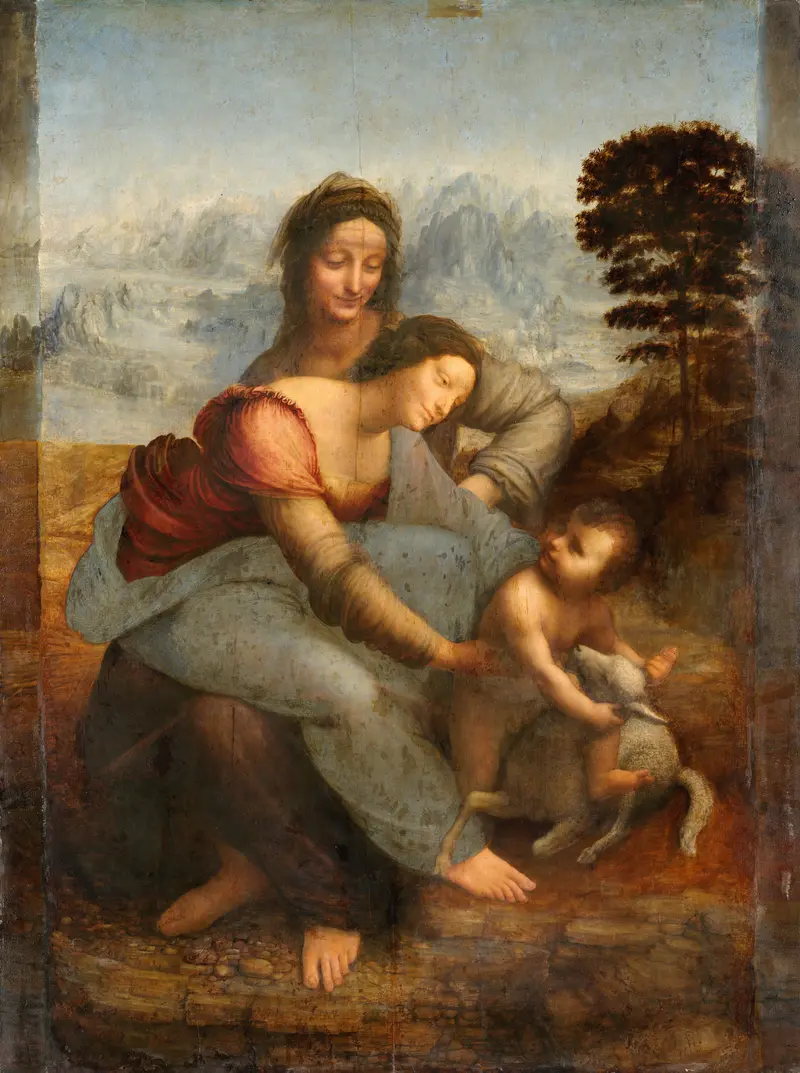
The Virgin and Child with St. Anne
Leonardo da Vinci
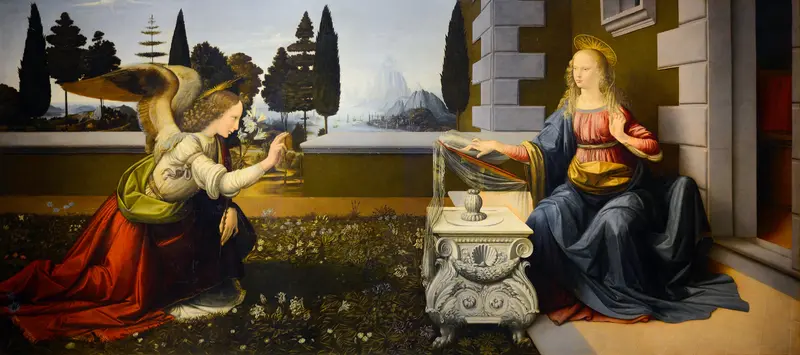
Annunciation
Leonardo da Vinci
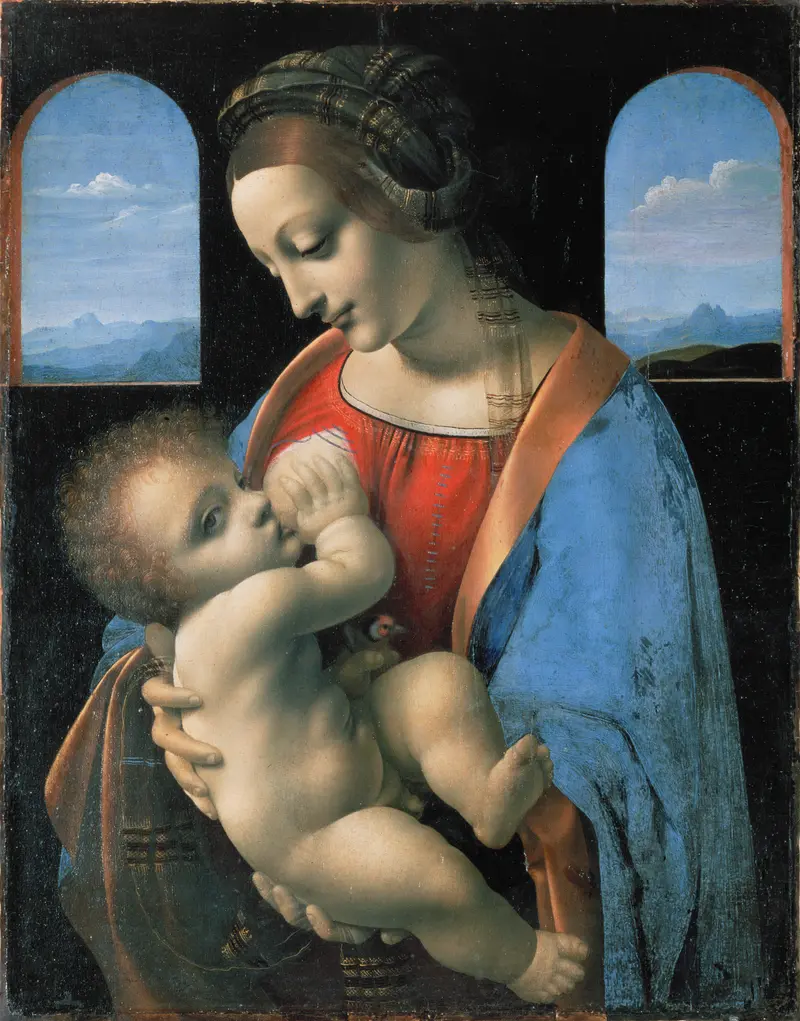
Madonna Litta
Leonardo da Vinci
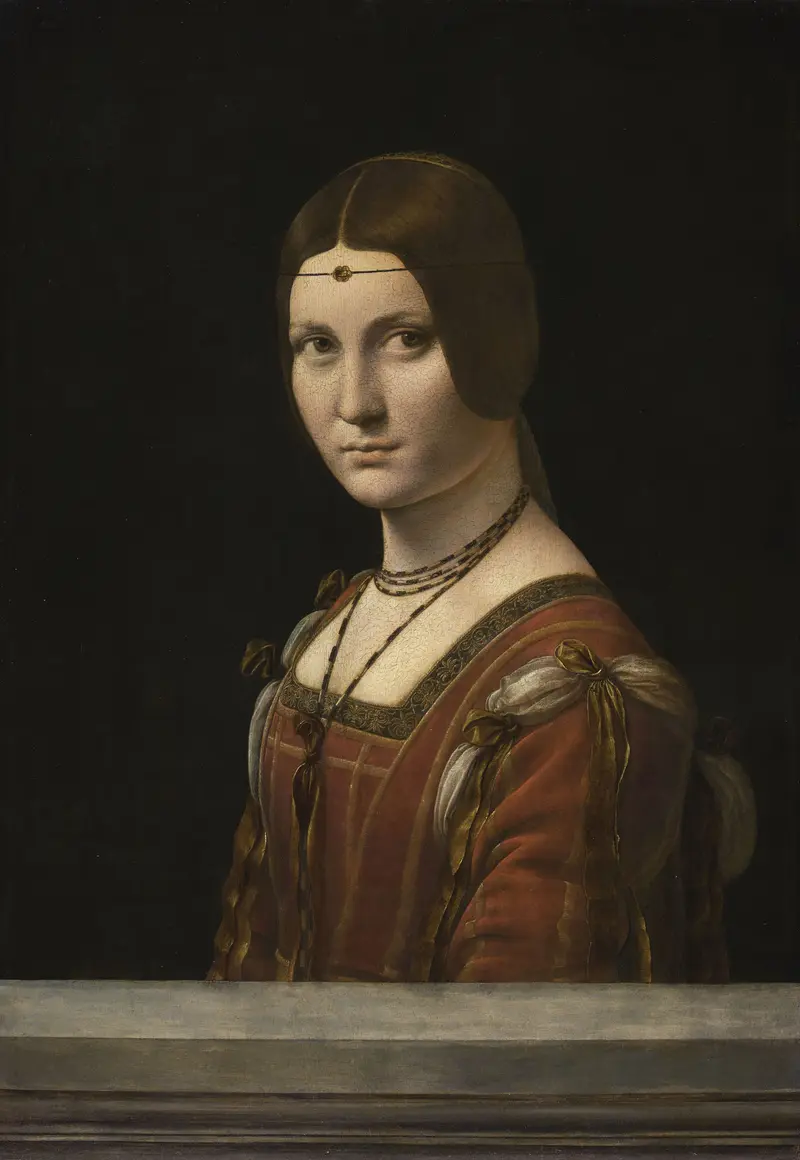
La Belle Ferronnière
Leonardo da Vinci
Ginevra de' Benci
Leonardo da Vinci
Virgin and Child
Leonardo da Vinci

Head of an Old Man, and Studies of Machinery
Leonardo da Vinci
Saint John the Baptist
Leonardo da Vinci





