
Madonna Litta — History & Facts
A woman in a red dress and blue mantle cradles a naked infant in her arms, her head bowed tenderly towards the child. Both figures are set against a dark background, with two arched windows opening onto a luminous landscape of distant blue mountains and a pale sky. The Virgin’s face is rendered in soft, delicate modeling, her features serene and her eyes lowered, suggesting a moment of quiet intimacy.
Her hair is arranged in intricate braids, with translucent veils crossing over the top and sides of her head. The Christ Child’s body is painted with smooth, rounded forms, his limbs gently curled and his skin modeled in subtle transitions of light and shadow. The woman’s right hand supports the child’s back, her long fingers carefully articulated and her thumb resting along his side.
A deep red dress with a square neckline is partly covered by a blue mantle that falls in angular folds across her shoulder and arm, contrasting with the brown drapery beneath. The composition is tightly focused on the two figures, who fill the foreground, while the arched windows create depth and frame the serene landscape beyond. Soft, diffused lighting models the faces and bodies, while the drapery shows a crisp, linear treatment, especially in the folds of the blue mantle.
The surface reveals fine, careful brushwork, with smooth transitions in flesh tones and sharper lines in the garments and hair. This is the Madonna Litta, attributed to Leonardo da Vinci and dated to the mid-1490s. The painting is recognized as a work of religious art from the Early Renaissance, made in Italy.
Sources: Wikidata Q1327676 · Wikipedia: Madonna Litta · Image source (Wikimedia Commons)
More Artworks by Leonardo da Vinci

Sheet of Studies
Leonardo da Vinci
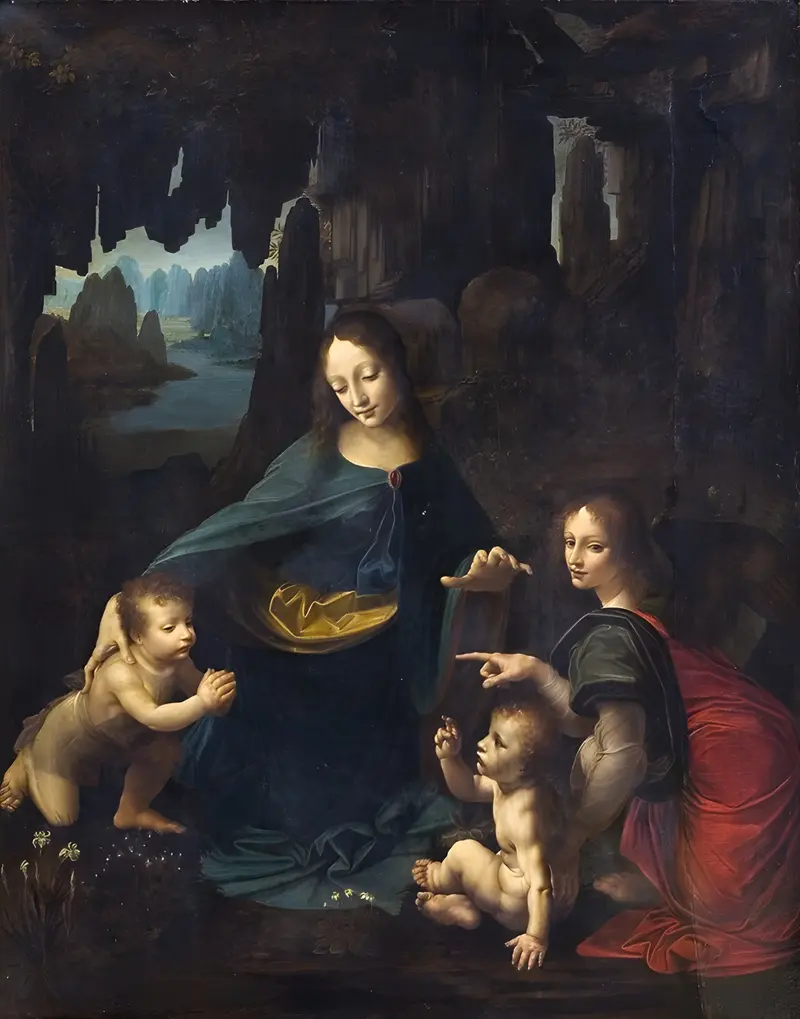
The Virgin of the Rocks
Leonardo da Vinci
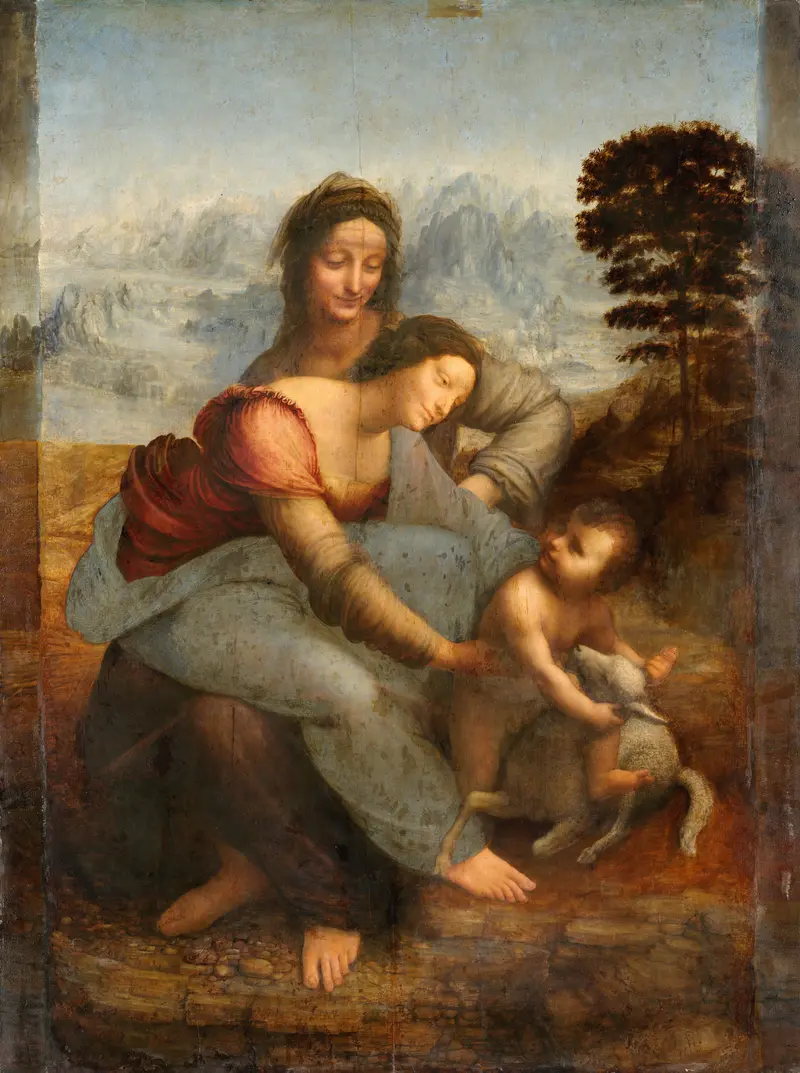
The Virgin and Child with St. Anne
Leonardo da Vinci
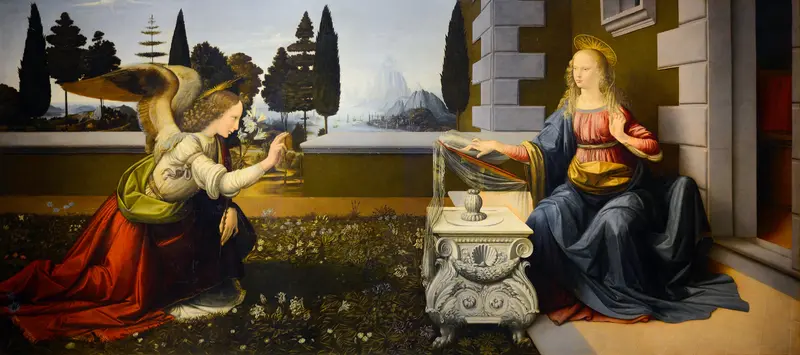
Annunciation
Leonardo da Vinci
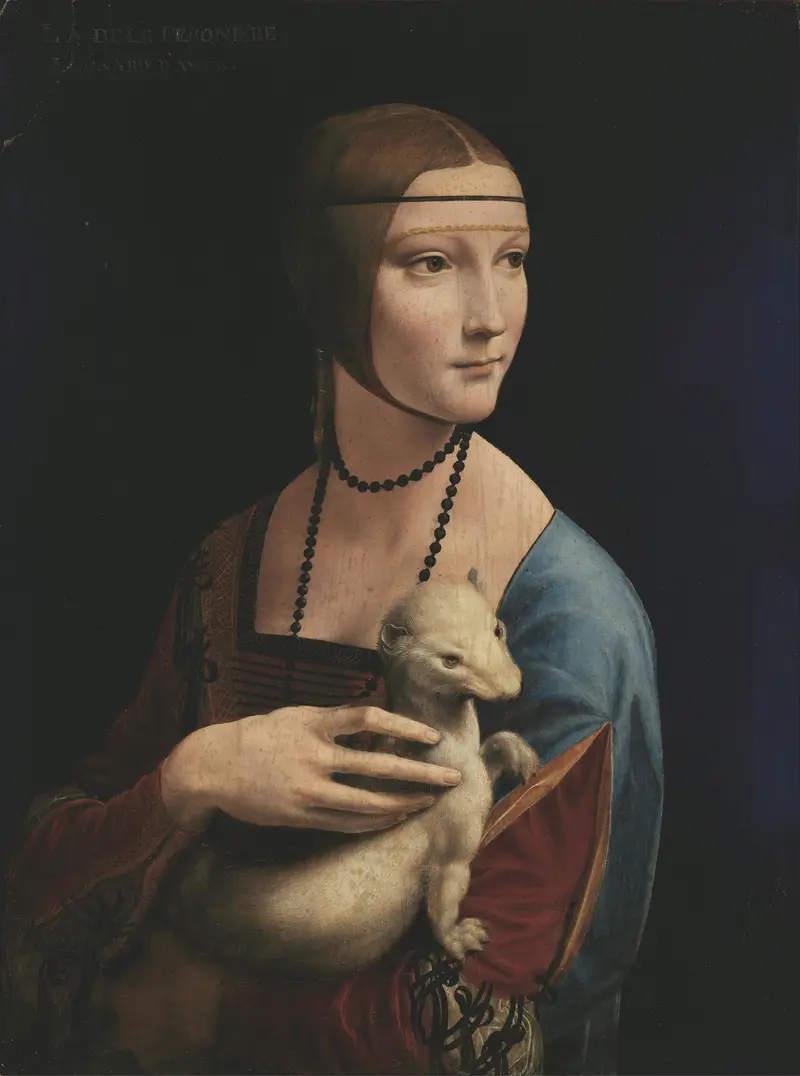
Lady with an Ermine
Leonardo da Vinci
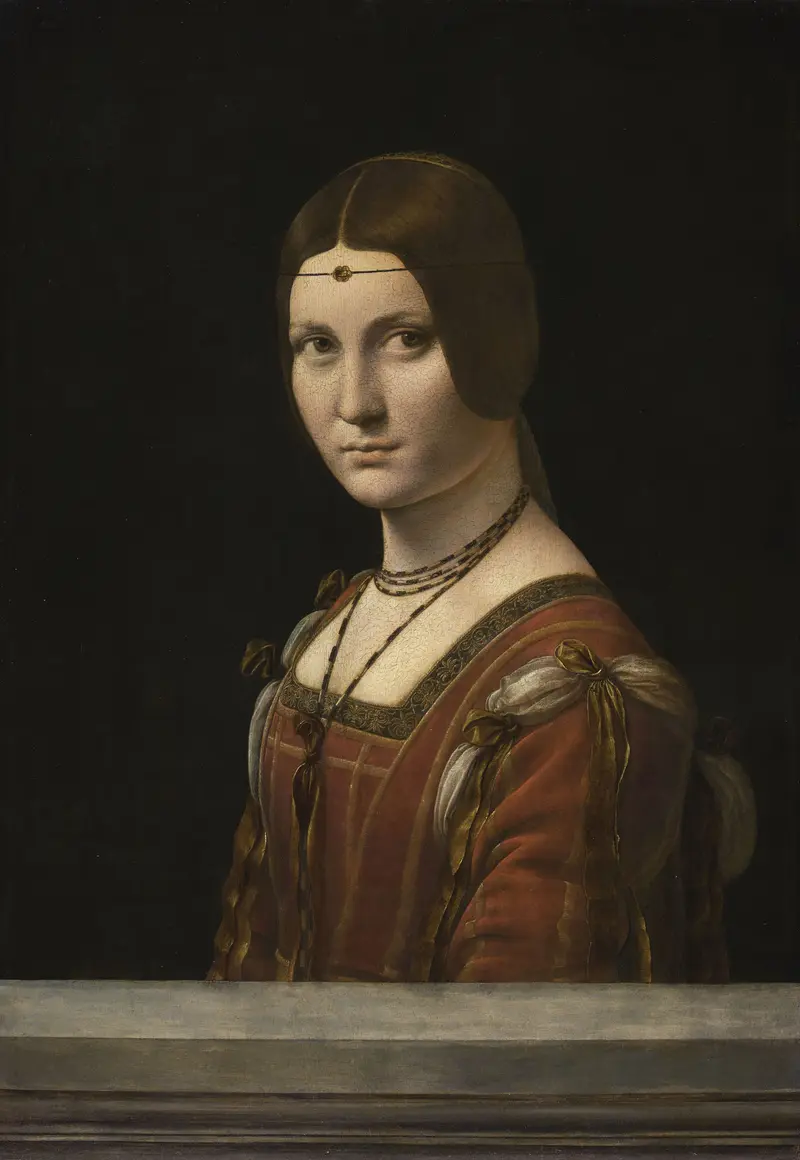
La Belle Ferronnière
Leonardo da Vinci
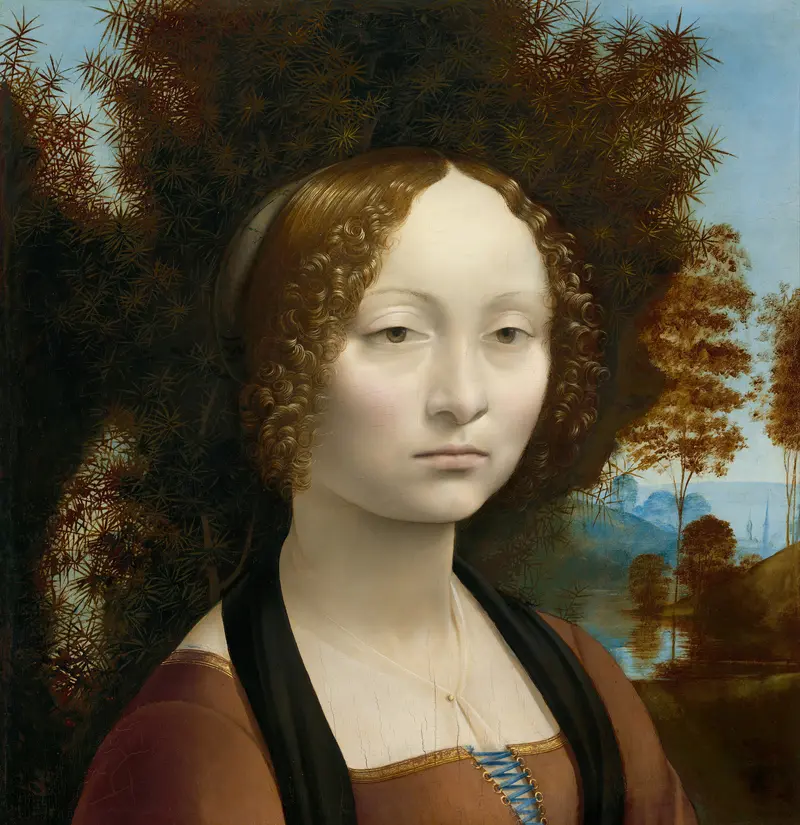
Ginevra de' Benci
Leonardo da Vinci
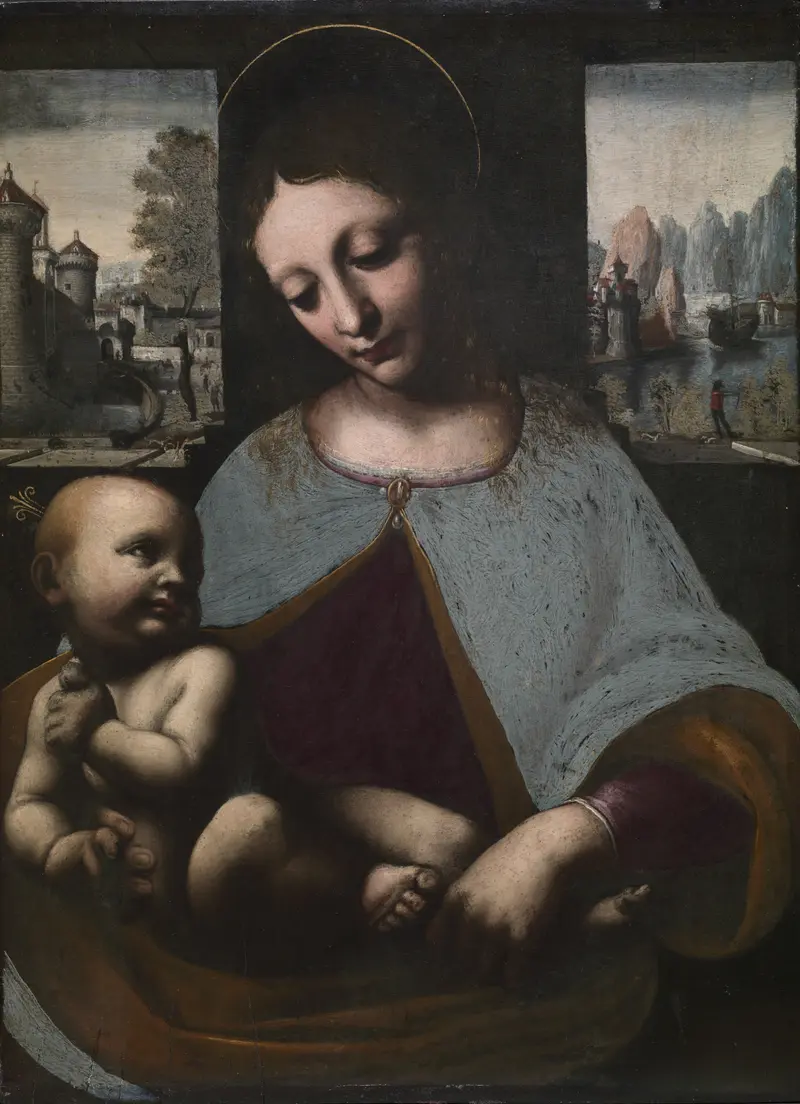
Virgin and Child
Leonardo da Vinci

Head of an Old Man, and Studies of Machinery
Leonardo da Vinci
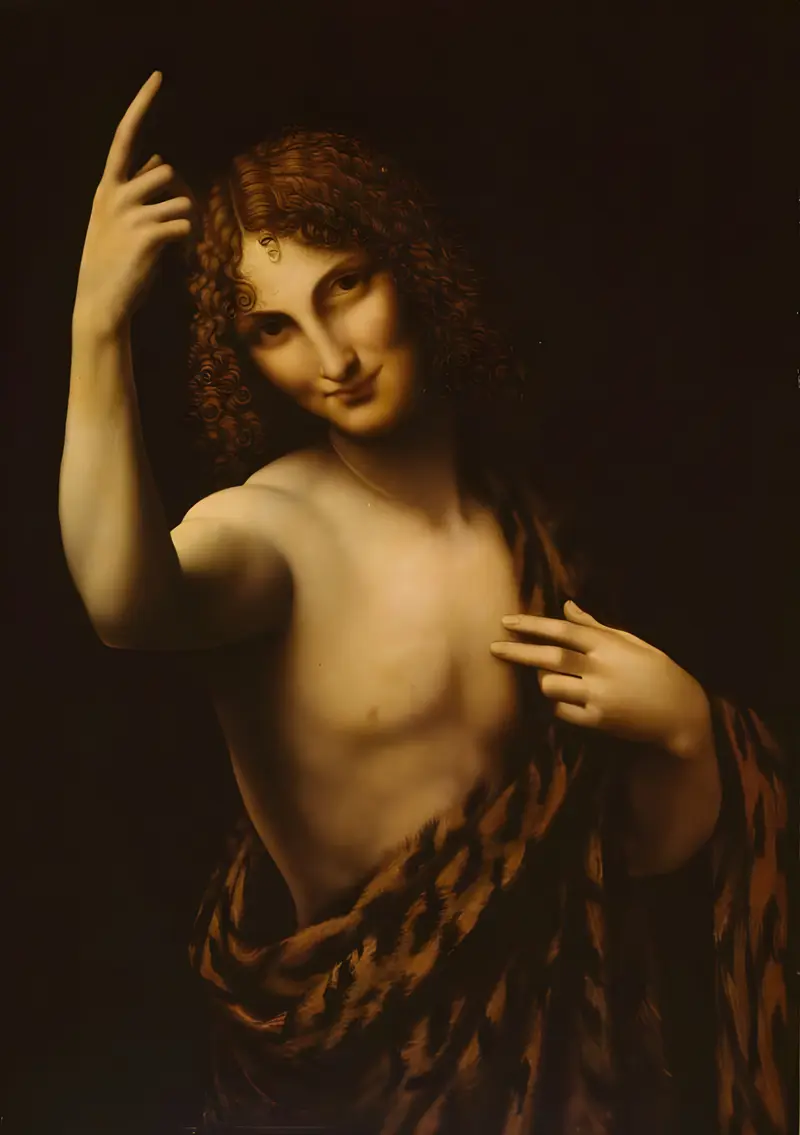
Saint John the Baptist
Leonardo da Vinci





