
La Place des Martyrs et la Taverne du Bagne — History & Facts
In the depths of chaos and clarity, madness unfolds, a surreal dance between reality and abstraction. Look to the foreground where vibrant colors surge, drawing your attention to the lively street scene alive with figures, each character a reflection of a broader narrative. Notice how the bold strokes of blue and ochre contrast with the softer whispers of green, guiding your eye across the cobblestone path that leads into the heart of the bustling tavern. The interplay of light—flickering against the shadows—breathes life into the faces, suggesting stories untold, as if you might overhear laughter mingling with hushed conversations. In the intricate details, the tension between chaos and order reveals itself—an erratic swirl of figures, each one caught in their own moment of contemplation or celebration.
The tavern, with its beckoning doorway, serves as a metaphorical threshold between sanity and the madness of life beyond its walls. The overlapping forms and dynamic composition invite viewers to delve into the layers of emotions, where joy and sorrow coexist, creating a delicate balance that resonates with the viewer's own experiences. Félix Hilaire Buhot painted this piece in 1885 while living in France, a time marked by shifting social landscapes and an exploration of impressionistic techniques. The artist navigated between realism and abstraction, capturing the essence of life and the ever-present undercurrents of madness that define the human experience.
As he merged these styles, Buhot contributed to the evolving narrative of modern art, encapsulating a fleeting moment in the chaos of urban existence.
More Artworks by Félix Hilaire Buhot
Browse all →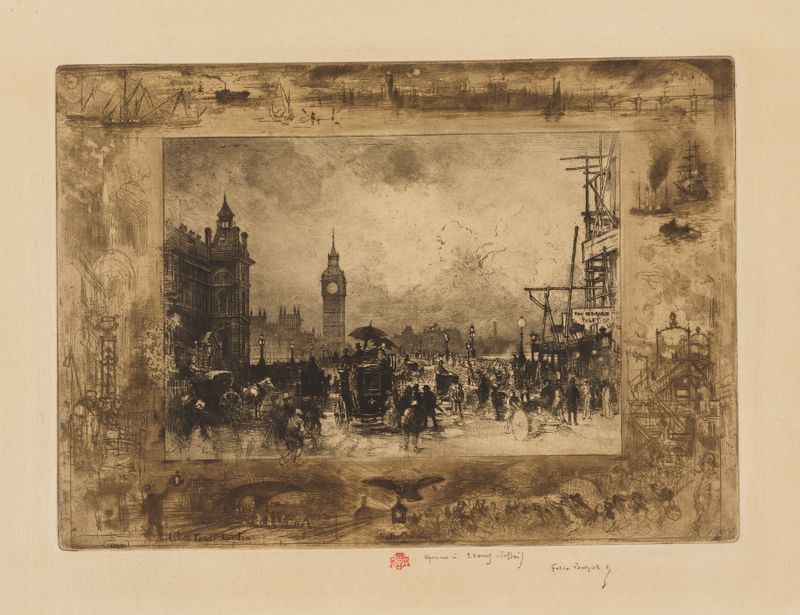
Westminster Bridge, or Westminster Clock Tower
Félix Hilaire Buhot
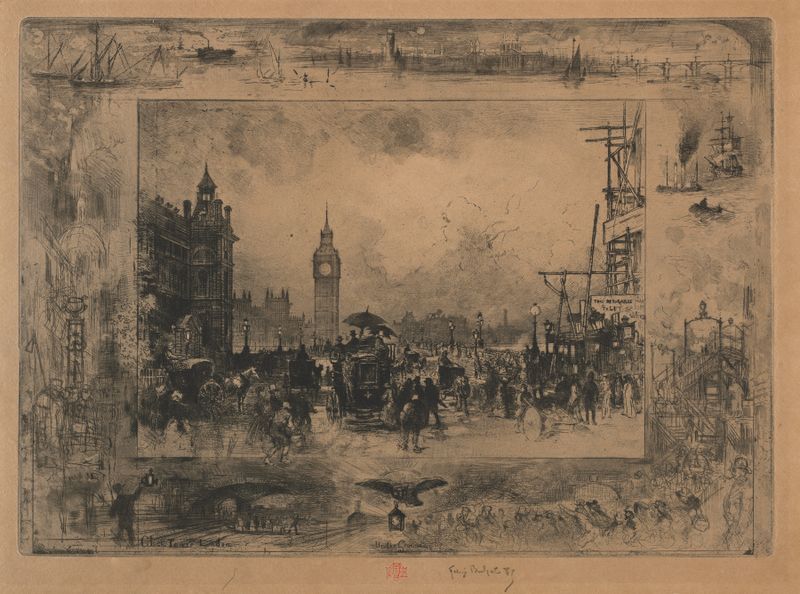
Westminster Bridge, or Westminster Tower
Félix Hilaire Buhot
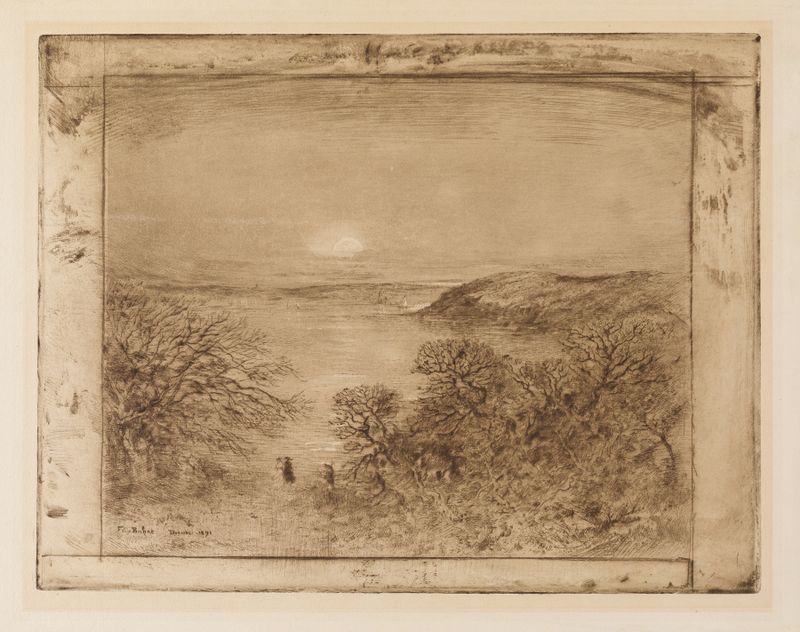
Moonrise at Dinard
Félix Hilaire Buhot
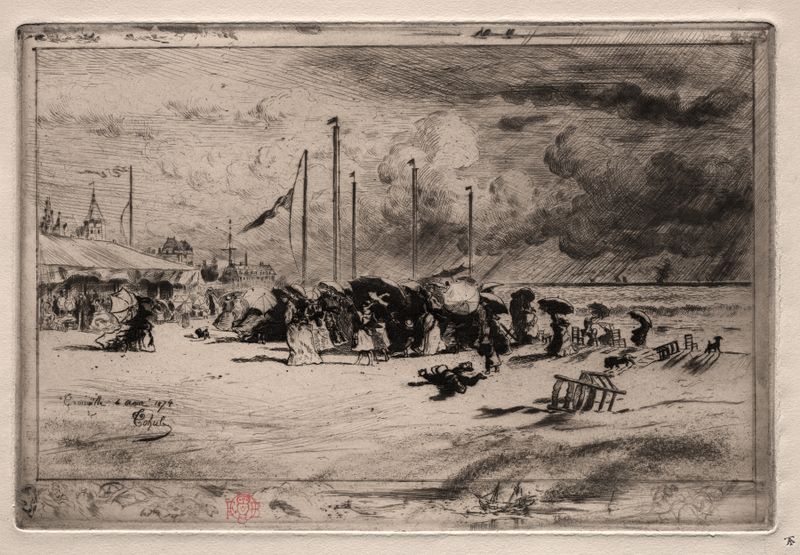
A Squall at Trouville
Félix Hilaire Buhot
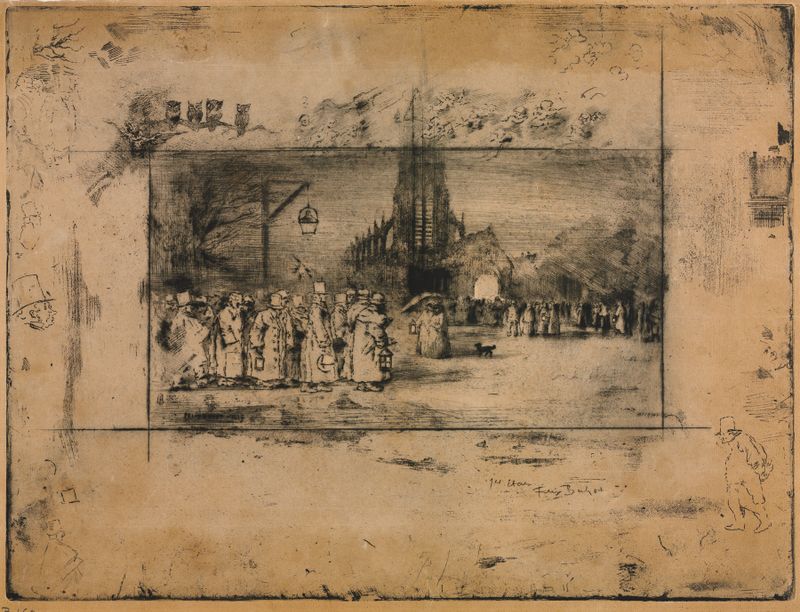
The Midnight Mass
Félix Hilaire Buhot
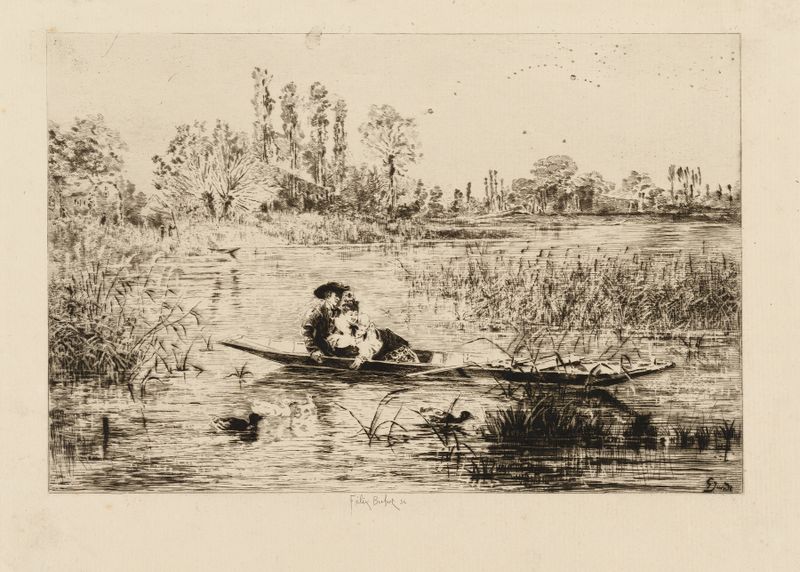
On the Thread of the Water
Félix Hilaire Buhot
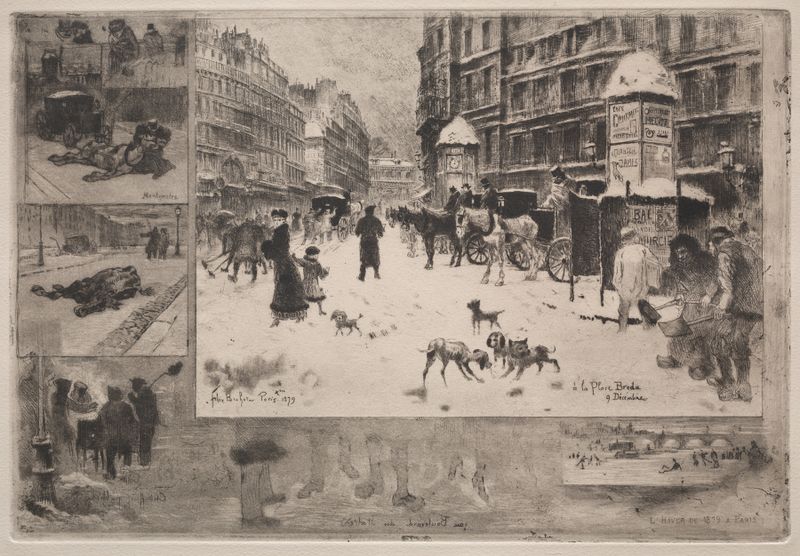
Winter in Paris
Félix Hilaire Buhot
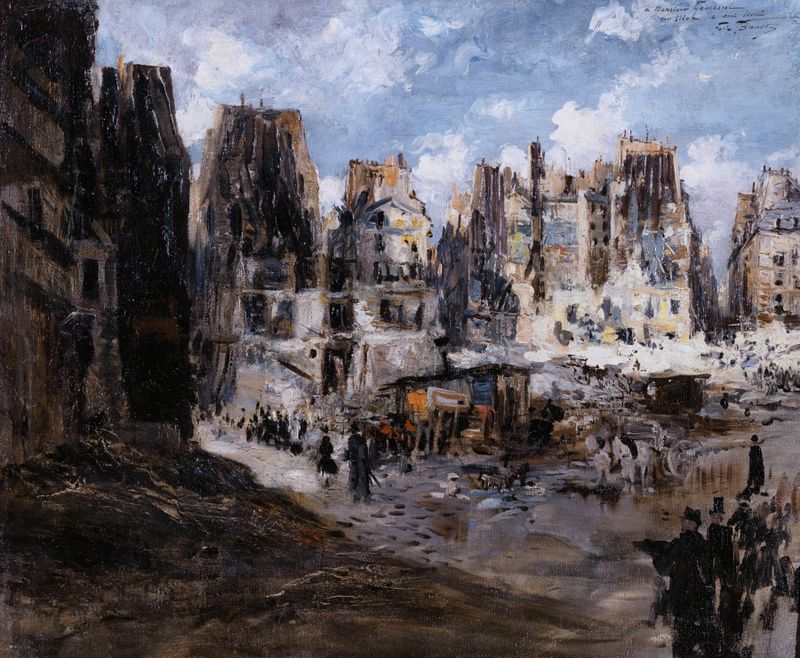
Le percement de l’avenue de l’Opéra.
Félix Hilaire Buhot
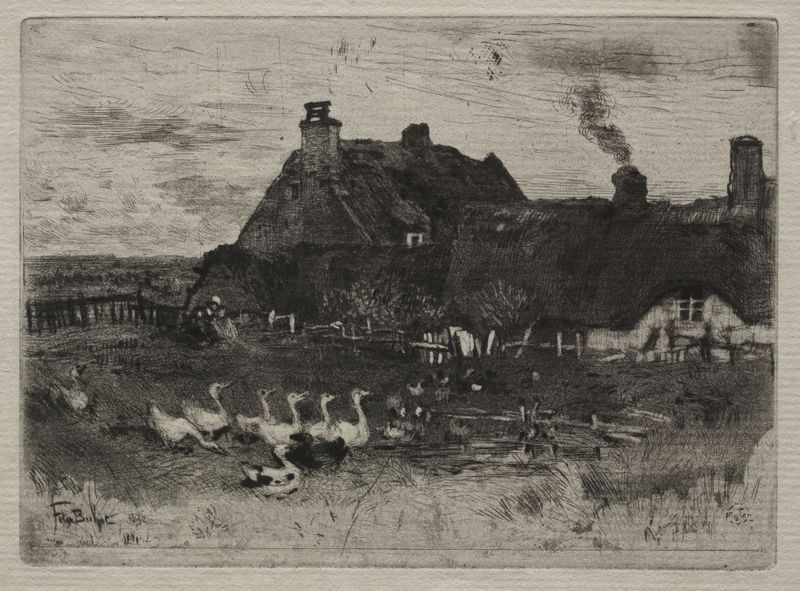
Thatched Cottages
Félix Hilaire Buhot
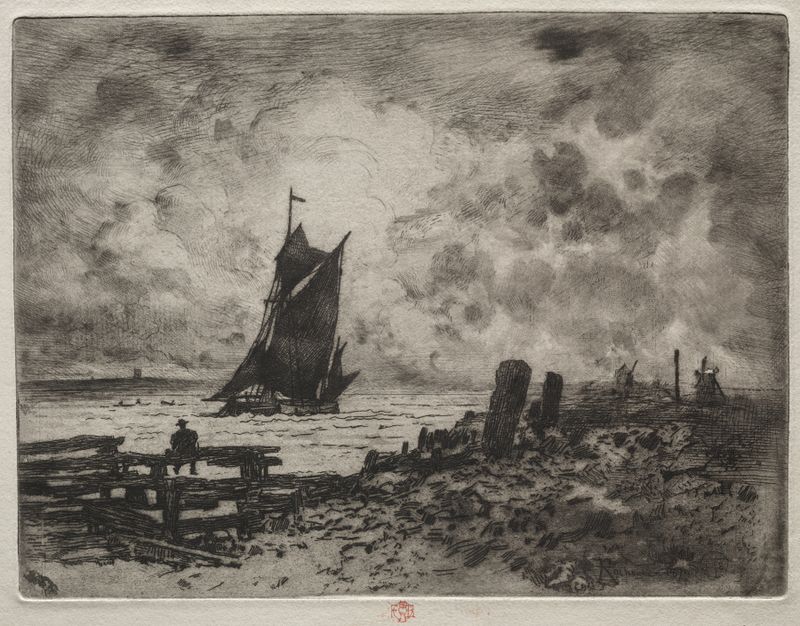
The Little Marine; Souvenir of Medway
Félix Hilaire Buhot





