
La rue Taille-Pain — History & Facts
Could a single brushstroke hold eternity? In Frédéric Houbron's La rue Taille-Pain, the essence of movement reverberates through the street, capturing the heartbeat of urban life as it unfolds. Look to the left at the arching trees, their leaves fluttering in a gentle breeze, framing the scene with a vibrant green that contrasts with the earthy tones of the buildings. Notice how the light falls upon the cobblestone path, creating dappled shadows that guide the eye downward, inviting viewers to walk alongside the figures that populate the lane. The subtle play of warm and cool colors enhances the painting's dynamism, making the viewer feel the pulse of a moment suspended in time. As you delve deeper, observe the juxtaposition of stability and motion—sturdy architecture stands resolute, while the passing pedestrians exude a sense of liveliness and purpose.
The figures, rendered with fluid brushstrokes, seem to dance through the frame, their expressions hinting at stories untold. This interplay of movement against a backdrop of permanence evokes a poignant reflection on transient moments in the ever-changing flow of life, deftly inviting contemplation of the mundane and the extraordinary. Created in 1898, this piece reflects Houbron’s artistic journey during a period marked by rapid industrialization and urban growth in France. Living and working in Paris, he was influenced by the Impressionist movement, which sought to capture the immediacy of experience.
This painting is a testament to that influence, as it encapsulates the vibrancy of modern life while demonstrating the artist's keen awareness of movement within the world around him.
More Artworks by Frédéric Houbron
Browse all →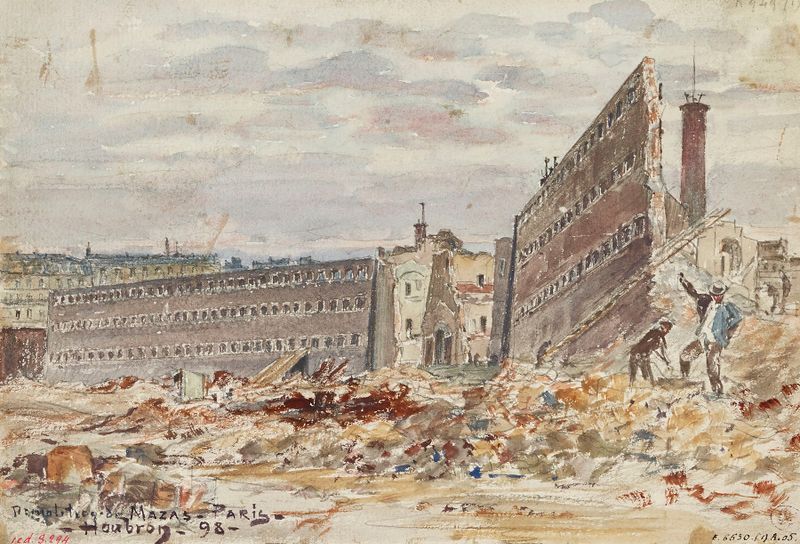
Démolition de la prison Mazas, 23, 25 boulevard Diderot (ancien boulevard Mazas)
Frédéric Houbron
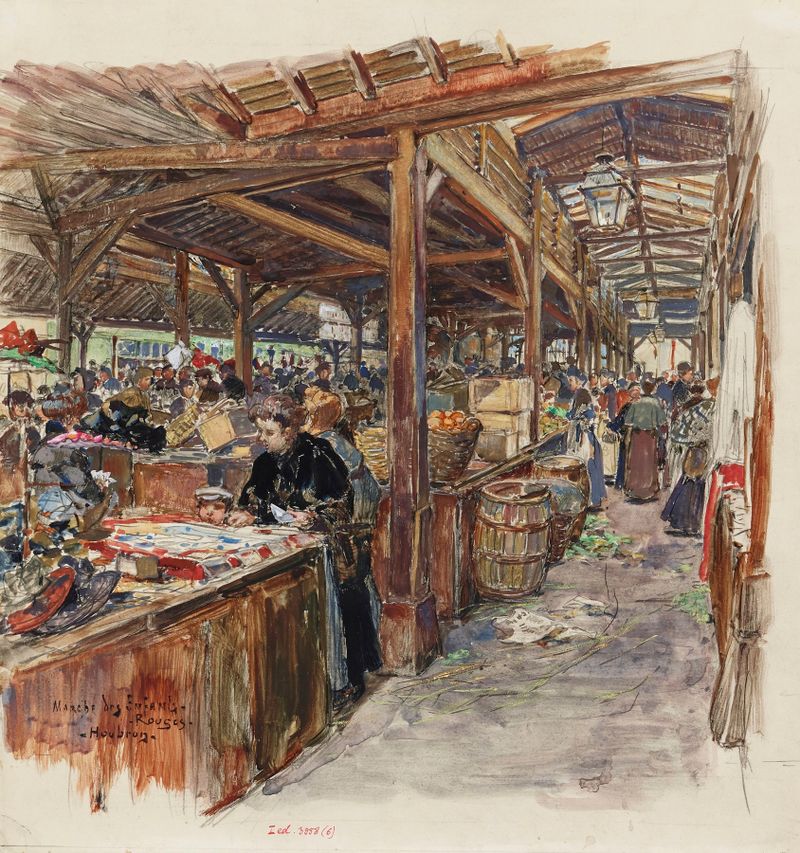
Intérieur du Marché des Enfants Rouges. 3ème arrondissement
Frédéric Houbron
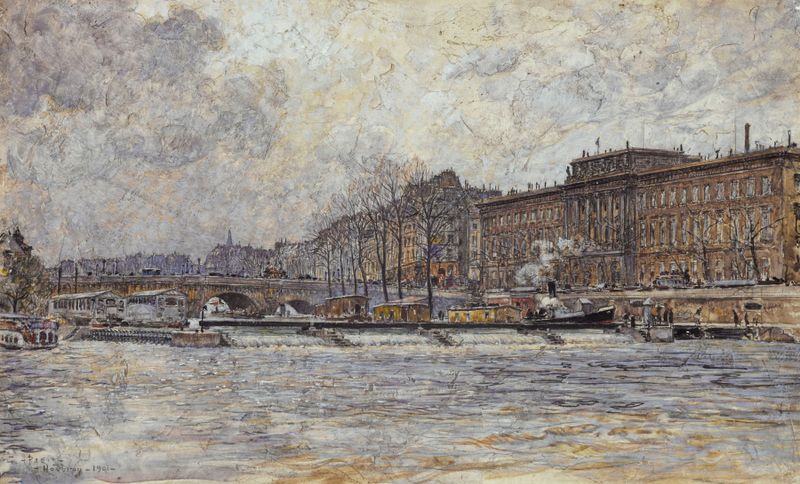
L’Hôtel de la Monnaie et le Pont-Neuf
Frédéric Houbron

Quai des Orfèvres. Paris. 1906
Frédéric Houbron
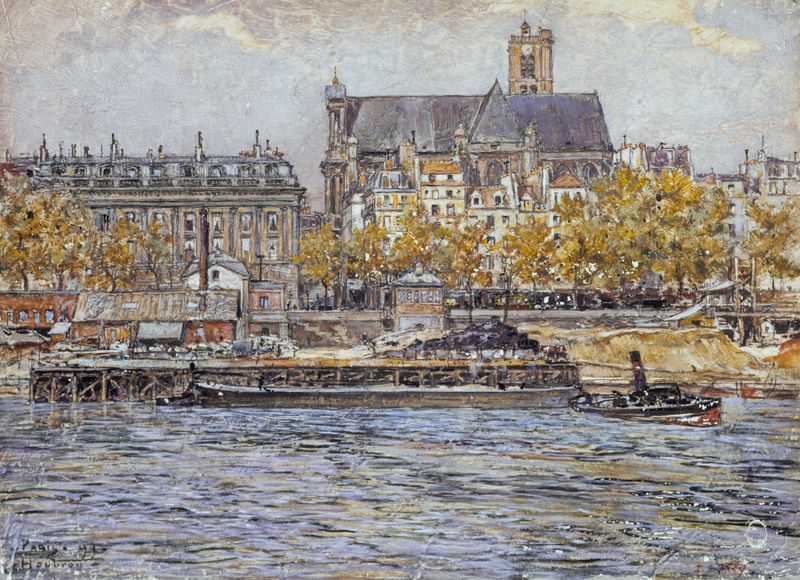
Le quai de l’Hôtel-de-Ville et l’église Saint-Gervais-Saint-Protais
Frédéric Houbron
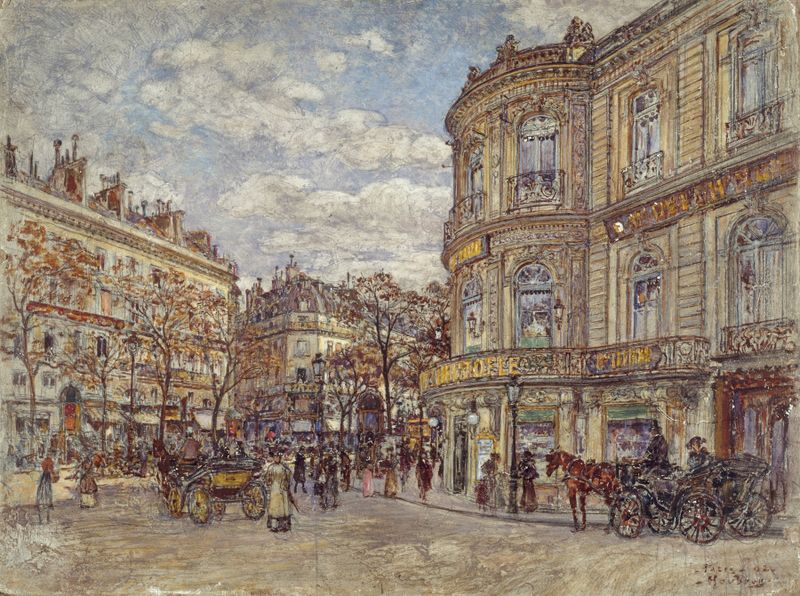
Le Pavillon de Hanovre, rue Louis-le-Grand
Frédéric Houbron

La rue du Chevalier-de-la-Barre, avec le Sacré-Cœur en construction
Frédéric Houbron
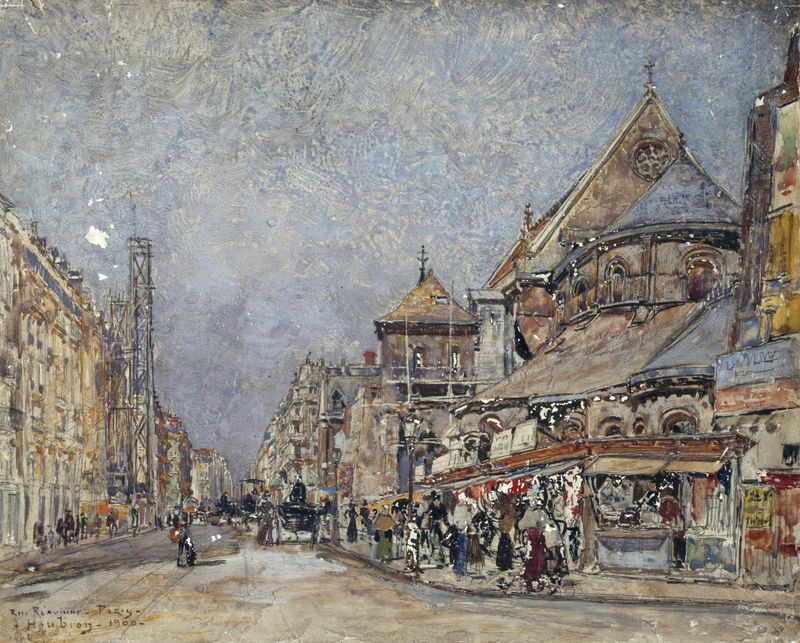
La rue Réaumur et le chevet de l’église Saint-Martin-des-Champs
Frédéric Houbron
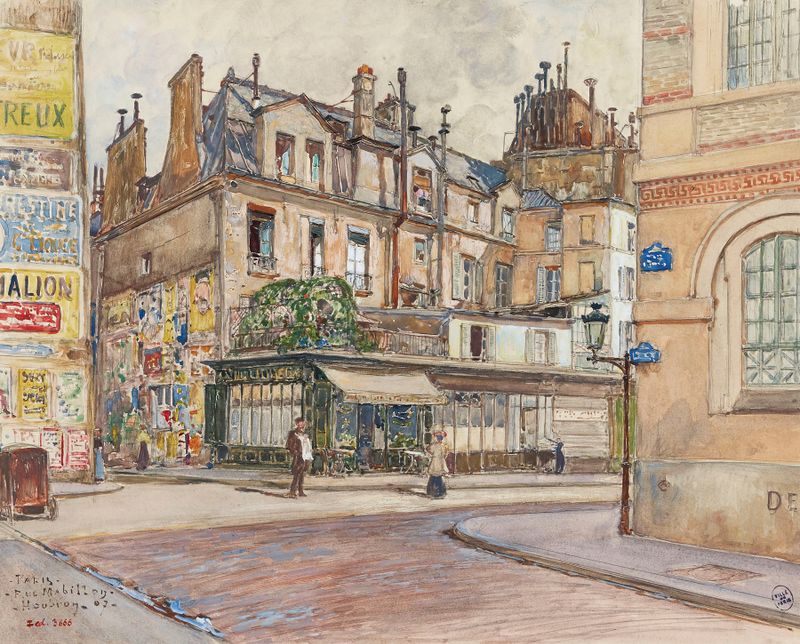
Angle rue Mabillon et rue Clément, en 1907. 5ème et 6ème arrondissements
Frédéric Houbron
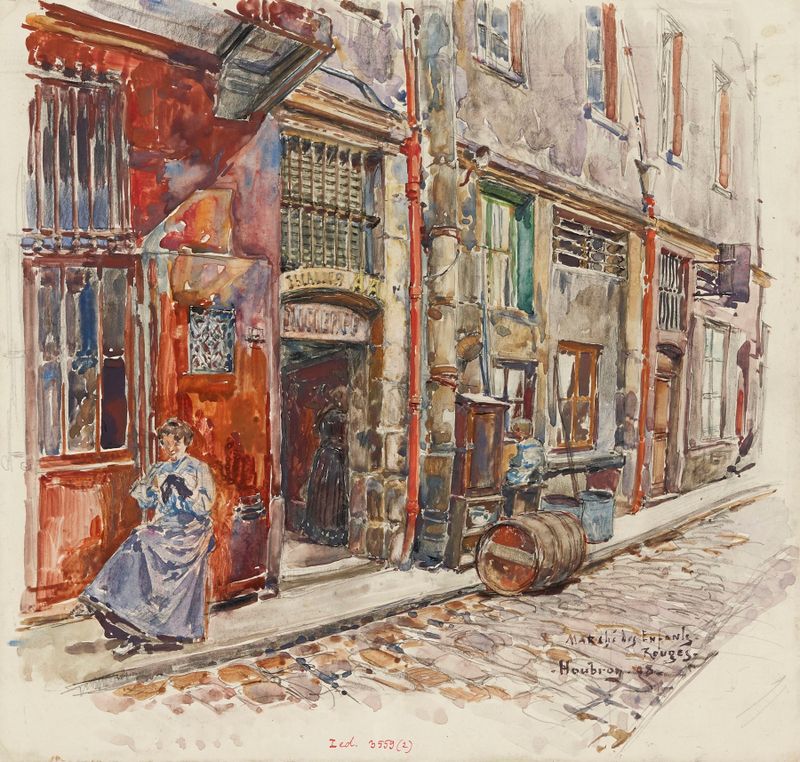
Entrée escalier A du Marché des Enfants-Rouges, en 1908. 3ème arrondissement
Frédéric Houbron





