
La Seine au pont-Marie, en 1899. 1er arrondissement — History & Facts
Can paint confess what words never could? In La Seine au pont-Marie, en 1899, the essence of a fleeting moment is captured, revealing the silent void that words often fail to express. Look to the left, where the Seine stretches languidly under the shadow of the Pont-Marie. The gentle strokes of blues and greens merge with soft strokes of white, evoking the shimmering water’s surface as it reflects the sky. The bright palette breathes life into the scene, inviting you to trace the subtle curves of the bridge and the figures walking along its banks, their presence enlivening the atmosphere without drowning it in noise. Yet, amid this picturesque tranquility, a deeper tension unfolds.
The juxtaposition of the vibrant activity along the riverbank against the stillness of the water hints at the passage of time—a relentless flow that cannot be paused. Furthermore, the almost ethereal quality of the light casts an ambiance of introspection, suggesting that beneath the surface, turbulence lies. The void between human connection and isolation is palpable, underscoring a profound emotional resonance that lingers long after the viewer has looked away. Frédéric Houbron painted this piece in Paris in 1899, a time marked by rapid industrial change and the burgeoning Impressionist movement.
He was keenly aware of the shifting dynamics of the world around him, as traditional forms of art began to give way to new expressions of modernity. This canvas reflects not just the beauty of the Seine, but also Houbron’s contemplation of the societal transformations unfolding in his own life.
More Artworks by Frédéric Houbron
Browse all →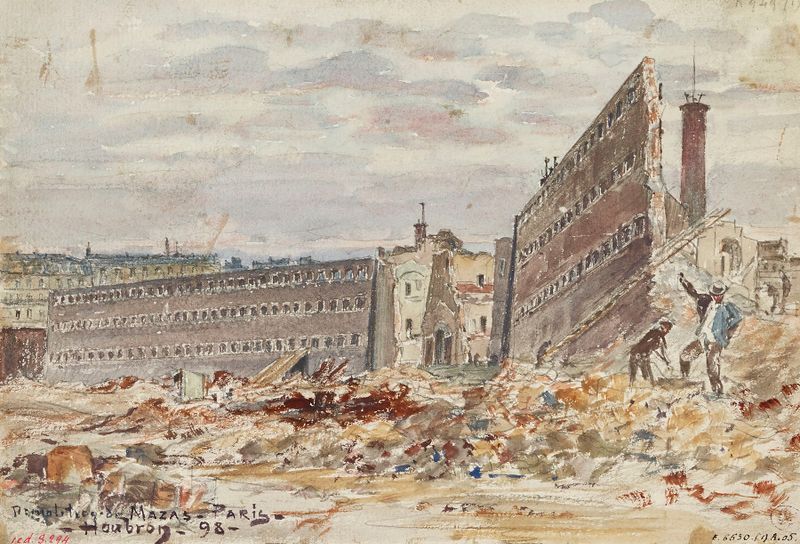
Démolition de la prison Mazas, 23, 25 boulevard Diderot (ancien boulevard Mazas)
Frédéric Houbron
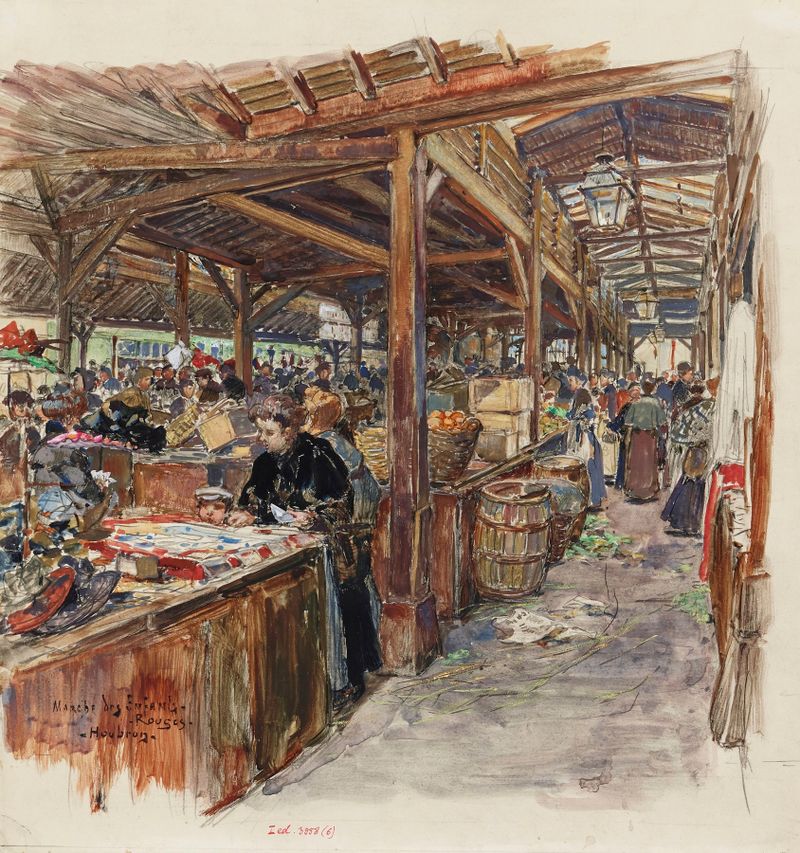
Intérieur du Marché des Enfants Rouges. 3ème arrondissement
Frédéric Houbron
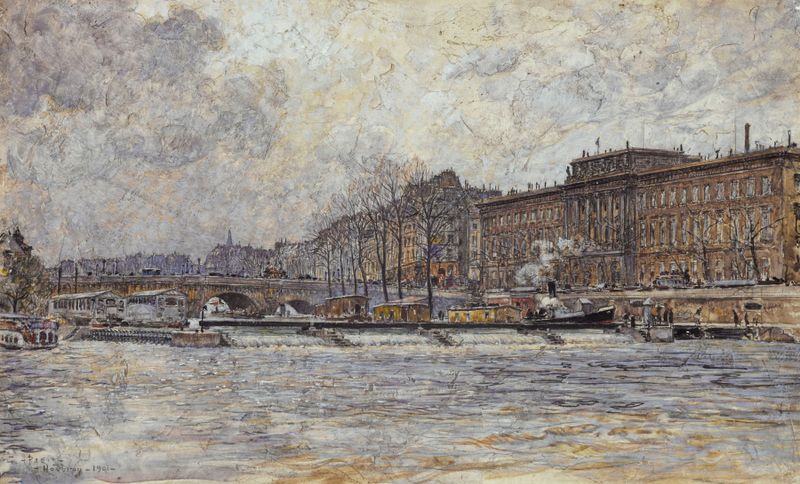
L’Hôtel de la Monnaie et le Pont-Neuf
Frédéric Houbron

Quai des Orfèvres. Paris. 1906
Frédéric Houbron
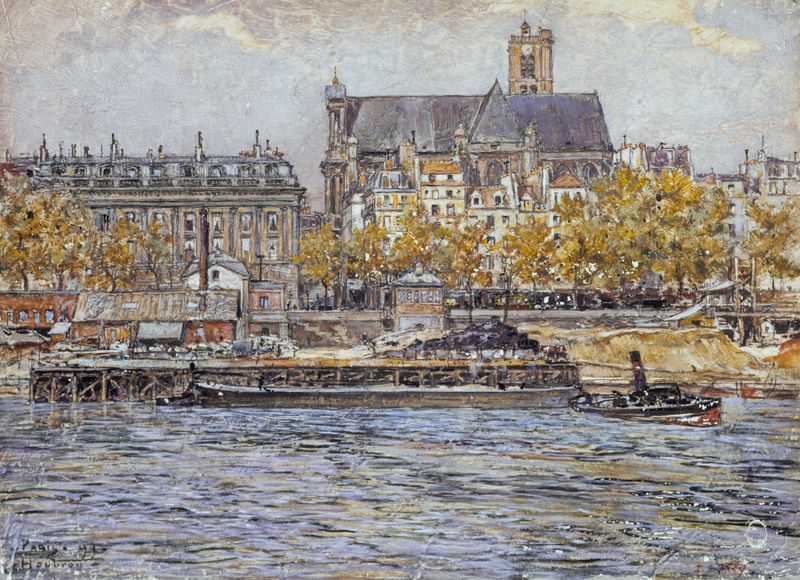
Le quai de l’Hôtel-de-Ville et l’église Saint-Gervais-Saint-Protais
Frédéric Houbron
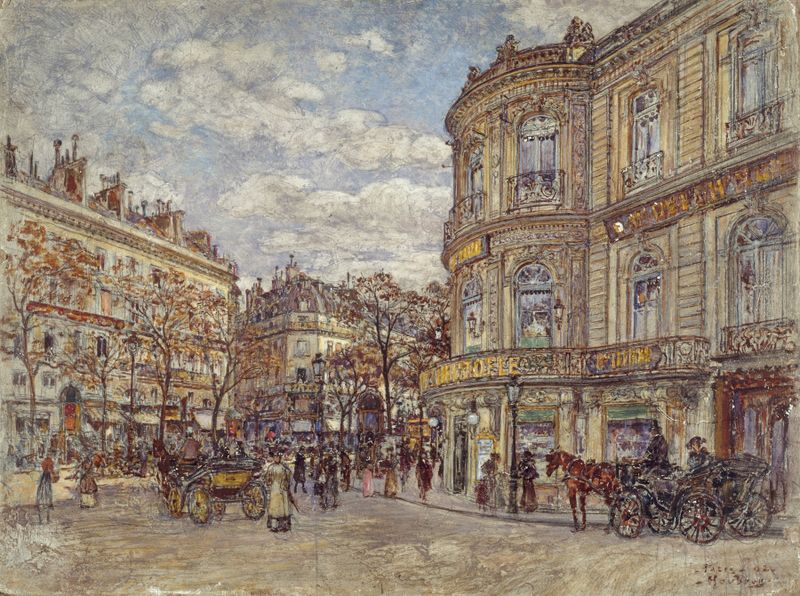
Le Pavillon de Hanovre, rue Louis-le-Grand
Frédéric Houbron

La rue du Chevalier-de-la-Barre, avec le Sacré-Cœur en construction
Frédéric Houbron
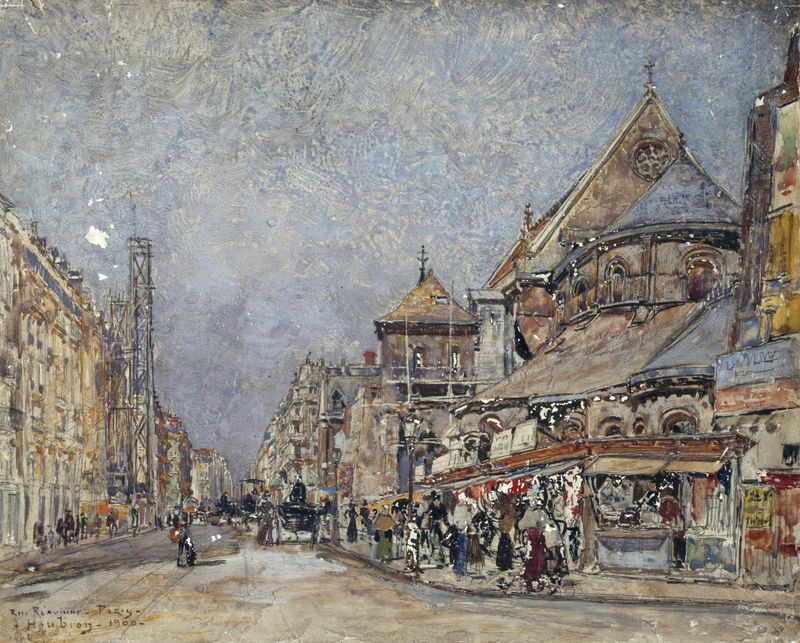
La rue Réaumur et le chevet de l’église Saint-Martin-des-Champs
Frédéric Houbron
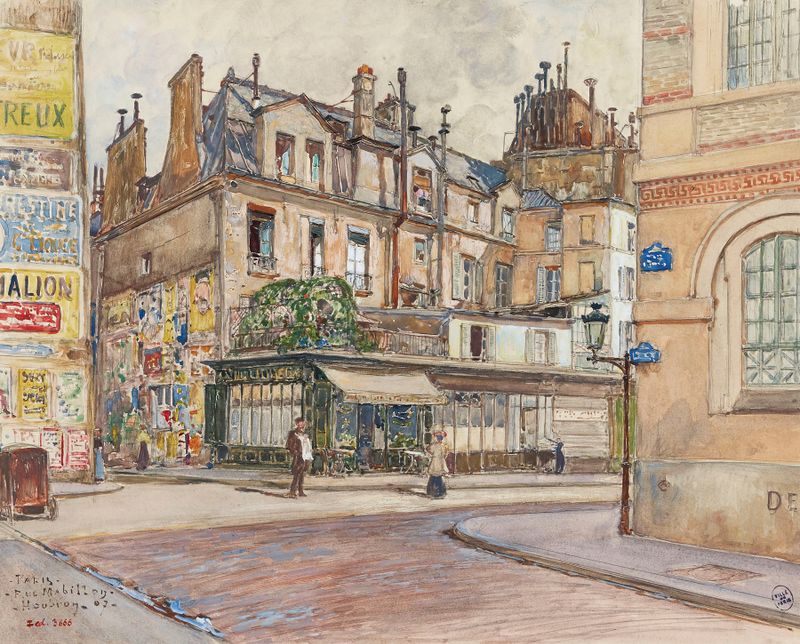
Angle rue Mabillon et rue Clément, en 1907. 5ème et 6ème arrondissements
Frédéric Houbron
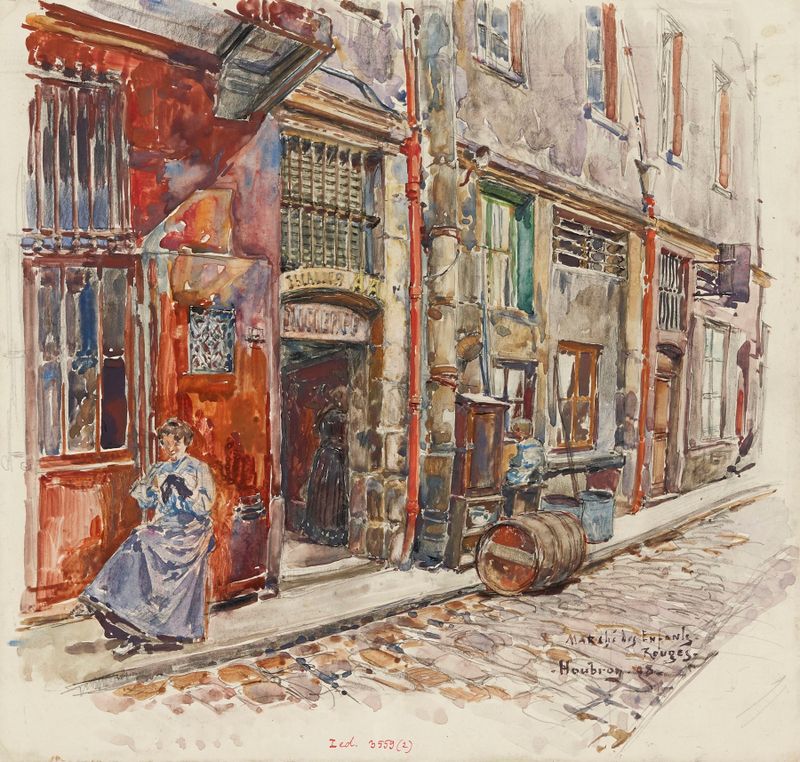
Entrée escalier A du Marché des Enfants-Rouges, en 1908. 3ème arrondissement
Frédéric Houbron





