
Laissez venir à moi les petits enfants. — History & Facts
When Émile Vernet-Lecomte painted Laissez venir à moi les petits enfants, he was working within a family legacy: as the grandson of Carle Vernet and nephew of Horace Vernet, he belonged to one of France’s most celebrated dynasties of painters. This lineage shaped both his career and his reputation, with critics of the time often noting how he balanced the family’s academic tradition with his own interest in Orientalist and religious themes. While the precise date and circumstances of this work’s creation remain uncertain, its subject matter—Christ welcoming children—was a favored motif in 19th-century French religious painting, reflecting both the artist’s faith and the era’s renewed interest in biblical compassion. At the heart of Laissez venir à moi les petits enfants is the Gospel scene where Jesus, seated among his disciples, receives a group of children brought forward by their mothers.
Vernet-Lecomte chooses the moment of gentle invitation, capturing Christ’s open arms and serene gaze as the children approach, some shy, others eager. The artist’s attention to the children’s varied expressions and the mothers’ hopeful faces underscores the message of inclusivity and innocence. The soft, golden light that bathes the figures recalls the warmth found in Carl Bloch’s later interpretations of the same scene, though Vernet-Lecomte’s composition is more intimate, focusing on the emotional exchange rather than grand spectacle.
The subtle placement of hands—Christ’s blessing gesture, a mother’s guiding touch—serves as a visual language of acceptance and care. The physical history of Laissez venir à moi les petits enfants is less documented than many of Vernet-Lecomte’s Orientalist canvases, which were often exhibited at the Salon or commissioned by private collectors. Its current location is uncertain, and it is not listed among the major public holdings of his work, suggesting it may remain in a private collection or ecclesiastical setting. This painting stands apart from his better-known portraits and Middle Eastern scenes, offering insight into his versatility and his engagement with religious subject matter.
While it may not have achieved the fame of his larger commissions, it remains a testament to the enduring appeal of biblical narratives in 19th-century French art.
More Artworks by Émile Vernet-Lecomte

Portrait d’Eugène Scribe (1791-1861), auteur dramatique
Émile Vernet-Lecomte
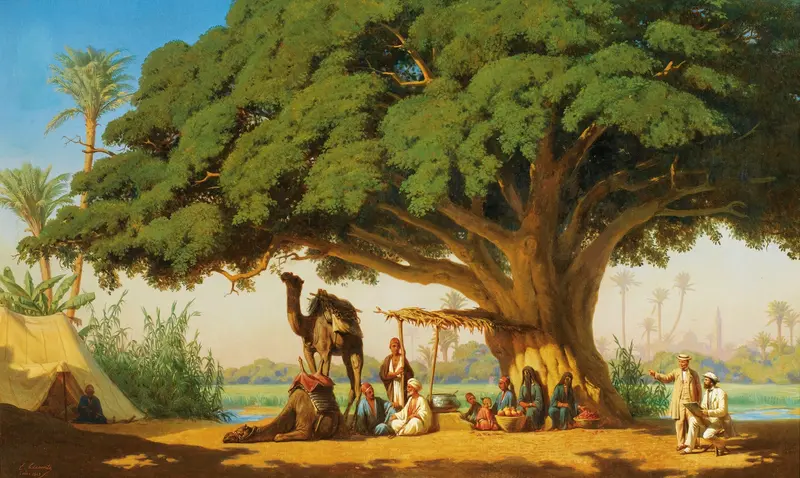
Travelling Artists Sketching An Arab Encampment, Cairo
Émile Vernet-Lecomte

A Greek Beauty
Émile Vernet-Lecomte
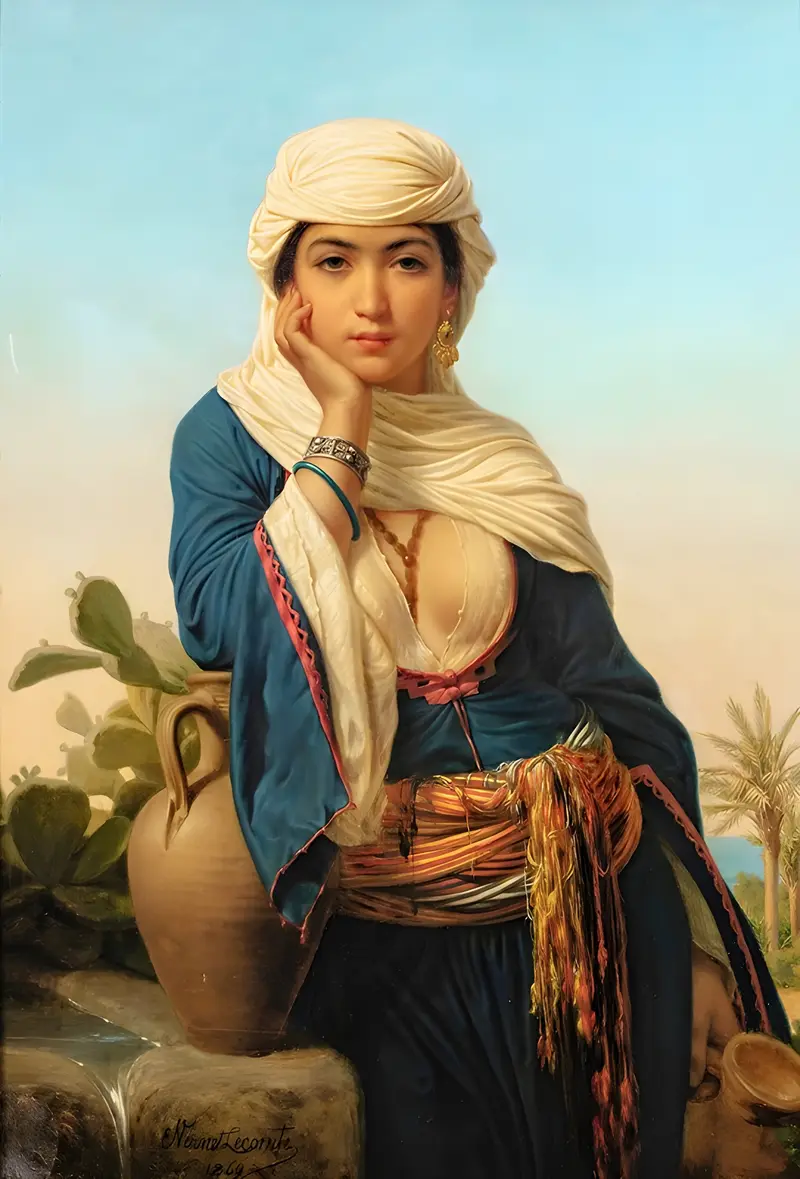
Rebecca At The Well
Émile Vernet-Lecomte
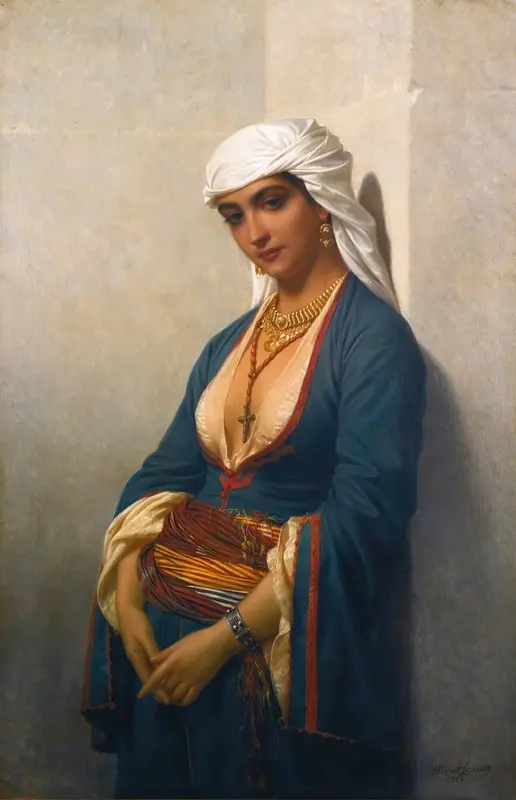
La fidèle
Émile Vernet-Lecomte
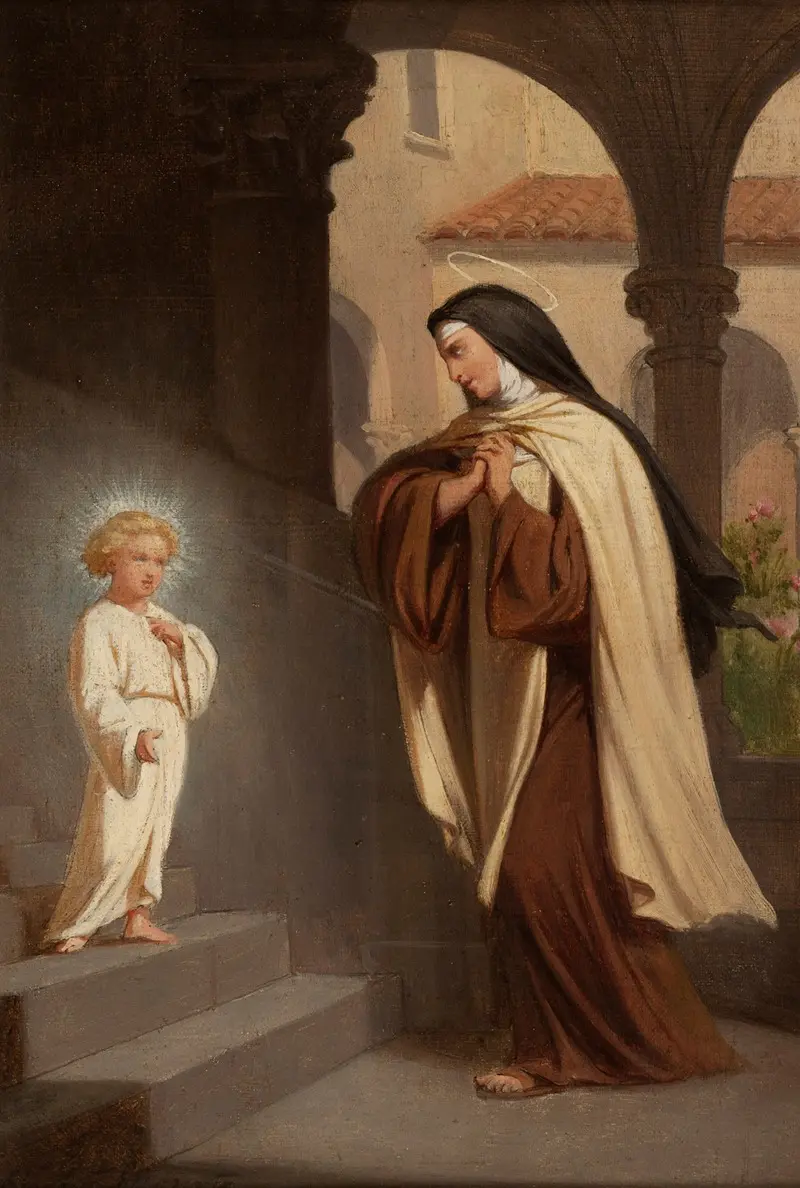
Jésus apparait à sainte Thérèse
Émile Vernet-Lecomte

La Femme Au Tambourin
Émile Vernet-Lecomte
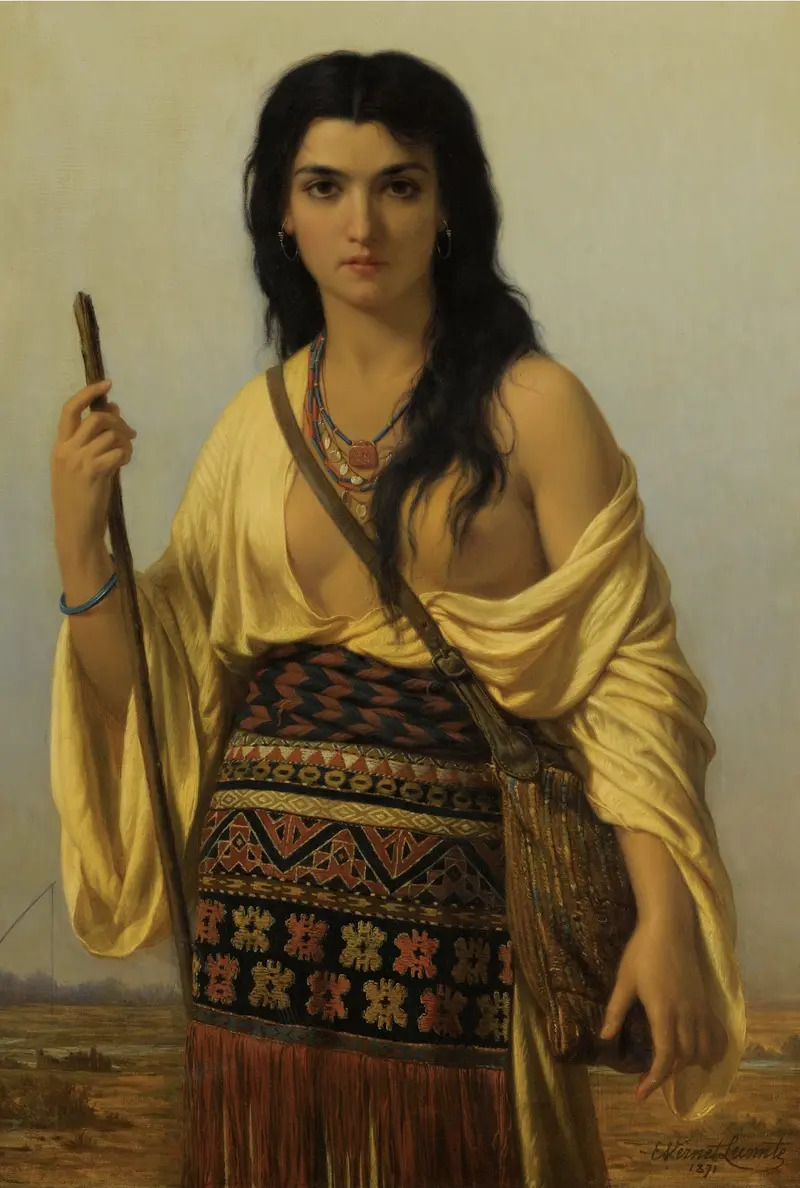
Minnehaha
Émile Vernet-Lecomte
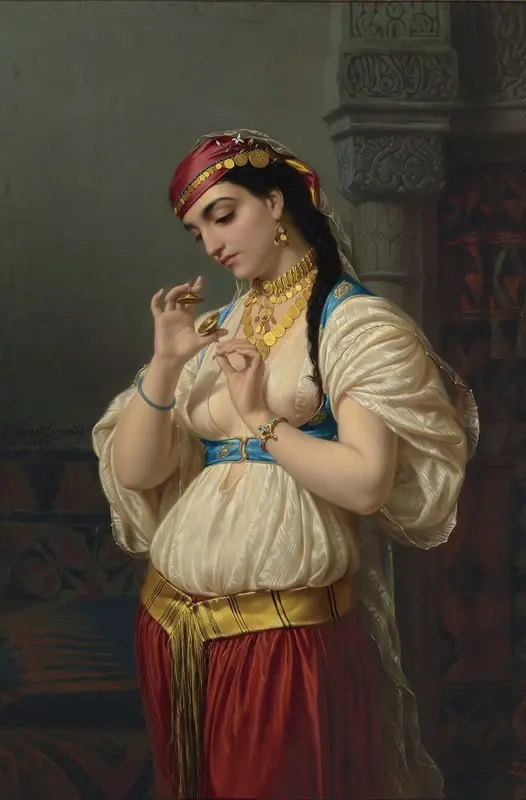
Aimée, A Young Egyptian
Émile Vernet-Lecomte
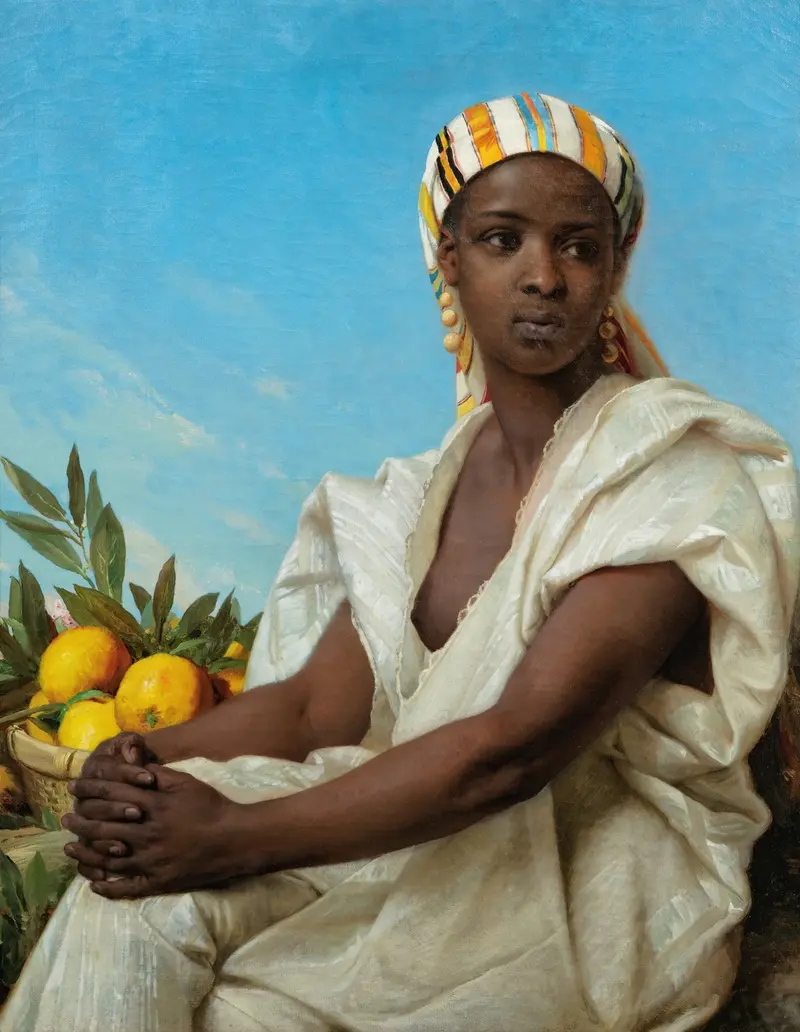
Portrait of a black woman
Émile Vernet-Lecomte





