
Jésus apparait à sainte Thérèse — History & Facts
When Émile Vernet-Lecomte painted Jésus apparait à sainte Thérèse, he joined a long tradition of French artists fascinated by the mystical visions of saints—yet his work remains shrouded in some mystery, as neither its date nor its original commission are clearly recorded. What is certain is that the subject, Saint Teresa of Ávila’s vision of Christ, was a favorite among 19th-century religious painters, reflecting the era’s renewed Catholic fervor after decades of revolution and secularism. The painting’s journey through collections is not well documented, and no period account describes its first exhibition, leaving scholars to piece together its story from style and iconography alone. The moment Vernet-Lecomte chose is one of intimate revelation: Saint Teresa, kneeling in rapt devotion, is visited by the figure of Christ, radiant and compassionate.
The artist captures the intensity of Teresa’s spiritual experience through her uplifted gaze and clasped hands, while Christ’s gesture—a hand extended in blessing—signals both comfort and authority. Light pours over the saint, isolating her from the dim chapel surroundings, a device recalling the dramatic illumination found in Francisco de Zurbarán’s depictions of saints. The presence of a crucifix and a book at Teresa’s side alludes to her dual devotion to Christ’s passion and to contemplative study. Though Jésus apparait à sainte Thérèse is not counted among the most famous works of Émile Vernet-Lecomte, it reflects his skill in religious narrative and his sensitivity to the inner life of his subjects.
The painting’s current whereabouts are uncertain; it does not appear in major public collections, and its provenance is not clearly traced in catalogues. Vernet-Lecomte, best known for his Orientalist scenes and portraits, here demonstrates a quieter, more introspective side. Without firm documentation, the painting stands as a testament to the enduring appeal of Saint Teresa’s mystical writings and the 19th-century taste for spiritual drama rendered with careful realism.
More Artworks by Émile Vernet-Lecomte

Portrait d’Eugène Scribe (1791-1861), auteur dramatique
Émile Vernet-Lecomte
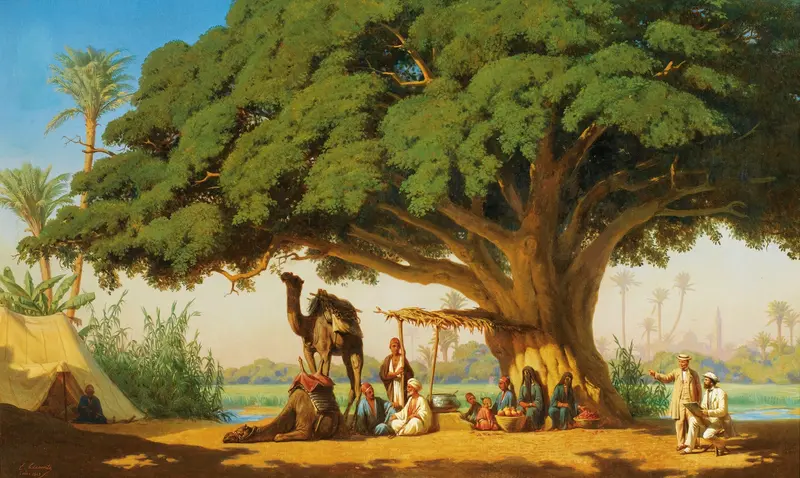
Travelling Artists Sketching An Arab Encampment, Cairo
Émile Vernet-Lecomte

A Greek Beauty
Émile Vernet-Lecomte
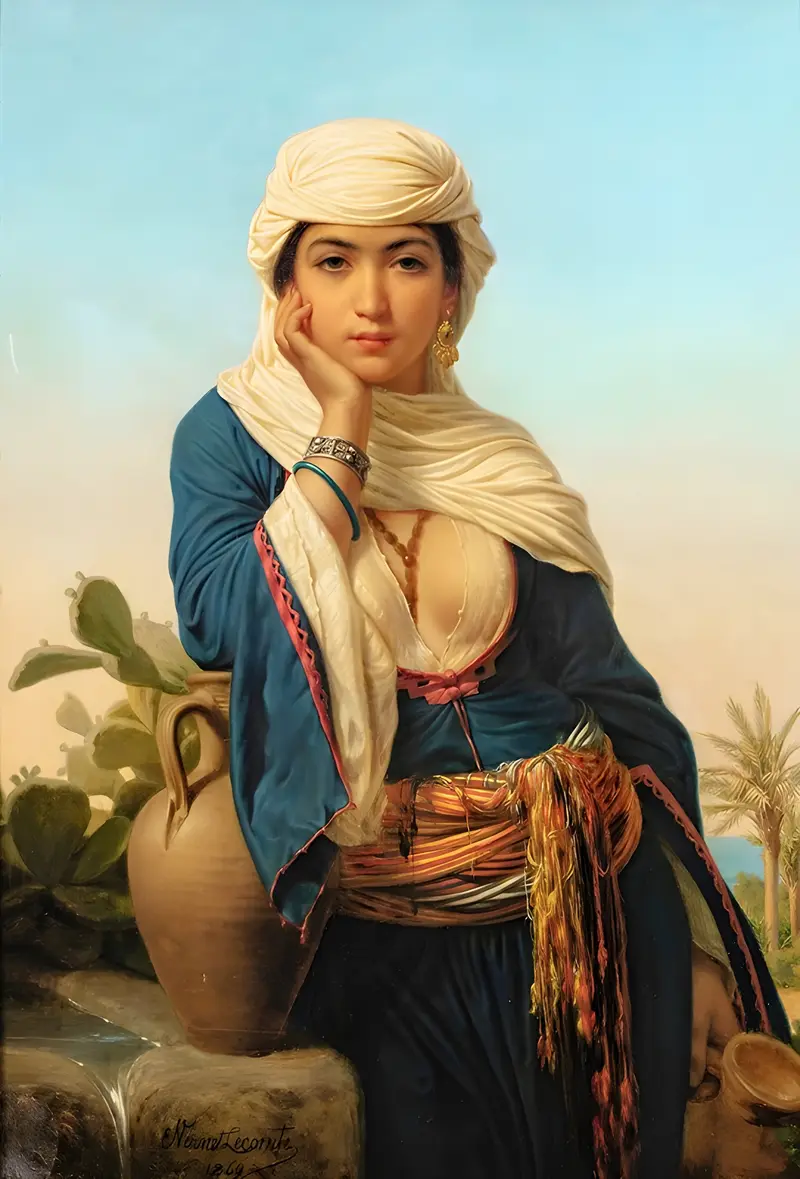
Rebecca At The Well
Émile Vernet-Lecomte
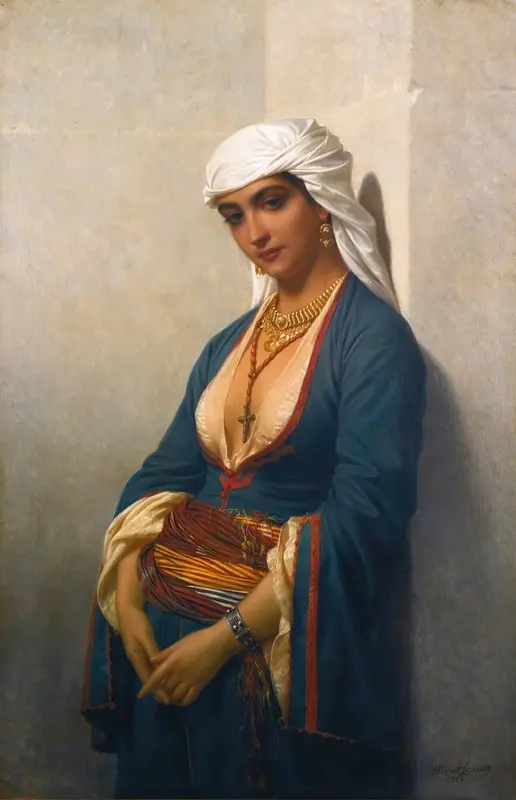
La fidèle
Émile Vernet-Lecomte

La Femme Au Tambourin
Émile Vernet-Lecomte
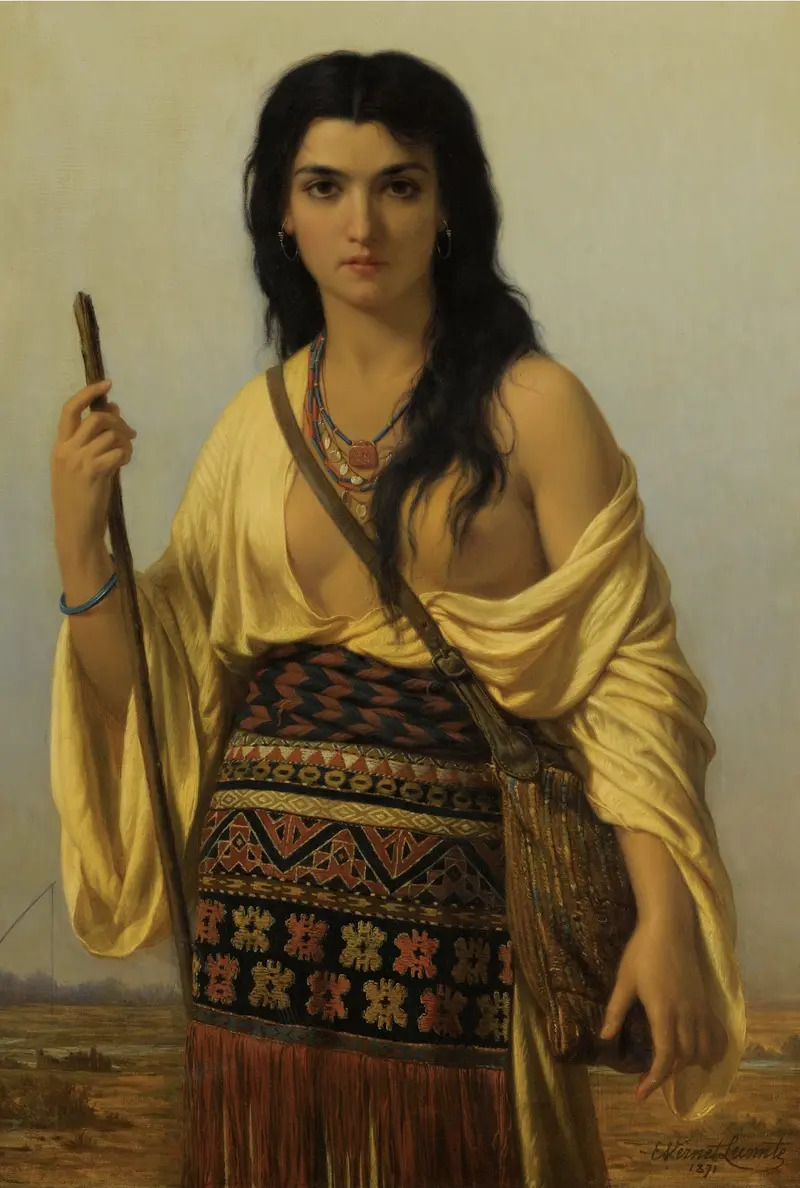
Minnehaha
Émile Vernet-Lecomte
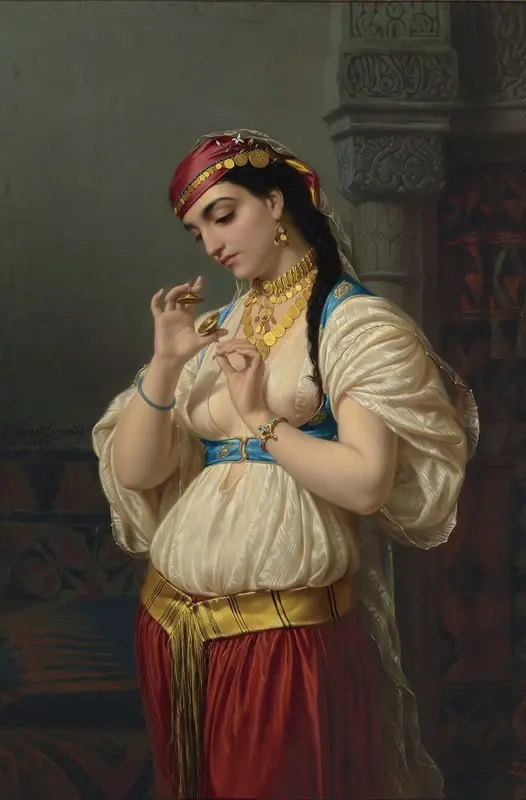
Aimée, A Young Egyptian
Émile Vernet-Lecomte
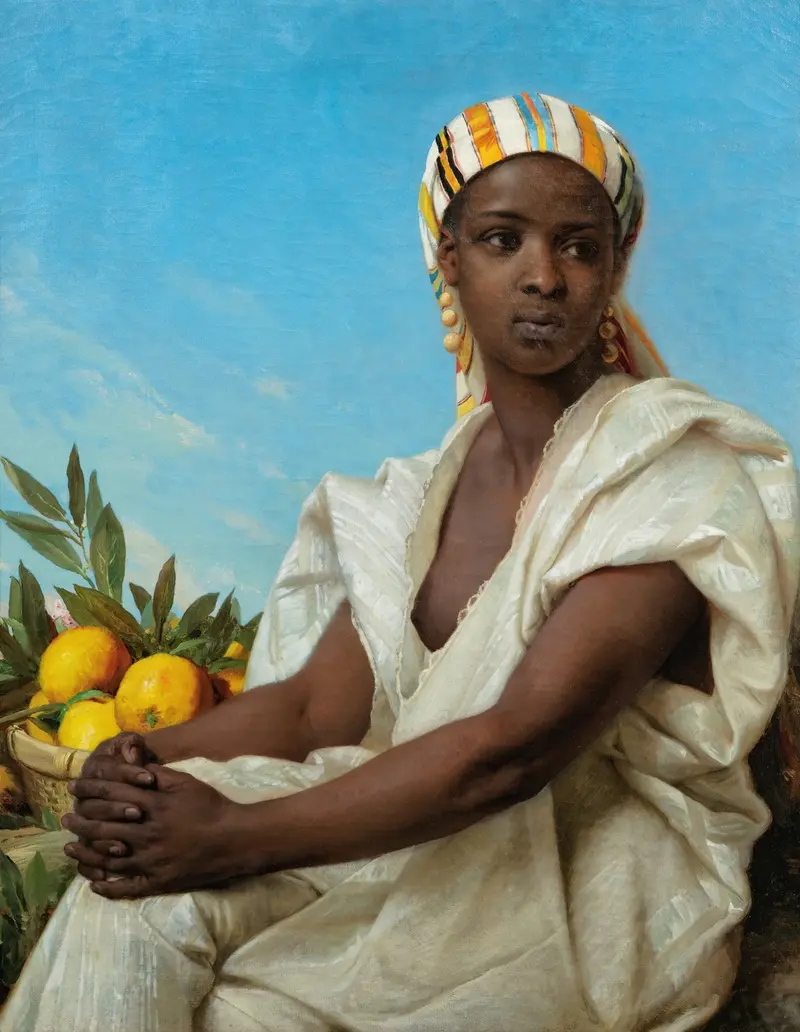
Portrait of a black woman
Émile Vernet-Lecomte
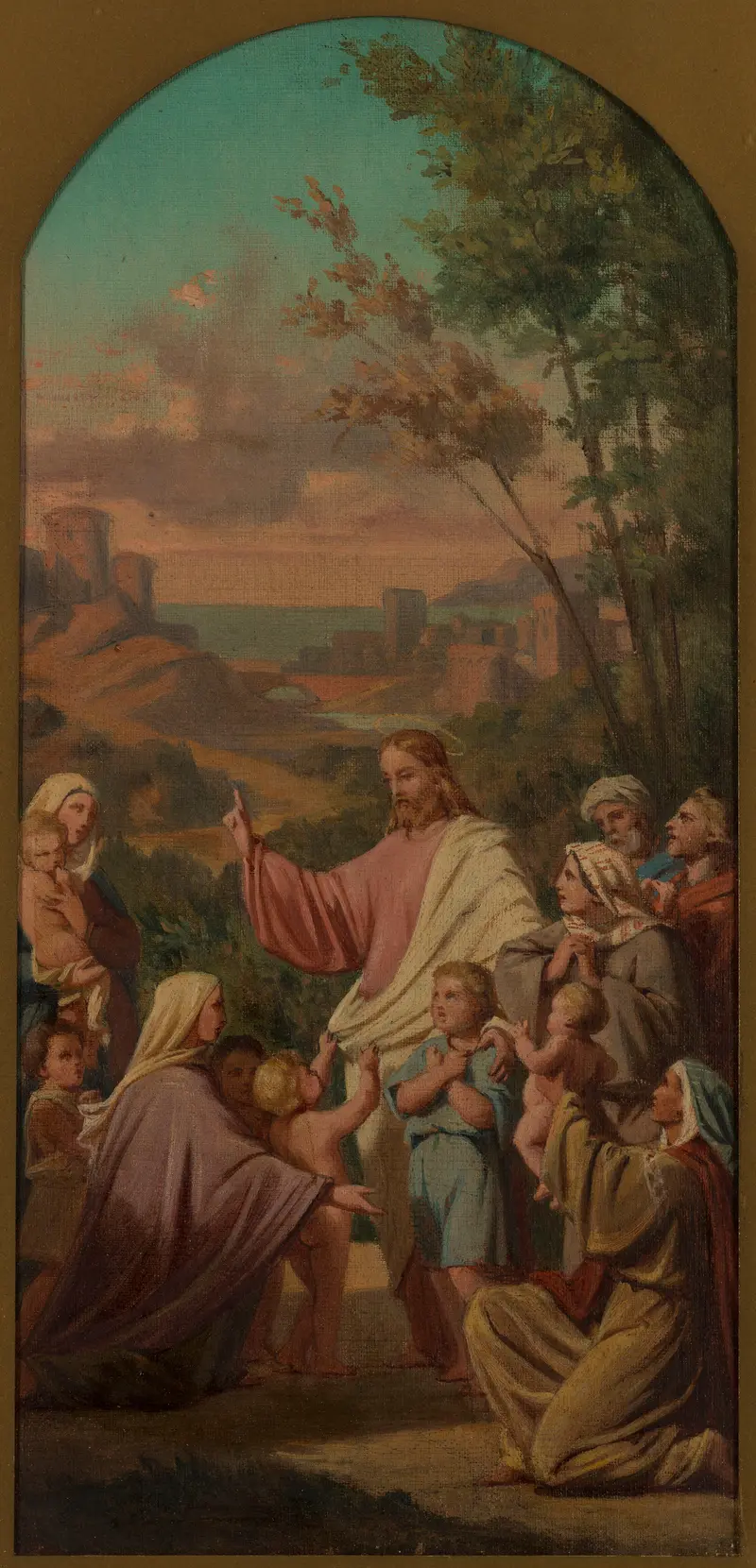
Laissez venir à moi les petits enfants.
Émile Vernet-Lecomte





