
Rebecca At The Well — History & Facts
In the 19th century, French Orientalist painters were captivated by biblical tales set against imagined Middle Eastern landscapes, and Émile Vernet-Lecomte became one of the genre’s most sensitive interpreters. Among his works, Rebecca At The Well stands out for its rare focus on the quiet, pivotal moment when a single act of kindness would change the course of a family’s destiny. While the exact date and circumstances of this painting’s creation remain uncertain, it is part of a tradition that fascinated collectors and audiences eager for scenes of antiquity rendered with contemporary color and detail. The scene springs from the Book of Genesis: Abraham’s servant, weary from travel, waits by a well in Nahor, seeking a sign to identify a wife for Isaac.
Rebecca approaches, offering water not only to the stranger but to his camels—a gesture of generosity that marks her as the chosen one. Vernet-Lecomte captures the moment of encounter: Rebecca, draped in flowing garments, balances a water jar on her shoulder, her posture open and attentive. The servant’s respectful bow and the warm, golden light draw the eye to the exchange, while the distant figures and palm trees evoke an imagined biblical landscape.
Unlike Nicolas Poussin’s more formal Rebecca and Eliezer at the Well, Vernet-Lecomte’s version emphasizes intimacy and the humanity of its figures. Though the painting’s early history is obscure, it reflects the 19th-century European appetite for biblical and Orientalist subjects, often created for private collectors or the Salon. Émile Vernet-Lecomte, a member of the prolific Vernet family, was known for his meticulous technique and interest in Middle Eastern themes, which he pursued throughout his career. Today, Rebecca At The Well survives as a testament to this fascination, though its current location and provenance are not firmly established.
It remains a touchstone for understanding how biblical stories were reimagined through the lens of 19th-century French painting.
More Artworks by Émile Vernet-Lecomte

Portrait d’Eugène Scribe (1791-1861), auteur dramatique
Émile Vernet-Lecomte
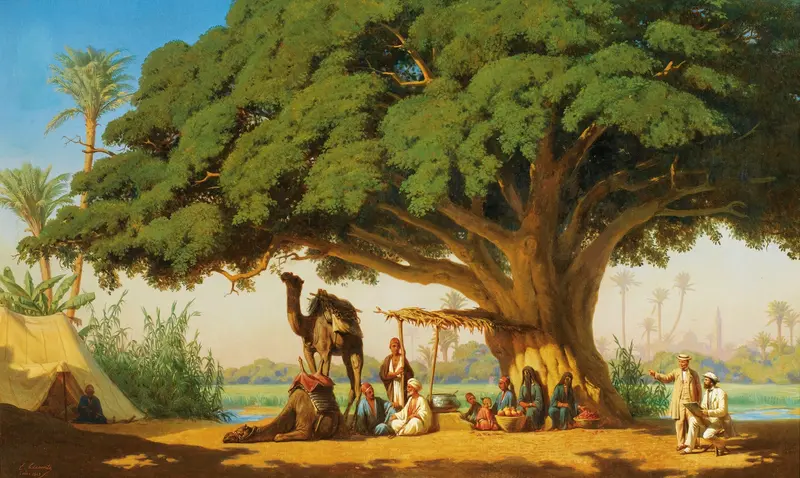
Travelling Artists Sketching An Arab Encampment, Cairo
Émile Vernet-Lecomte

A Greek Beauty
Émile Vernet-Lecomte
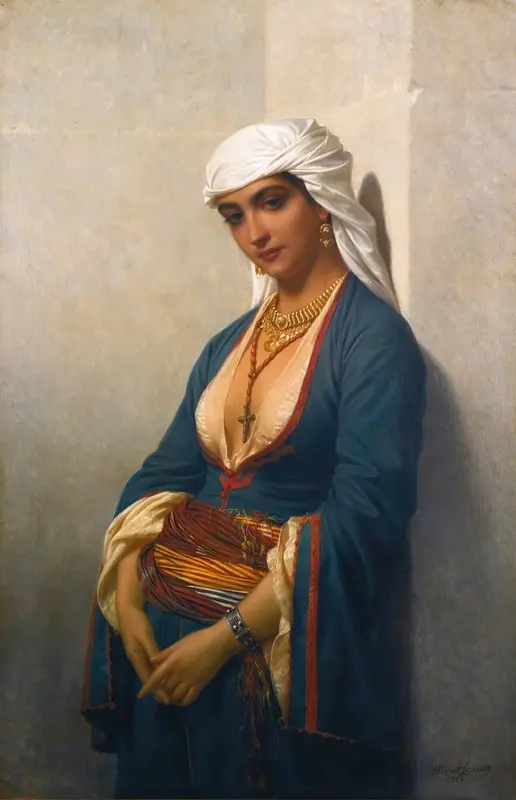
La fidèle
Émile Vernet-Lecomte
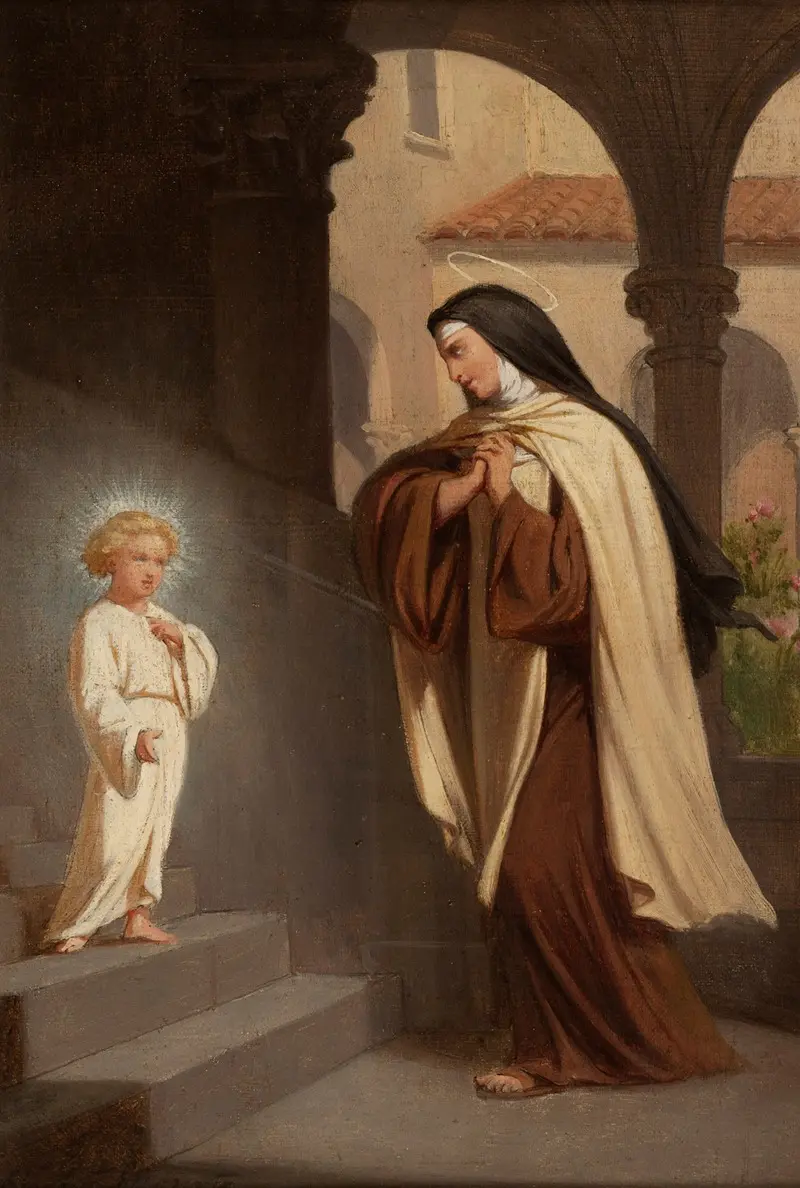
Jésus apparait à sainte Thérèse
Émile Vernet-Lecomte

La Femme Au Tambourin
Émile Vernet-Lecomte
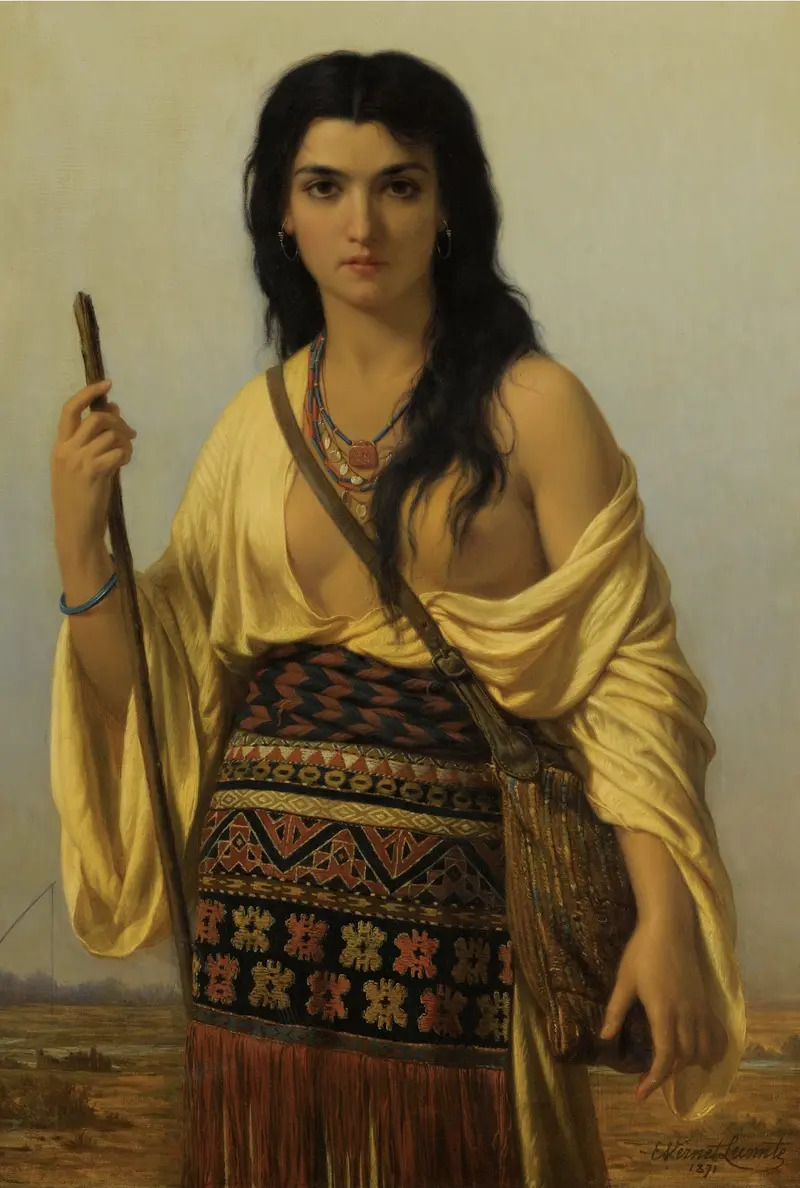
Minnehaha
Émile Vernet-Lecomte
Aimée, A Young Egyptian
Émile Vernet-Lecomte
Portrait of a black woman
Émile Vernet-Lecomte
Laissez venir à moi les petits enfants.
Émile Vernet-Lecomte





