
Minnehaha — History & Facts
When Minnehaha by Émile Vernet-Lecomte first appeared in the Parisian salons, it drew immediate attention for its rare subject: the tragic Native American heroine from Henry Wadsworth Longfellow’s 1855 poem, The Song of Hiawatha. European artists seldom turned their gaze to American indigenous legends, and Vernet-Lecomte’s choice was both novel and timely, reflecting a vogue for romanticized “exotic” themes in mid-19th-century art. The painting’s precise date and commission remain uncertain, but its very existence speaks to the transatlantic reach of Longfellow’s poetry, which had been translated into French and captivated readers across Europe. At the heart of the image lies Minnehaha herself, captured at a moment of profound stillness and sorrow.
Vernet-Lecomte selects the scene of Minnehaha’s final hours, as she succumbs to a harsh winter and illness, her gaze distant and resigned. The artist surrounds her with tokens of her culture—a woven blanket, a beaded necklace, perhaps a birch-bark vessel—each rendered with careful attention, yet filtered through a European lens. The muted palette and soft, cool light reinforce the sense of fragility and isolation.
Unlike Eastman Johnson’s more documentary Minnehaha Feeding Birds, Vernet-Lecomte’s version leans into the romantic tragedy, emphasizing emotion over ethnographic accuracy. The later history of Minnehaha is as elusive as its origins. While Émile Vernet-Lecomte was celebrated for his Orientalist scenes, this work stands apart for its subject and mood, and may have been painted for a private collector rather than a public commission. Its current whereabouts are unclear; it appears in exhibition catalogues and period reviews, but has not been definitively traced in modern museum collections.
The painting remains a testament to the 19th-century fascination with distant cultures and literary heroines, and a rare example of a French artist engaging with American legend.
More Artworks by Émile Vernet-Lecomte

Portrait d’Eugène Scribe (1791-1861), auteur dramatique
Émile Vernet-Lecomte
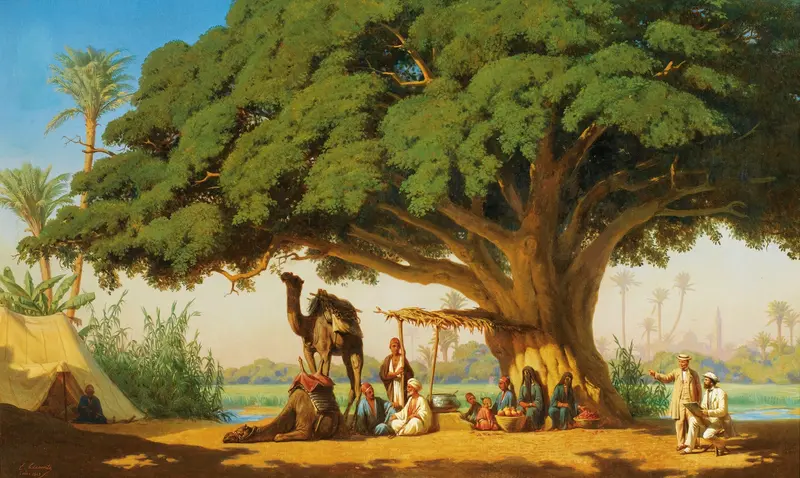
Travelling Artists Sketching An Arab Encampment, Cairo
Émile Vernet-Lecomte

A Greek Beauty
Émile Vernet-Lecomte
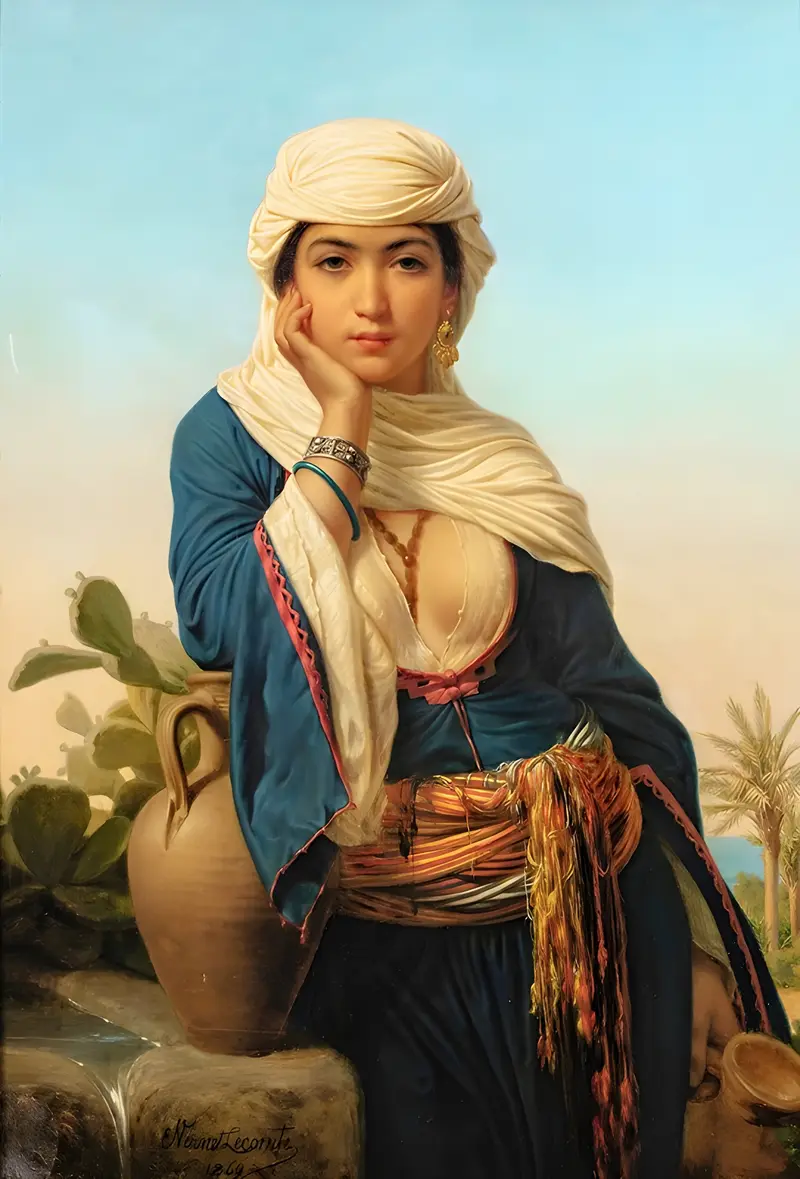
Rebecca At The Well
Émile Vernet-Lecomte
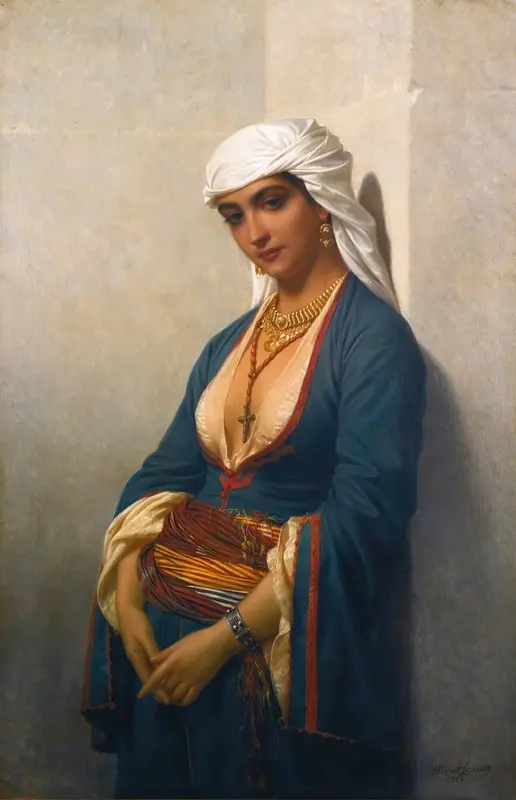
La fidèle
Émile Vernet-Lecomte
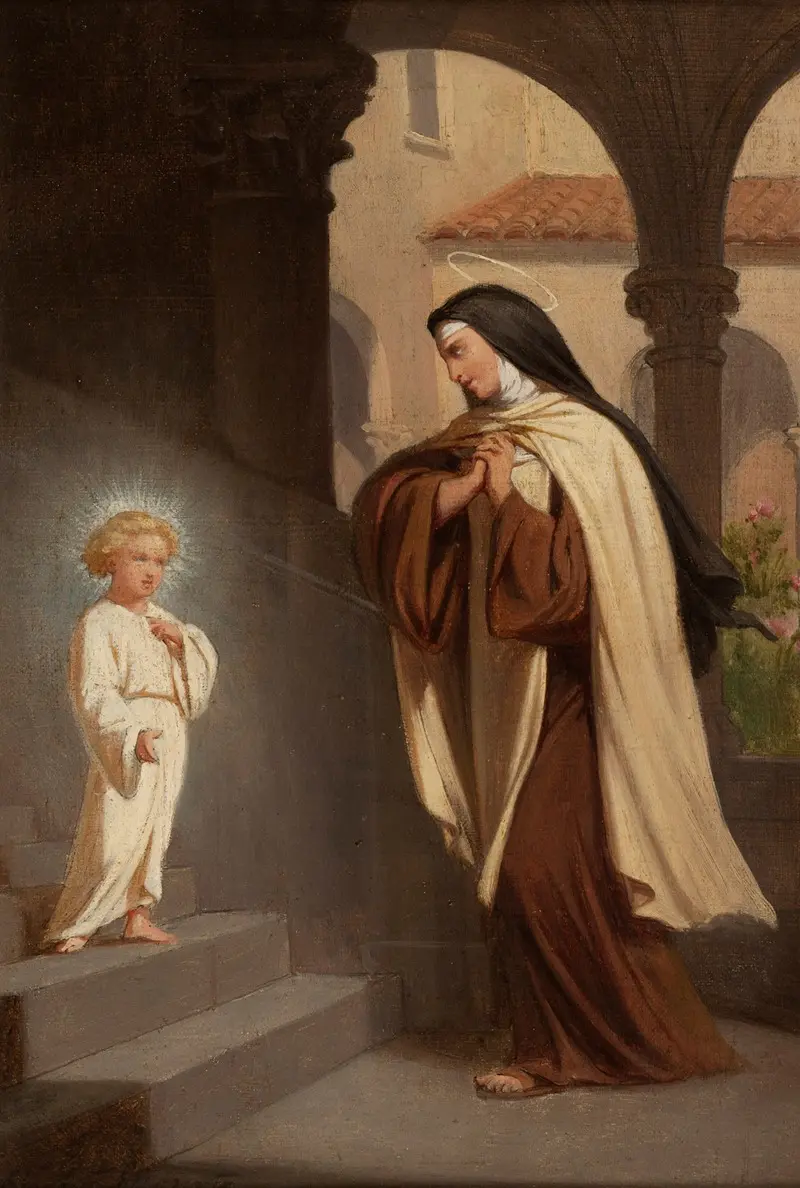
Jésus apparait à sainte Thérèse
Émile Vernet-Lecomte

La Femme Au Tambourin
Émile Vernet-Lecomte
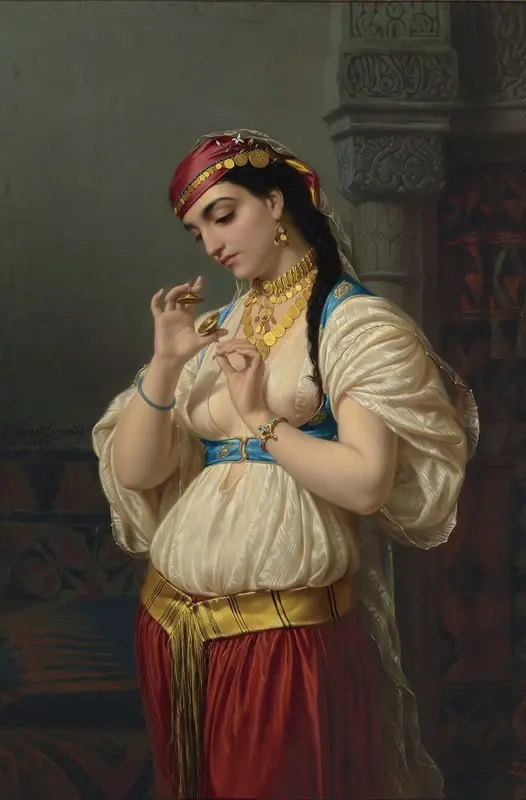
Aimée, A Young Egyptian
Émile Vernet-Lecomte
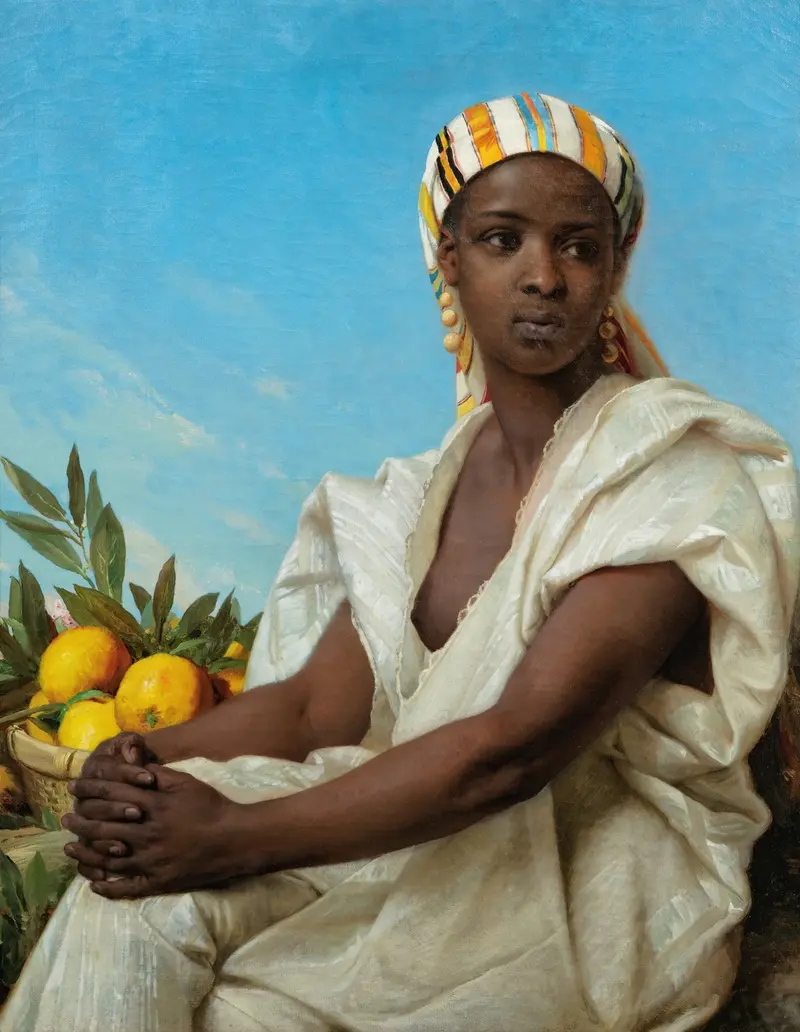
Portrait of a black woman
Émile Vernet-Lecomte
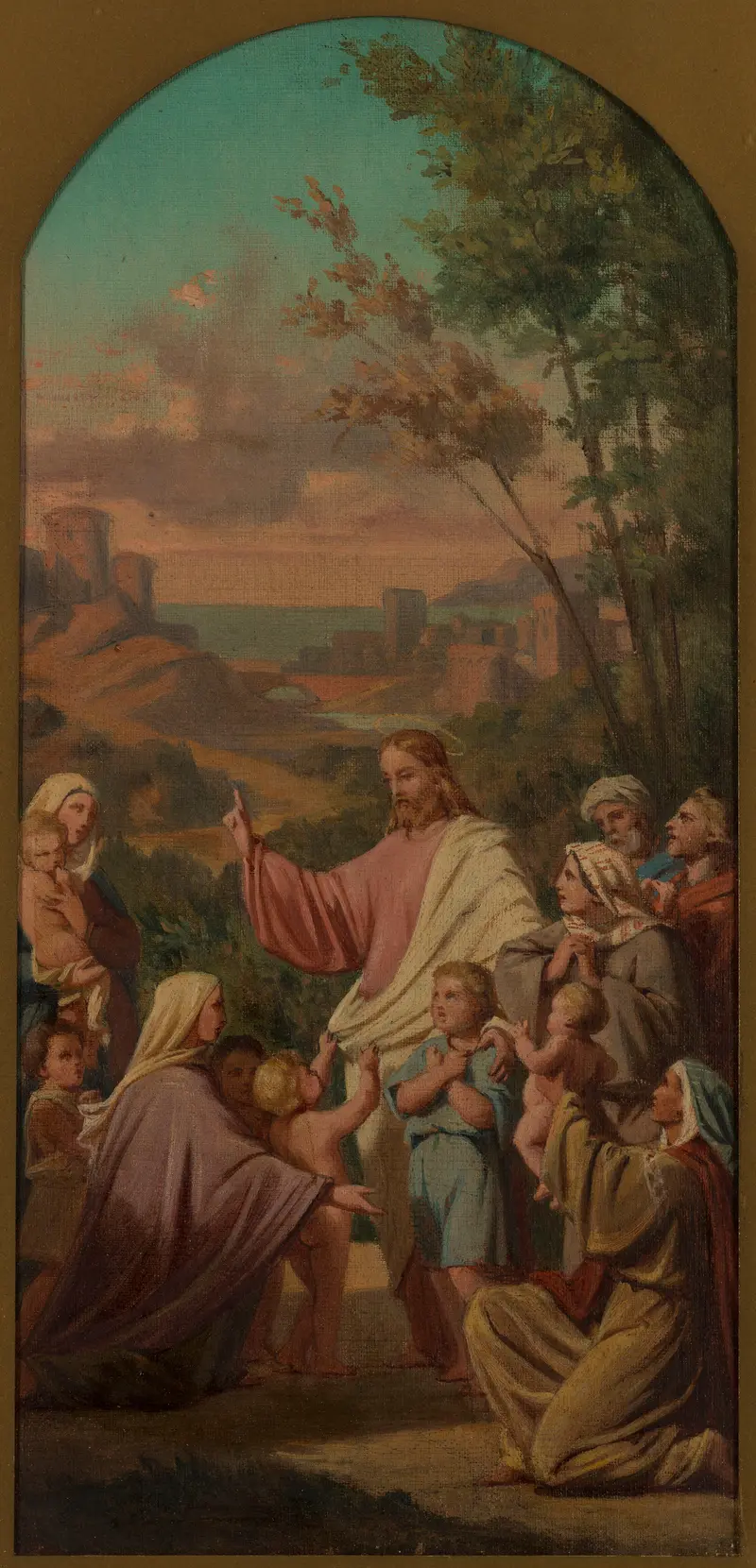
Laissez venir à moi les petits enfants.
Émile Vernet-Lecomte



