
Portrait d’Eugène Scribe (1791-1861), auteur dramatique — History & Facts
Few portraits in 19th-century France capture the subtle power of celebrity quite like Portrait d’Eugène Scribe (1791-1861), auteur dramatique. Eugène Scribe was not merely a prolific playwright; he was the architect of the “well-made play,” a dramatic formula that dominated Parisian stages and shaped European theatre for decades. When Émile Vernet-Lecomte painted Scribe, he was immortalizing a man whose pen had dictated the rhythm of cultural life, whose works had been performed for kings and revolutionaries alike.
The portrait stands as a rare visual testament to a literary figure whose fame was built on words, not appearances. Scribe is shown at a moment of poised reflection, seated with a manuscript in hand, his gaze meeting the viewer with a blend of confidence and approachability. The careful rendering of his crisp attire and the scattered papers on his desk hint at both his bourgeois respectability and his relentless productivity. Vernet-Lecomte’s attention to the light falling across Scribe’s face and hands draws the eye to the tools of his craft: intellect and pen.
Unlike the more theatrical depictions of writers by contemporaries such as Jean-Auguste-Dominique Ingres, Vernet-Lecomte opts for quiet realism, emphasizing the everyday labor behind Scribe’s literary triumphs. The exact circumstances of the portrait’s commission remain unclear, as does its early provenance, but it fits within a tradition of honoring cultural figures in mid-19th-century France. Émile Vernet-Lecomte, known for his portraits and Orientalist scenes, here demonstrates his ability to capture psychological presence without resorting to grand gestures. The painting’s whereabouts have shifted over time, with records indicating it has appeared in both private and public collections, though its current location is not widely published.
As a work, it stands as a testament to both Scribe’s enduring impact on French theatre and Vernet-Lecomte’s understated skill as a portraitist.
More Artworks by Émile Vernet-Lecomte
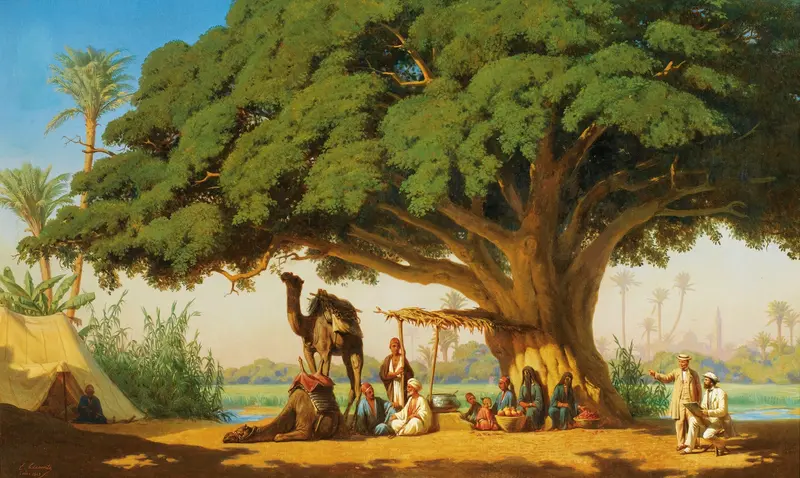
Travelling Artists Sketching An Arab Encampment, Cairo
Émile Vernet-Lecomte

A Greek Beauty
Émile Vernet-Lecomte
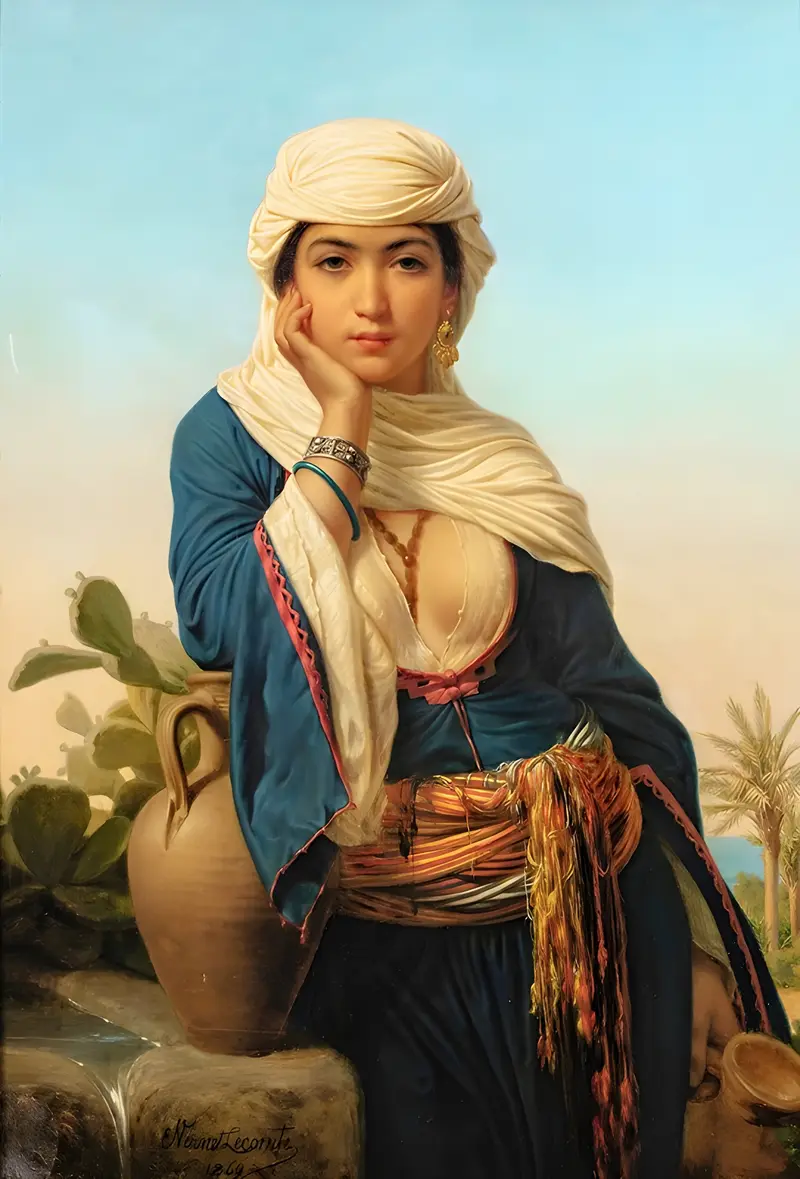
Rebecca At The Well
Émile Vernet-Lecomte
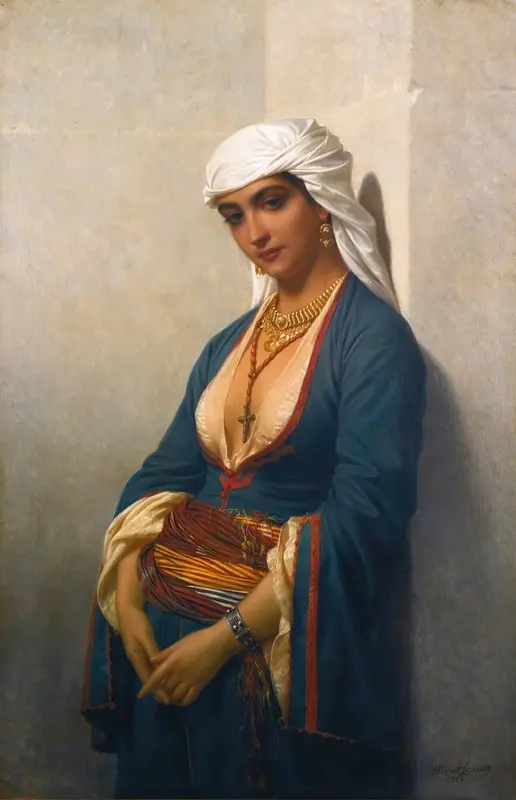
La fidèle
Émile Vernet-Lecomte
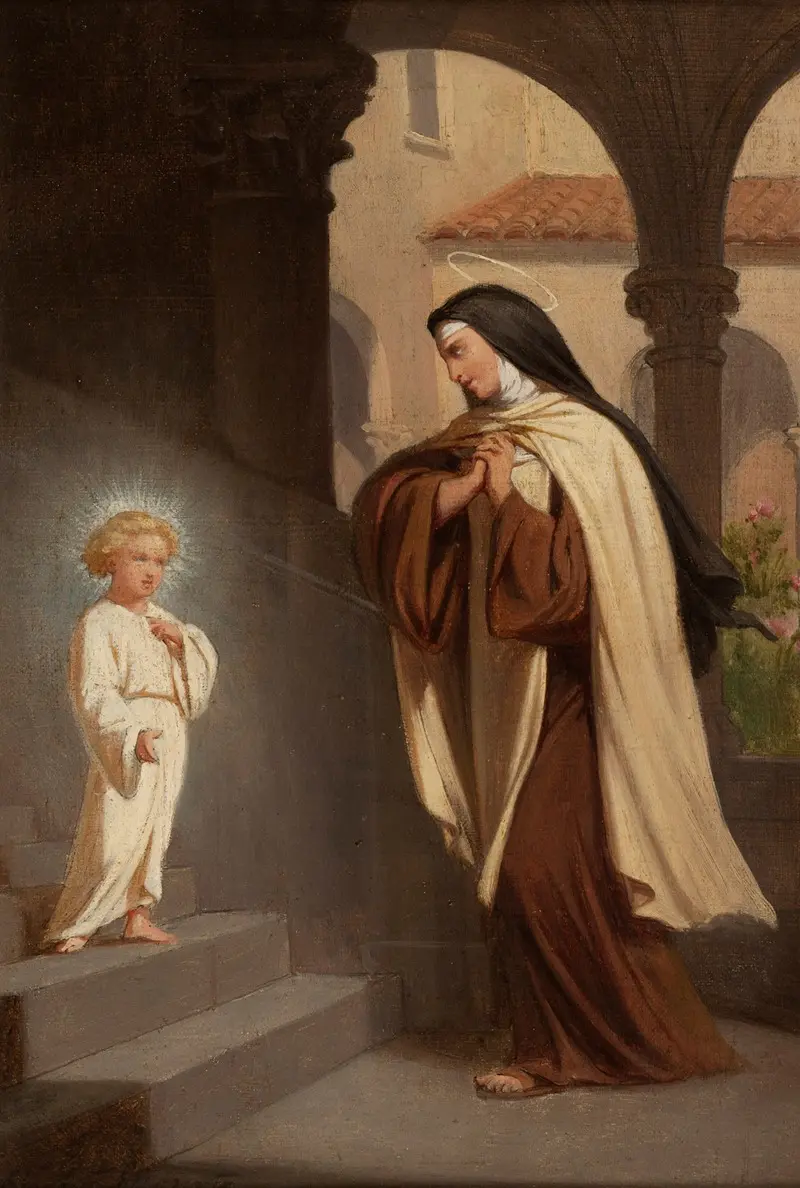
Jésus apparait à sainte Thérèse
Émile Vernet-Lecomte

La Femme Au Tambourin
Émile Vernet-Lecomte
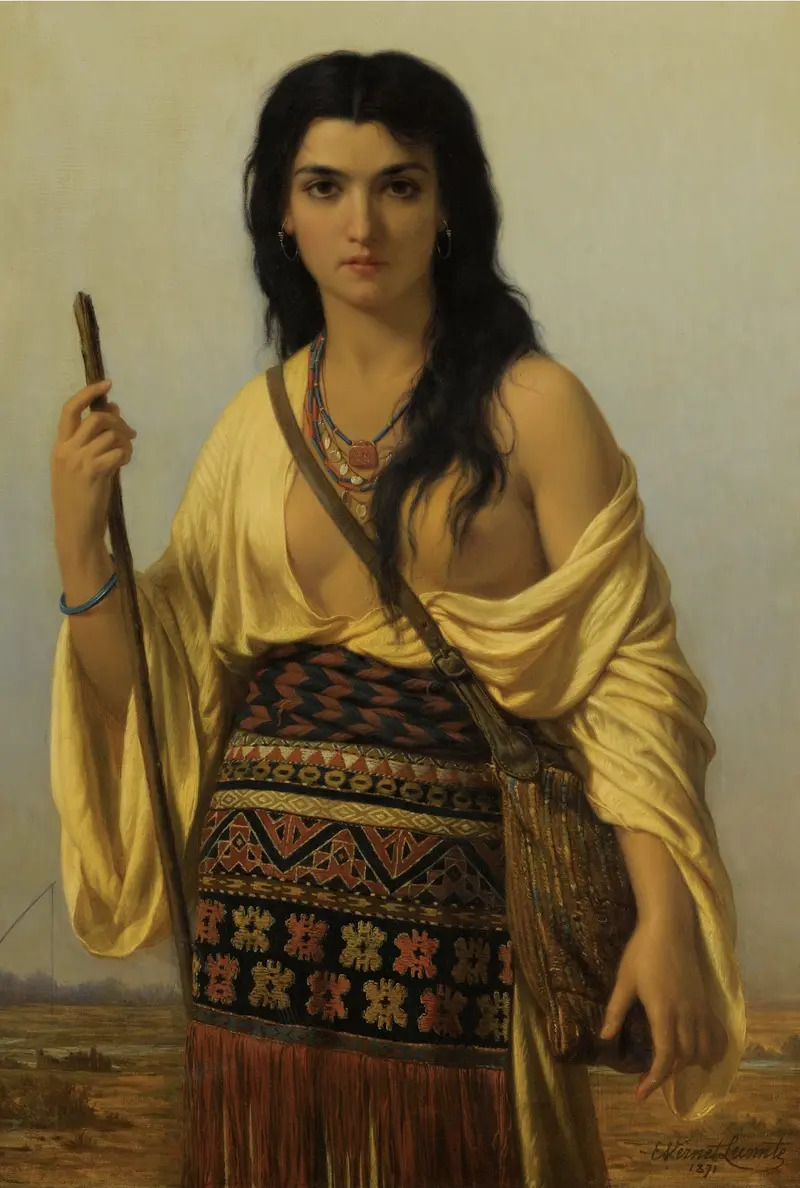
Minnehaha
Émile Vernet-Lecomte
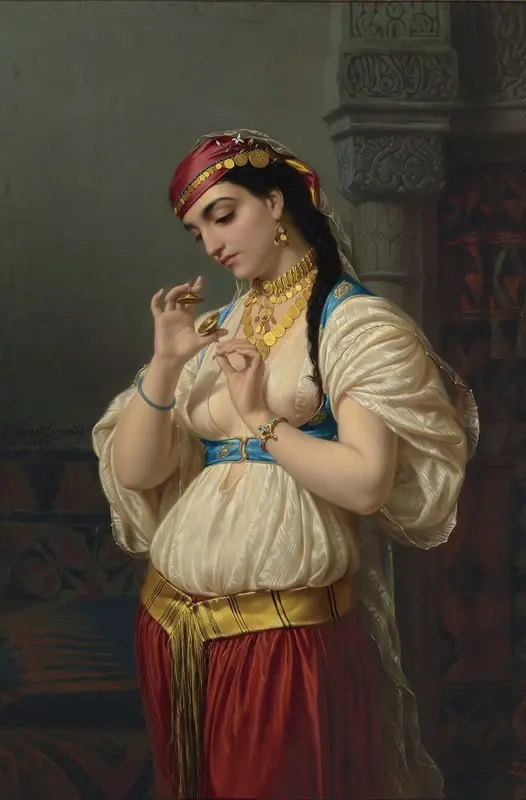
Aimée, A Young Egyptian
Émile Vernet-Lecomte
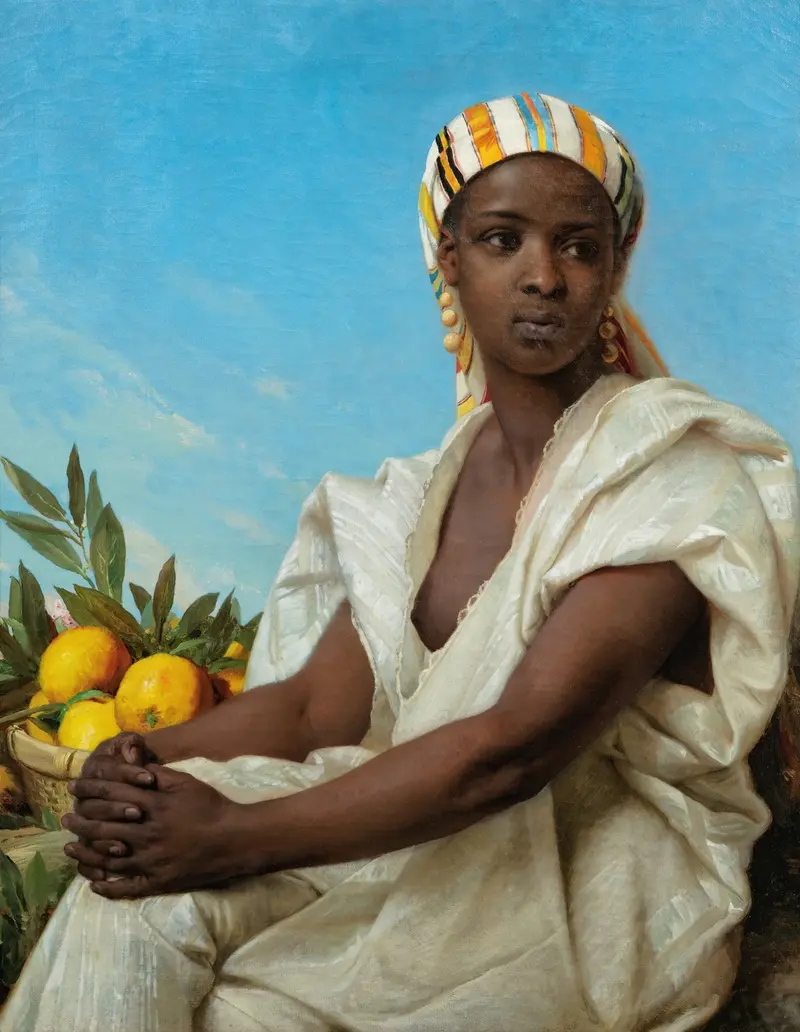
Portrait of a black woman
Émile Vernet-Lecomte
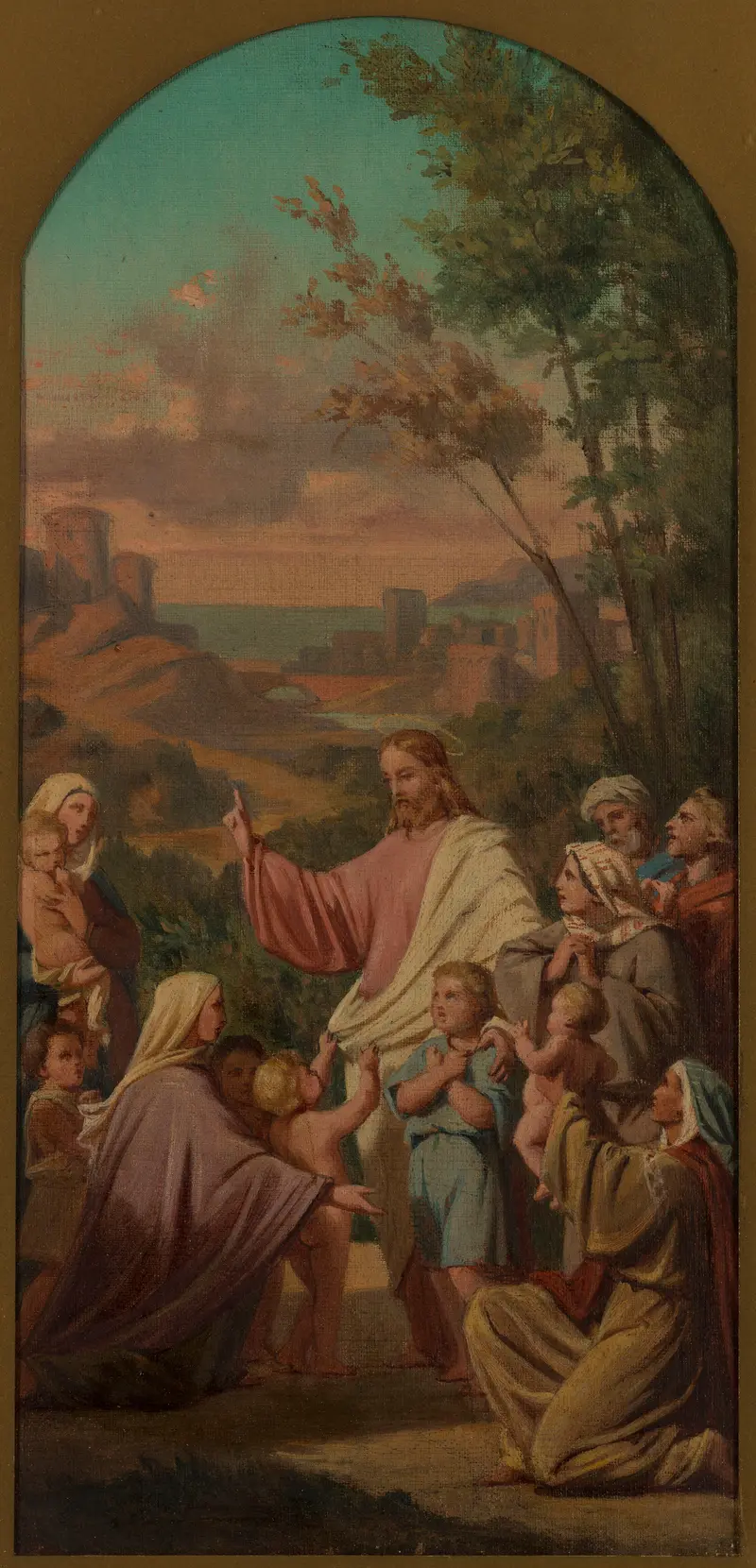
Laissez venir à moi les petits enfants.
Émile Vernet-Lecomte





