
Lancaster, Peace and War — History & Facts
Is this a mirror — or a memory? In Lancaster, Peace and War, desire mingles with longing, revealing the quiet tension between what is and what could be. Look to the left at the two figures standing in a serene landscape, their postures relaxed, yet their gazes drift toward the horizon, hinting at aspirations unfulfilled. The softness of the pastel colors evokes a sense of tranquility, while the juxtaposition of the dark storm clouds in the background casts an ominous shadow, reminding us that peace can be fleeting. The composition balances the idyllic countryside with the encroaching threat of conflict, capturing the duality of existence where beauty and turmoil coexist. Beneath the surface, the painting suggests an emotional dialogue between hope and despair.
The figures’ serene expressions contrast sharply with the turbulent skies, emphasizing the fragility of peace amid looming uncertainty. Each brushstroke conveys yearning—both for the serenity of the present and the dread of impending strife. The delicate interplay of light and shadow mirrors the emotional landscape of desire, suggesting that aspirations are often clouded by the realities of life. In 1842, David Cox created this work during a period marked by political upheaval and social change in England.
At this time, he was exploring new techniques, shifting towards a more atmospheric style that captured fleeting moments in nature. This painting reflects not only his personal evolution as an artist but also the broader artistic movement toward Romanticism, where emotion and the sublime found a voice against a backdrop of industrialization and conflict.
More Artworks by David Cox
Browse all →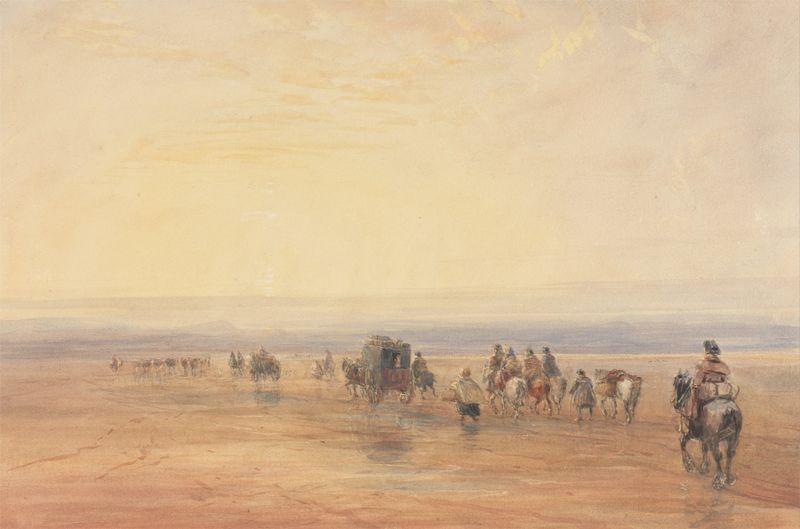
Crossing Lancaster Sands
David Cox
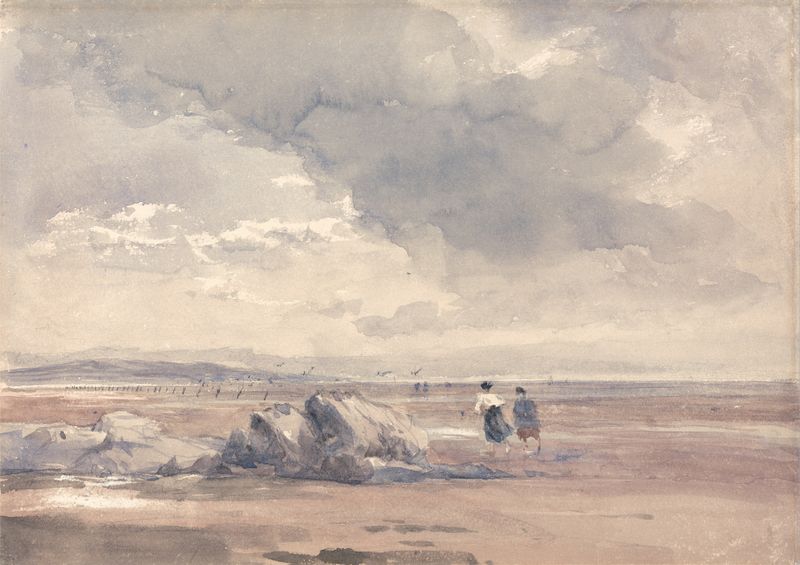
On Lancaster Sands, Low Tide
David Cox

Lincoln Cathedral from Brayford Pool
David Cox

View in Wales
David Cox
Mountain Heights, Cader Idris
David Cox

Bergen op Zoom
David Cox

Boating Before Lambeth Palace, London
David Cox
Bolton Abbey
David Cox

London Bridge
David Cox
Westminster from Lambeth
David Cox





