
L’Ancien cimetière Saint-André, 13 rue Suger. 6ème arrondissement — History & Facts
Can beauty exist without sorrow? In L’Ancien cimetière Saint-André, 13 rue Suger. 6ème arrondissement, Frédéric Houbron masterfully explores the delicate balance between the two as he captures a moment steeped in quiet reverence. Look to the foreground where weathered tombstones rise, their forms softened by gentle brushstrokes and muted colors. The somber palette of grays and browns evokes an atmosphere of stillness, while dappled light filters through the branches of somnolent trees, casting elongated shadows that dance with the whispers of the past.
Each stone tells a story, their inscriptions barely legible yet echoing with the weight of history. The composition invites the eye to wander, revealing the layered textures of moss and lichen that cling to the graves, a testament to time’s relentless passage. As you delve deeper into the work, consider the emotional tension between life and decay. The verdant foliage surrounding the cemetery stands in stark contrast to the stillness of the stones, suggesting that even in death, nature continues its vibrant cycle.
This juxtaposition reflects an obsession with memory and loss, inviting viewers to confront their own reflections on mortality and the legacy of those who have come before. Each detail, from the crumbling edges of the tombstones to the flickering light, invites contemplation of how beauty can emerge from sorrow. Frédéric Houbron painted this piece in 1906 during a time when Paris was undergoing rapid transformation, with artists increasingly drawn to explorations of the ephemeral and the forgotten. At this point in his career, he had established himself as a keen observer of urban landscapes and the human condition, reflecting the social and artistic changes that defined the era.
This work stands as a poignant reminder of his unique ability to capture both the beauty and melancholy inherent in the passage of time.
More Artworks by Frédéric Houbron
Browse all →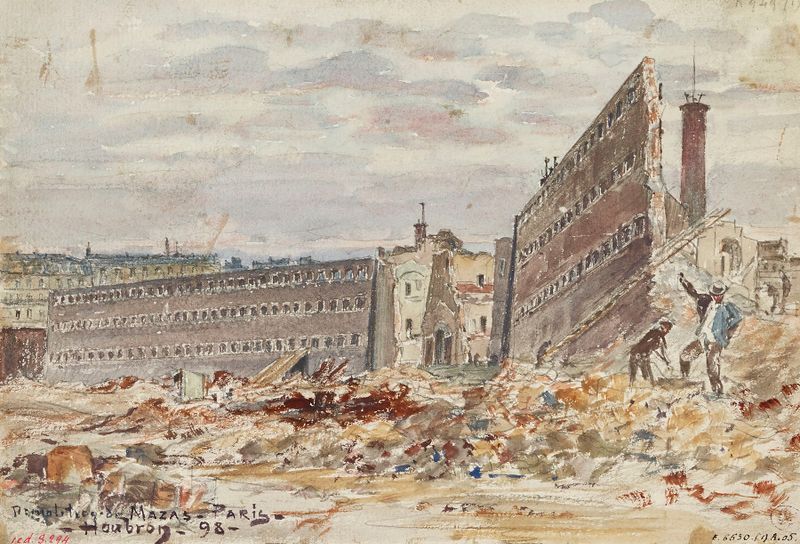
Démolition de la prison Mazas, 23, 25 boulevard Diderot (ancien boulevard Mazas)
Frédéric Houbron
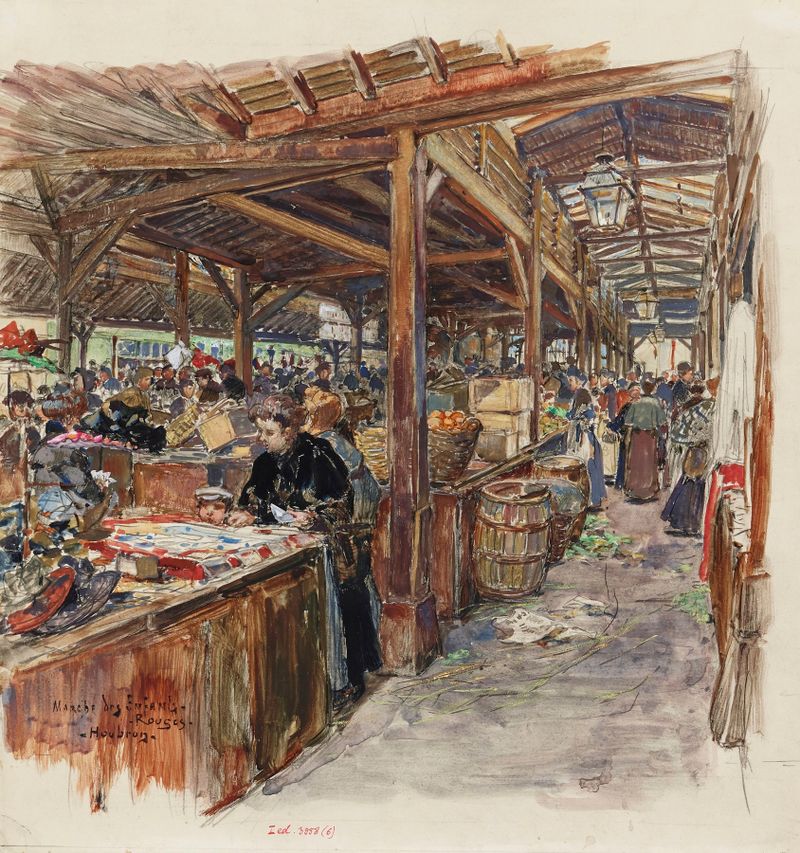
Intérieur du Marché des Enfants Rouges. 3ème arrondissement
Frédéric Houbron
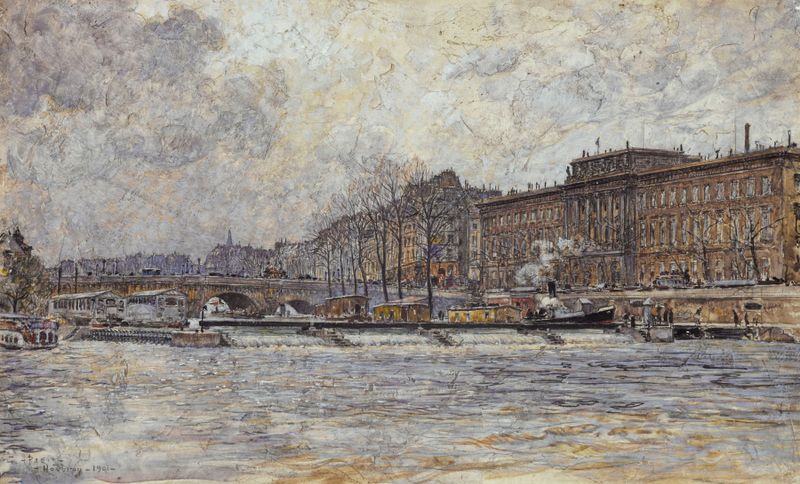
L’Hôtel de la Monnaie et le Pont-Neuf
Frédéric Houbron

Quai des Orfèvres. Paris. 1906
Frédéric Houbron
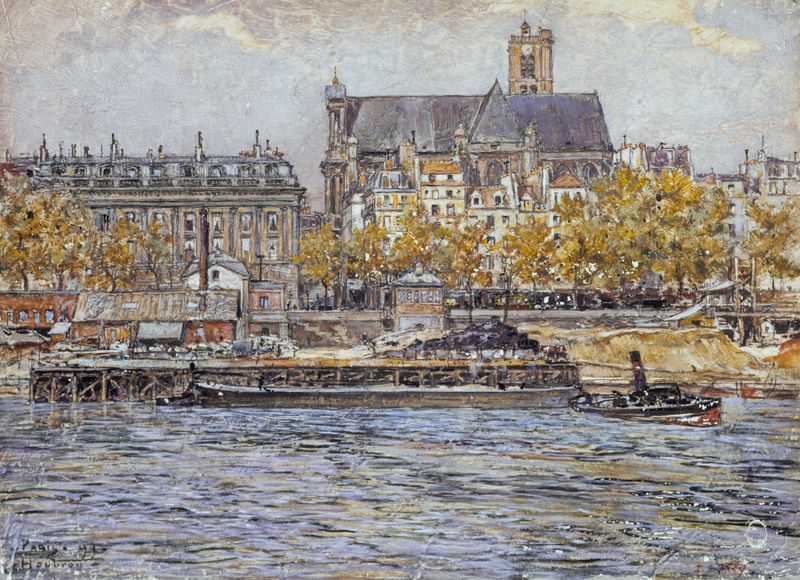
Le quai de l’Hôtel-de-Ville et l’église Saint-Gervais-Saint-Protais
Frédéric Houbron
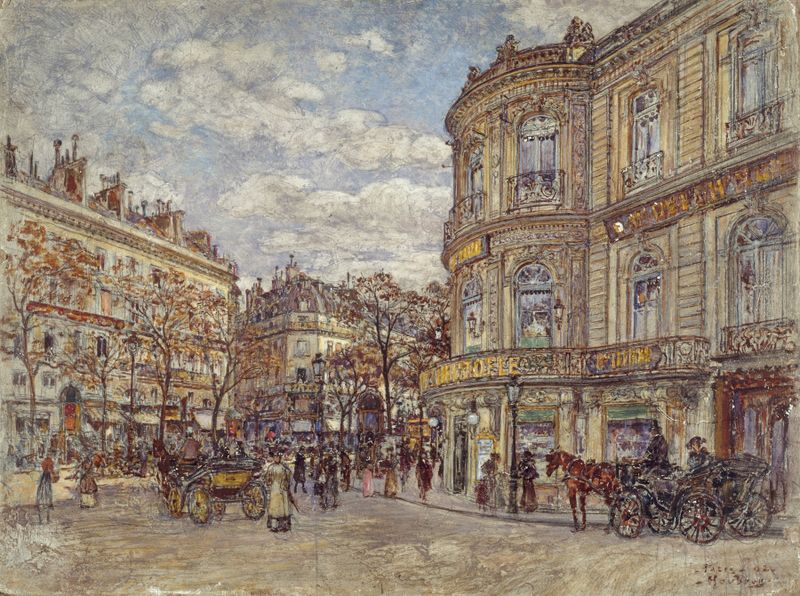
Le Pavillon de Hanovre, rue Louis-le-Grand
Frédéric Houbron

La rue du Chevalier-de-la-Barre, avec le Sacré-Cœur en construction
Frédéric Houbron
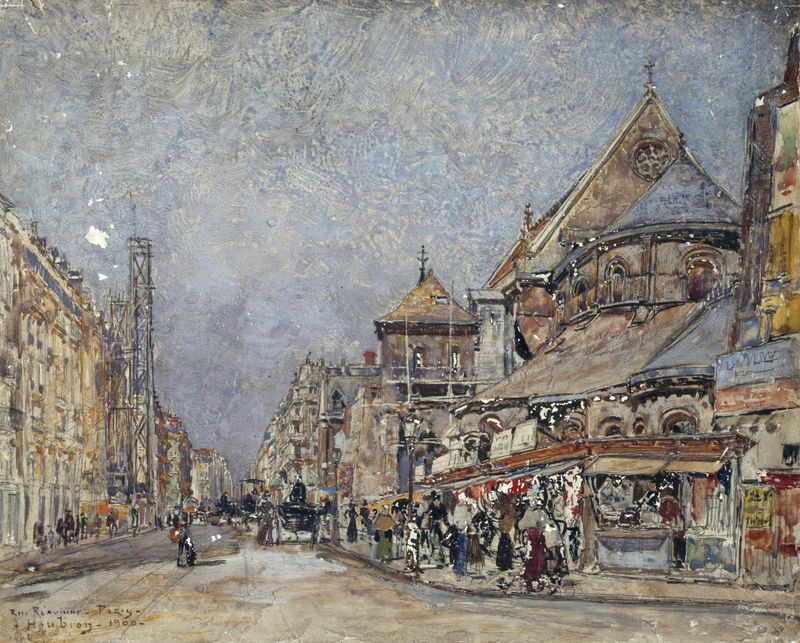
La rue Réaumur et le chevet de l’église Saint-Martin-des-Champs
Frédéric Houbron
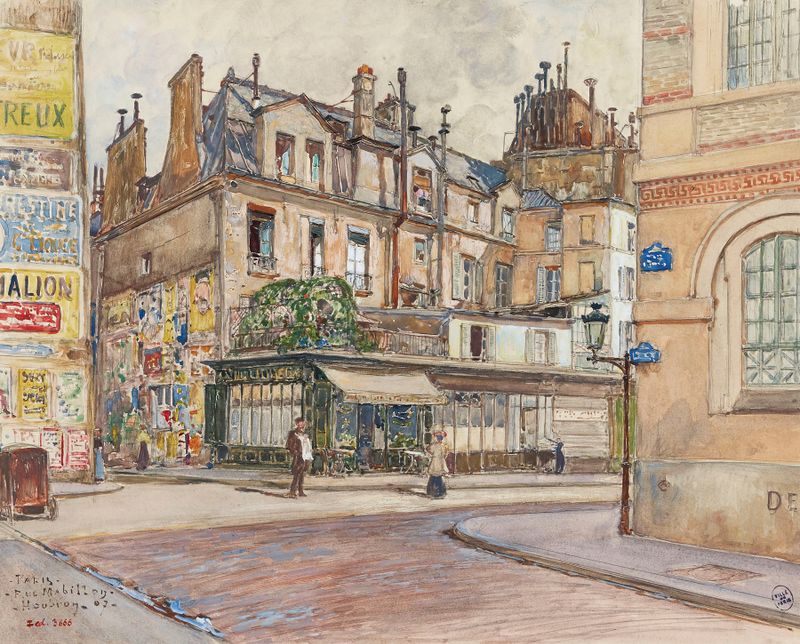
Angle rue Mabillon et rue Clément, en 1907. 5ème et 6ème arrondissements
Frédéric Houbron
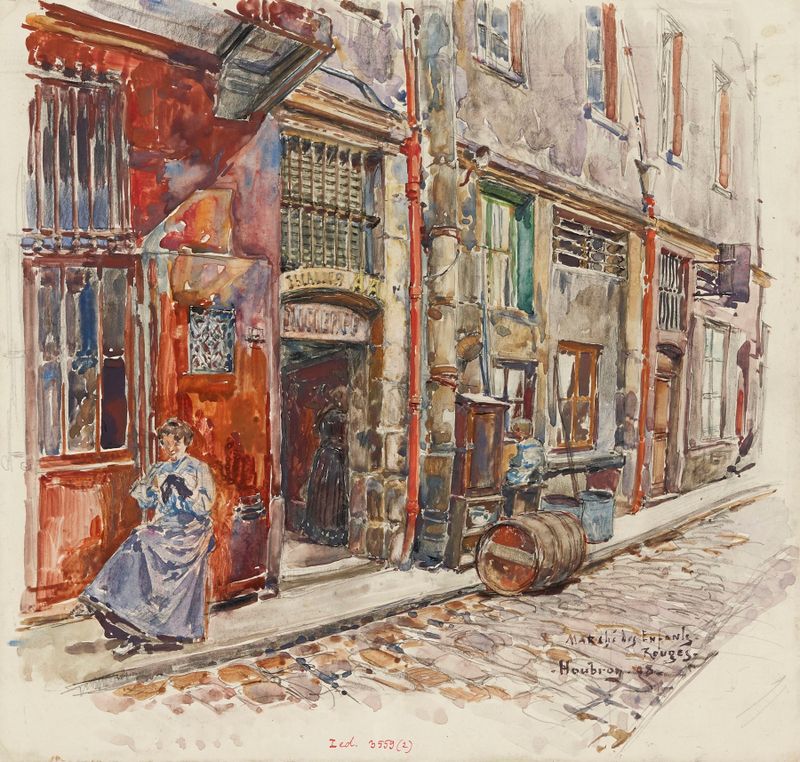
Entrée escalier A du Marché des Enfants-Rouges, en 1908. 3ème arrondissement
Frédéric Houbron





