
Landscape — History & Facts
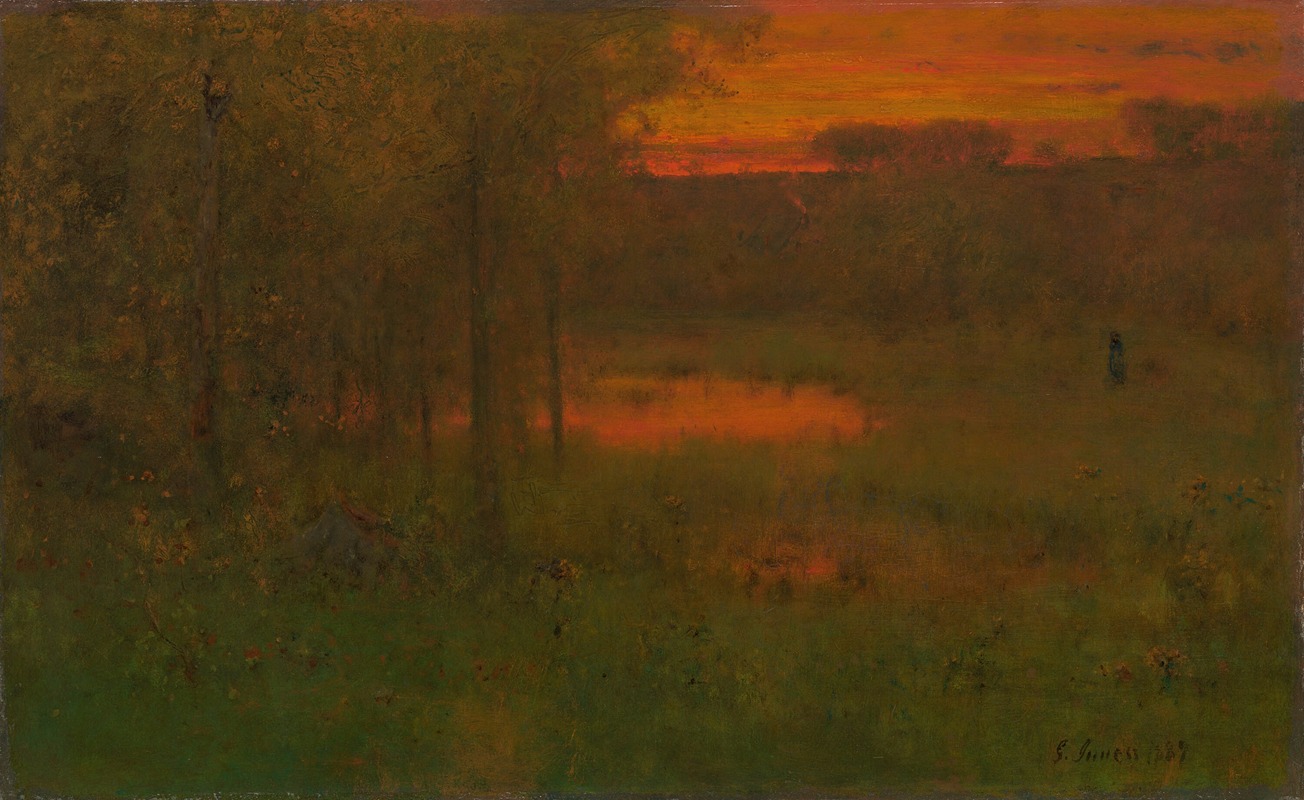
Did the painter know this moment would outlive them? In the tranquil expanse of a lush landscape, a dream unfurls in soft hues and gentle brushstrokes, whispering secrets of time and eternity. Look to the center, where a serene meadow stretches beneath a sky brushed with twilight colors. Notice how the delicate interplay of greens and golds captures the warmth of an afternoon sun, casting dappled light across the terrain. The horizon, though distant, draws the viewer's eye inward, inviting a sense of contemplation rooted in nature's embrace.
The composition balances open space and subtle details, creating a harmonious relationship between the earth and the expansive sky. Within this idyllic scene lies a tension between the idyllic and the ephemeral. The scattered clouds, tinged with soft pinks and fading blues, hint at the transience of a day ending, while the sturdy trees stand resolute, immortalizing the moment in their steadfast presence. Each brushstroke echoes an emotional resonance, encapsulating a fleeting experience that simultaneously embodies the eternal beauty of the natural world. George Inness created this work in 1860 during a period of artistic evolution in America, exploring the nuances of light and atmosphere.
Living in New Jersey at the time, he was deeply influenced by the ideals of the Hudson River School, yet sought to infuse his landscapes with a more personal, emotive quality, reflecting his spiritual beliefs and experiences. This painting emerged as a testament to both his personal journey and the broader shift in American art, emphasizing a connection to nature that would resonate for generations to come.
More Artworks by George Inness
Browse all →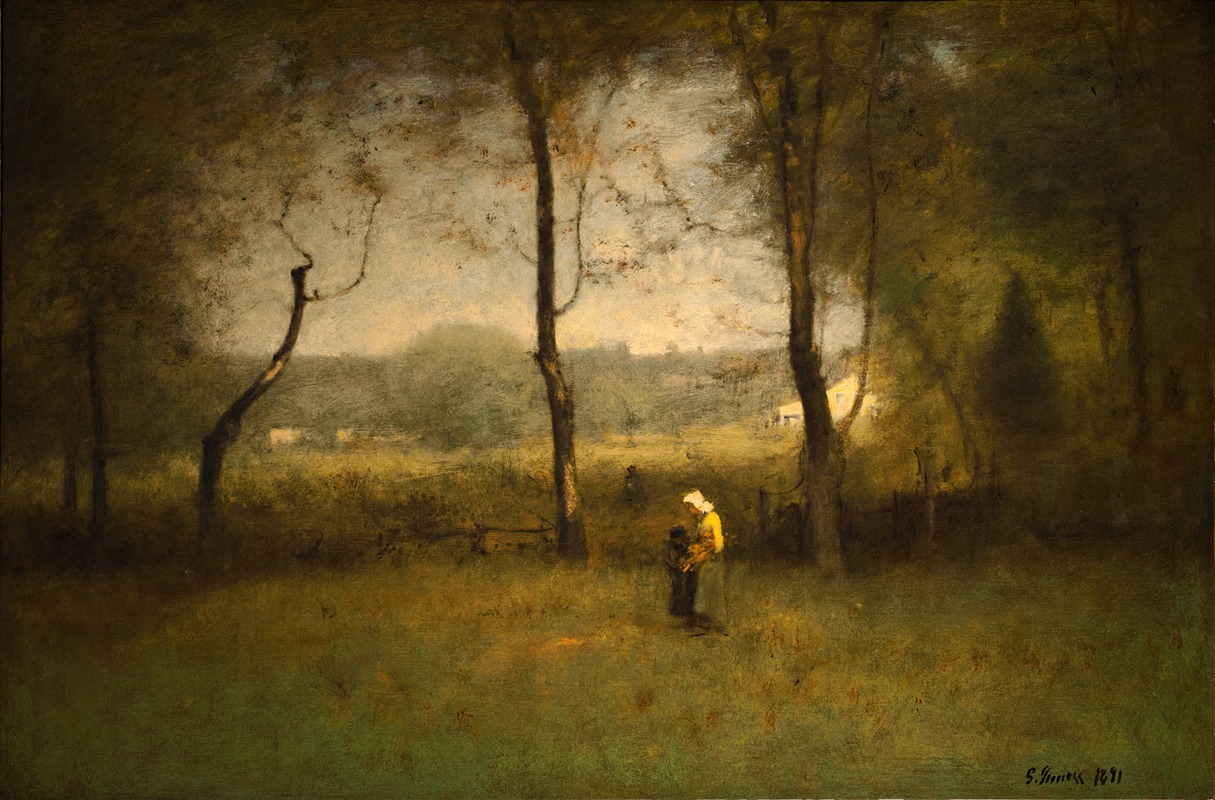
Autumn Woods
George Inness
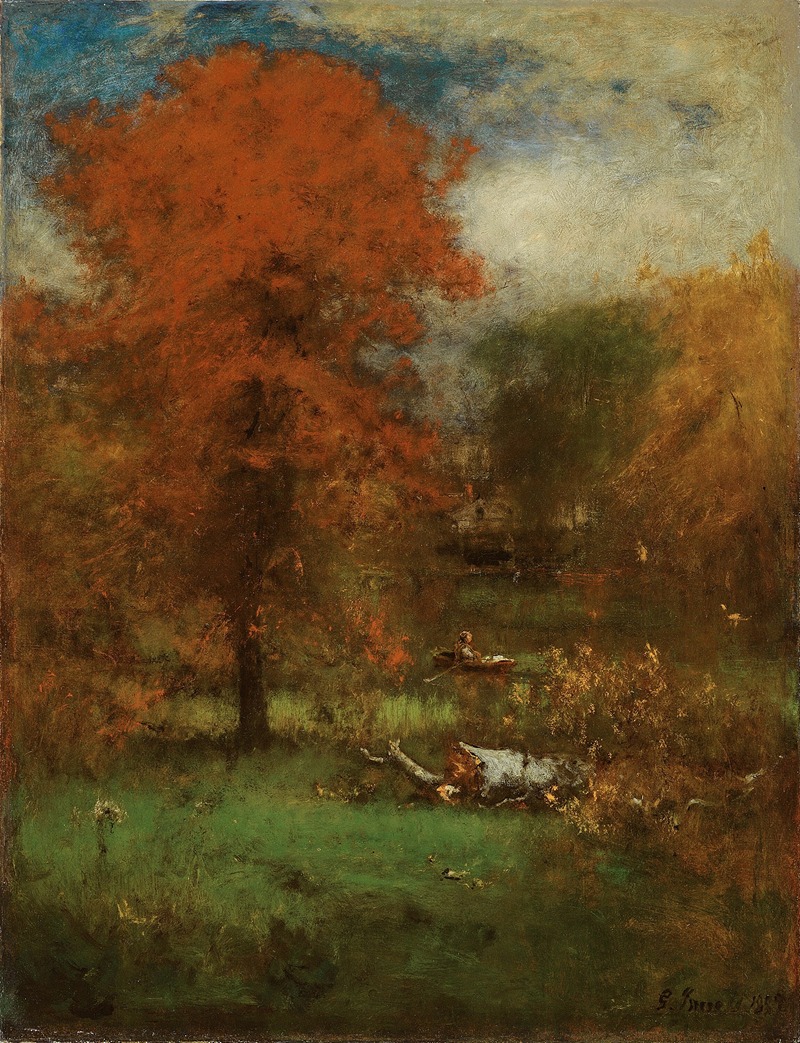
The Mill Pond
George Inness
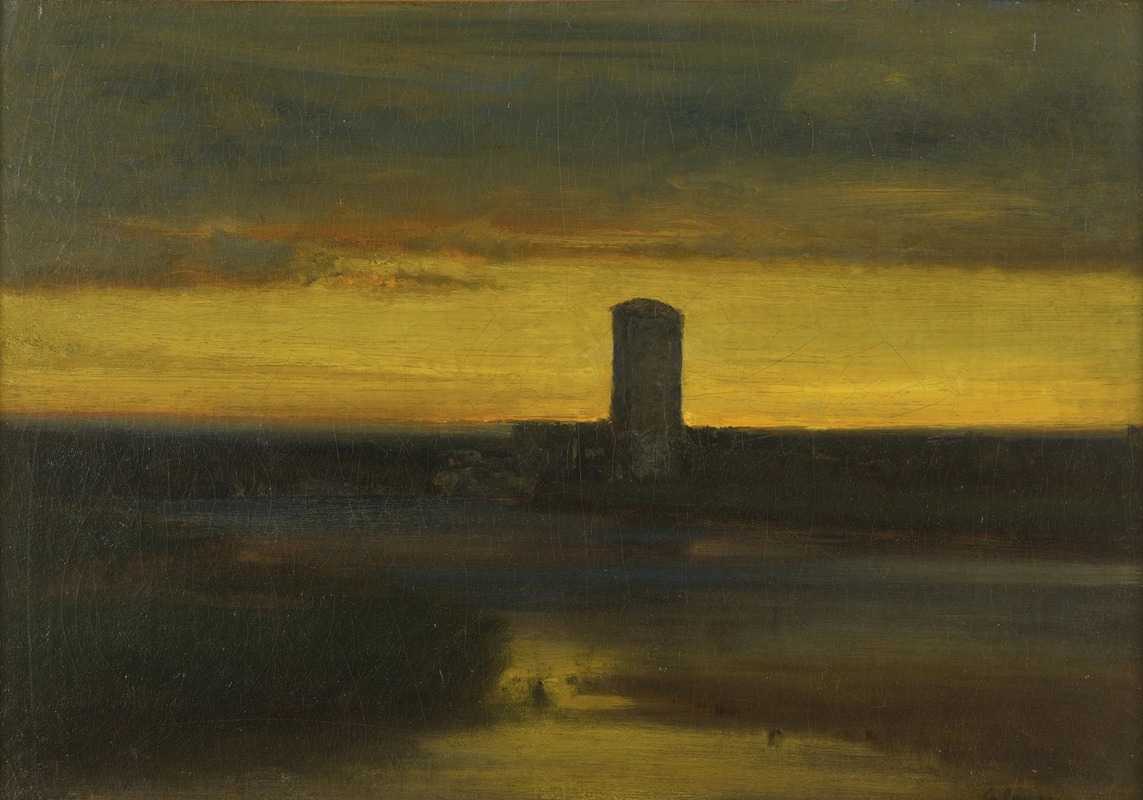
Afterglow
George Inness
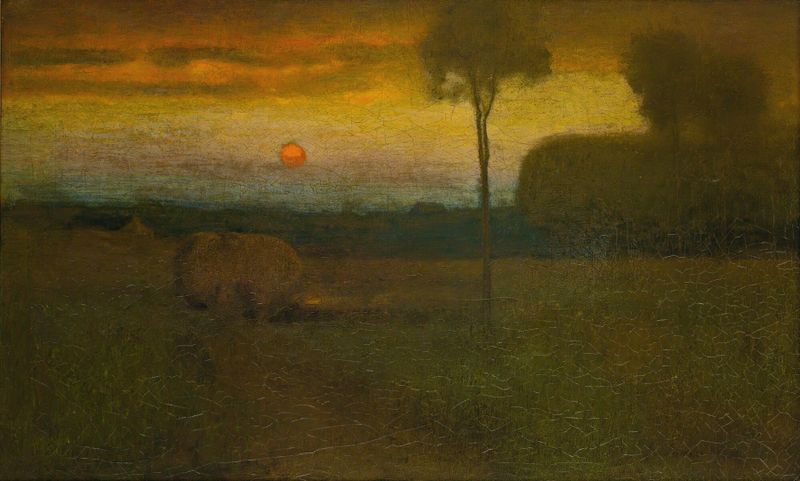
Landscape (Evening Landscape)
George Inness

Montclair
George Inness

View in Berkshire County, Massachusetts, Clearing Off after a September Storm
George Inness

October
George Inness
Landscape, Sunset
George Inness
Afterglow
George Inness
Catskill Mountains
George Inness





