
Landscape — History & Facts
In the tranquility of Landscape, the viewer finds a profound stillness that belies the movement of nature itself—a gentle whisper of the unseen, waiting to be felt. Focus first on the soft interplay of greens and browns that envelop the canvas. The horizon stretches wide, dividing the earth from a hazy sky that bleeds into shades of blue and gray. Look to the foreground, where brushstrokes dance with fluidity, embodying the essence of foliage in motion.
Each stroke invites the viewer deeper into the landscape, suggesting a breeze that rustles through the trees, while the sunlight dapples the ground, creating a symphony of light and shadow that enhances the sense of depth. This artwork speaks of both calm and energy, a juxtaposition between the serene scene and the vibrant life it contains. The placement of distant hills invites contemplation, suggesting a journey beyond the immediate. The subtle transitions in color evoke an emotional resonance—a reminder of nature's cycles, where stillness is often underpinned by unseen dynamism.
Notice the delicate use of light; it serves not only as illumination but as a bridge between the tangible and the ethereal. Created in the mid-19th century, during a time of great change in American art, Inness painted this work when the Hudson River School was flourishing. He sought to transcend mere representation, exploring ideas of spiritual and emotional connections to nature. At this juncture in his career, he was deeply influenced by Romanticism, which added layers of meaning and depth to his landscapes, marking a significant transition in his artistic evolution.
More Artworks by George Inness
Browse all →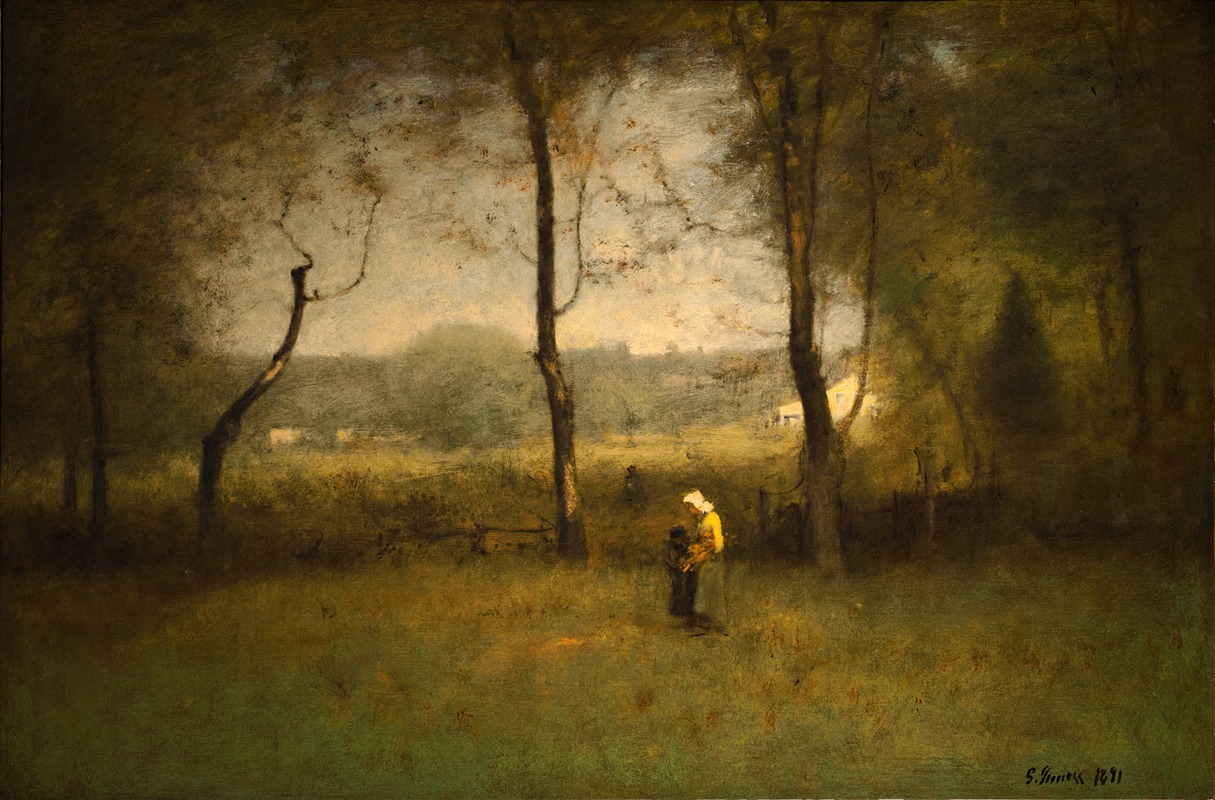
Autumn Woods
George Inness
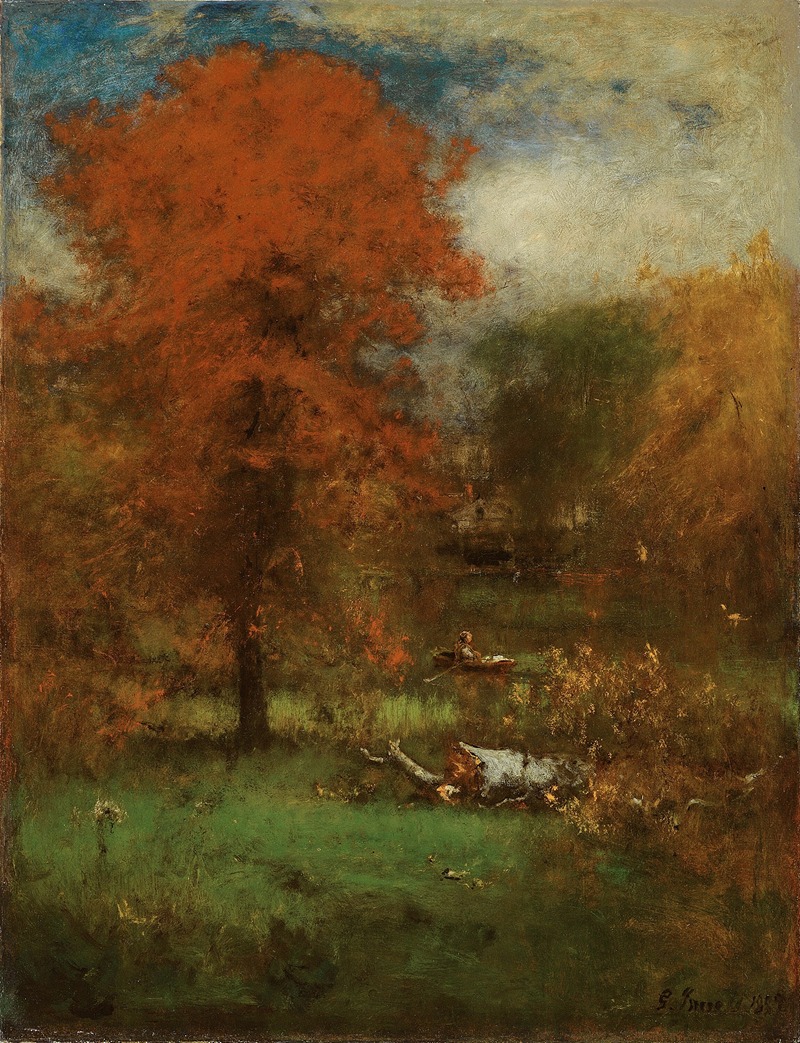
The Mill Pond
George Inness
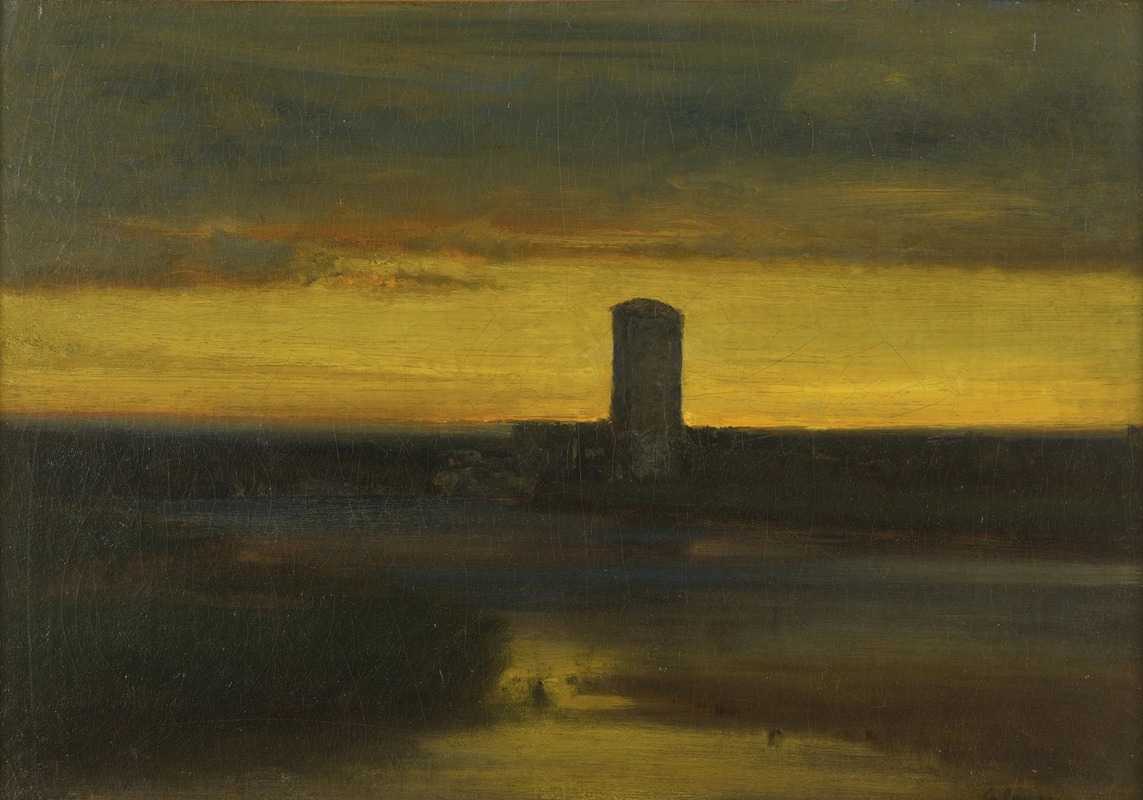
Afterglow
George Inness
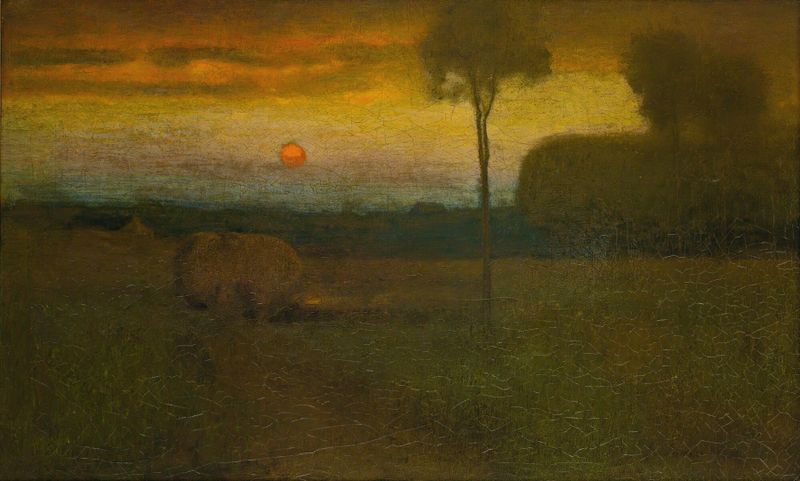
Landscape (Evening Landscape)
George Inness

Montclair
George Inness

View in Berkshire County, Massachusetts, Clearing Off after a September Storm
George Inness

October
George Inness
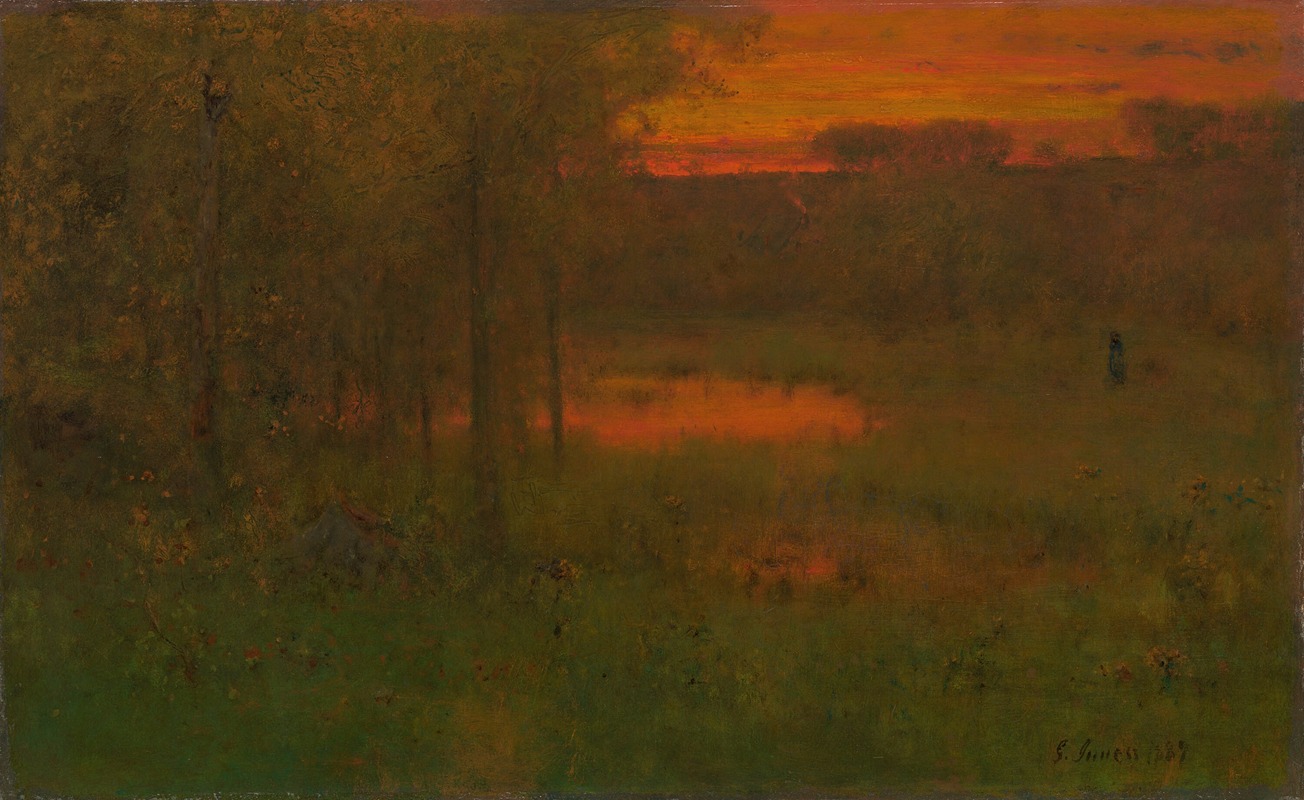
Landscape, Sunset
George Inness
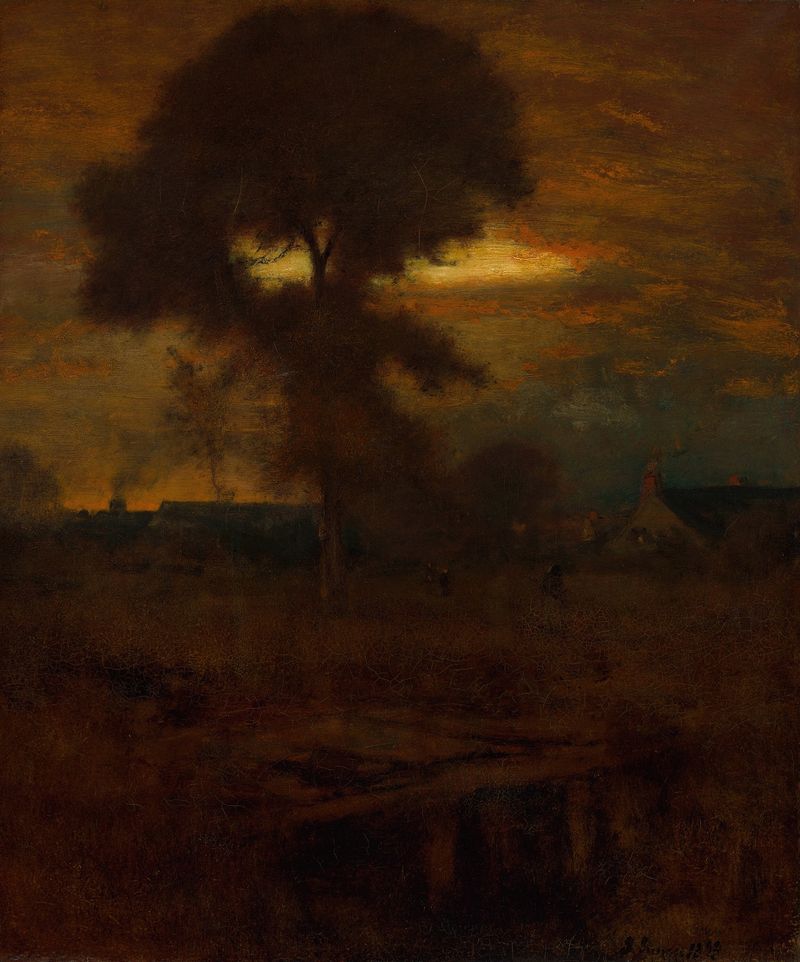
Afterglow
George Inness
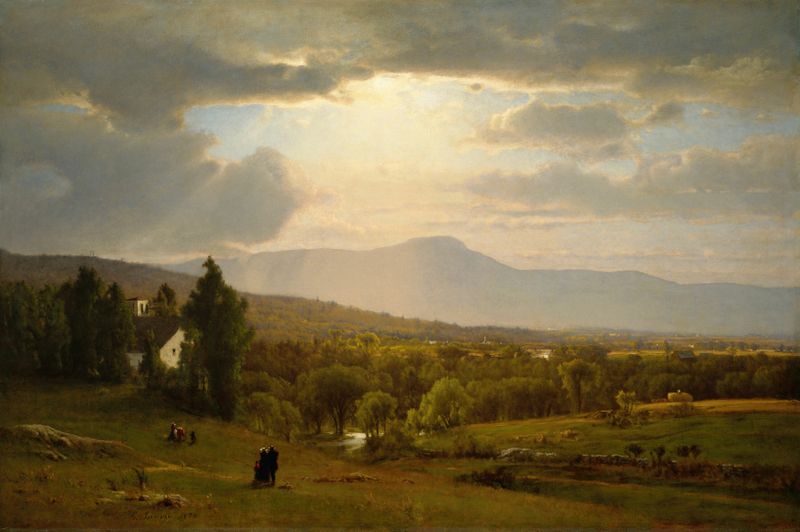
Catskill Mountains
George Inness





