
Landscape — History & Facts
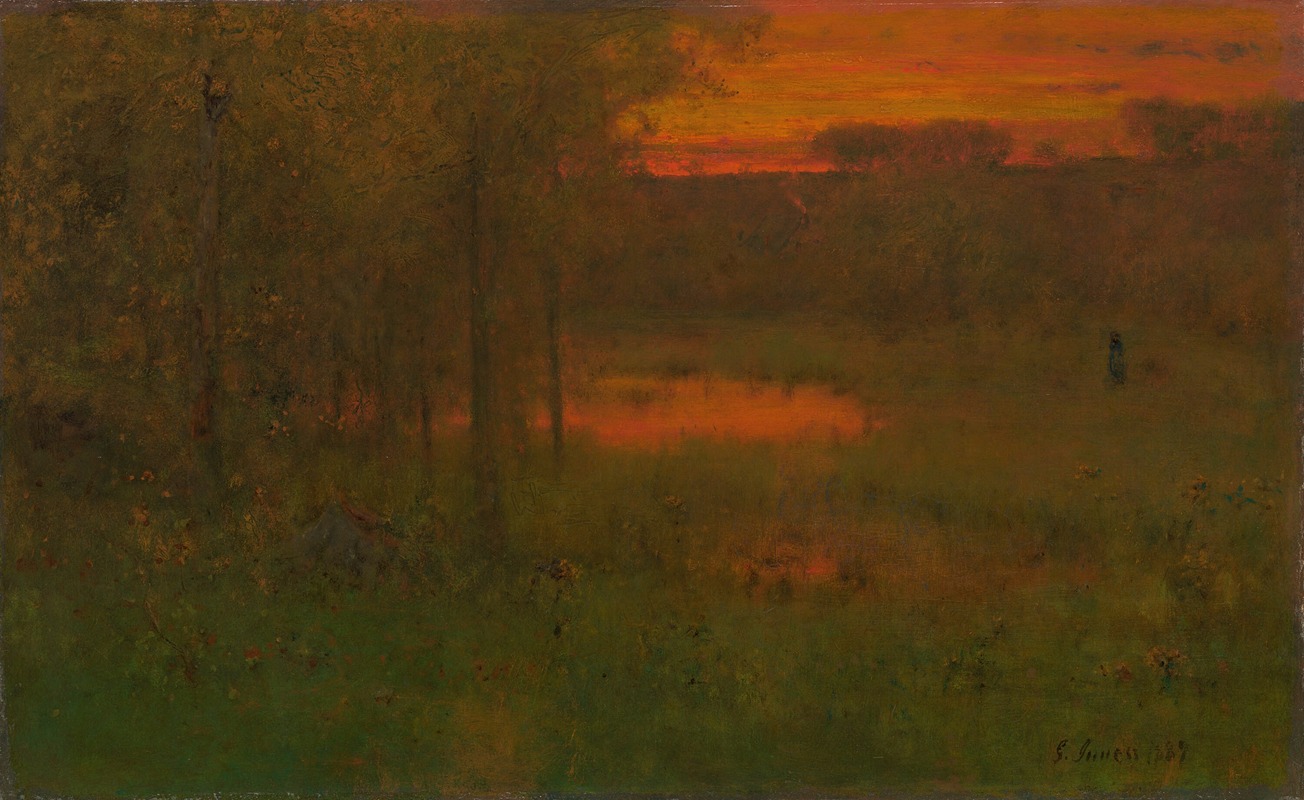
When did color learn to lie? In the delicate interplay of hues, a revelation unfolds, inviting us to question the very nature of our perception. Focus on the center, where gentle strokes of green and gold converge to form a serene meadow, a harmonious blend of life and stillness. Notice how the light filters through the trees, illuminating patches of grass with an almost ethereal glow. The soft, painterly technique evokes a sense of tranquility, while the subtle layering of colors creates depth, allowing the landscape to breathe with a palpable presence. As you explore the canvas, contrast emerges between the lush foreground and the distant horizon, suggesting a boundary between the known and the unknown.
The clouds above, heavy yet luminescent, hint at the tension of an impending change, perhaps a storm gathering or the promise of a new dawn. This interplay of light and shadow instills a sense of melancholy, reminding us that beauty often coexists with uncertainty. In 1884, George Inness found himself in a period of introspection, deeply influenced by transcendentalist ideas and the natural world. Painting in New Jersey, he sought to express spirituality through landscape, capturing not just the physical form of nature but its emotional resonance.
This piece reflects a culmination of his artistic evolution, marked by a desire to convey the sublime experience of the earth’s beauty while hinting at the complexities underlying it.
More Artworks by George Inness
Browse all →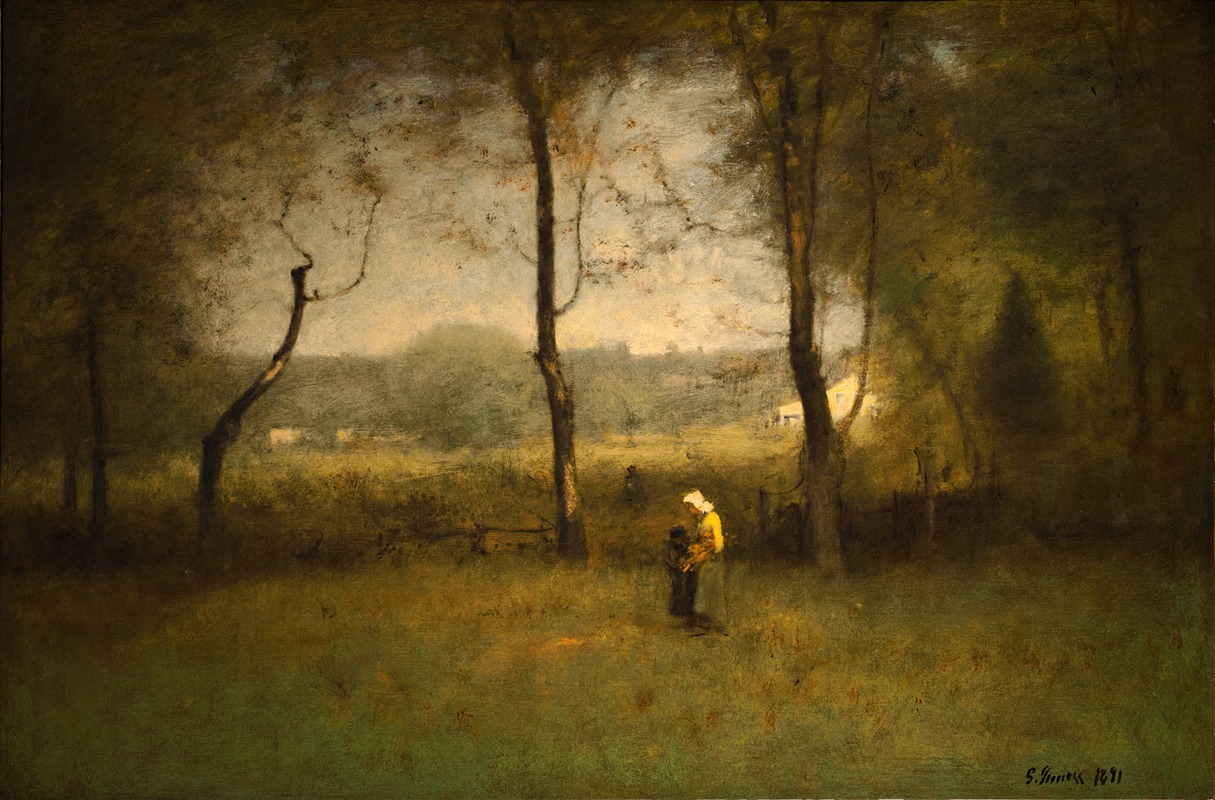
Autumn Woods
George Inness
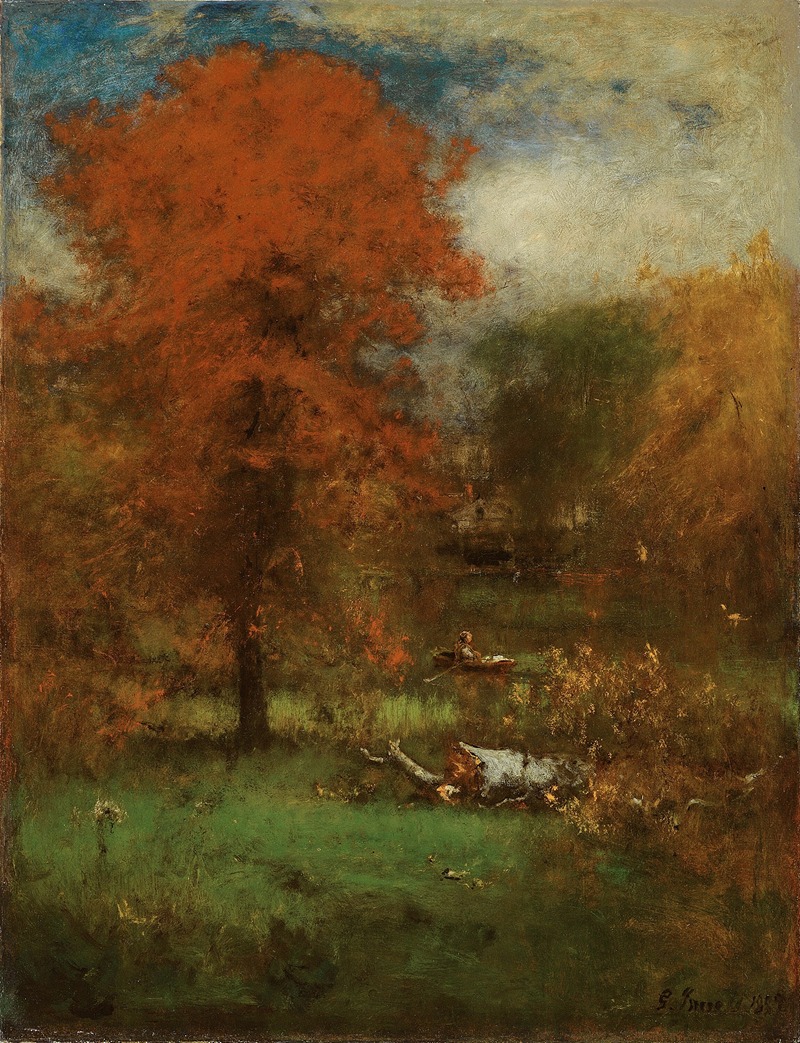
The Mill Pond
George Inness
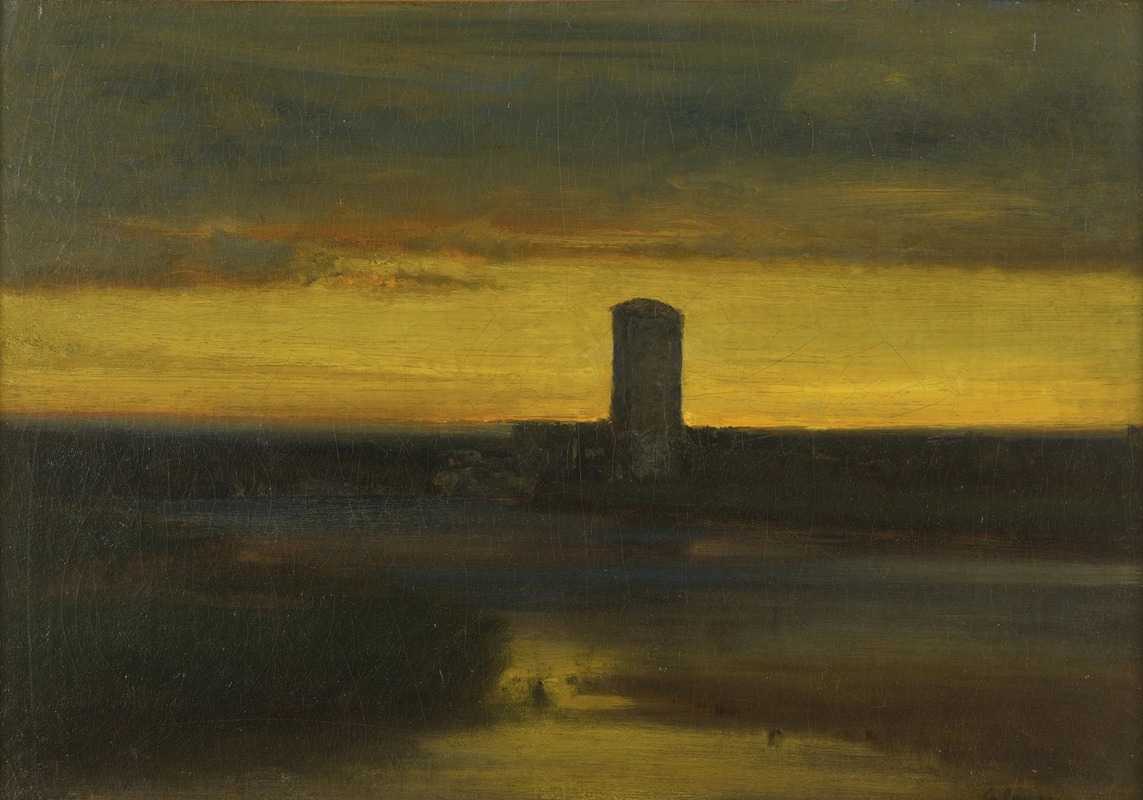
Afterglow
George Inness
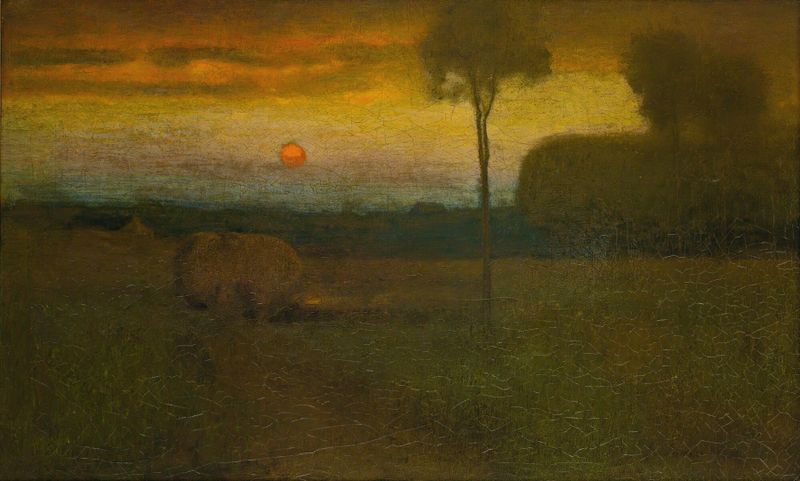
Landscape (Evening Landscape)
George Inness

Montclair
George Inness

View in Berkshire County, Massachusetts, Clearing Off after a September Storm
George Inness

October
George Inness
Landscape, Sunset
George Inness
Afterglow
George Inness
Catskill Mountains
George Inness





